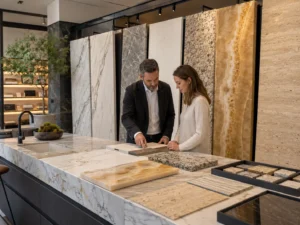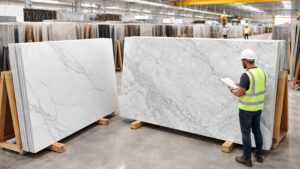
Buying Bianco Carrara Marble in 2025 is less about finding availability and more about managing expectation.
“Bianco Carrara” is not a single-grade product but a commercial category shaped by quarry origin, block selection, processing standards, and visual tolerance.
Most sourcing issues do not come from structural failure, but from visual mismatch caused by oversimplified catalogs, unclear grading logic, and lack of batch-level selection.
Successful buyers treat Carrara as a controlled natural material—evaluated by slab, lighting context, and processing accountability—rather than a perfect white surface promised by marketing descriptions.
Why Buying Bianco Carrara Is Harder Than It Looks
On paper, Bianco Carrara Marble looks easy to buy.
It has a famous origin, a recognizable name, and decades of global circulation. Search results are full of suppliers, catalogs, and polished project images. Yet in real procurement scenarios—especially in 2025—Bianco Carrara remains one of the most misunderstood white marbles in global trade.
The problem is not availability.
The problem is expectation mismatch.
This article does not explain what Bianco Carrara looks like. Instead, it explains why buyers often receive something different from what they thought they ordered, and how to make sourcing decisions that align material reality with project intent.
The First Hidden Truth: “Bianco Carrara” Is Not a Single Product
One of the biggest misconceptions buyers carry is assuming Bianco Carrara is a fixed specification.
In reality, Bianco Carrara is a geographic and commercial category, not a single-grade product. Variations exist across:
-
Quarry zones
-
Extraction depth
-
Block selection criteria
-
Processing standards
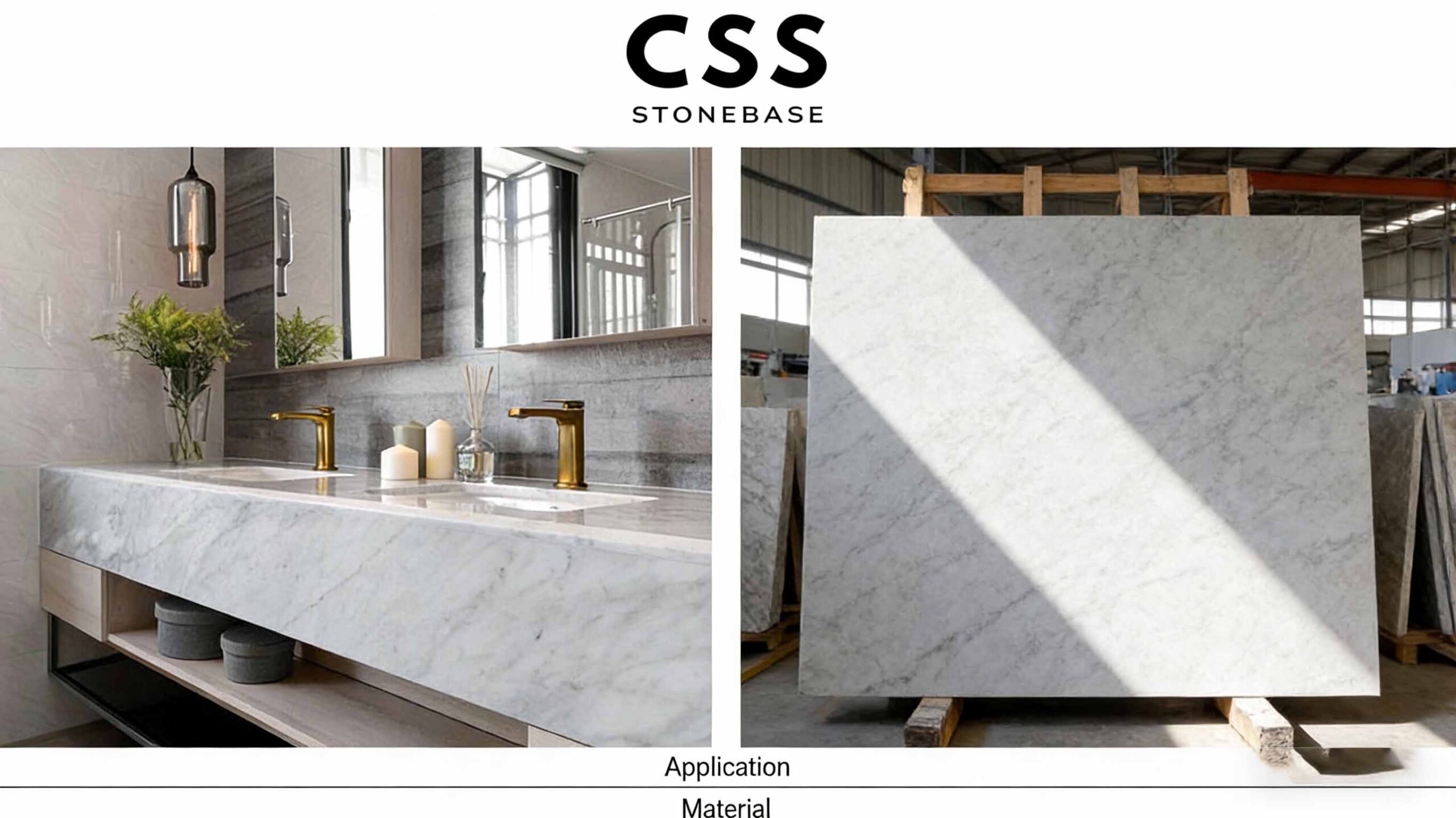
Two slabs sold under the same name may differ noticeably in background tone, vein density, and overall visual balance.
This is why experienced buyers evaluate Carrara by batch and slab, not by name alone.
Quarry Origin vs Commercial Labeling
Italy’s Carrara region contains dozens of active quarry sites, each producing material with subtle but important differences. However, once blocks enter global circulation, distinctions between quarry origins are often flattened into simplified commercial labels.
For buyers, this creates a structural blind spot:
-
“Italian origin” does not guarantee uniform appearance
-
“Carrara marble” does not guarantee identical geological behavior
-
“Same grade” does not always mean same visual outcome
Understanding how stone moves from quarry to market—and where variation is introduced—requires seeing the full extraction and processing chain. This disconnect between origin and final product is explored more broadly in From quarry to architecture: how natural marble is extracted, processed, and used in modern construction, which illustrates why material identity often shifts long before it reaches the buyer.
Grades Exist, But Not the Way You Think
Buyers often ask for “higher grade” Bianco Carrara, assuming grades function like standardized industrial classifications. In reality, grading is partially subjective and market-driven.
What typically changes between grades is not strength, but:
-
Background whiteness
-
Vein contrast and density
-
Visual consistency across slabs
There is no global authority defining Carrara grades. Instead, grades emerge from buyer preference patterns and regional expectations. A grade considered premium in one market may be rejected in another.
This makes visual selection—not specification sheets—the decisive factor in most serious purchases.

Slabs vs Tiles: The Consistency Gap
One of the most underestimated buying decisions is choosing between slabs and tiles.
Slabs offer:
-
Better visual continuity
-
More control over veining layout
-
Higher selection transparency
Tiles, while more economical, introduce a higher risk of:
-
Batch inconsistency
-
Pattern repetition
-
Tonal variation across installation zones
For projects where visual calm is critical, slab sourcing is not a luxury—it is risk control.
Processing Location Matters More Than Many Buyers Realize
Another common assumption is that Italian marble equals Italian processing.
In practice, many Carrara blocks are exported for processing in other regions. This does not automatically mean lower quality, but it does introduce variability in:
-
Cutting tolerances
-
Surface finishing consistency
-
Quality inspection standards
Buyers who focus only on stone origin often overlook processing accountability, which is where many downstream issues actually originate.
The Real Cost of Visual Mismatch
Most Carrara-related disputes are not about breakage or structural failure. They are about visual disappointment.
This confusion often extends into functional applications as well.
For example, thickness assumptions, load expectations, and usage scenarios—especially in stair and step installations—are frequently misunderstood at the buying stage.
These issues are explored in more detail in is 1.8 cm Bianco Carrara marble strong enough for stair steps,which highlights how sourcing decisions and application logic are often disconnected.
Common complaints include:
-
Slabs appearing darker than expected
-
Veining reading “busier” in installed space
-
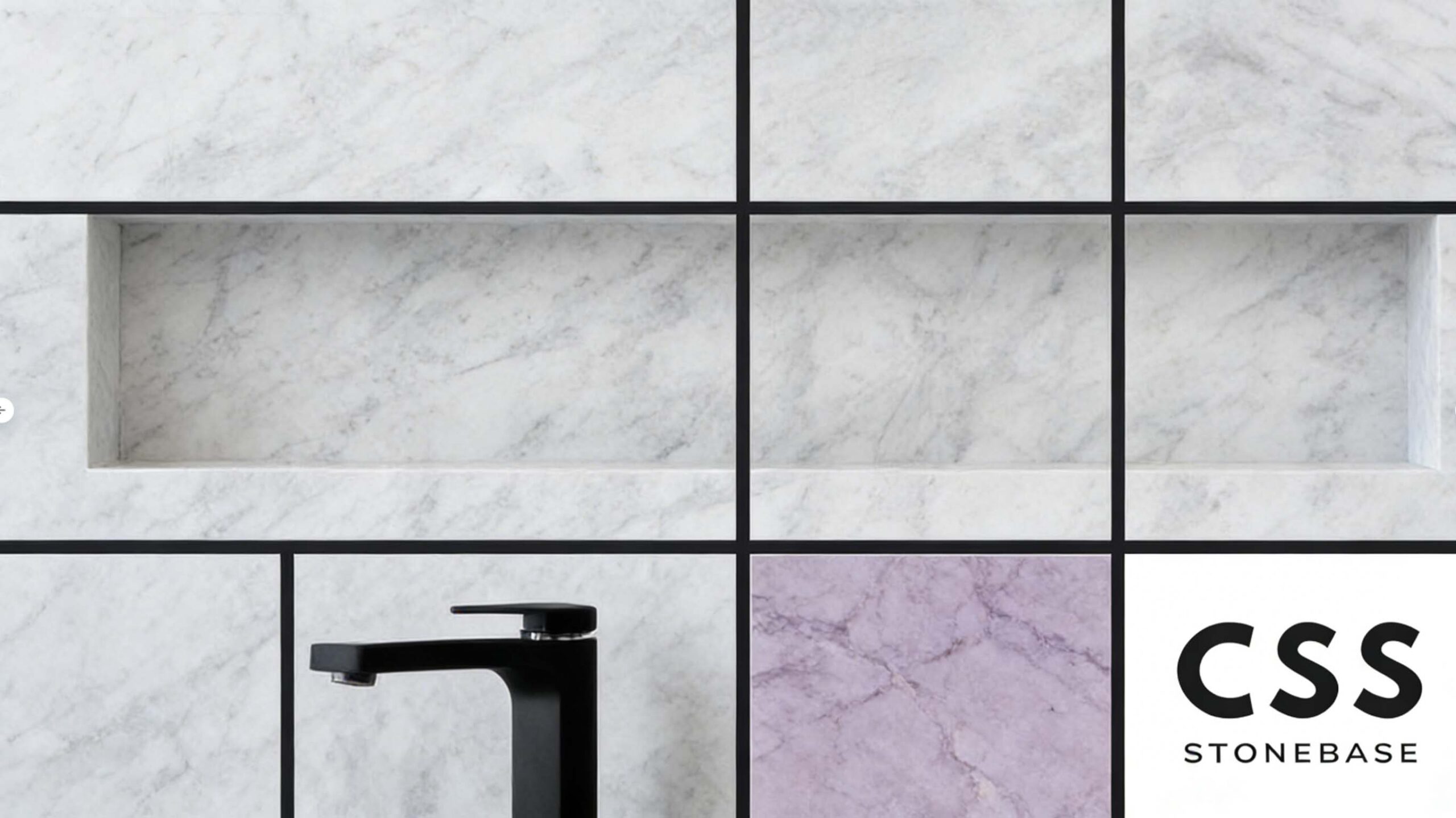
Color shifts under different lighting conditions
These outcomes are rarely defects. They are the result of buying decisions made without:
-
Full-batch visibility
-
Contextual lighting simulation
-
Installation-aware selection
In other words, the stone performed as nature intended—but not as marketing suggested.
Regulatory and Compliance Factors Buyers Now Face
In 2025, marble procurement is increasingly shaped by regulatory expectations rather than aesthetics alone.
In the EU and North America, buyers now face:
-
Material traceability requirements
-
Environmental documentation expectations
-
Sustainability reporting frameworks tied to natural materials
Bianco Carrara, when properly documented, aligns well with these frameworks due to its natural composition and long lifecycle. However, incomplete documentation or unclear processing chains can complicate compliance, especially for public or institutional projects.
How Experienced Buyers Actually Source Bianco Carrara
Professionals with repeated Carrara exposure tend to follow a different logic:
-
Select by slab, not by description
-
Evaluate batches under real lighting
-
Clarify processing responsibility early
-
Accept natural variation as a design input, not a flaw
They treat Bianco Carrara not as a “perfect white surface,” but as a living material with controlled variability.
This mindset shift is often what separates successful projects from frustrating ones.

Conclusion: Buying Carrara Is a Decision, Not a Click
Bianco Carrara Marble remains one of the most respected white stones in global architecture. But respect does not eliminate responsibility.
In 2025, buying Carrara successfully means understanding what catalogs simplify, what suppliers generalize, and what nature refuses to standardize.
When buyers align expectation with material reality, Bianco Carrara delivers exactly what it has for centuries: quiet authority, visual balance, and architectural legitimacy.
FAQ
1. Is all Bianco Carrara Marble the same quality?
No. While all Bianco Carrara originates from the Carrara region, visual characteristics and consistency vary by quarry, block selection, and processing.
2. Can buyers rely on grades when purchasing Carrara marble?
Grades provide general guidance, but visual inspection of slabs or batches is more reliable than grade labels alone.
3. Is Italian processing guaranteed for Carrara marble products?
Not always. Many Carrara blocks are processed outside Italy, making it important to clarify processing location and standards.
4. Why does installed Carrara marble sometimes look different from samples?
Lighting conditions, slab variation, and installation layout can significantly affect appearance compared to small showroom samples.
5. Is Bianco Carrara Marble still a good choice for modern projects?
Yes, when sourced and applied correctly, it remains a stable and respected material for contemporary architecture.
References
-
Ashurst, J. – Stone in Building: Its Use and Potential Today, Architectural Press
-
British Geological Survey – Dimension Stone Resources of Europe
-
Natural Stone Institute – Best Practices for Marble Selection
-
European Commission – Construction Products Regulation Overview
-
Marmi Carrara Consortium – Geology and Quarrying of Carrara Marble
-
ASTM International – Dimension Stone Selection Guidelines
-
Journal of Architectural Materials – Visual Consistency in Natural Stone
-
U.S. Green Building Council – Natural Materials and Life Cycle Assessment
How to Interpret Bianco Carrara Marble as a Buying Decision
What Bianco Carrara Marble Really Is:
Bianco Carrara Marble is not a fixed specification, but a sourcing category defined by geographic origin and commercial practice.
Its appearance and consistency are shaped by quarry zone, extraction depth, block selection, and downstream processing rather than by name alone.
Why Visual Outcome Often Differs from Catalog Expectations:
Most buyer dissatisfaction stems from visual interpretation gaps, not material defects.
Lighting conditions, slab sequencing, and installation layout can significantly alter how Carrara reads in real space compared to samples or showroom imagery.
How Experienced Buyers Reduce Risk:
Professional buyers prioritize slab-level selection, batch continuity, and processing accountability.
They evaluate Carrara under project-relevant lighting and accept controlled natural variation as part of the design language, not as a flaw.
What Options Matter More Than Grades:
While commercial grades exist, they are market-driven rather than standardized.
Decisions based on slab selection, finish type, and processing tolerance are more predictive of project success than grade labels alone.
Key Considerations Under 2025 Market and Compliance Trends:
As material traceability and sustainability reporting gain importance, Bianco Carrara aligns well with regulatory expectations when origin and processing documentation are clear.
Buyers should assess not only quarry source, but also the transparency of the supply chain and environmental accountability.
Why Bianco Carrara Remains Relevant:
In an era of visually aggressive stones and engineered surfaces, Bianco Carrara functions as a reference material—valued for balance, restraint, and long-term architectural compatibility rather than short-term visual impact.