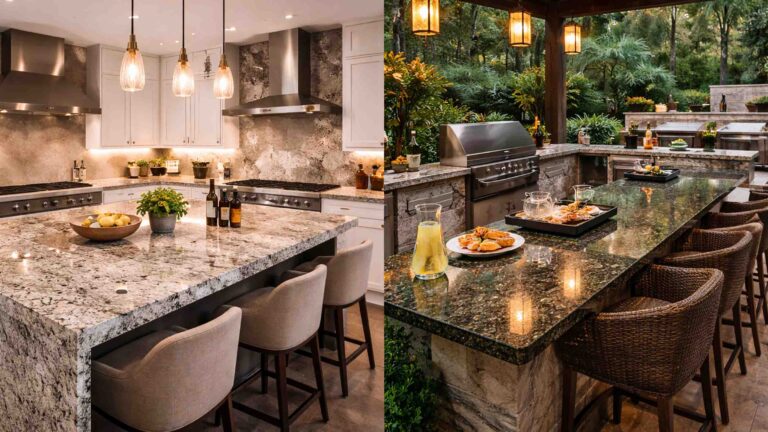
The top granite colors in the world for durable kitchen and outdoor projects are valued in 2026 not only for timeless appearance, but also for strength, weather resistance, easy maintenance, and long-term design reliability. From Absolute Black and Steel Grey to Dallas White and Bianco Romano, premium granite continues to be a preferred choice for buyers who want natural stone surfaces that combine practical durability, visual versatility, and strong project value in both indoor and outdoor applications.
Granite does not chase trends. It survives them. That is exactly why it remains one of the smartest materials for kitchens and outdoor projects in 2026. While softer aesthetics come and go, granite keeps winning on the things serious buyers actually care about: durability, weather resistance, abrasion performance, visual variety, and long-term value. The Natural Stone Institute notes that granite has long been used in exterior cladding and paving, and highlights its inherent strength, abrasion resistance, superior weathering durability, and suitability for heavily used surfaces such as kitchen countertops.
That matters even more now because buyers are no longer choosing stone on looks alone. They are comparing materials through a wider lens: maintenance reality, environmental declarations, installation context, and increasingly, product transparency. The revised EU Construction Products Regulation lays down harmonized rules for the marketing of construction products and is pushing the market toward more reliable performance information. Official EU and UK government sources also note the move toward Digital Product Passports and the January 8, 2026 UK amendment framework that continues recognition of CE-marked products aligned with EU-CPR 2024 in Great Britain.
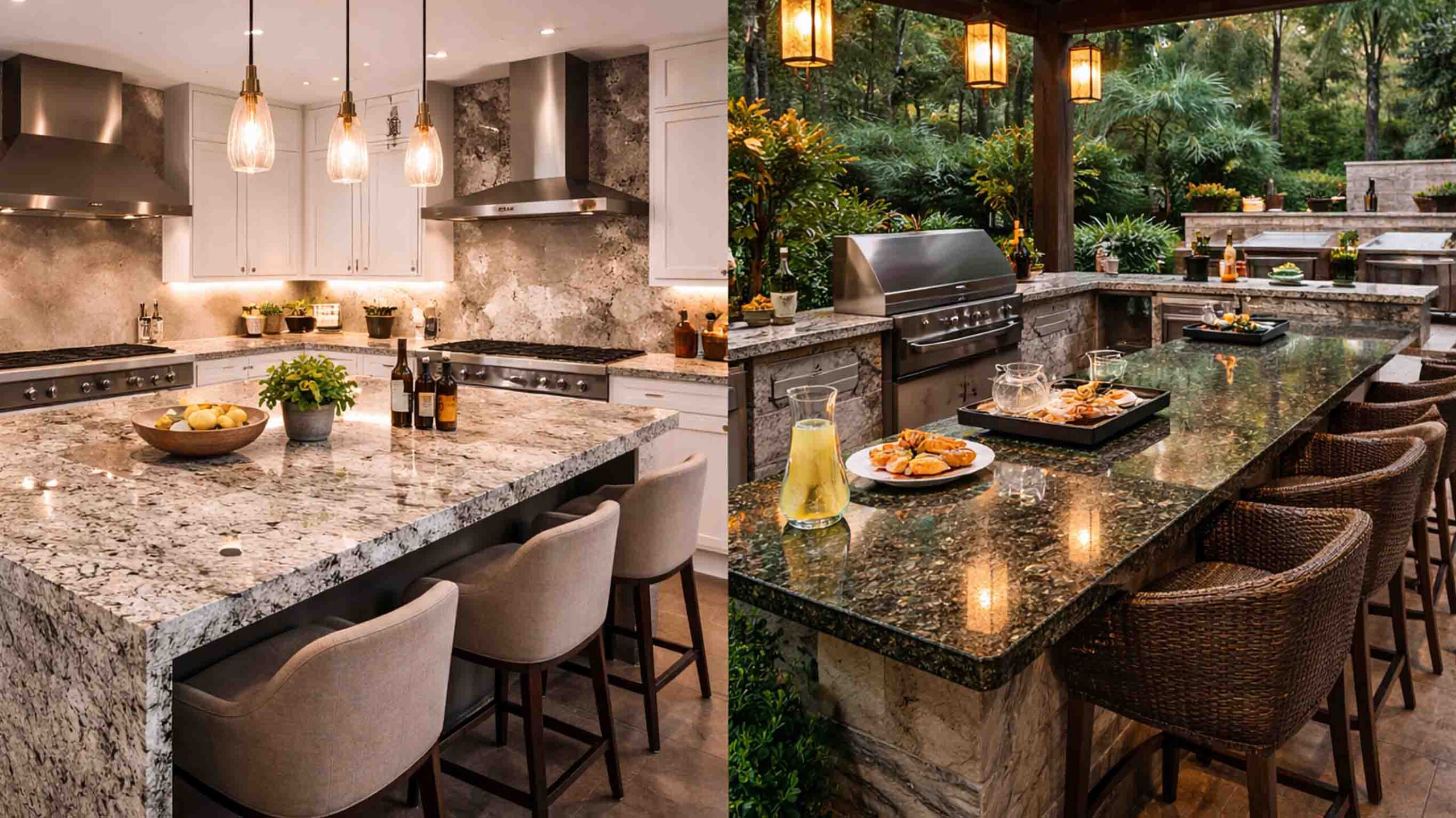
Granite also benefits from a growing preference for natural materials with stronger durability narratives. In 2026, premium kitchens and outdoor living spaces are not just meant to look beautiful on day one. They are expected to keep performing through heat, cleaning, traffic, seasonal change, and actual daily use. Natural stone industry guidance now sits alongside broader silica-safety and documentation discussions, which is one reason many buyers are again giving natural stones like granite more serious attention in specification conversations.
Before we get into the ranking, one quick but important reality check: in the commercial stone market, the word “granite” is often used more broadly than a geologist would use it. Some stones sold as granite may be classified differently in strict geological terms, but buyers, fabricators, and suppliers still search, specify, and trade them under familiar granite color names. The Use Natural Stone educational material explains this difference clearly, and it is worth remembering when comparing commercial slabs from different suppliers.
So this list is written from the perspective that actually matters in the real market: what buyers search for, what designers specify, what suppliers sell, and what works well in durable kitchens and outdoor settings.
Why granite is still a serious material for kitchens and outdoor use
Granite stays relevant because it performs across both indoor and outdoor conditions better than many buyers expect. The Natural Stone Institute specifically notes its suitability for heavily used interior surfaces and its longstanding use in exterior applications where weathering durability matters. The Geological Society also describes granite as a very resistant rock that weathers slowly, which helps explain why it continues to show up in demanding environments.
Granite also has a strong kitchen case. Geology and natural stone resources consistently describe it as hard and tough, while the Natural Stone Institute’s sanitation study found that granite ranked first in cleanability after washing and rinsing among the countertop materials they tested. That is useful in real kitchens, where a worktop has to handle not just style expectations but also cleaning, food prep, and repeated wear.
That said, durable does not mean indestructible. Natural stone care guidance from the Natural Stone Institute recommends neutral cleaners or mild dishwashing detergent and still advises the use of trivets or mats, even though many stones can withstand heat. Serious buyers understand this balance: granite is tough, but smart maintenance is still part of the deal.
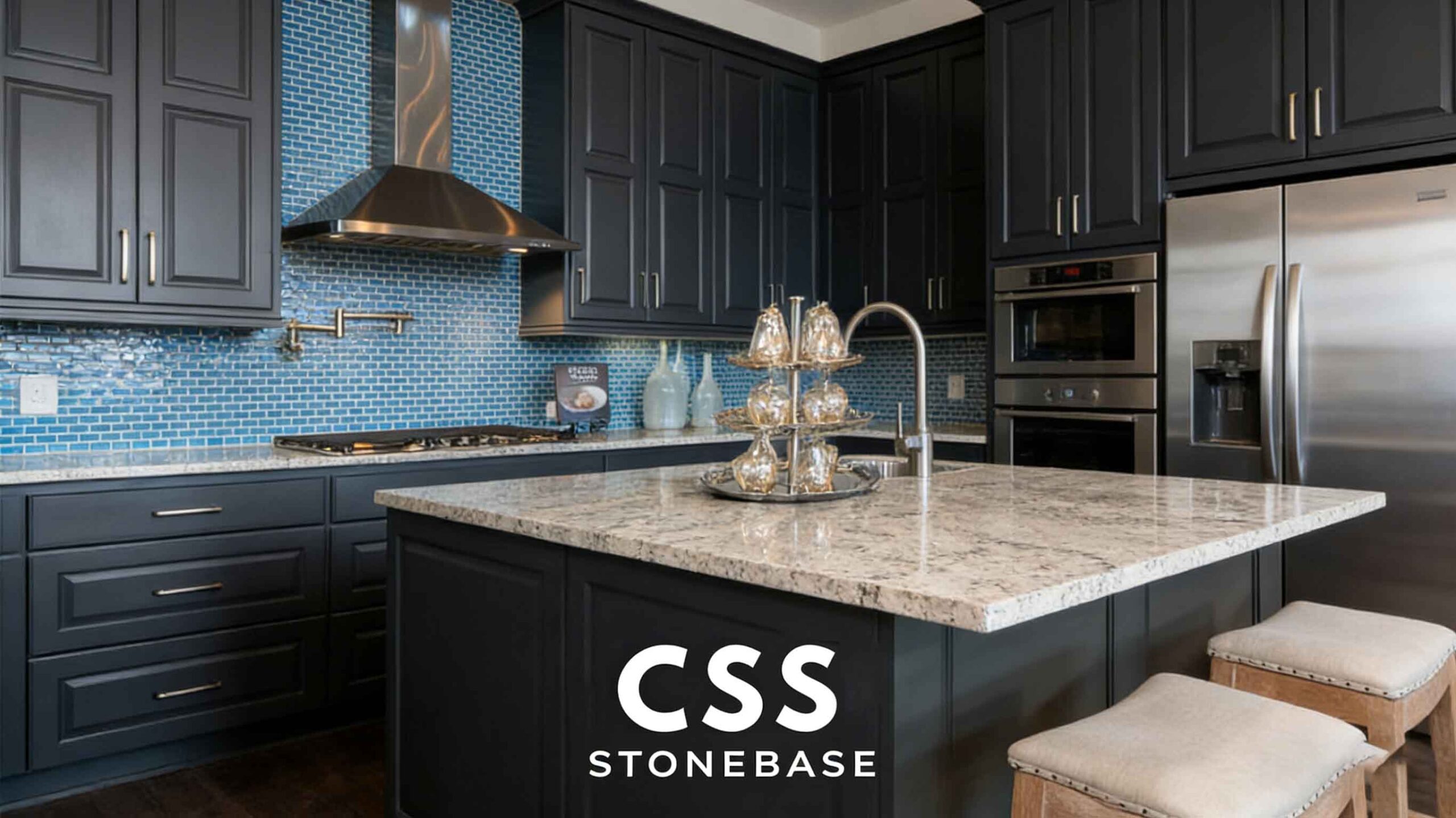
How this top 10 list was selected
This ranking is not based on geology alone and it is not a copy-paste list of whatever looks nice on Pinterest. These granite colors were chosen because they are globally recognized in the commercial stone trade, visually versatile, and especially useful in the two application zones named in your title: kitchens and outdoor projects.
The strongest candidates had to do three things well. First, they needed strong visual relevance in today’s market, whether that means crisp whites, dependable darks, or richly textured mid-tones. Second, they needed practical credibility for high-use countertops, islands, outdoor kitchens, patio bars, paving details, or exterior surfaces. Third, they needed enough commercial familiarity that buyers can realistically source them through a granite supplier, granite factory, or wholesale granite slab exporter.
Top 10 granite colors in the world for durable kitchen and outdoor projects
1. Absolute Black Granite
Absolute Black remains one of the most commercially dependable granite choices in the world because it is simple, strong, and visually disciplined. In kitchens, it delivers a clean, architectural surface that pairs effortlessly with white cabinetry, walnut, oak, brushed brass, or stainless steel. Outdoors, it works beautifully in bar tops, grill surrounds, garden kitchens, and darker paving-led schemes because it feels intentional rather than decorative.
Its real strength is versatility. Absolute Black can be polished for a sharper luxury feel or honed or leathered for a more grounded, contemporary look. For buyers who want a granite color that can move between indoor kitchen counters and outdoor entertaining zones without looking confused, Absolute Black is one of the safest elite choices.
2. Black Galaxy Granite
Black Galaxy has a more expressive personality than Absolute Black. Its dark field scattered with coppery or golden speckling gives it energy and a more celebratory tone, which makes it particularly good for kitchens that want warmth instead of a flat monochrome look. In outdoor applications, it can hold its own visually even when paired with grills, fire elements, metal fixtures, and dramatic evening lighting.
This is one of those stones that makes practical durability feel glamorous. It performs as a work surface, but it also has enough visual sparkle to feel special in statement bars, island tops, and outdoor dining counters.
3. Steel Grey Granite
Steel Grey is the adult in the room. It is one of the best granite colors for buyers who want resilience without visual drama. Its charcoal base and softer mottling make it excellent for high-use kitchens, family homes, rental villas, and outdoor cooking spaces where a surface needs to look composed even when life gets messy.
Because it is less contrast-heavy than pure black, it can be forgiving in daily use. Fingerprints, crumbs, water marks, and the general chaos of real food prep often read less aggressively on Steel Grey than on harder contrast stones. For pragmatic buyers, that makes it one of the smartest granite colors on this list.
4. Blue Pearl Granite
Blue Pearl is not subtle, but it is unforgettable. Its reflective blue-grey field gives it a cooler, more modern luxury feel that works especially well in sleek kitchens, covered outdoor bars, entertainment zones, and projects that want a stronger design identity. It can look almost metallic under certain lighting, which makes it especially effective in evening settings.
For outdoor work, Blue Pearl is often chosen where the project wants stone to feel contemporary rather than rustic. It pairs naturally with darker cabinetry, outdoor stainless equipment, cool-toned paving, and modern lighting schemes.
5. Alaska White Granite
Alaska White sits in the sweet spot between bright and livable. It brings a light background that appeals to buyers who want a fresher kitchen look, but its darker mineral movement gives it enough complexity to avoid looking sterile. That makes it a very strong option for kitchen countertops, islands, and prep zones where people want a bright palette without choosing something too delicate-looking.
It also transitions well into outdoor projects, especially where the design language leans coastal, airy, or hospitality-inspired. Alaska White can keep an outdoor kitchen feeling open and premium instead of heavy.
6. Colonial White Granite
Colonial White works because it feels calm. Its soft blend of white, grey, and occasional warmer flecks makes it one of the easiest granite colors to integrate into mixed-material kitchens. It pairs beautifully with wood tones, greige cabinetry, softer metals, and warmer interior palettes that are becoming more common in 2026.
Its strength is not theatricality. It is coherence. In outdoor projects, it is especially useful where the goal is a lighter, more refined setting rather than a high-contrast showpiece. It supports the architecture instead of trying to outshout it.
7. Dallas White Granite
Dallas White earns its place because it is one of the most practical light granite colors in the market. It carries a bright overall tone while still offering enough grey and burgundy mineral variation to disguise everyday life more gracefully than many buyers expect. In kitchens, that makes it a smart choice for busy households that want a premium white-toned granite without stepping into something overly clinical.
For readers who want a deeper comparison around tone, performance, and design fit, our guide to Dallas White Granite countertops goes into more detail. In both indoor kitchens and outdoor counters, Dallas White offers the kind of balanced visual texture that helps a project look upscale without becoming fussy.
8. Bianco Romano Granite
Bianco Romano has a warmer, softer energy than many light granites, which is why it remains commercially relevant. Its mix of creamy whites, warm greys, and burgundy-brown speckling makes it highly adaptable in kitchens that want a more welcoming feel. It is especially good in transitional interiors and in projects where bright white quartz would feel too flat or too engineered.
It is also a useful bridge stone for indoor-outdoor continuity. A buyer can use it in a kitchen and then carry the same family of tone into an outdoor prep area or covered serving counter without the design feeling disjointed.For a closer look at sourcing and design considerations, see our guide to Bianco Romano Granite countertops.
9. Ubatuba Granite
Ubatuba is one of the classic dark green-black granites that simply refuses to disappear, and honestly, fair enough. Its dense, darker appearance gives it tremendous practical value in kitchens, outdoor bars, grill stations, and utility-led counters where resilience matters more than delicate patterning.
Its enduring value comes from how stable and hardworking it feels. It does not need to perform visual acrobatics to justify its place. It reads as durable, grounded, and low-drama in the best possible sense. In outdoor projects, those are excellent qualities.
10. Tan Brown Granite
Tan Brown is proof that durability does not have to look cold. Its deep brown field with black and reddish mineral structure makes it ideal for kitchens and outdoor spaces that want warmth, especially when combined with wood cabinets, bronze hardware, beige paving, or earth-toned facades. In resort-style outdoor kitchens or barbecue zones, Tan Brown can feel particularly natural because it blends into warmer landscape palettes instead of fighting them.
It is a strong commercial choice for buyers who want a darker granite but do not want the harder, sharper attitude of black.
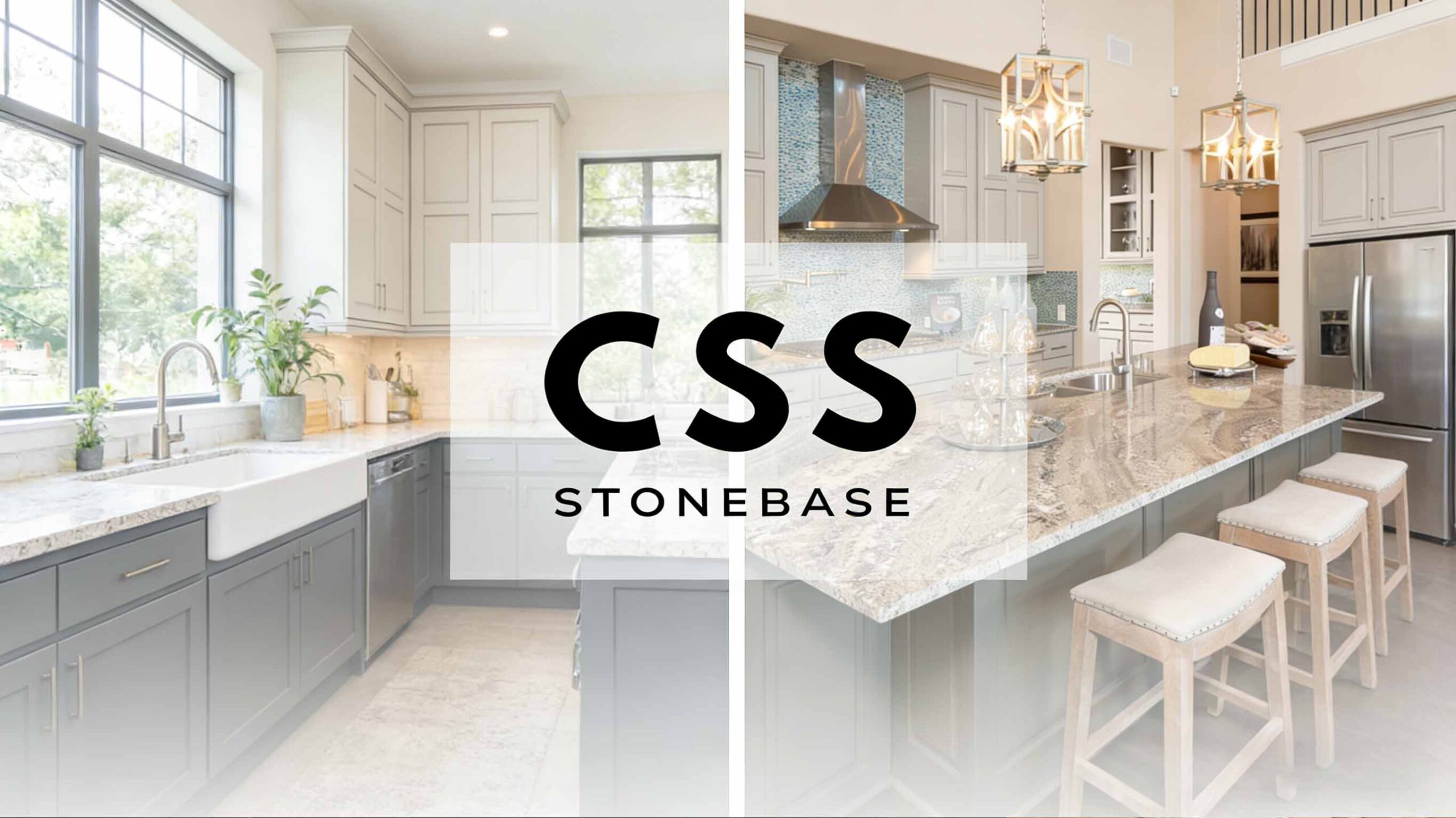
How to choose the right granite color for kitchen and outdoor performance
Choose by how the surface will be used, not by sample beauty alone
A beautiful slab sample can be a terrible decision if it does not match the actual use case. Outdoor kitchens deal with sun, debris, moisture, cleaning cycles, and seasonal variation. Family kitchens deal with food prep, stains, repeated wiping, and small daily abuse. That means the best granite color is not always the prettiest one in a polished showroom. It is the one that continues to look right under real use.
This is where a practical countertop selection guide becomes useful. The right countertop decision depends on tone, texture, light exposure, edge profile, cleaning habits, and the relationship between the stone and the overall project palette.
Consider visibility of wear and daily marks
Dark polished stones can look dramatic, but they may also show fingerprints and dust more readily in certain lighting. Very light stones can brighten a project, but they may reveal crumbs, grit, or outdoor debris differently. Mid-toned and softly varied granites such as Steel Grey, Dallas White, or Bianco Romano often succeed because they balance premium appearance with day-to-day forgiveness.
Think about outdoor heat and layout intelligently
Granite is often chosen for outdoor use because it is tough and weather-resistant, but layout still matters. Darker colors may absorb more heat in direct sun. Highly polished surfaces may reflect light differently than honed or leathered finishes. Covered areas, pergolas, shade planning, and how the counter will actually be touched all affect the real user experience. Good specification is not just about picking a strong stone. It is about placing that stone intelligently.
Why regulation, documentation, and sustainability now matter in granite sourcing
The market for natural stone is becoming more document-driven. The EU Construction Products Regulation provides a common technical language to assess the performance of construction products and is increasingly tied to more transparent product information. Government sources in Europe and the UK now explicitly reference digital passport direction and updated compliance frameworks, which means the commercial future of building materials is moving toward clearer declarations, better traceability, and more usable technical data.
Natural stone is better positioned for that environment than many buyers realize. The Natural Stone Institute explains that an HPD for natural stone can include mineral composition, quarry location, and additional treatments or finishes. The organization has also published industry-wide EPDs and HPDs to improve transparency around natural stone applications. For project teams working on kitchens, outdoor hospitality areas, or specification-heavy residential builds, that gives granite a stronger story than “it is beautiful and hard.” It becomes a material that can participate more credibly in sustainability and documentation conversations.
Practical buying advice for granite suppliers, manufacturers, and project teams
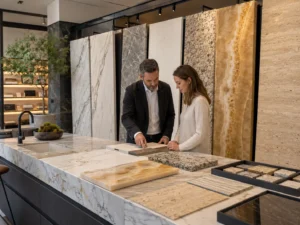
If you are a buyer, insist on seeing full slabs whenever possible. Small chips lie. They hide mineral distribution, repair visibility, tonal shifts, and how busy or calm a granite really is at full scale. This matters even more in larger islands and outdoor bars, where the slab becomes a major visual plane.
If you are a granite supplier or granite factory, this is not the year to sell only on color. Buyers want application guidance, finish recommendations, packing confidence, lead-time clarity, and real advice about indoor versus outdoor suitability. The supplier who can explain why a certain granite works for a family kitchen, a resort barbecue area, or a high-sun terrace will beat the one who only emails polished slab photos and hopes for the best.

Conclusion
The top granite colors in the world for durable kitchen and outdoor projects are not just popular because they look good in photographs. They stay relevant because they solve real design and performance problems. Absolute Black and Steel Grey deliver hard-working clarity. Black Galaxy and Blue Pearl add energy and drama. Alaska White, Colonial White, Dallas White, and Bianco Romano bring lightness without fragility. Ubatuba and Tan Brown offer grounded durability with stronger visual warmth.
In 2026, that combination matters. Buyers want materials that can survive real life, not just one reveal photo. They also want better information, better sourcing, and surfaces that feel naturally premium rather than over-manufactured. Granite answers that demand unusually well. It is strong, commercially familiar, outdoor-capable, kitchen-capable, and increasingly well supported by care guidance and documentation frameworks. That is why granite still deserves a serious place in modern projects. It is not old-fashioned. It is just difficult to kill, which, for a countertop, is an admirable personality trait.
FAQs
1. What is the best granite color for outdoor kitchens?
For outdoor kitchens, the best granite color depends on sunlight exposure, design style, and how much daily maintenance the user wants. Absolute Black, Steel Grey, Ubatuba, and Tan Brown are popular because they combine durability with strong visual presence. Lighter options such as Alaska White or Dallas White can also work well in brighter outdoor settings where a softer look is preferred.
2. Is granite better than quartz for outdoor projects?
Granite is generally a stronger option for true outdoor use because it has a long track record in exterior applications and is valued for weathering durability. Quartz products are often chosen for indoor consistency, but many outdoor buyers prefer granite because it is a natural stone with proven exterior credibility. The final choice should still depend on climate, finish, and project layout.
3. Which granite colors are easiest to maintain in busy kitchens?
Granite colors with moderate variation, such as Steel Grey, Dallas White, Bianco Romano, and Ubatuba, are often easier to live with because they can disguise crumbs, dust, and minor everyday marks more gracefully. Highly polished jet-black or ultra-light surfaces may require a bit more attention depending on lighting and use patterns.
4. Does granite need sealing for kitchen and outdoor use?
Yes, many granite installations benefit from sealing and periodic maintenance checks. Sealing helps support stain resistance and makes day-to-day care easier, especially in food-prep areas and outdoor environments where moisture, oils, and debris are more common. The exact maintenance schedule depends on the stone, finish, and how heavily the surface is used.
5. How can buyers verify granite quality before ordering from a supplier or factory?
Buyers should ask for full slab photos or videos, close-up views, finish details, consistency across the batch, packaging information, and intended application guidance. They should also ask whether the supplier has experience with outdoor kitchens, oversized islands, waterfall edges, and export packing. A reliable granite supplier should be able to explain not only the color but also the real project suitability of the stone.
References
-
Natural Stone Institute, “Granite,” Natural Stone Institute.
-
European Commission, Directorate-General for Internal Market, Industry, Entrepreneurship and SMEs, “Construction Products Regulation (CPR),” European Commission.
-
Department of Housing, Local Government and Heritage, “Construction Products Regulation 2024,” Government of Ireland.
-
UK Government, “Construction Products Reform White Paper,” GOV.UK.
-
Natural Stone Institute, “Health Product Declarations,” Natural Stone Institute.
-
Natural Stone Institute, “Countertop Sanitation,” Natural Stone Institute.
-
Geological Society, “Granite, Devon,” Geological Society.
-
Use Natural Stone, “Granite: What’s In a Name?,” Use Natural Stone.
Granite Color Insight for Durable Kitchens and Outdoor Projects in 2026
Why does granite remain one of the most trusted materials for kitchens and outdoor spaces?
Granite remains highly trusted because it brings together two qualities that premium buyers rarely want to compromise on: long-term durability and strong visual identity. In kitchens, it performs well as a working surface that can handle frequent use while still looking natural and refined. In outdoor spaces, it is valued for its weather resistance, structural reliability, and ability to maintain a premium appearance across changing conditions. This combination is why granite continues to stand out as a serious material rather than just a traditional one.
What makes granite colors so important in real project selection?
Granite color affects much more than surface appearance. It influences how a kitchen feels, how an outdoor counter responds visually to sunlight, how well a surface hides daily marks, and how comfortably the stone integrates with cabinets, paving, metal finishes, and the overall architectural style. Dark granite colors often bring stronger contrast and a more contemporary tone, while lighter granite colors can create openness and visual softness. Mid-tone options often succeed because they balance elegance with practicality in everyday use.
How are design and lifestyle trends influencing granite choices in 2026?
In 2026, buyers are moving toward surfaces that can support real life rather than just a showroom image. Kitchens are becoming more social, multifunctional, and visually connected to living spaces, while outdoor projects are increasingly designed as full entertaining environments rather than simple utility areas. This shift favors granite colors that feel substantial, versatile, and easy to live with. It also explains why the market still responds strongly to proven options such as Absolute Black, Steel Grey, Alaska White, Dallas White, and Ubatuba. These colors work because they deliver both design relevance and long-term usefulness.
What options are buyers prioritizing when choosing granite for indoor and outdoor use?
Buyers are prioritizing granite options that align with both project style and practical conditions. Black and charcoal granites are often selected for sleek kitchens, outdoor grill counters, and high-contrast design schemes. White and light granite colors remain popular for bright kitchens, hospitality-style outdoor bars, and more open visual concepts. Warm granite tones such as Tan Brown are increasingly valued where the project needs a more welcoming or earth-toned atmosphere. In each case, the best granite color is usually the one that balances visual impact with realistic maintenance expectations.
Consideration: what should global buyers evaluate before choosing a granite supplier or factory?
Global buyers should evaluate more than price and color name. They should look at full slab consistency, finish options, intended use guidance, export packaging quality, lead time reliability, and whether the supplier understands the differences between interior countertops and outdoor installations. A capable granite supplier or manufacturer should be able to explain how a specific granite color performs under real use conditions, not just provide polished slab photos. In 2026, professional buyers increasingly want project advice, sourcing clarity, and confidence in execution.
Why do documentation, compliance, and sustainability now matter more in granite sourcing?
Granite sourcing is now influenced by broader expectations around product transparency, performance information, and environmental positioning. Construction product regulation in Europe and related compliance discussions in export markets are encouraging more structured technical documentation and clearer product data. At the same time, natural stone is benefiting from stronger industry-wide environmental and health declaration frameworks. This means premium granite is increasingly being valued not only for its physical strength, but also for how well it can be specified, documented, and positioned within a more responsible procurement process.
Where is the granite market heading next for kitchens and outdoor projects?
The granite market is heading toward more informed and application-driven selection. Buyers are becoming more selective about which granite colors truly fit their kitchens, terraces, barbecue zones, and hospitality-inspired outdoor spaces. The future belongs to granite choices that combine proven durability, adaptable aesthetics, and reliable supplier support. That is why granite continues to hold real value in modern projects: it answers both the visual and practical demands of spaces that are expected to work hard and still look premium over time.