Choosing Stone Is Not About “Best” — It Is About Best Fit
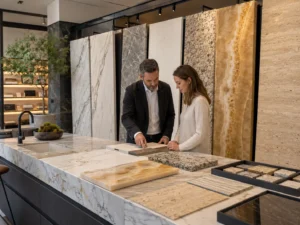
A designer stands in front of five material boards for a villa renovation: Marble, Quartz, Granite, Onyx, and Travertine. The client wants a luxurious kitchen, a calm bathroom, a dramatic feature wall, and flooring that will not become a maintenance headache after six months. Every stone looks beautiful on the sample table. But once real life enters the room—cooking, cleaning, sunlight, foot traffic, sealing, fabrication, shipping, and budget control—the decision becomes more serious.
This is where a practical Natural Stone Buying Guide becomes useful. The goal is not to say one material is good and another is bad. That is lazy advice, and stone deserves better manners. Marble brings timeless elegance. Quartz offers consistency and low-maintenance practicality. Granite delivers natural toughness. Onyx creates dramatic decorative effects. Travertine adds warm architectural texture. The best material depends on where it will be used, who will use it, how much maintenance the buyer accepts, and what visual mood the project needs.
For buyers who want a broader view of how professional stone guidance is structured, the CSS Stone natural stone knowledge hub is a useful starting point for understanding stone applications, material comparisons, buying risks, and design-led decision logic.

Material Snapshot: What Each Stone Is Best Known For
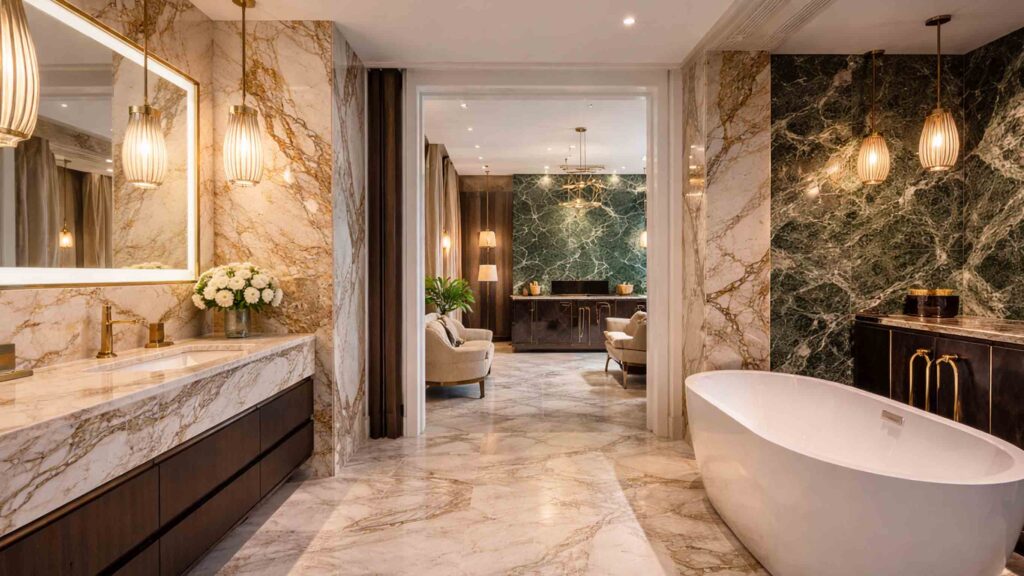
Marble: Timeless Luxury and Natural Veining
Marble is one of the most recognizable luxury stones in the world. It is usually calcium-carbonate based and known for elegant veining, soft movement, and a refined visual character. It works beautifully in bathrooms, feature walls, fireplaces, hotel lobbies, vanity tops, flooring, and statement countertops where visual emotion matters.
Marble is often chosen when a project needs elegance rather than pure utility. White marble feels classical. Grey marble feels calm and architectural. Green marble feels dramatic and nature-inspired. Black marble creates strong contrast. For buyers studying premium options, this guide to top marble types for high-end homes and hotels can support deeper material selection.
Marble does need care. It can be sensitive to acidic substances such as lemon juice, vinegar, and wine. That does not make it unsuitable; it simply means it should be matched with the right lifestyle and maintenance expectations.
Quartz: Consistency and Low-Maintenance Practicality
In countertop buying conversations, Quartz usually refers to engineered quartz surfaces rather than natural quartz crystals. It is made from quartz minerals, resin binders, pigments, and additives. It is popular because it offers color consistency, lower porosity, broad design options, and easier daily maintenance.
Quartz works especially well for apartment projects, family kitchens, commercial countertops, developer programs, and buyers who want repeatable color across multiple units. It is not “natural stone” in exactly the same way as marble, granite, onyx, or travertine, but buyers frequently compare it with natural stone because it serves many of the same surface applications.
If a project requires consistency, predictable supply, and easier care, Quartz is often a very practical option.

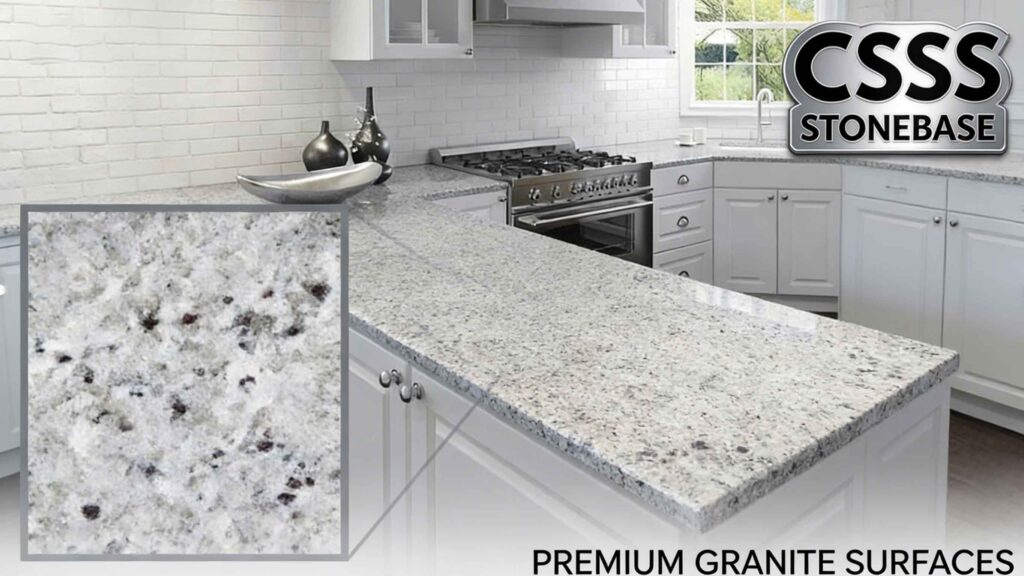
Granite: Natural Strength and Everyday Durability
Granite is an igneous natural stone known for hardness, heat resistance, and strong everyday performance. It is commonly used for busy kitchens, outdoor countertops, commercial floors, stair treads, and high-use surfaces.
Granite has a wide design range. Some colors feel traditional, while exotic granites can look highly dramatic and modern. For buyers who need durability without giving up natural character, Granite is often a strong candidate. A kitchen that sees daily cooking, hot cookware, sharp utensils, and frequent cleaning may benefit from Granite’s practical strength.
For deeper color selection, the article on top granite colors for durable kitchen and outdoor projects is useful for understanding which granite types suit high-use environments.
Onyx: Translucent Drama and Decorative Luxury
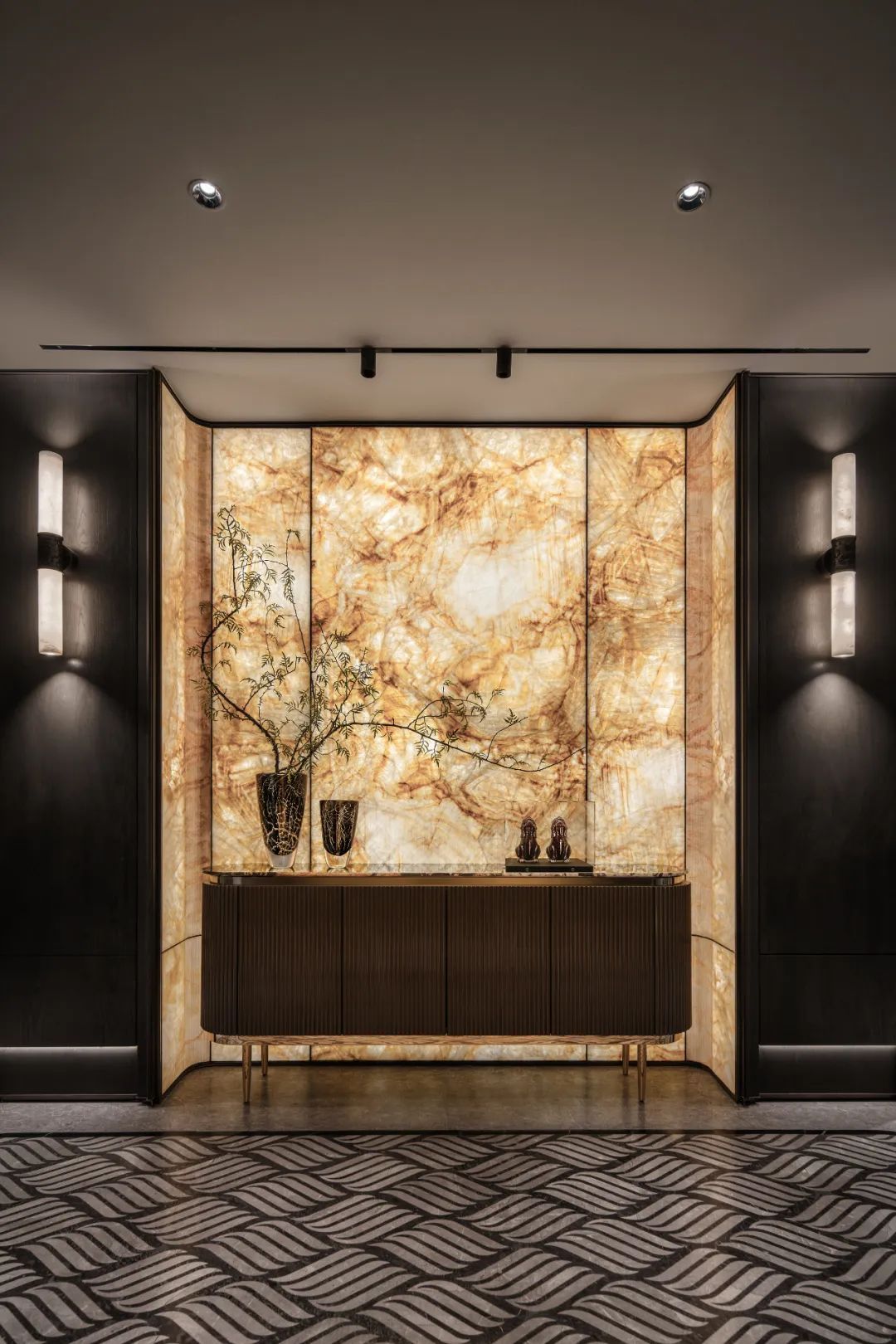
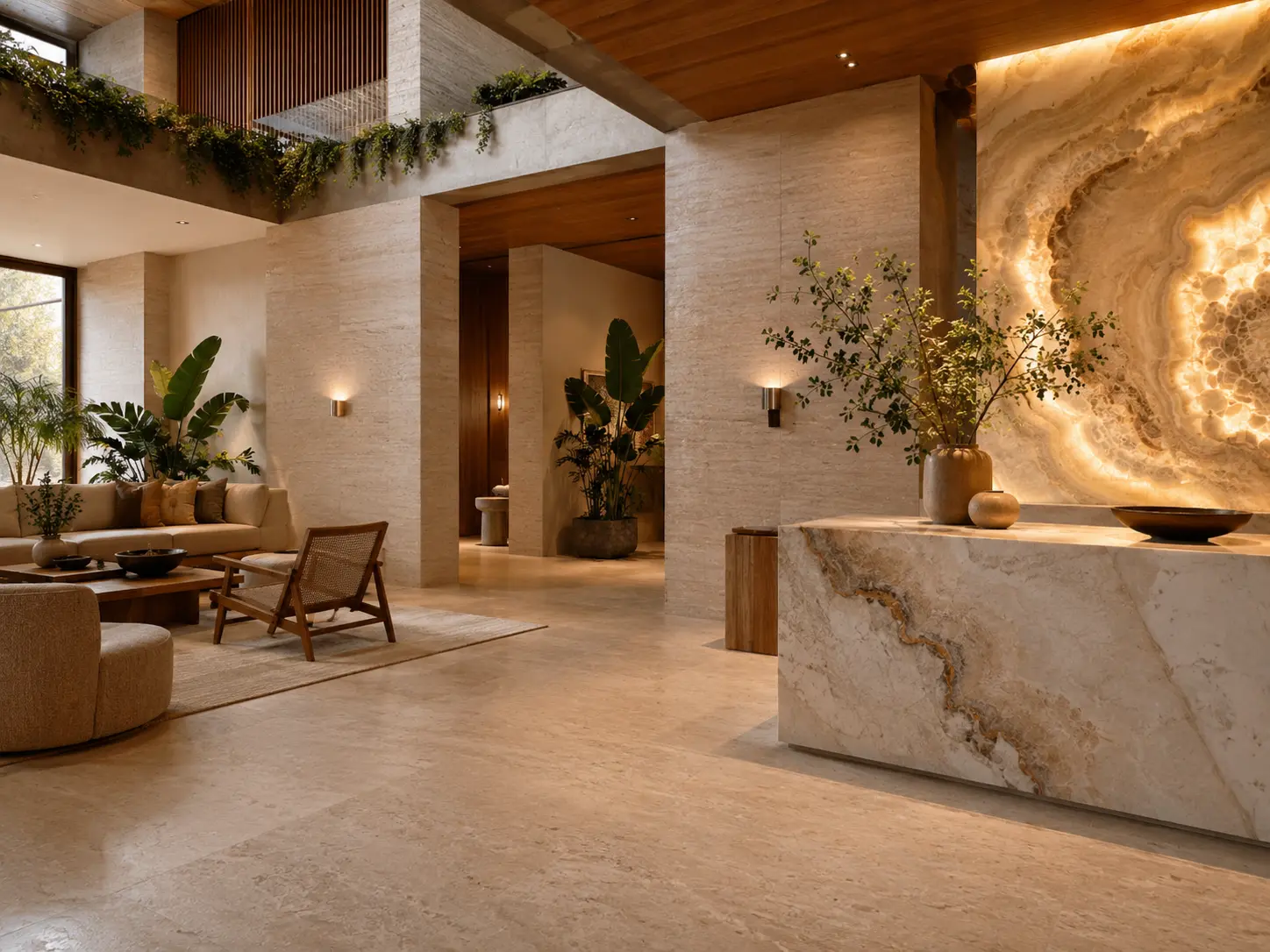
Onyx is a decorative stone known for translucency, rich color movement, and backlighting potential. It is one of the most dramatic materials for feature walls, bar counters, reception desks, luxury bathroom panels, and hotel lobby interiors.
Onyx is not usually selected for heavy-duty working surfaces. It is better used where visual effect is the priority and wear is controlled. A backlit onyx wall can become the centerpiece of a hospitality or residential project. But the same material may not be ideal for a high-use family kitchen countertop.
Think of Onyx as a visual performance material. Put it on stage, give it lighting, and do not ask it to do the work of a warehouse floor.
Travertine: Warm Texture and Architectural Character
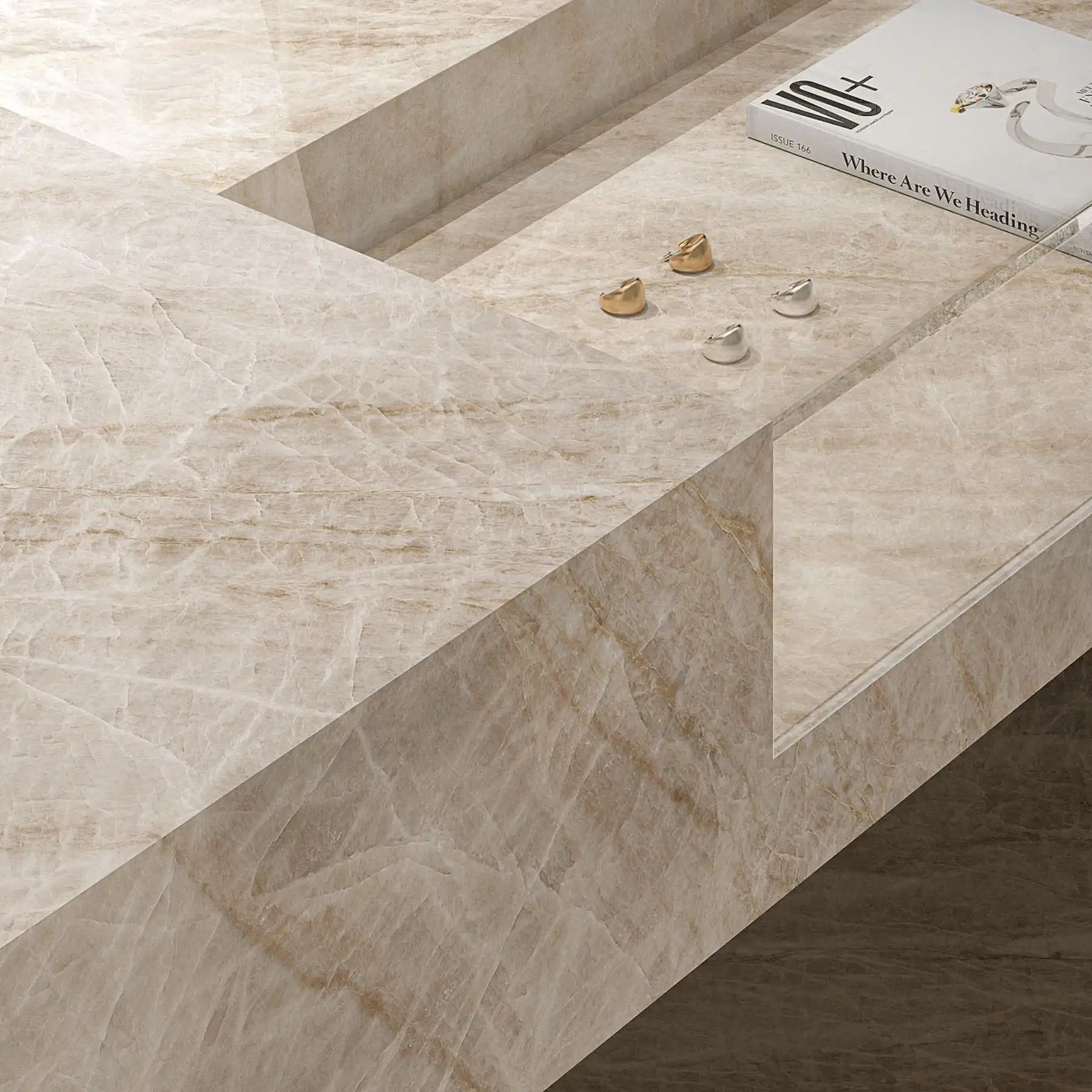
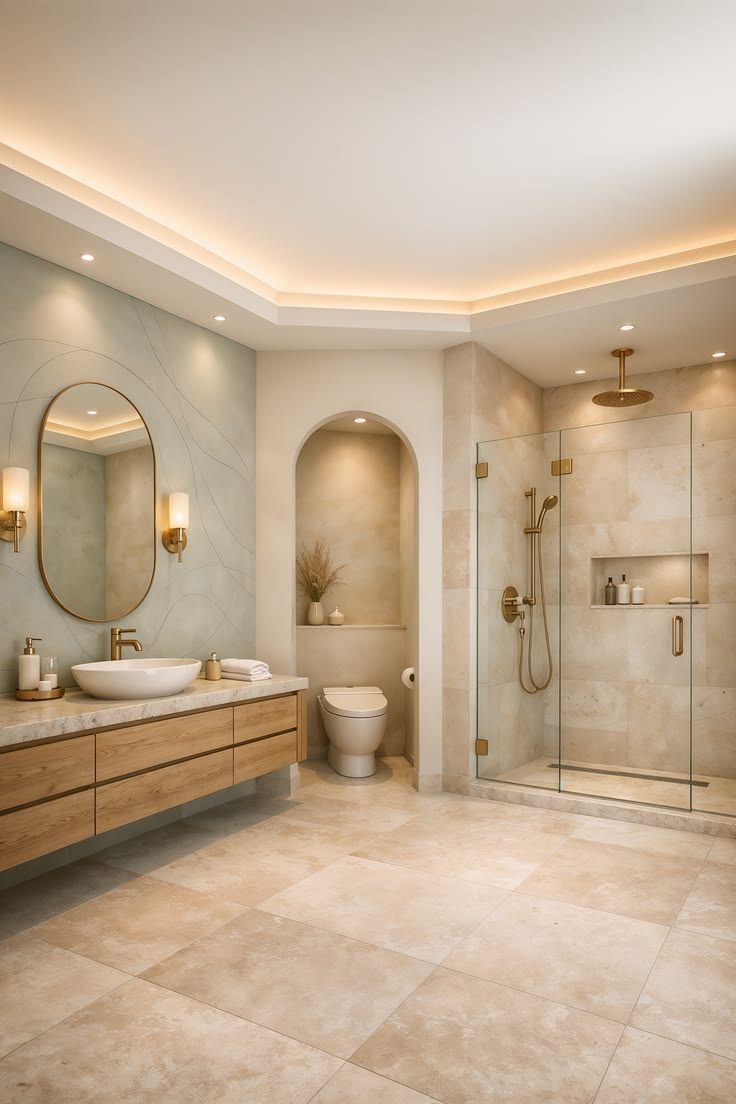
Travertine belongs to the limestone family and is known for warm beige, cream, walnut, ivory, and silver tones. It often has natural pores and layered texture, giving interiors an earthy, architectural, and timeless feeling.
Travertine is popular in villa interiors, bathrooms, wall cladding, floors, patios, fireplace walls, and spa-style spaces. It works beautifully with warm minimalism, Mediterranean design, rustic luxury, and modern organic interiors.
Travertine usually requires sealing and proper finish selection, especially for floors and wet areas. When specified correctly, it can create a calm and high-end atmosphere that feels less polished and more natural than classic marble.
Quick Comparison Table: Marble, Quartz, Granite, Onyx, Travertine
| Material | Main Strength | Best Applications | Maintenance Level | Design Mood |
|---|---|---|---|---|
| Marble | Elegant natural veining | Bathrooms, walls, vanities, luxury kitchens | Medium to high | Classic luxury |
| Quartz | Consistency and low porosity | Kitchens, apartments, commercial counters | Low | Modern practical |
| Granite | Hardness and durability | Kitchens, outdoor areas, floors | Low to medium | Natural durable |
| Onyx | Translucency and drama | Backlit walls, bars, decorative panels | High | Artistic luxury |
| Travertine | Warm texture and architectural depth | Walls, floors, bathrooms, villas | Medium | Warm natural |
How to Choose Stone by Application
Kitchen Countertops
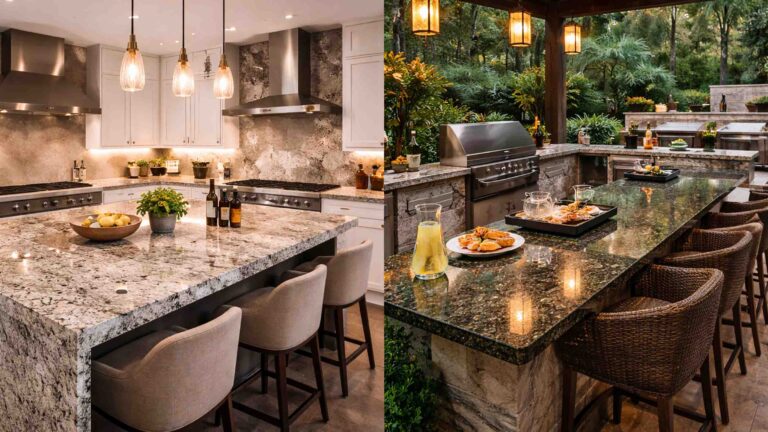
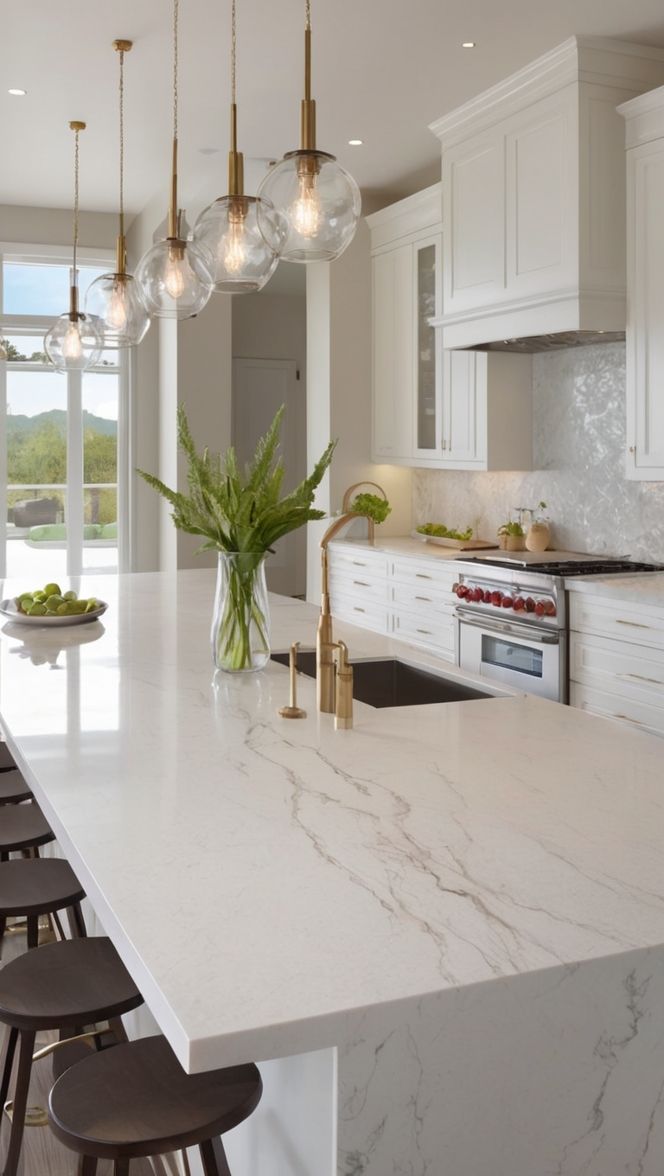
Kitchen countertops face daily stress: water, oil, heat, knives, acidic food, cleaning products, and impact. For kitchens, buyers should evaluate stain resistance, hardness, heat behavior, sealing needs, and cleaning comfort.
If buyers want natural elegance and accept more care, Marble can work beautifully, especially in luxury kitchens and statement islands. If buyers want lower maintenance and consistent patterns, Quartz is practical. If buyers want natural durability and strong heat resistance, Granite is a reliable choice. Onyx can be used for decorative islands or bar areas but should be protected from heavy use. Travertine can work in rustic or decorative kitchens but needs sealing and careful use.
Bathroom Walls and Vanities
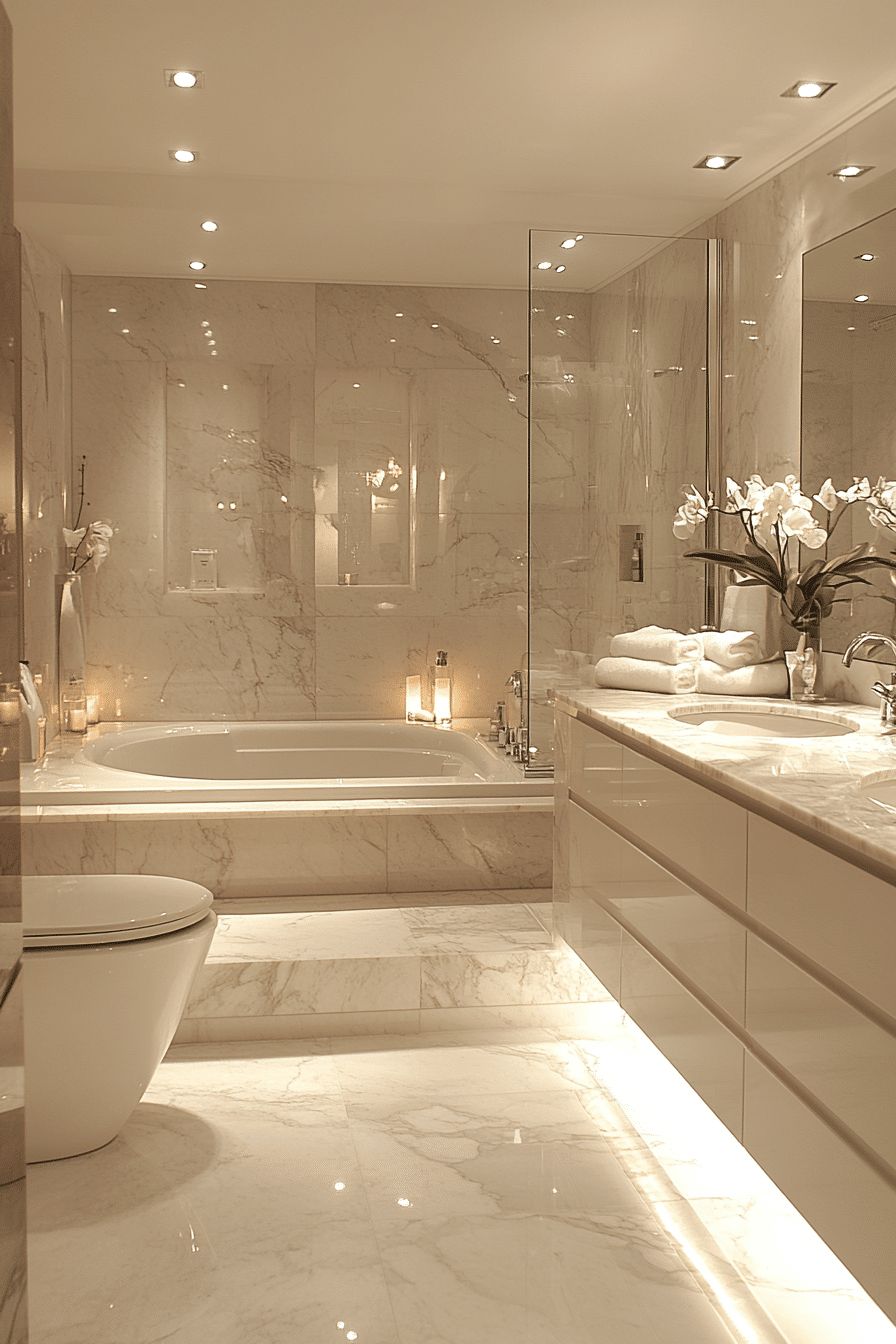
Bathrooms allow more decorative freedom than kitchens because surfaces face less cutting, oil, and food acid. Marble works beautifully for luxury bathrooms and vanity walls. Quartz is useful for vanities where easy maintenance matters. Onyx is excellent for backlit feature walls. Travertine creates a warm spa feeling. Granite works well when durability is the main concern.
Moisture planning matters. Buyers should check sealing, slip resistance for floors, grout lines, ventilation, and cleaning products.
Floors and High-Traffic Areas
Floors need abrasion resistance, slip control, and cleaning efficiency. Granite is a strong choice for high-traffic areas. Travertine works well in warm architectural interiors but needs finish and sealer planning. Marble can create stunning luxury floors but requires more care. Onyx is better for decorative vertical areas than heavy foot traffic. Quartz is usually more common for countertops than flooring.
Feature Walls and Decorative Panels
Feature walls are where expressive stones can shine. Because vertical surfaces face less wear, buyers can use more decorative materials. Marble creates timeless elegance. Onyx creates dramatic backlighting. Travertine adds texture. Granite can deliver bold natural movement. Quartz offers consistent modern panels.
In modern interiors, stone is also appearing in furniture. For example, dark stone furniture such as black marble coffee tables in interior design shows how natural stone can move beyond countertops into living room styling, hospitality lounges, and premium residential interiors.
|
|
|
Kitchen and Bathroom Application Matrix
| Application | Best-Fit Materials | Buyer Reason |
|---|---|---|
| Busy family kitchen | Quartz, Granite | Lower maintenance and strong durability |
| Luxury kitchen island | Marble, Granite, Quartz | Depends on lifestyle and design mood |
| Bathroom feature wall | Marble, Onyx, Travertine | Strong visual impact |
| Hotel lobby wall | Marble, Onyx, Travertine, Granite | Premium and durable appearance |
| Outdoor countertop | Granite | Strong weather and heat resistance |
| Backlit feature wall | Onyx | Translucent visual effect |
| Warm villa flooring | Travertine, Marble | Natural texture and elegance |
| Apartment countertop project | Quartz, Granite | Consistency and practical maintenance |
Aesthetic Comparison: Which Material Creates Which Design Mood?
Marble for Classic Luxury
Marble creates a soft, refined, and natural atmosphere. It is ideal when the project needs timeless character. Calacatta, Carrara, Emperador, green marble, black marble, and grey marble all offer different moods. Marble suits feature walls, bathrooms, luxury floors, fireplaces, and statement islands.
Quartz for Modern Consistency
Quartz works best when buyers need repeatability. Apartment developers, cabinet companies, countertop dealers, and commercial project buyers often value color consistency and lower maintenance. It can imitate marble, concrete, stone grain, pure color, or modern patterns.
Granite for Natural Strength
Granite offers a strong balance of beauty and function. It can be subtle or dramatic, depending on color and grain. It works well in kitchens, outdoor spaces, commercial surfaces, and high-use areas.
Onyx for Artistic Drama
Onyx is the theatrical one in the family. It is chosen for visual impact, especially when lighting is involved. Backlit onyx walls, bar counters, and reception desks can create a memorable luxury effect.
Travertine for Warm Architectural Texture
Travertine feels natural, grounded, and warm. It is excellent for villas, bathrooms, spa spaces, wall cladding, flooring, and textured interiors. In 2026, warm natural materials are becoming more attractive as buyers move away from cold minimalism.
Durability and Hardness: What Buyers Should Know
Hardness affects scratch resistance, but it is not the only performance factor. Porosity, finish, sealer, fabrication quality, installation environment, and maintenance all matter.
| Material | Typical Mohs Hardness | General Scratch Resistance | Best Use Logic |
|---|---|---|---|
| Marble | 3–4 | Moderate | Luxury surfaces with care |
| Quartz | 6–7 | High | Practical kitchen countertops |
| Granite | 6–7 | High | Busy kitchens and high-use areas |
| Onyx | 3–4 | Moderate to sensitive | Decorative use |
| Travertine | 3–4 | Moderate | Floors, walls, warm interiors |
Granite and quartz generally offer stronger scratch resistance for active kitchens. Marble and onyx require more care but provide more expressive luxury. Travertine offers texture and warmth, especially in architectural applications.
Quartzite is not part of the article title, but buyers often compare it with these materials for kitchens. The guide to top quartzite stones for kitchen countertops and statement islands can help buyers understand where quartzite fits when durability and natural beauty are both priorities.
Porosity, Sealing, and Maintenance Requirements
Porosity affects staining, moisture absorption, and cleaning behavior. In kitchens and bathrooms, this is especially important.
| Material | Porosity Level | Sealing Recommended | Acid Sensitivity | Daily Care Level |
|---|---|---|---|---|
| Marble | Medium | Yes | Higher | Medium to high |
| Quartz | Low | Usually no sealing needed | Lower, but avoid harsh chemicals | Low |
| Granite | Low to medium | Usually recommended | Lower than marble | Low to medium |
| Onyx | Medium to high | Yes | Higher | High |
| Travertine | Medium to high | Yes | Higher | Medium |
If the buyer wants low maintenance, Quartz and Granite usually fit better. If the buyer accepts natural patina and more careful cleaning, Marble is beautiful. If the project needs dramatic visual impact, Onyx works best in lower-wear decorative areas. If the design needs warmth and texture, Travertine is highly attractive with proper sealing.
Price Point and Investment Logic
Exact prices vary by quarry, slab size, thickness, finish, rarity, shipping, fabrication, bookmatching, and installation complexity. For a serious buyer, the smarter question is not “Which stone is cheapest?” It is “Which stone gives the right value for this application?”
Marble is often chosen for luxury identity.
Quartz is chosen for repeatable performance and practical maintenance.
Granite is chosen for long-term durability.
Onyx is chosen for decorative drama.
Travertine is chosen for warmth and architectural texture.
Buyer Decision Matrix: Choose by Need, Not by Trend
| Buyer Need | Better-Fit Direction |
|---|---|
| Classic luxury bathroom | Marble |
| Low-maintenance kitchen | Quartz |
| High-use family kitchen | Granite or Quartz |
| Backlit feature wall | Onyx |
| Warm villa interior | Travertine |
| Outdoor countertop | Granite |
| Apartment bulk project | Quartz |
| Hotel lobby statement wall | Marble, Onyx, Travertine |
| Rustic luxury flooring | Travertine |
| Durable commercial surface | Granite |
Design trends are useful, but they should not bully the project. For broader market context, this article on natural stone trends reshaping luxury interiors in 2026 helps buyers understand why warm stones, dramatic slabs, textured surfaces, and biophilic design are becoming stronger.
Technical Data Buyers Should Request Before Ordering
Before ordering slabs, buyers should request full slab photos, thickness, finish, dimensions, batch information, vein direction, surface treatment, packing method, and installation guidance.
Performance-related information may include water absorption, compressive strength, flexural strength, abrasion resistance, slip resistance for floors, stain resistance, sealer recommendation, and cleaning guide.
| Parameter | Why It Matters | Buyer Action |
|---|---|---|
| Water Absorption | Affects staining and sealing | Request test data or supplier guidance |
| Flexural Strength | Important for slabs and panels | Check for large-format applications |
| Compressive Strength | Supports heavy-use evaluation | Useful for floors and structural uses |
| Slip Resistance | Important for flooring | Confirm finish suitability |
| Thickness Tolerance | Affects installation | Request project tolerance |
| Finish Type | Affects look and maintenance | Test samples under project lighting |
| Packing Method | Reduces shipping damage | Request packing photos |
| Batch Control | Protects visual consistency | Approve slab photos before shipment |
For project buyers who need material recommendations, installation questions, or sourcing advice, a stone project consultation can help clarify applications, risk points, and supplier evaluation logic before purchasing.
Industry Trends for 2026
Warm Natural Interiors
Travertine, beige marble, warm granite, and soft natural stone tones are rising because buyers want interiors that feel calmer and less cold.
Statement Stone Surfaces
Onyx, dramatic marble, exotic granite, and bold stone furniture are becoming stronger in hospitality and high-end residential design.
Practical Luxury
Quartz and Granite remain strong because many buyers want beauty with lower daily maintenance.
Biophilic Design
Green stone, earthy tones, wood-stone combinations, and natural textures are increasingly used to create wellness-inspired interiors.
Compliance and Fabrication Safety
Stone fabrication requires dust control, wet cutting, ventilation, PPE, and local safety compliance. Quartz fabrication also needs silica-related safety attention in some markets. Buyers should verify local rules before importing or fabricating engineered quartz.
Because the market is moving quickly, reviewing 2026 natural stone interior trends can help buyers align material choices with current design demand rather than outdated showroom habits.
Supplier Selection: How to Choose a Reliable Stone Partner
A reliable supplier should support full slab photos, clear material naming, thickness confirmation, finish options, packing photos, inspection records, technical data, export experience, and claim handling.
Buyers should ask:
Can you provide full slab photos?
Can you confirm thickness and finish?
Can you provide technical data?
Can you support bookmatching?
Can you reserve same-batch slabs?
What packing method do you use?
Can you provide inspection photos?
Do you support cut-to-size projects?
What markets do you export to?
How do you handle claims?
A natural stone factory may offer stronger fabrication control. A trading company may offer broader material access. The right choice depends on project complexity. For custom projects, fabrication-heavy orders, and strict quality control, direct production capability matters. For multi-material sourcing, a strong trading supplier may also be useful.
Common Mistakes Buyers Should Avoid
The first mistake is choosing by small samples only. Small samples cannot show full slab movement, color range, or vein direction.
The second mistake is ignoring maintenance. Every material has care requirements.
The third mistake is using the wrong stone in the wrong place. Onyx is beautiful, but not ideal for heavy-use countertops. Travertine is warm, but it needs sealing. Marble is elegant, but it needs care.
The fourth mistake is forgetting lighting. Stone colors can change under warm, neutral, and cool light.
The fifth mistake is ignoring fabrication difficulty. Onyx and exotic stones may require more careful handling.
The sixth mistake is not planning shipping and packing. Slabs are heavy, fragile, and expensive to replace.
The Best Stone Is the One That Matches the Project
There is no single best material for every project. Marble, Quartz, Granite, Onyx, and Travertine each offer different strengths. A high-end bathroom may need Marble. A busy family kitchen may need Granite or Quartz. A dramatic hotel bar may need Onyx. A warm villa wall may need Travertine.
Before placing an order, buyers should compare full slab photos, technical data, maintenance expectations, application environment, fabrication difficulty, and supplier capability. A beautiful stone can still fail if it is used in the wrong place. A practical stone can become premium when it is matched with the right design.
Frequently Asked Questions
1. What is the best natural stone for kitchen countertops?
The best natural stone for kitchen countertops depends on how the kitchen will be used. Granite is often a strong choice for busy kitchens because it offers natural durability, heat resistance, and good scratch resistance. Marble can work beautifully for luxury kitchens when buyers accept more care and sealing. Quartz is not natural stone in the same way as granite or marble, but it is often chosen for countertops because it offers consistency, low porosity, and easier maintenance.
2. Is marble better than granite or quartz?
Marble is not simply better or worse than granite or quartz; it serves a different design purpose. Marble is ideal when the buyer wants timeless elegance, natural veining, and a luxury appearance. Granite is usually stronger for high-use kitchens and outdoor applications. Quartz is practical when buyers want consistent color, lower maintenance, and repeatable supply. The best choice depends on design goal, usage frequency, maintenance expectation, and project location.
3. Is quartz considered natural stone?
Quartz countertops are usually engineered surfaces made from quartz minerals, resins, pigments, and binders, so they are not natural stone in the same way as marble, granite, onyx, or travertine. However, quartz is often compared with natural stone in countertop buying decisions because it serves similar applications. Buyers choose quartz when they want color consistency, lower porosity, and easier maintenance, especially for kitchens, apartment projects, and commercial countertops.
4. What is onyx best used for?
Onyx is best used for decorative and visual-impact applications such as backlit feature walls, bar counters, reception desks, luxury bathroom panels, and hotel lobby accents. Its translucency and dramatic patterns make it excellent for statement interiors. However, because onyx is more sensitive than many countertop materials, it is usually better for lower-impact areas rather than heavy-use kitchen worktops. Proper lighting, sealing, and installation planning are very important.
5. Does travertine need sealing?
Yes, travertine usually needs sealing because it is a porous natural stone. Sealing helps reduce water absorption, staining, and dirt penetration, especially in bathrooms, floors, kitchens, and outdoor areas. Travertine can be a beautiful choice for warm architectural interiors, villa floors, spa-style bathrooms, and wall cladding, but buyers should choose the right finish and follow proper maintenance guidance. Honed, filled, brushed, or tumbled finishes may perform differently depending on the application.
References
- “Dimension Stone Design Manual” — Natural Stone Institute Technical Committee, Natural Stone Institute
- “Standard Specification for Marble Dimension Stone” — ASTM International, ASTM C503/C503M
- “Standard Specification for Granite Dimension Stone” — ASTM International, ASTM C615/C615M
- “Standard Specification for Travertine Dimension Stone” — ASTM International, ASTM C1527/C1527M
- “Natural Stone Countertop Care and Maintenance” — Natural Stone Institute Editorial Team, Use Natural Stone
- “Kitchen Planning Guidelines” — National Kitchen & Bath Association Professional Guidelines
- “Stone Fabrication Safety and Silica Dust Control” — Occupational Safety and Health Administration, OSHA
- “Biophilic Design and Natural Materials in Interior Spaces” — Terrapin Bright Green Research Publications
How to Choose Marble, Quartz, Granite, Onyx, and Travertine
What matters most: Natural stone selection should be based on application, lifestyle, maintenance expectation, durability needs, visual goal, installation environment, and supplier reliability. Marble, Quartz, Granite, Onyx, and Travertine are all strong materials when used in the right place.
How buyers should decide: Choose Marble for timeless elegance and natural veining, Quartz for low-maintenance consistency, Granite for durability and high-use kitchens, Onyx for backlit decorative drama, and Travertine for warm architectural texture. The best choice depends on whether the project is a kitchen, bathroom, floor, wall, hotel lobby, outdoor area, or villa interior.
Why mistakes happen: Many stone-buying problems come from choosing by small samples, ignoring maintenance, using decorative materials in heavy-use areas, skipping technical data, or failing to check supplier packing and inspection processes. Full slab photos, finish samples, sealing guidance, and fabrication planning should be reviewed before ordering.
Option logic: If the buyer needs a busy kitchen countertop, Granite or Quartz may be more practical. If the buyer needs a luxury bathroom or feature wall, Marble can be ideal. If the buyer wants a glowing statement wall, Onyx is highly suitable. If the buyer wants warmth and texture for villas or spa-style interiors, Travertine is a strong option.
Final consideration: Before confirming a stone order, buyers should prepare project drawings, application areas, slab size requirements, finish preferences, maintenance expectations, technical data requests, packing requirements, and installation conditions. A reliable supplier can then recommend a better-fit material and reduce sourcing risk.