Black marble coffee tables are back—not as heavy, traditional décor, but as an architectural anchor for calm, contrast-driven modern interiors in Europe and the United States. The key is matching stone “personality” (graphic veins like Nero Marquina, soft flow like Silver Wave, classic balance like Napoleon Black, or black-and-gold drama like Portoro) to room scale, lighting, and styling discipline. The best results come from proportion-first sizing (about 60–70% of sofa length), edited tabletop styling with negative space, and finish selection based on glare (honed for calm, polished for boutique-hotel shine). For real homes, treat the surface like a functional zone—use coasters/trays, wipe acidic spills fast, and consider periodic sealing. As EU/US buyers increasingly prioritize durability, transparency, and healthier indoor environments, long-life natural stone paired with responsible, well-documented fabrication remains a future-proof choice.
Why Black Marble Is Returning to the Center of the Living Room
For nearly a decade, white marble dominated interior design headlines. Yet across modern European apartments and American contemporary homes, black marble coffee tables are quietly reclaiming the spotlight.
This is not a return to heavy, traditional interiors. It is a shift toward contrast-driven minimalism — where dark stone becomes an architectural anchor in otherwise light, breathable rooms.
Black marble is no longer about excess. It is about control.
And in living rooms, nothing expresses that balance more clearly than a black marble coffee table.
The Design Role of a Black Marble Coffee Table
1. Visual Anchor
In open-plan living rooms, especially common in US suburban homes and European urban lofts, the coffee table defines the seating zone. A black marble coffee table grounds the space, visually stabilizing neutral sofas and pale rugs.
2. Material Contrast
Modern interiors rely on contrast:
-
Matte vs polished
-
Warm wood vs cool stone
-
Soft fabric vs hard surface
Black marble introduces depth without adding visual clutter.
3. Light Absorption & Balance
Unlike white marble, dark stone absorbs light, which creates:
-
Calm zones
-
Reduced glare
-
Stronger object definition
This is particularly important in high-ceiling American homes and glass-heavy European apartments.
Understanding Different Types of Black Marble Coffee Tables
Not all black marble looks the same. Styling depends on veining character.
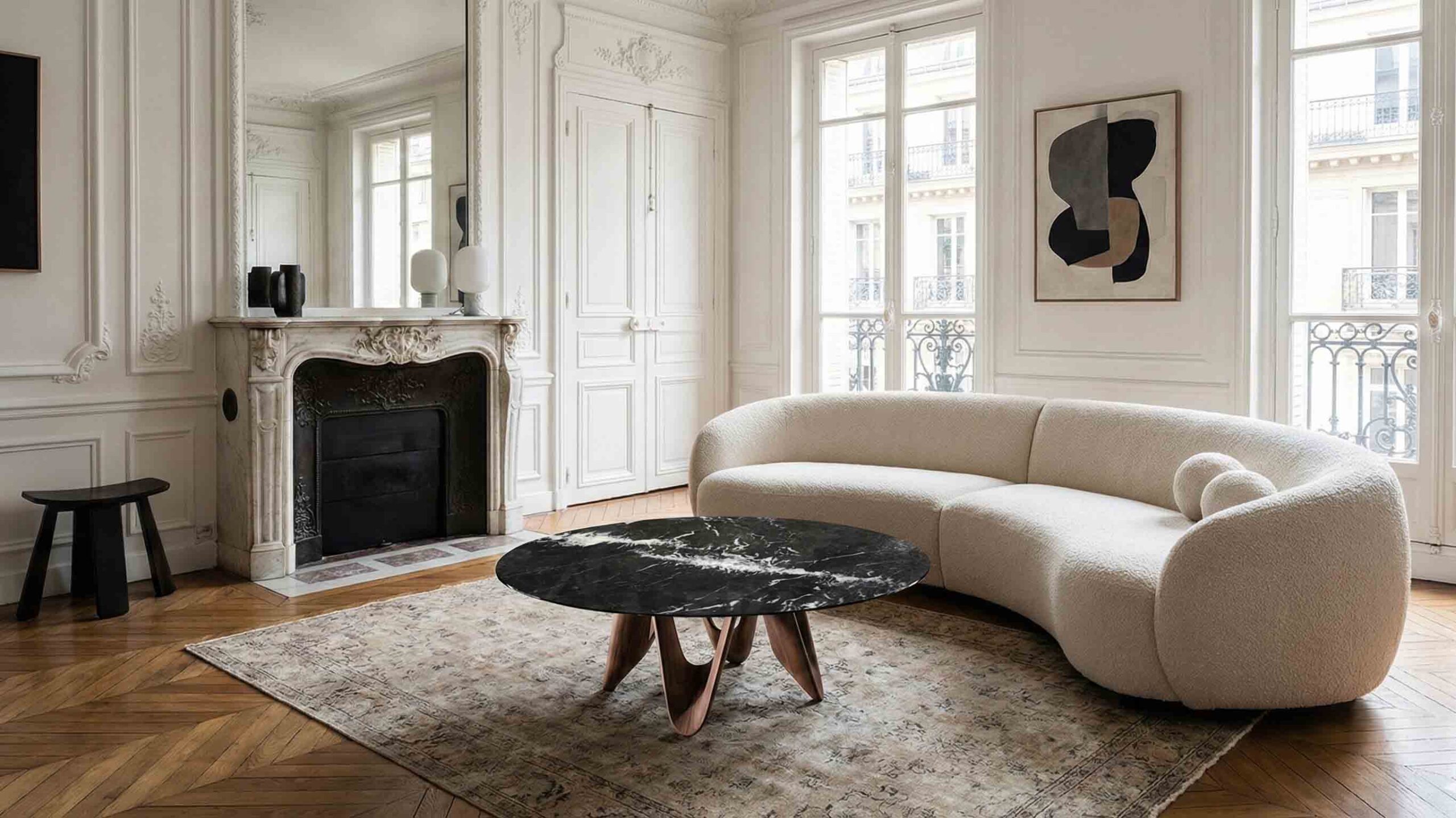
Nero Marquina – Graphic Contrast
Crisp white veins cutting through deep black create a strong visual statement. Nero Marquina works best in minimalist interiors where geometry and contrast define the room.
Nero Marquina marble coffee table styling guide
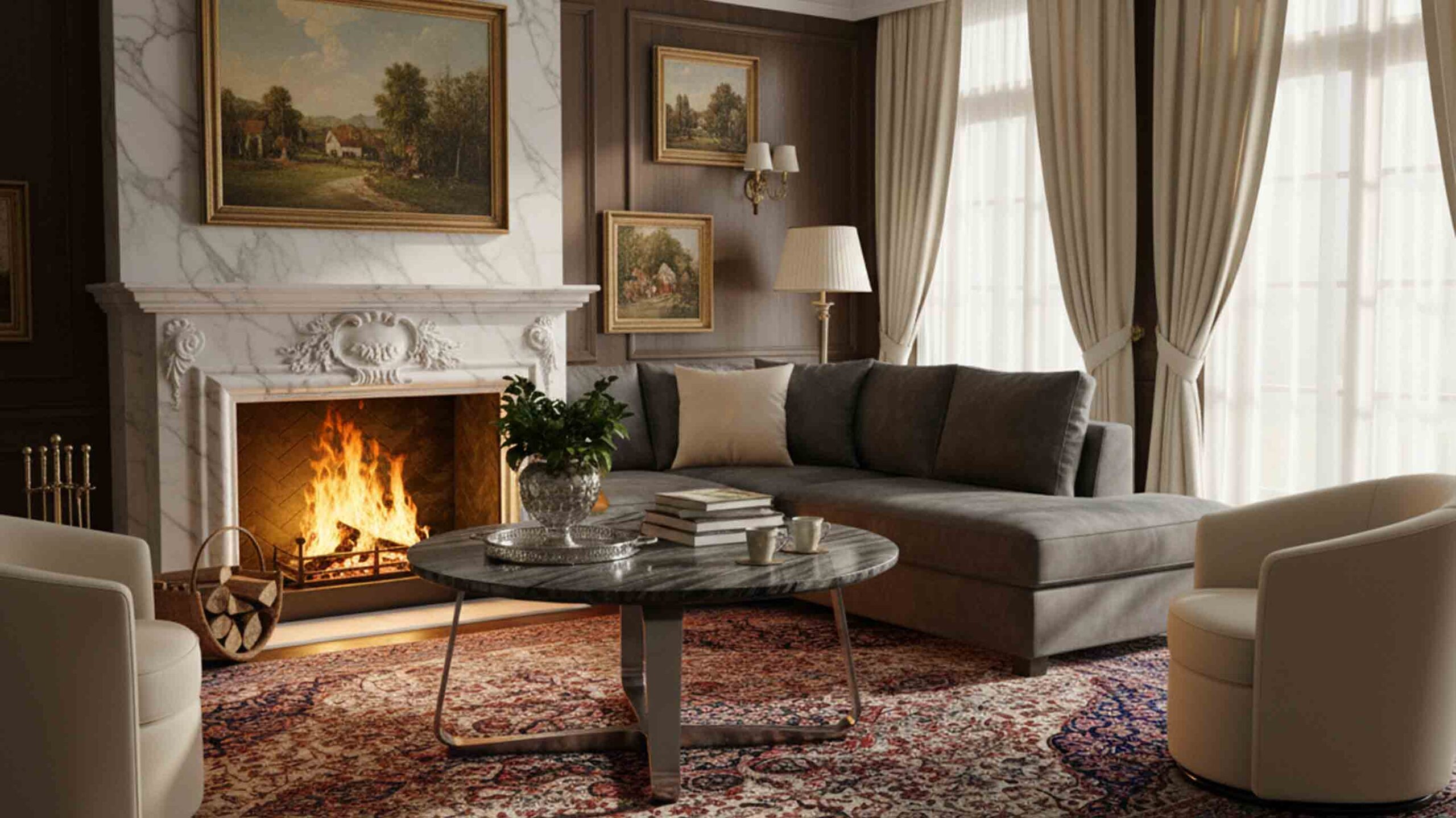
Silver Wave – Soft Flowing Movement
Unlike high-contrast stones, Silver Wave introduces a calmer rhythm. Its silver-grey veining flows organically, making it ideal for Scandinavian and modern European apartments where atmosphere matters more than drama.
Silver Wave marble coffee table tops
Napoleon Black – Balanced & Architectural
Napoleon Black offers subtle veining and classical proportion. It bridges traditional stone elegance with contemporary restraint, making it adaptable in both American transitional homes and European modern settings.
Napoleon black natural marble coffee table
Portoro – Black & Gold Luxury
Portoro introduces warm gold veining across a deep black base. It suits boutique-hotel inspired interiors and statement-focused living rooms.
Portoro marble coffee table top
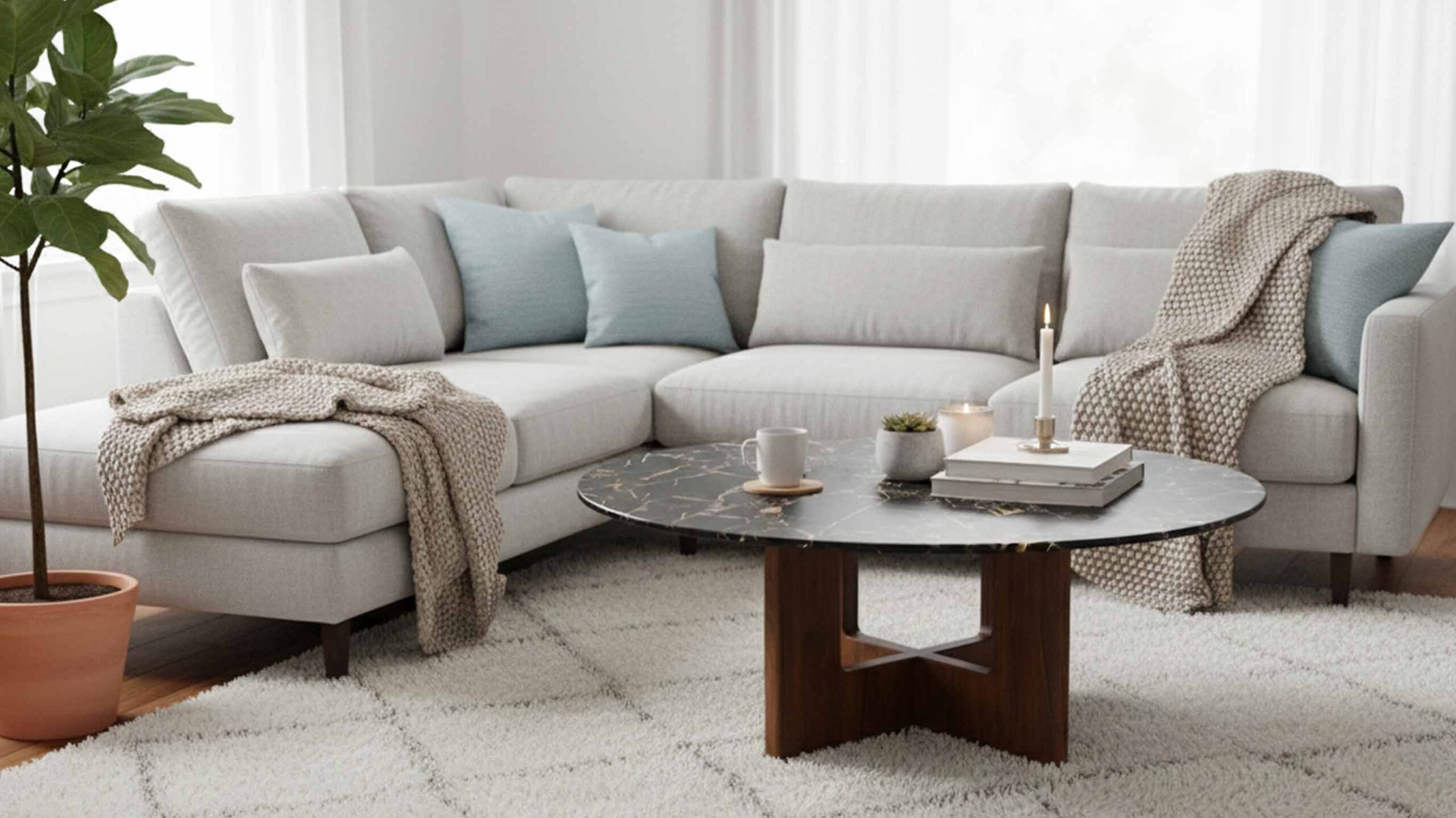
Silver Dragon – Directional Texture
Silver Dragon marble features elongated silver veins that create directional movement across the surface. It works particularly well in architectural interiors where linear rhythm is emphasized.
Silver Dragon marble coffee table design
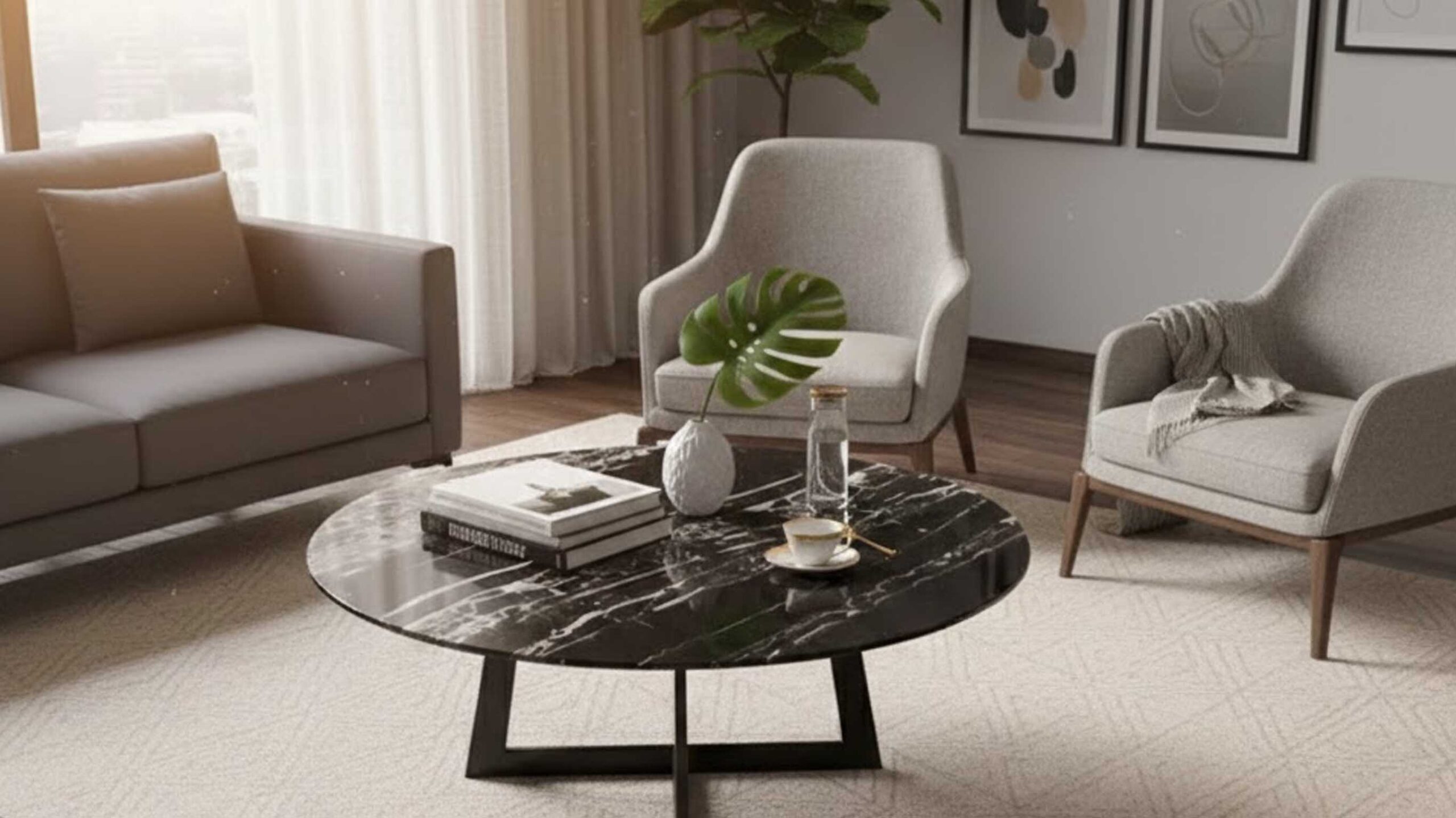
Marble Top + Metal Base – Contemporary Pairing
Pairing a marble top coffee table with a metal base introduces structural lightness. Black marble combined with matte black or brushed brass bases creates a refined contrast without overwhelming the space.
Marble top coffee table with metal base
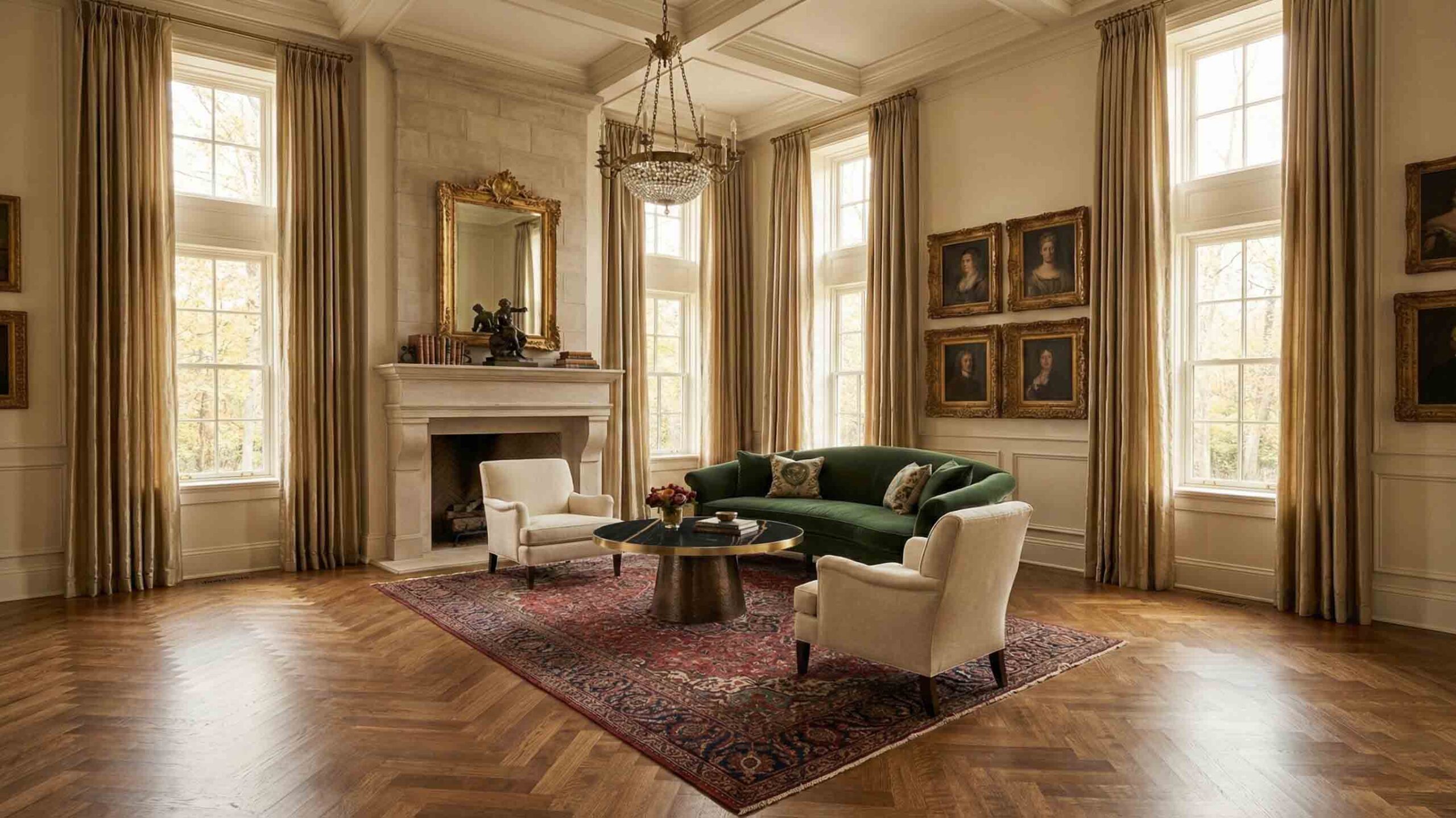
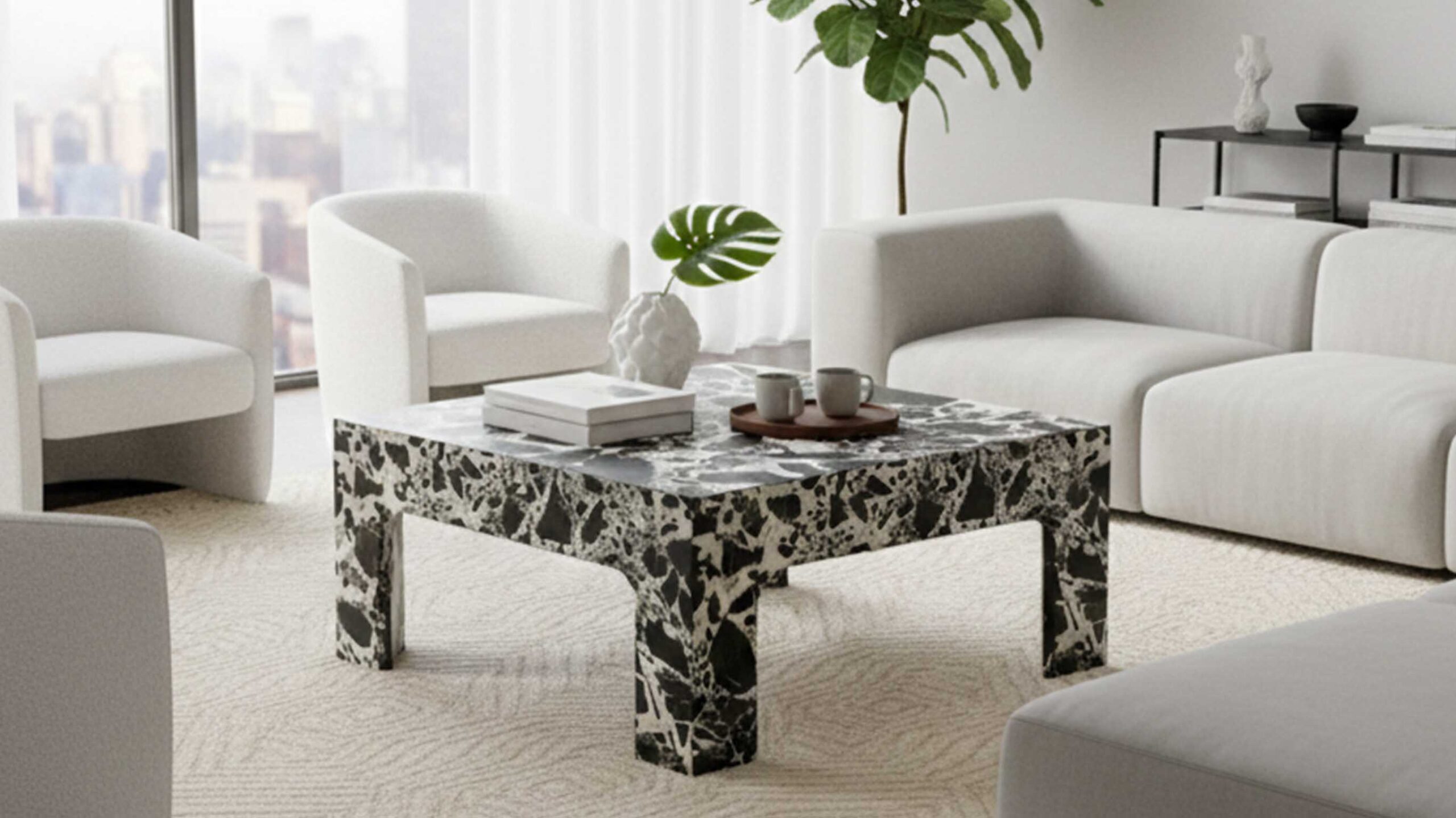
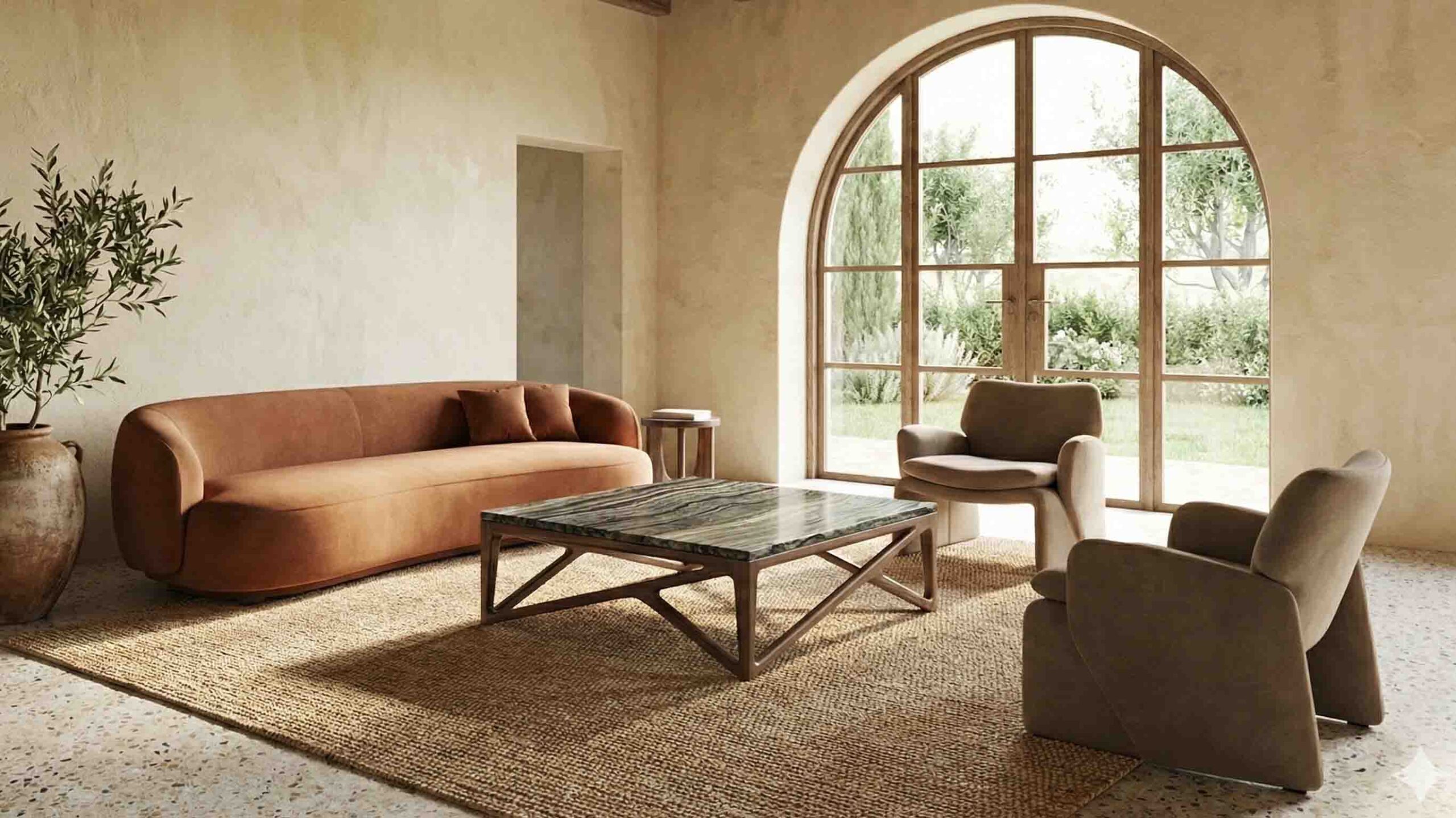
Toros Black Square Marble Tabletop – Structured Spatial Clarity
A square black marble coffee table, such as a Toros Black marble tabletop, brings architectural precision and spatial balance to modern interiors. Unlike rounded forms that soften edges, the square silhouette reinforces lines already present in contemporary furniture — sofas, media units, shelving — creating a cohesive layout that feels intentional rather than accidental.
Toros Black marble coffee table design
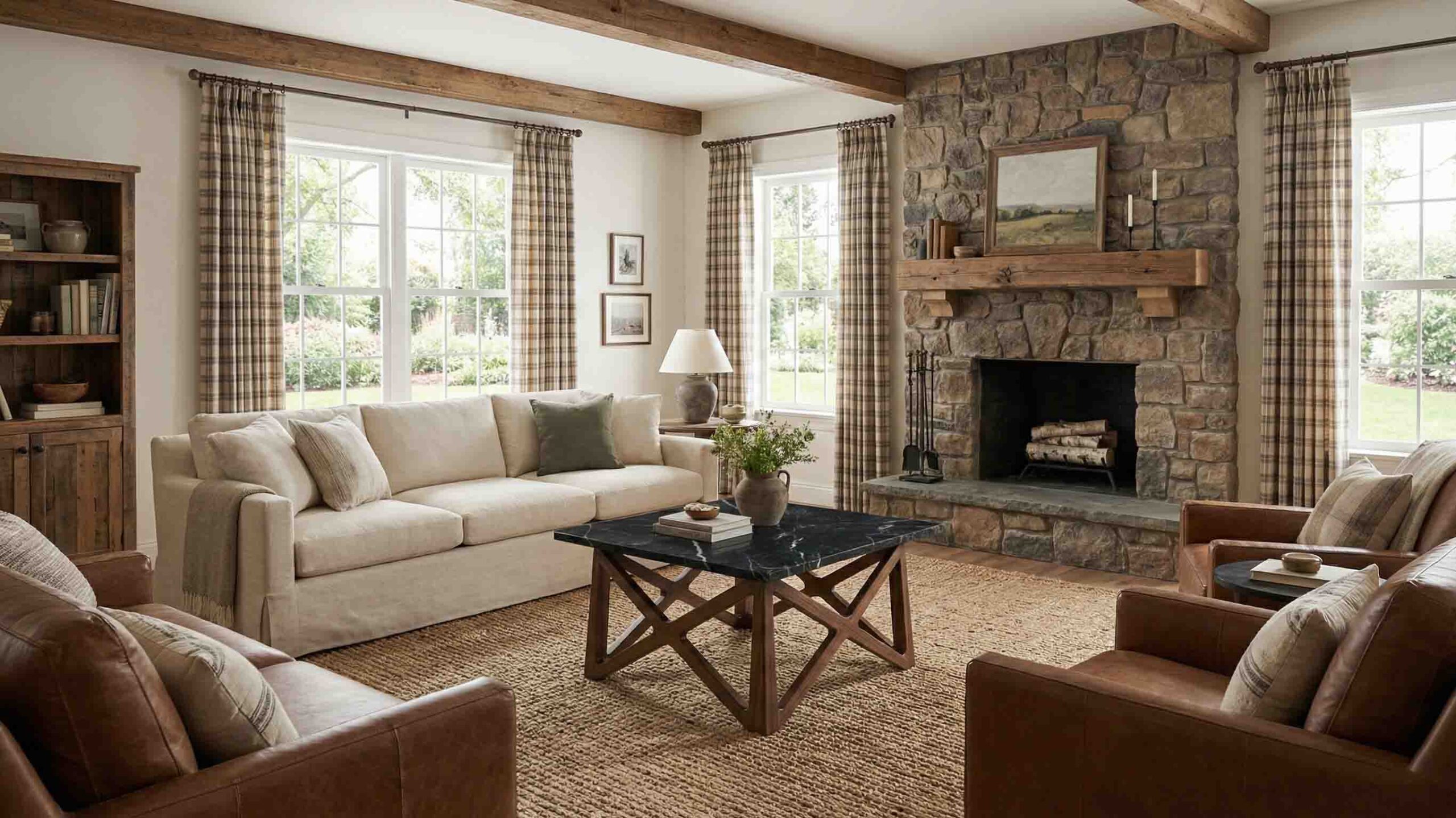
Black Wood Marble Square Coffee Table – Warm Minimalism in Structure
Rather than focusing solely on stone type, this variation explores material dialogue. A black marble square coffee table paired with a wood base introduces warmth into dark stone architecture, transforming visual weight into balanced contrast.
Black wood marble square coffee table
Styling Strategies for Modern European Homes
European interiors prioritize:
-
Light walls
-
Natural wood
-
Controlled ornamentation
Strategy A: Negative Space Emphasis
Keep styling minimal:
-
One tray
-
One sculptural object
-
One book stack
Let the marble breathe.
Strategy B: Matte Contrast
Pair polished marble with matte oak floors.
Strategy C: Brass Accent Control
Use brass lightly. Overuse reduces sophistication.
Styling Strategies for American Homes
American interiors often feature:
-
Larger sofas
-
Deeper seating
-
Stronger lighting
Strategy A: Scale Management
Large sectionals require larger slab proportions.
| Sofa Length | Recommended Table Length |
|---|---|
| 220–250cm | 110–120cm |
| 260–300cm | 120–140cm |
Strategy B: Layering
Use layered rugs to soften dark stone dominance.
Strategy C: Lighting Discipline
Dark polished marble reflects directional spotlights strongly. Avoid direct overhead glare.
Shape Psychology: Round vs Rectangular
| Shape | Emotional Effect | Best For |
|---|---|---|
| Round | Soft, social | Small apartments |
| Oval | Flowing | Transitional interiors |
| Rectangle | Structured | Large American living rooms |
| Square | Formal | Symmetrical layouts |
Surface Finish Comparison
| Finish | Reflection | Style Outcome |
|---|---|---|
| Polished | High | Luxury hotel feel |
| Honed | Low | Contemporary calm |
| Leathered | Textured | Rustic modern |
European markets increasingly prefer honed finishes due to glare control and minimalism.
Durability & Maintenance in Real Homes
Black marble coffee tables are durable but require awareness.
Acid Sensitivity
Marble reacts to acidic liquids (wine, citrus). Use coasters.
Sealing
Annual sealing recommended.
Scratch Awareness
Dark surfaces reveal micro-scratches under angled light.
Sustainability & Regulatory Direction
EU construction and furnishing sectors increasingly emphasize:
-
Durability over disposability
-
Material transparency
-
Reduced embodied carbon
Natural marble, when responsibly quarried and fabricated under dust-control compliance, aligns with long-life product philosophy.
US market trends show rising preference for:
-
Natural materials
-
VOC-conscious interiors
-
Long-term investment pieces
Black marble furniture fits both directions.
Market Trend Outlook (2025–2027)
-
Shift from white to contrast-based interiors
-
Fewer but higher-quality statement pieces
-
Architectural furniture replacing decorative clutter
-
Mixed materials (stone + metal + wood)
Interior publications consistently highlight dark stone surfaces as “controlled luxury” rather than flashy luxury.
How to Choose the Right Black Marble Coffee Table
Step 1: Identify Vein Personality
Do you want:
-
Graphic contrast?
-
Soft flow?
-
Gold drama?
Step 2: Measure Proportion
Length = 60–70% of sofa length.
Step 3: Confirm Slab Orientation
Always preview slab before cutting.
Step 4: Consider Base Material
Metal = modern
Wood = warm
Full stone = architectural
Common Styling Mistakes
-
Over-decorating dark surfaces
-
Ignoring glare
-
Choosing too small scale
-
Pairing with too many gold accents
Restraint defines sophistication.
Conclusion: Dark Stone as Architectural Intelligence
Black marble coffee tables are no longer about heaviness.
They are about contrast.
About material honesty.
About intentional space-making.
In modern European apartments and American contemporary homes, dark marble does not dominate — it organizes.
When proportioned correctly and styled with discipline, a black marble coffee table becomes the visual anchor that holds an entire living room together.
FAQ
1) Is black marble suitable for small living rooms?
Yes. Round or oval versions reduce visual heaviness.
2) Does black marble show dust easily?
Less than white marble, but polished surfaces show fingerprints.
3) Is honed better than polished?
Honed reduces glare and feels more contemporary.
4) Can black marble scratch easily?
It is durable but should not be treated like granite. Use protective pads.
5) Is black marble going out of style?
No. Current interior trends show increasing preference for contrast-based materials.
References
-
European Commission — Ecodesign for Sustainable Products Regulation (ESPR)
https://commission.europa.eu/energy-climate-change-environment/standards-tools-and-labels/products-labelling-rules-and-requirements/ecodesign-sustainable-products-regulation_en -
European Commission (Environment) — Circular Economy & Sustainable Product Updates
https://environment.ec.europa.eu/news/new-eu-rules-stop-destruction-unsold-clothes-and-shoes-2026-02-09_en -
U.S. Environmental Protection Agency (EPA) — Volatile Organic Compounds’ Impact on Indoor Air Quality
https://www.epa.gov/indoor-air-quality-iaq/volatile-organic-compounds-impact-indoor-air-quality -
U.S. EPA — Indoor Air Quality Design Tools (Material Emissions Context)
https://www.epa.gov/iaq-schools/controlling-pollutants-and-sources-indoor-air-quality-design-tools-schools -
Occupational Safety and Health Administration (OSHA) — Respirable Crystalline Silica Standard (29 CFR 1926.1153)
https://www.osha.gov/laws-regs/regulations/standardnumber/1926/1926.1153 -
OSHA — Silica in Construction Overview
https://www.osha.gov/silica-crystalline/construction-info -
U.S. Green Building Council (USGBC) — LEED v4.1 Rating System
https://www.usgbc.org/leed/v41 -
Architectural Digest — Best Coffee Tables for Modern Interiors
https://www.architecturaldigest.com/story/best-coffee-tables
What a black marble coffee table does in interior design: It acts as a visual anchor that defines the seating zone, increases depth, and creates controlled contrast. Dark stone absorbs light and clarifies furniture outlines, which helps modern spaces feel more intentional and “architected.”
Why black marble is trending again (EU + US context): Modern interiors are shifting from “all-light everything” toward contrast-based minimalism. Buyers want fewer but higher-quality statement pieces that age well visually. Black marble delivers that luxury signal without needing extra décor—especially when the room stays edited.
How to style dark stone so it looks modern, not heavy: Start with negative space. Keep tabletop styling to a simple trio (tray + low object + one vertical element) and leave breathing room. Repeat one tone from the marble (grey/silver/gold) elsewhere subtly through textiles or ceramics. Avoid stacking multiple high-contrast accessories that fight the veining.
Options that change the room’s mood (finish + shape + vein personality): Honed finishes reduce glare and read calmer; polished finishes increase depth and create boutique-hotel shine. Round and oval shapes soften dark stone, supporting smaller EU apartments and relaxed layouts; rectangles and squares feel more architectural for larger US living rooms. Vein personality should match the desired “energy”: graphic for crisp minimalism, flowing for calm rhythm, gold for hospitality drama, subtle for timeless balance.
Considerations that decide whether the result feels premium: Proportion is the first quality signal—aim for 60–70% of sofa length and keep comfortable clearance for circulation. Slab orientation matters more than stone name; confirm slab photos and mark vein direction before cutting. Under-support design prevents long-span stress. Packaging standards matter because dark polished surfaces reveal micro-scratches under angled light.
Trend + compliance direction (future-proof framing): EU/US market expectations increasingly reward durability, material transparency, and healthier indoor environments. That favors long-life surfaces and better-documented fabrication practices. Black marble coffee tables fit this direction when sourced responsibly, fabricated with dust-control discipline, and finished with low-odour sealers/adhesives where relevant.