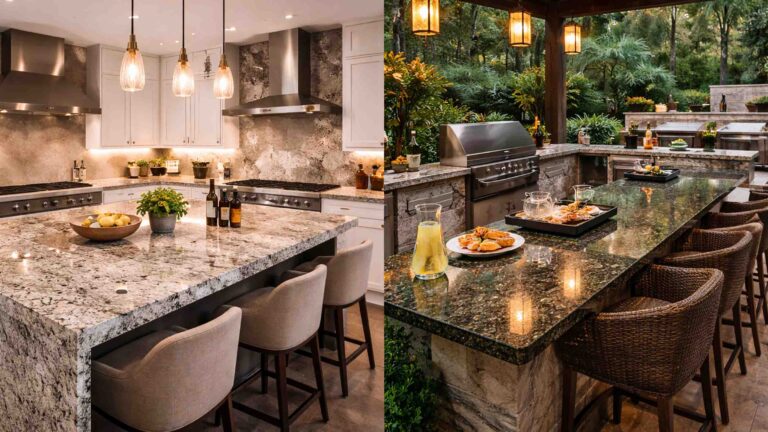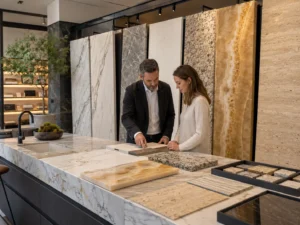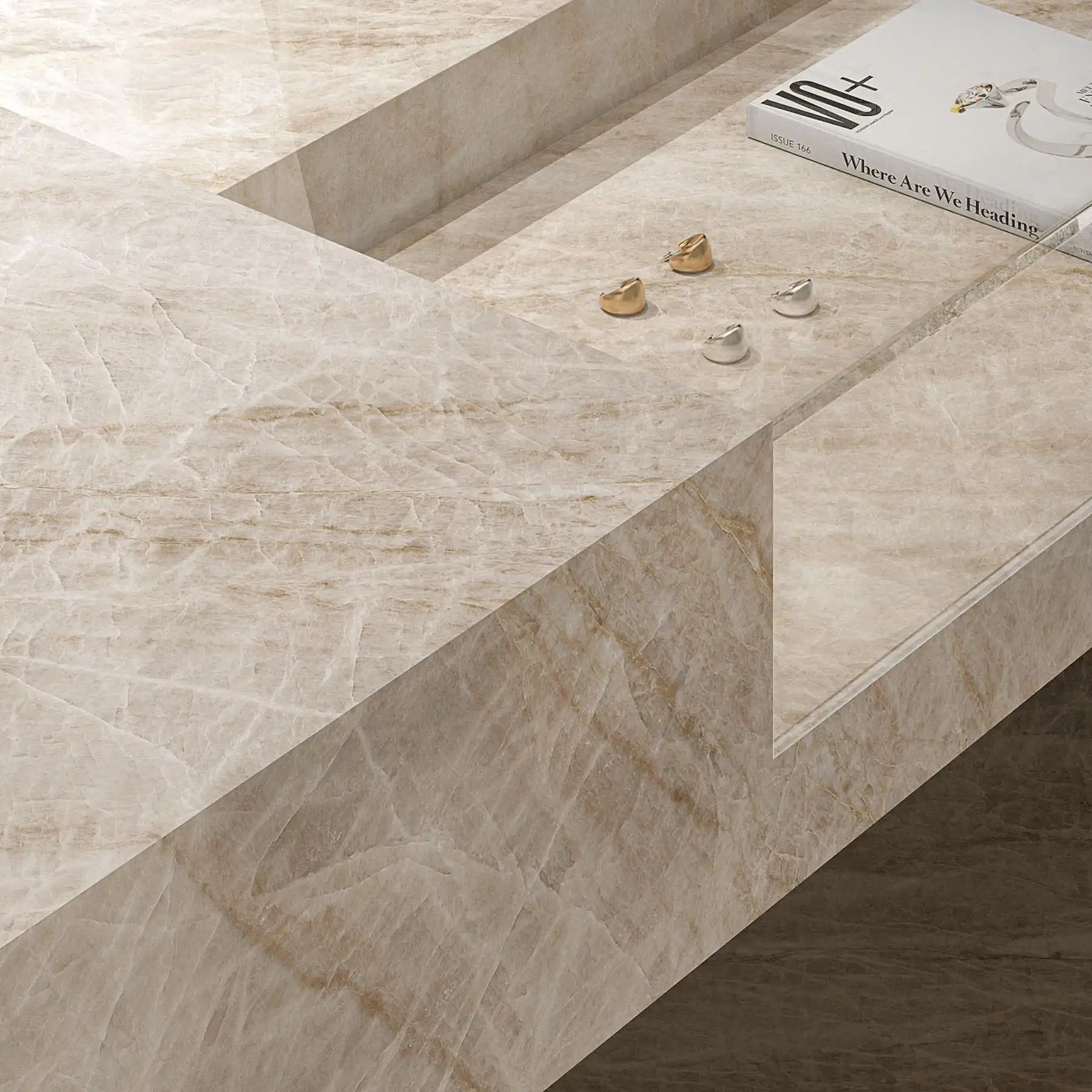
Natural stone trends in 2026 are reshaping luxury interiors through large-format slabs, quartzite surfaces, warm neutral palettes, tactile finishes, full-height stone backsplashes, and stronger sustainability expectations. For architects, developers, and global buyers, the new direction is no longer about appearance alone—it is about performance, compliance, traceability, and how natural stone creates timeless value in high-end residential, hospitality, and commercial spaces.
The conversation around luxury interiors in 2026 is no longer just about appearance. It is about performance, traceability, wellness, material transparency, and long-term design value. Natural stone sits at the center of that shift. What used to be specified mainly for prestige is now being evaluated for embodied carbon, durability, fabrication safety, finish quality, and how well it fits the new language of quieter, more tactile, more architectural interiors. According to NKBA’s 2026 Kitchen Trends Report, natural quartzite ranks just behind quartz for countertops and backsplashes, showing how strongly designers and specifiers are leaning toward natural-looking, high-performance surfaces in premium spaces.
At the same time, regulations and material disclosure requirements are changing how projects are designed and approved. In the EU, the revised Construction Products Regulation entered into force in January 2025 and introduces stronger sustainability, safety, and digital product information expectations, including Digital Product Passports. In Great Britain, the 2025 amendment rules came into force on January 8, 2026, allowing CE-marked products aligned with EU-CPR 2024 to continue circulating in GB under the updated framework. For stone suppliers, stone manufacturers, and project developers, this means aesthetics alone are no longer enough. Documentation, conformity, and measurable performance matter more than ever.
This is why the top natural stone trends of 2026 are not random style moments. They reflect deeper market forces: the demand for healthier interiors, the return of tactile materials, the preference for long-life finishes, and the rising importance of product transparency. For architects, hotel developers, luxury homeowners, and any natural stone supplier targeting high-value projects, these ten trends provide a practical map of where the market is moving next.
Why Natural Stone Is Returning to the Center of Luxury Design
Natural stone is benefiting from a larger shift in interior design. The minimal, overly polished, uniform look that dominated the past few years is giving way to richer textures, organic surfaces, warmer tones, and materials with visible geological character. Designers are increasingly choosing finishes and surfaces that feel less manufactured and more grounded. This helps explain why stones with movement, variation, translucency, and tactile finishes are gaining momentum in kitchens, bathrooms, lobbies, bars, and wellness spaces.
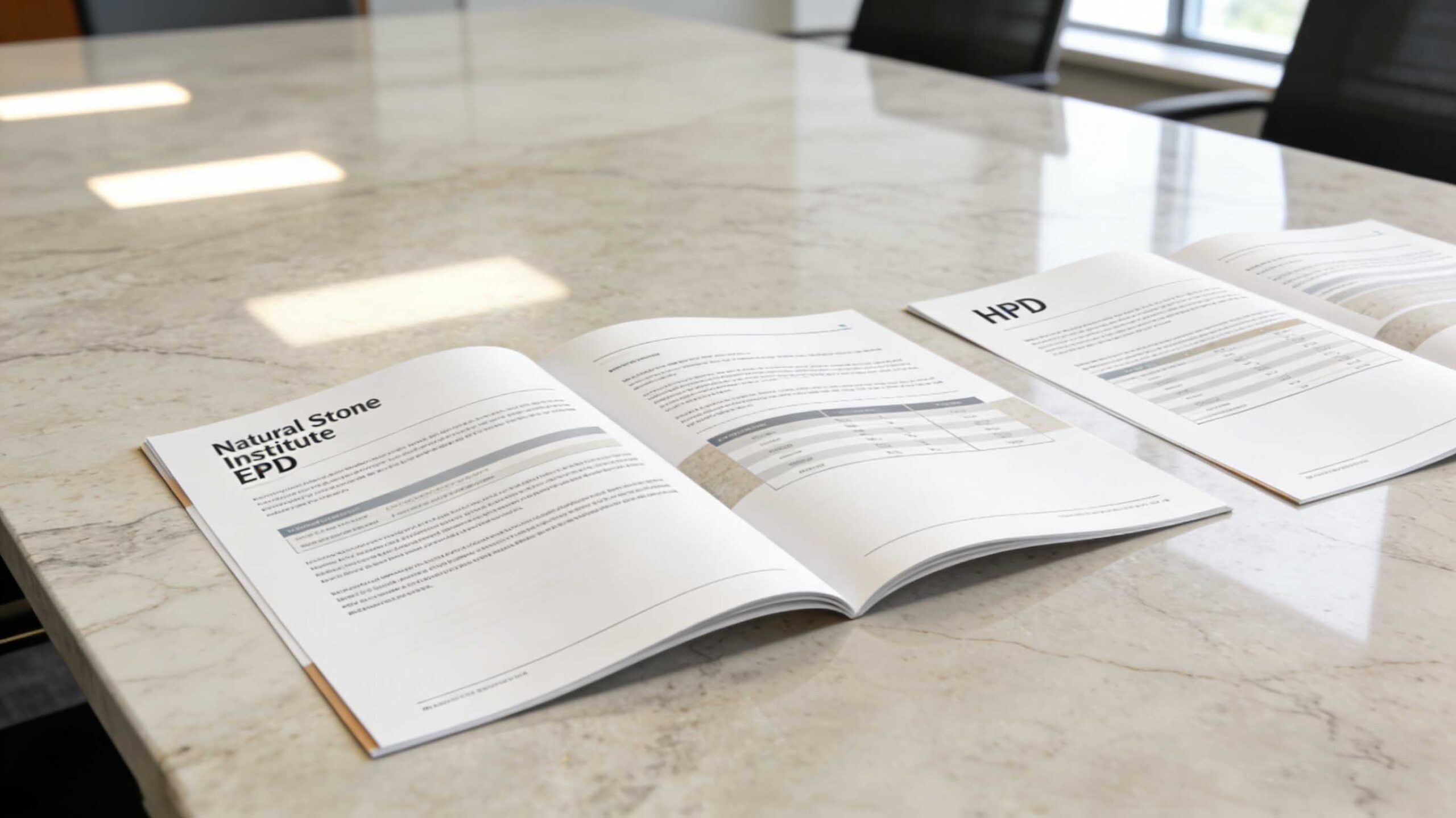
There is also a practical reason for the revival. Natural stone can now be supported by better environmental and health documentation than ever before. The Natural Stone Institute published industry-wide EPDs and HPDs for key natural stone applications, giving design teams verified environmental and material-health information for cladding, flooring, paving, and countertops. That matters in a market where premium buyers want proof, not just polished brochures.
For high-end interiors, the winning formula in 2026 is simple: a material must look timeless, perform reliably, and come with a stronger story than “it looks luxurious.” Natural stone increasingly checks all three boxes.
The Top 10 Natural Stone Trends Shaping Luxury Interiors in 2026
1. Large-format statement slabs are becoming the new luxury baseline
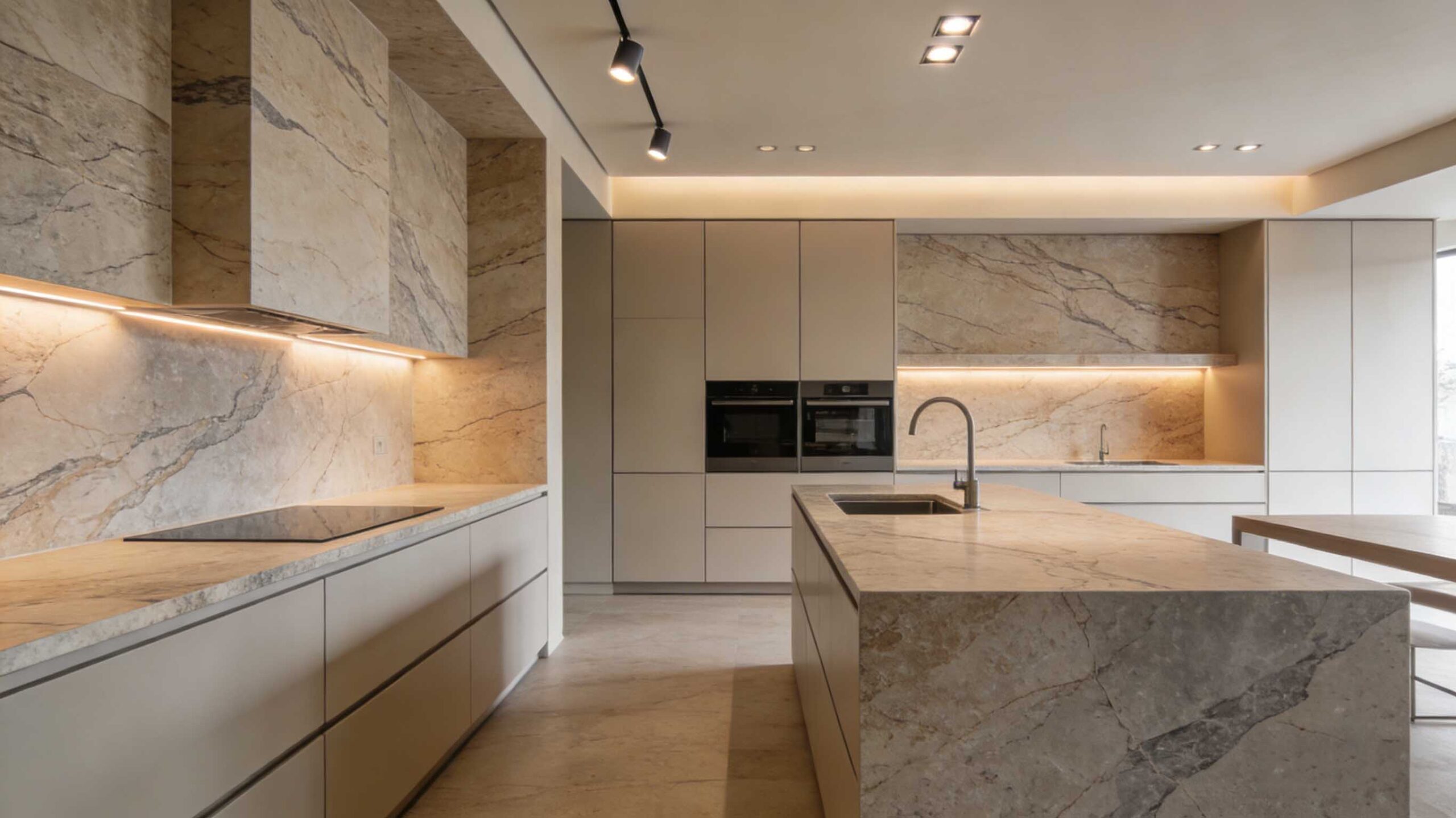
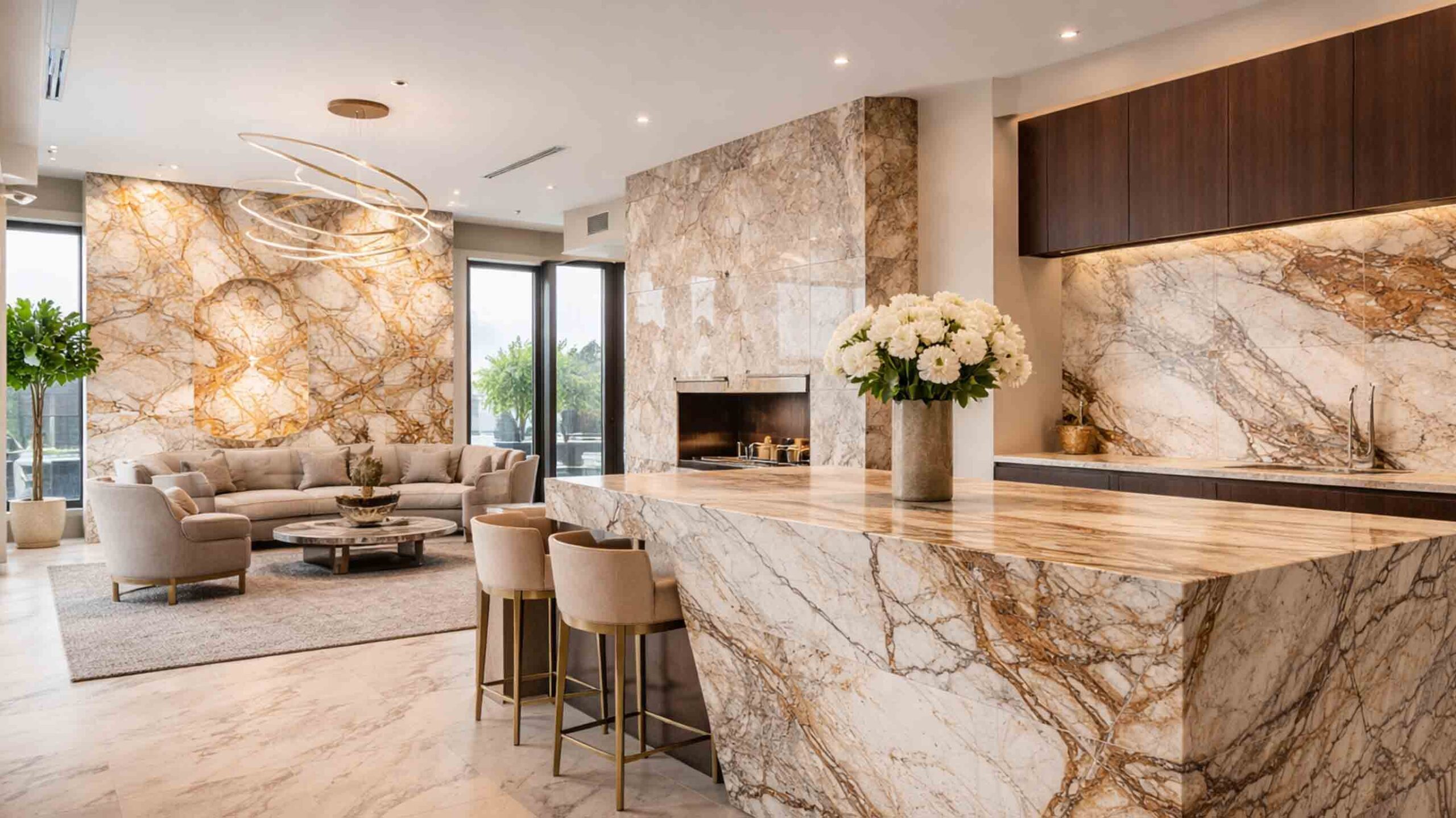
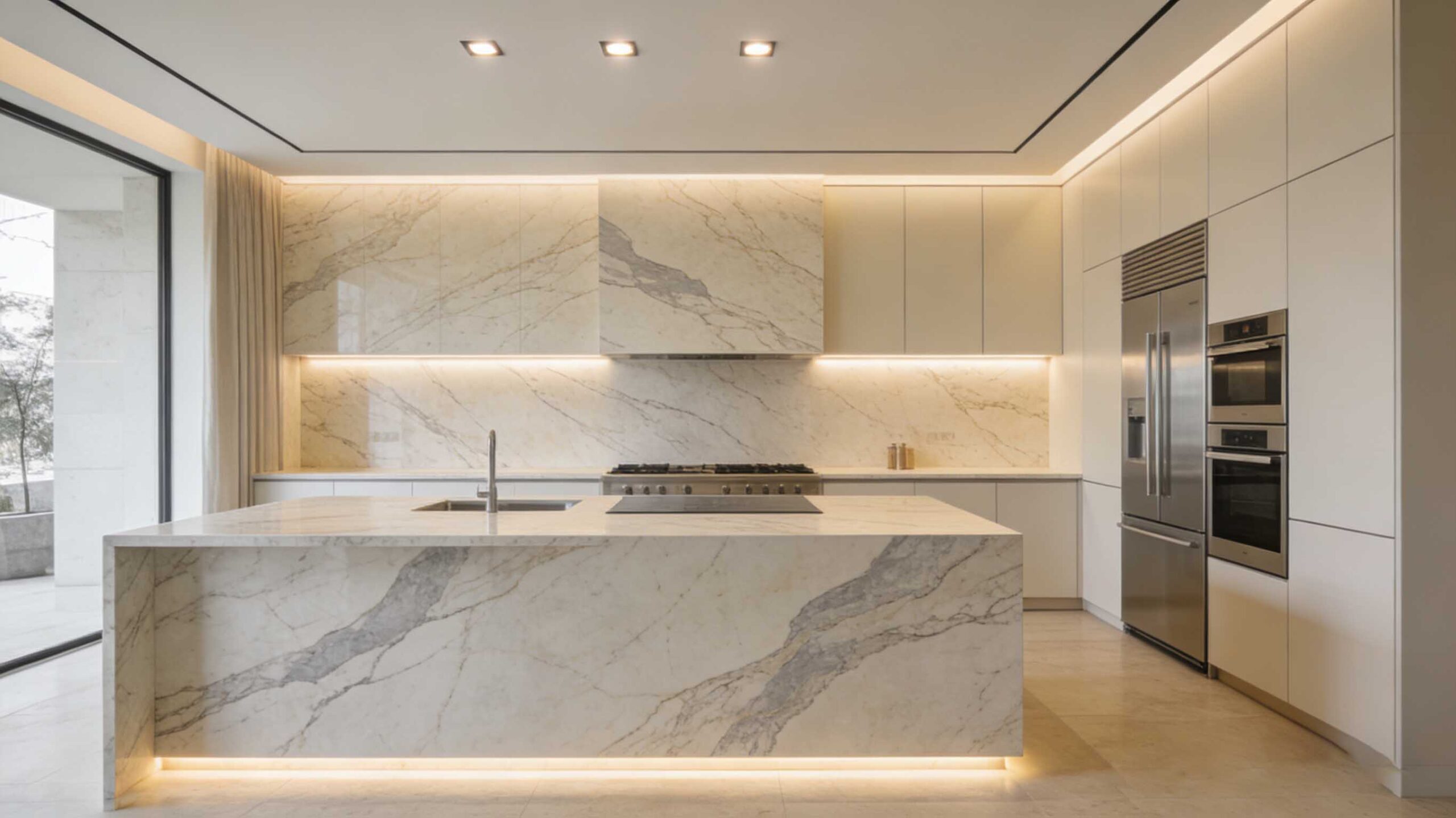
Large-format stone slabs are no longer reserved for ultra-custom mansions. They are becoming a mainstream language of luxury because they reduce visual interruption, minimize grout lines, and create a more seamless architectural effect. In kitchens, they are showing up on islands, backsplash walls, waterfall ends, and even integrated shelving. In bathrooms and hospitality spaces, they help rooms feel monolithic, calm, and premium. Design media and professional trend reporting both point to strongly veined slab surfaces and full-height applications as a defining direction for 2026.
This trend also fits the preferences of buyers searching for premium materials from a quartzite slab supplier or marble manufacturer because a large-format slab allows the stone’s movement and character to do most of the design work. When the slab is strong enough visually, the room needs fewer decorative tricks.
2. Quartzite is rising as the performance-led luxury stone
One of the most important signals from NKBA’s 2026 report is the strength of quartzite in both countertops and backsplashes. Designers like it because it offers the visual drama people often associate with marble while being selected more often in projects where performance, scratch resistance, and long-term wear are major concerns. That makes quartzite especially attractive for kitchens, show units, hospitality suites, and multi-generational homes where beauty must survive actual use.
For this reason, more global buyers are now speaking not only to a natural stone supplier, but specifically to a quartzite slab supplier that can provide consistent block selection, matching slabs, and application advice. Quartzite is no longer a niche upgrade. In 2026, it is increasingly a lead material in premium specification.
3. Warm neutrals are replacing cold minimalism
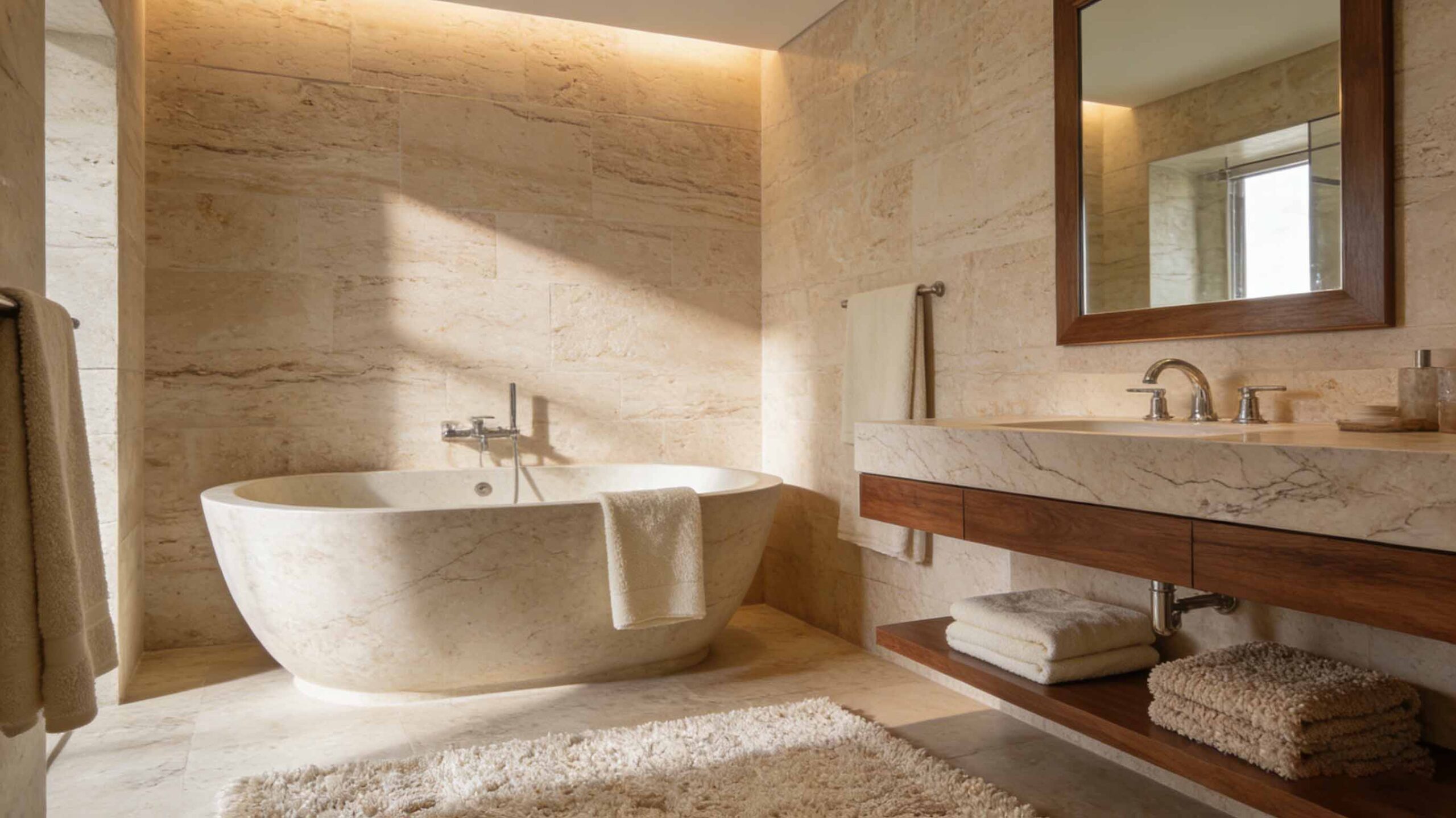
The era of overly cold grey luxury is fading. In its place, designers are moving toward warm neutrals: sand, taupe, cream, travertine beige, tobacco brown, and honeyed stone tones. These colors work especially well in spaces that want calm without feeling sterile. They also layer naturally with oak, walnut, brushed brass, limewash walls, boucle fabrics, and softer indirect lighting. Trend coverage across design media points to warmer palettes and natural textures as one of the defining shifts entering 2026.
This is great news for travertine, limestone, beige marble, and soft quartzite selections. It also means that a wholesale natural stone strategy aimed at hotels, apartments, and wellness projects should prioritize stones that support a warmer, more habitable form of luxury.
4. Deep green, burgundy, and dramatic accent stones are going mainstream
If warm neutrals are the base, colored stone is becoming the punctuation mark. Deep green marble, burgundy-veined stone, richly patterned quartzite, and darker mineral surfaces are increasingly used as focal materials rather than all-over finishes. Designers are pairing them with dark wood, soft metallics, and sculptural lighting to create spaces that feel layered rather than flat. In 2026, luxury is becoming more expressive, not less.
This trend is especially relevant for vanity walls, cocktail bars, reception counters, feature powder rooms, fireplace surrounds, and boutique hospitality projects where one slab can define the room’s identity.
5. Honed, brushed, and leathered finishes are outperforming high polish in many projects
Polish still matters, especially in classic marble settings, but the strongest movement in luxury interiors is toward touchable finishes. Honed stone feels quieter and more contemporary. Leathered granite and textured finishes add dimension without overwhelming the palette. Brushed and softly matte surfaces also suit the current design appetite for authenticity, tactility, and lived-in elegance. Trend reporting for 2026 repeatedly highlights texture as a central theme rather than a minor detail.
For buyers, this changes how sampling should work. You are no longer choosing only by color and pattern. You are choosing by light reflection, maintenance experience, slip performance, and tactile response.
6. Full-height stone backsplashes are becoming a standard statement
Full-height backsplash design is one of the most commercially useful trends in this list because it combines visual drama with a cleaner installation logic. Rather than stopping at a short splash, designers are taking stone all the way to the underside of wall cabinets or to the ceiling in open kitchen compositions. This creates continuity, increases the perceived value of the stone, and makes the kitchen feel more architectural. Professional design coverage identifies strongly veined slabs and full-height stone applications as one of the most talked-about backsplash directions for 2026.
If you want a practical example of how surrounding finishes affect this look, see our <a href=”https://cssstone.com/what-backsplash-pairs-best-with-white-marble-countertops-design-expert-tips/”>what backsplash pairs best with white marble countertops</a> guide. It is a useful companion for design teams who want the slab to feel intentional rather than overpowering.
7. Backlit stone is moving from novelty to architectural feature
Backlit stone used to be a specialty move. In 2026, it is becoming a serious design statement in bars, spas, powder rooms, feature walls, and high-end hospitality counters. Translucent stones such as onyx, agate, and selected quartzites respond particularly well to lighting, turning the surface into both material and atmosphere. Recent design reporting shows that backlit stone is now being specified not only for visual spectacle, but for mood, warmth, and experiential value.
This matters because luxury buyers increasingly want memorable spaces, not just expensive materials. Backlit stone gives designers a way to create emotional impact without relying on excessive ornament.
8. Sculptural edges, curves, and rounded forms are changing fabrication priorities
Luxury interiors in 2026 are getting softer in silhouette. Straight minimal boxes are giving way to rounded islands, eased edges, thicker visual massing, and sculptural stone furniture. This trend changes not just how a room looks, but how stone is fabricated. It requires tighter templating, more advanced CNC capability, and better coordination between slab selection and finished geometry. In short, the trend favors capable manufacturers over commodity traders.
For a marble manufacturer or natural stone supplier, this means fabrication expertise has become part of the product. Buyers are no longer purchasing slabs alone. They are purchasing execution.
9. Sustainability documentation is becoming a design requirement, not a bonus
Natural stone is benefiting from a more data-driven sustainability conversation. The Natural Stone Institute’s industry-wide EPDs and HPDs have already strengthened the material’s position in green building discussions, and the PNA sector EPD released in 2025 expands the broader European conversation with independently verified life-cycle data for natural stone slabs. These developments give architects and developers a stronger basis for comparing materials, especially when embodied carbon and material transparency become part of tender evaluation.
This is also where the story of origin matters. Quarry source, processing method, finishing, packaging, and transport all contribute to how a project team evaluates stone. Our article on <a href=”https://cssstone.com/from-quarry-to-architecture-how-natural-marble-is-extracted-processed-and-used-in-modern-construction/”>from quarry to architecture</a> explains why provenance and processing now matter to both designers and buyers.
10. Safer fabrication and compliance-led specification are influencing material choices
One of the biggest industry shifts behind the scenes is health and compliance. CDC and NIOSH warn that engineered stone can contain over 90% respirable crystalline silica content, creating serious silicosis risk during fabrication if controls are poor. Their 2026 bulletin also notes that 51% of inspected California stone fabrication shops had at least one employee exposed above OSHA’s permissible exposure limit of 50 micrograms per cubic meter. This does not mean natural stone is risk-free. It means safer fabrication, wet cutting, dust capture, ventilation, PPE, and material selection are now part of responsible specification.
As a result, luxury projects are paying more attention to how surfaces are made, not just how they look. That is pushing more demand toward suppliers who can explain fabrication controls, compliance systems, and safe processing protocols with confidence.
How Regulations Are Directly Shaping the 2026 Stone Market
Material transparency is becoming mandatory thinking
The revised EU Construction Products Regulation is not just a bureaucratic update. It signals a market where digital product information, sustainability data, and declared performance will increasingly shape product acceptance. The European Commission explicitly highlights Digital Product Passports as a way to provide performance, conformity, safety, and use information while also supporting more reliable building carbon calculations.
For export-oriented stone companies, that means the sales conversation is changing. Catalogs and slab photos still matter, but technical files, declarations, and traceable documentation now play a bigger role in winning serious projects.
Compliance now supports premium positioning
Some manufacturers see regulation as a burden. Smart companies treat it as a filter. In a crowded global market, the ability to show responsible quarrying, documented material data, proper fabrication controls, and clear installation guidance helps a supplier move out of the commodity bracket. In 2026, compliance is not the opposite of luxury. It is part of luxury.
Safer fabrication is becoming part of brand trust
Silica-related health concerns are forcing the industry to confront an uncomfortable truth: the most visually uniform material is not always the safest to process. This is why some buyers are revisiting natural stone with fresh eyes. The question is no longer only “Which surface looks best?” It is also “Which surface aligns with safer production and a more transparent supply chain?”
How Buyers, Designers, and Suppliers Should Respond
Specify by application, not by fashion alone
A hotel bar, a villa kitchen, a spa wall, and an apartment vanity do not need the same stone. The smartest way to use these 2026 trends is to match material choice to wear level, cleaning expectations, light conditions, scale, and visual purpose. A practical <a href=”https://cssstone.com/countertop-selection-guide-a-complete-step-by-step-handbook-for-modern-homes/”>countertop selection guide</a> is useful because the right stone is rarely the trendiest one in abstract. It is the one that fits the project brief most accurately.
Build your sampling and storytelling around systems
If you are a natural stone supplier or marble manufacturer, your competitive edge in 2026 should include more than slab inventory. Offer finish options, matching logic, bookmatching capability, mockups for large-format applications, sustainability documents, and realistic maintenance guidance. Buyers remember suppliers who reduce uncertainty.
Use trends as entry points, not as gimmicks
The best trend-based content does not chase aesthetics blindly. It translates market direction into better decisions. That is what makes a 2026 luxury stone strategy commercially useful. A quartzite slab supplier should not just say quartzite is trending. They should explain why quartzite is being chosen, where it performs best, and how it compares with marble, granite, porcelain slab, or engineered surfaces in real projects.
Conclusion
The top natural stone trends shaping luxury interiors in 2026 are not isolated style preferences. They are the visible result of bigger changes in how premium spaces are designed and delivered. Large-format slabs, warmer palettes, expressive colors, tactile finishes, full-height stone walls, backlit features, and sculptural detailing all point to a more architectural, more emotional, and more materially aware form of luxury.
At the same time, regulations, silica awareness, EPDs, HPDs, and product transparency are changing the commercial logic behind material selection. That is why natural stone is entering 2026 with unusual strength. It can satisfy both the visual ambitions of luxury interiors and the growing demand for traceable, durable, and responsibly specified materials.
For buyers, the message is clear: choose stone with more rigor. For suppliers, the message is even clearer: sell stone with more evidence. The companies that can combine beauty, documentation, finish quality, and fabrication credibility will be the ones that define the next phase of the premium stone market.
FAQs
1. Why is natural stone becoming more popular again in luxury interiors?
Natural stone is becoming more popular because designers and buyers want surfaces that feel authentic, durable, and visually distinctive. In 2026, luxury interiors are moving away from overly uniform finishes and toward warmer tones, stronger texture, and materials with geological character. Natural stone also benefits from growing transparency tools such as EPDs and HPDs, which make it easier to specify in premium projects.
2. Which natural stone is trending most for kitchens in 2026?
Quartzite is one of the strongest kitchen materials in 2026 because it combines dramatic natural movement with strong performance. It is being used for countertops, waterfall islands, and full-height backsplashes in high-end homes and hospitality spaces. Marble remains highly desirable, but quartzite is gaining ground in projects that prioritize both aesthetics and durability.
3. Are full-height stone backsplashes still in style for 2026?
Yes, full-height stone backsplashes are one of the standout luxury design directions for 2026. They create a cleaner visual flow, make better use of the slab’s pattern, and give kitchens a more architectural appearance. They are especially effective with large-format marble, quartzite, and other strongly veined natural stones.
4. How are regulations influencing natural stone selection in 2026?
Regulations are increasing the importance of product transparency, safety documentation, and responsible fabrication. In Europe and Great Britain, construction product rules are placing more focus on performance declarations, conformity, and digital product information. In fabrication, silica safety is pushing project teams to ask more detailed questions about cutting methods, dust control, and compliance systems.
5. What should buyers ask a natural stone supplier before placing an order?
Buyers should ask about quarry origin, finish options, slab matching, fabrication capability, lead times, packing methods, sustainability documents, and application suitability. They should also request realistic maintenance advice and project-specific recommendations instead of choosing only by appearance. A reliable supplier should be able to explain both the beauty and the technical behavior of the stone.
References
-
Alyson Fortner, R. Reid Harvey, Justine Lew Weinberg, Chelsea Woolsey, Fernanda Florez, “Engineered Stone and Silicosis,” NIOSH Science Bulletin, CDC.
-
Directorate-General for Internal Market, Industry, Entrepreneurship and SMEs, “New EU rules on the safety and sustainability of construction products mark a new step for the sector’s competitiveness,” European Commission.
-
“KBIS Releases Annual 2026 Kitchen Trends Report,” NKBA.
-
“Natural Stone Institute Publishes First Industry-Wide Environmental Product Declarations and Health Product Declarations for Natural Stone,” Natural Stone Institute.
-
“EPD-IES-0023920:002 Sector EPD by PNA,” EPD International.
-
Molly Malsom, “The Most Coveted Kitchen Backsplash Trends for 2026,” Homes & Gardens.
-
“Backlit Stone Is the Left-Field, Luxe Surface to Know,” Livingetc.
-
“Construction Products Reform White Paper,” GOV.UK.
Natural Stone Trend Insight for 2026 Luxury Interiors
Why are natural stone trends becoming more important in luxury interiors?
In 2026, luxury interior design is moving away from flat, overly uniform surfaces and toward materials that feel more architectural, tactile, and enduring. Natural stone stands out because it combines visual depth with material authenticity, allowing designers to create interiors that feel calmer, warmer, and more valuable over time. This makes stone not just a decorative finish, but a long-term design decision tied to identity, durability, and perceived quality.
What is changing in the market beyond design style?
The market is no longer driven only by color and pattern. Buyers now look at material documentation, project suitability, fabrication standards, sustainability positioning, and health-related compliance concerns. As regulations and product transparency expectations become more important, natural stone is gaining attention not only for its beauty, but also for its ability to support a more traceable and specification-friendly supply chain. In other words, the stone itself matters, but so does the story behind how it is sourced, processed, finished, and delivered.
How are the top 10 natural stone trends influencing real projects?
The strongest natural stone trends are influencing projects in practical ways. Large-format slabs create cleaner visual lines and reduce interruption in kitchens and bathrooms. Quartzite is being selected more often where luxury and performance need to work together. Warm beige, sand, cream, and brown-toned stones are helping designers move away from cold minimalism. Honed, brushed, and leathered finishes are adding tactile softness, while backlit stone and expressive colored slabs are making hospitality and statement spaces more memorable. These are not isolated style choices; they reflect how designers now balance emotion, function, and longevity.
What options are buyers and designers prioritizing in 2026?
Buyers are prioritizing stones that can perform across multiple criteria at once. They want surfaces that work visually in high-end interiors, but also offer reliable application value for countertops, wall cladding, vanity areas, flooring, bar tops, and feature walls. Options such as quartzite slabs, textured marble finishes, full-height stone backsplashes, sculptural edge profiles, and sustainable natural stone selections are increasingly favored because they answer both design ambition and practical project needs. This is why natural stone supplier selection is becoming more strategic: buyers want guidance, not just inventory.
What should global buyers consider before selecting a natural stone supplier or manufacturer?
Global buyers should look beyond surface appearance and evaluate whether a supplier can support the full project process. That includes finish consistency, slab matching, application knowledge, fabrication capability, packaging quality, lead time control, sustainability documentation, and an understanding of changing compliance expectations in export markets. A strong marble manufacturer or natural stone factory should be able to explain where the stone fits best, how it performs in real environments, and why it aligns with both luxury design trends and responsible project execution.
Where is the market heading next?
The future of luxury stone interiors is moving toward surfaces that are more expressive, more tactile, and more transparent in every sense. The winning materials in 2026 and beyond will be those that can combine timeless visual appeal with application clarity, sustainability relevance, and supply chain credibility. Natural stone is well positioned for that shift, which is why it is becoming a stronger choice not only for luxury homes, but also for hotels, branded residences, wellness spaces, and premium commercial interiors worldwide.