Xiamen Stone Fair 2026 Travel Guide Micro Summary
If you’re flying into Xiamen for the Stone Fair, the biggest “travel mistake” isn’t booking the wrong hotel—it’s arriving with a plan that looks fine on Google Maps and collapses the moment you hit real-world traffic, peak check-in waves, and back-to-back supplier meetings. This travel guide is built for buyers with manufacturer / factory / wholesale intent: you’re not here for a postcard, you’re here to leave with verified suppliers, tight schedules, and enough brainpower left to negotiate.
For show timing, multiple industry calendars list March 16–19, 2026 for Xiamen International Stone Fair in Xiamen.
Know the essentials before you book anything
Dates, city, venue (anchor your logistics first)
-
Event: Xiamen International Stone Fair 2026
-
Dates: March 16–19, 2026
-
Venue: Xiamen International Conference & Exhibition Center (XICEC)
-
Venue address commonly listed as No.198, Huizhan Road / Conference & Exhibition Rd, Xiamen, Fujian, China (postal 361008).
When you plan hotels and transport, treat “XICEC” as your gravity center. If you stay too far away, you’ll lose the only resource you can’t buy more of at the fair: time.
Airport code and arrival reality
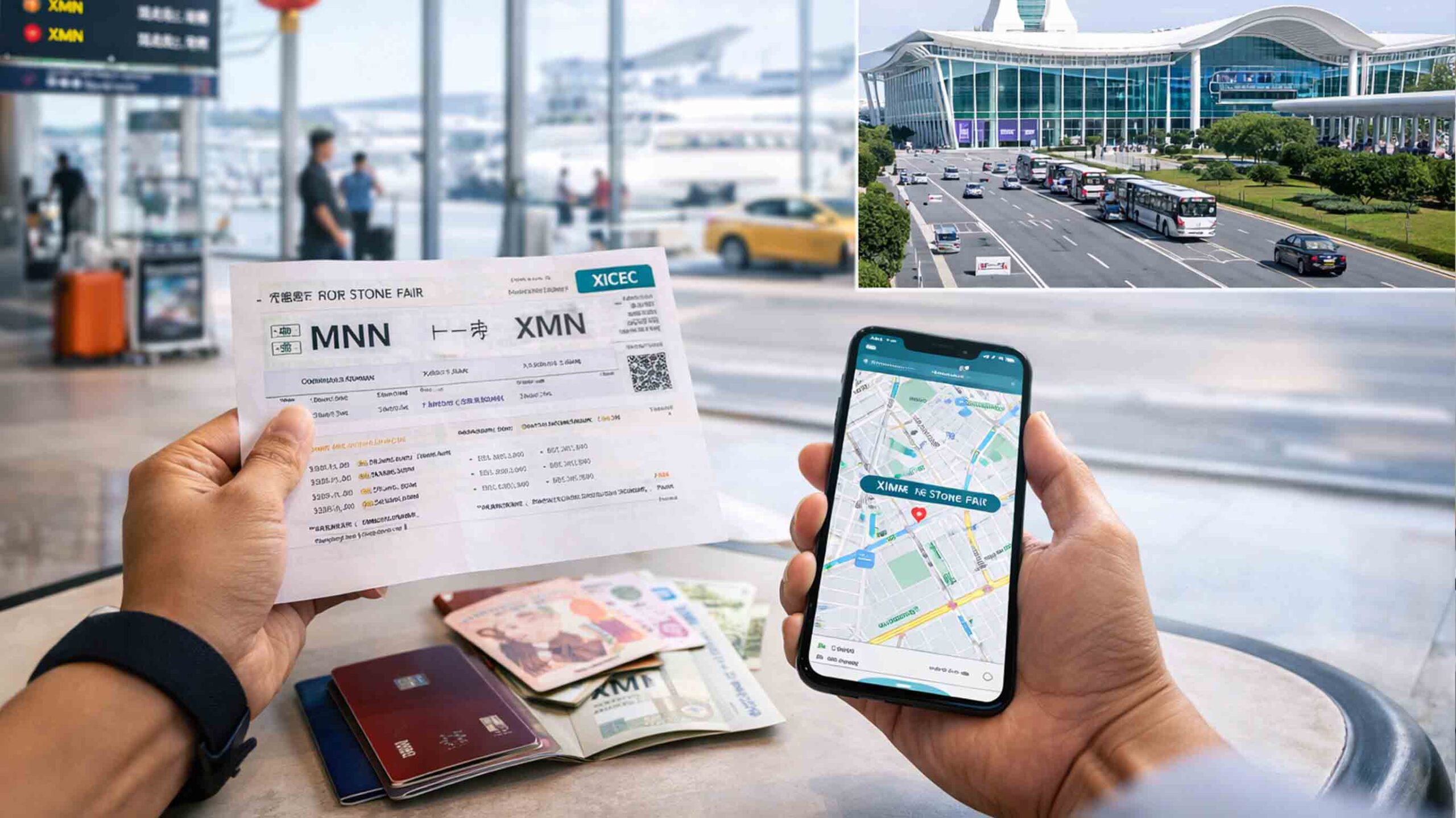
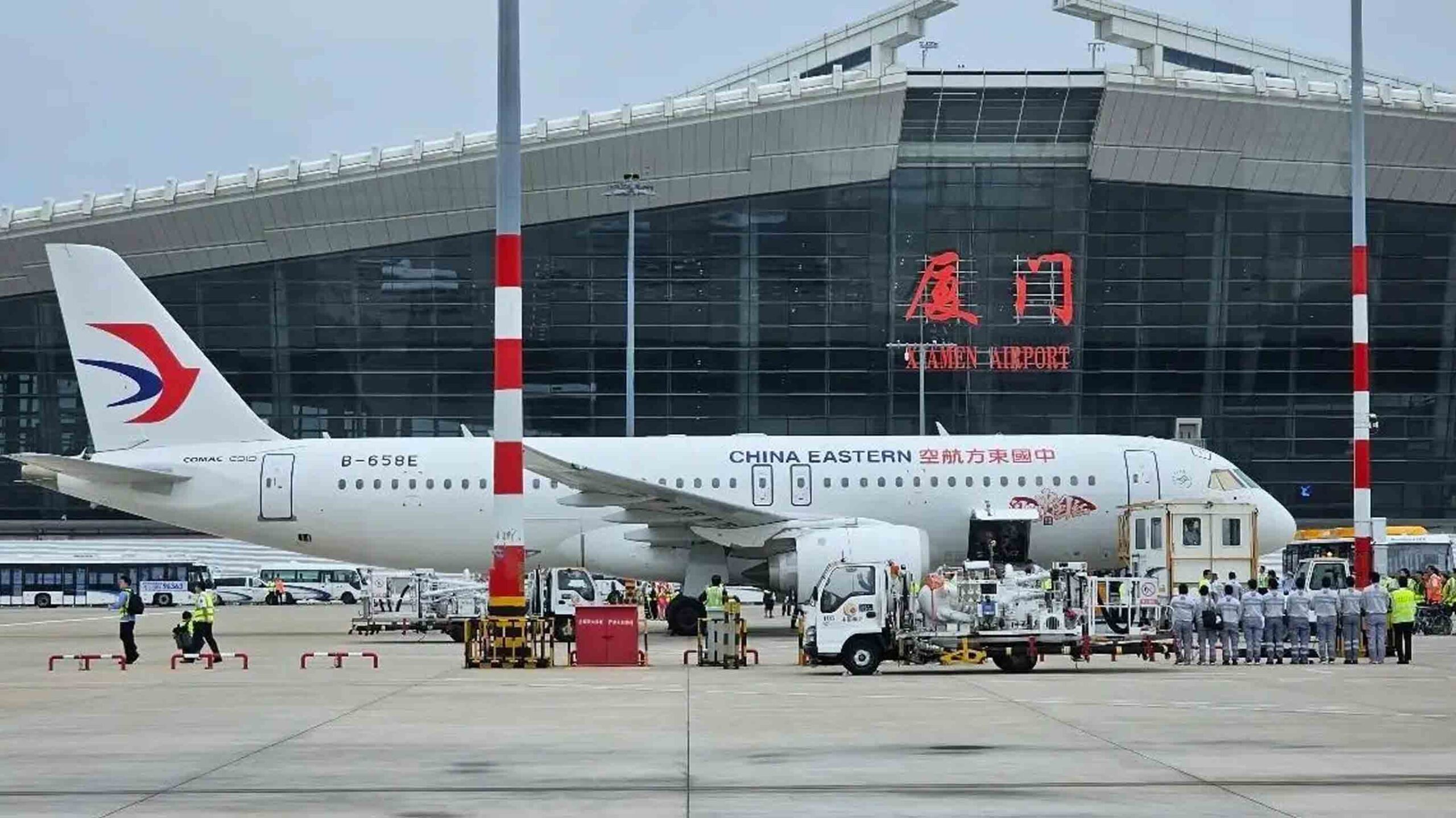
Xiamen’s main airport is Xiamen Gaoqi International Airport (XMN). It’s roughly 12 km from downtown according to multiple travel references.
Flights: how buyers should choose routes to Xiamen
Pick arrival windows that protect your first morning
For trade fairs, the most expensive hour of your trip is the first morning—because that’s when you set the tone for your supplier pipeline. If you land late at night and sleep poorly, your first day becomes “walking and nodding” instead of evaluating factories.
Practical buyer rule:
-
Land 1 day before your planned first hall day.
-
If possible, arrive early afternoon so you can check in, buy a SIM/eSIM, test ride-hailing, and pre-map your venue entrances.
Direct vs hub routes (the buyer logic)
Not every country has direct flights to Xiamen, so you often connect through major hubs. Choose based on risk tolerance, not just ticket price:
-
If your schedule is dense (factory meetings + booth visits), prioritize fewer connections and avoid ultra-tight layovers.
-
If you carry samples or demo tools, avoid routes with frequent baggage misconnect risk.
Airport terminal note (helps when you’re jet-lagged)
Some airport guides note that Xiamen Gaoqi has multiple terminals and that certain terminals handle different flight categories.
Even if you don’t memorize terminal assignments, do one simple thing: screenshot your airline’s terminal info the day before you fly.

Entry and visa: what to check so you don’t get surprised at the airport
Visa rules can change, so the winning strategy is simple: verify your eligibility close to departure using official or airline sources, then keep proof (confirmed onward ticket, hotel booking, etc.) ready.
Visa-free transit (short-stay business travel use case)
Xiamen Airlines publishes guidance describing China’s 144-hour visa-free transit eligibility and notes that entry/exit ports for Xiamen include Xiamen Gaoqi International Airport (and certain wharfs/cruise facilities).
In addition, Visa for China’s FAQ materials describe a 240-hour visa-free transit framework (up to 10 days) for eligible countries and ports—again, details depend on nationality and routing, so treat this as a “check if you qualify” path rather than a guarantee.
Buyer tip: don’t gamble—build a compliant route
Transit visa-free policies often require:
-
Passport from an eligible country
-
Confirmed onward ticket to a “third place”
-
Staying within permitted areas/time
If you’re going to the fair to meet stone manufacturers and audit factory capability, don’t let entry uncertainty be the weak link. If you’re unsure, apply for the standard business visa route early.
Hotels: where to stay for Xiamen Stone Fair (and why it matters)
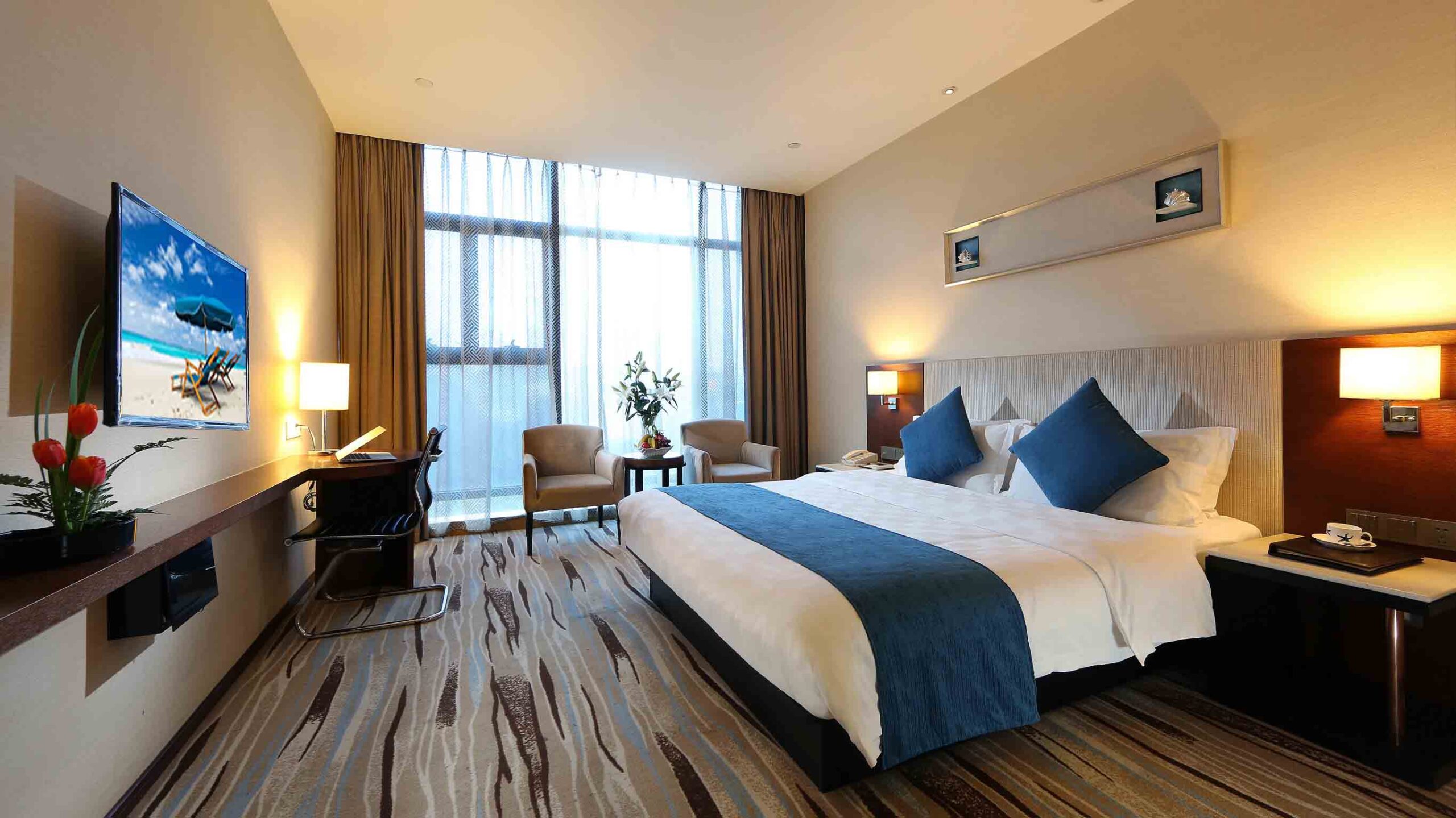
If you search “Xiamen Stone Fair hotel,” you’ll see a million options. Here’s the buyer filter: choose a location that protects your morning hours and reduces “commute friction” when you’re carrying catalogs, samples, or meeting notes.
Zone A: Near XICEC (best for time-sensitive buyers)
This is the simplest choice if your priority is showing up early and leaving late without transport drama. Staying near the venue reduces the risk of morning bottlenecks and helps you schedule quick “reset breaks” (drop samples, charge devices, change shoes).
Best for:
-
Buyers with 2–3 packed hall days
-
People running factory verification interviews
-
Teams splitting up and regrouping frequently
Zone B: Downtown Xiamen (best for dinners + broader meetings)
Downtown can be better if you’re doing dinners with suppliers, visiting showrooms, or meeting partners off-site. You trade some morning commute risk for easier evening logistics and more restaurant density.
Best for:
-
Buyers mixing fair + city meetings
-
Teams hosting multiple supplier dinners
Zone C: Near the airport / Huli (best for short trips or late arrivals)
If your trip is very short or your arrival is late, airport-adjacent areas can reduce stress. But for multi-day fair attendance, you often “pay back” the saved airport time with repeated commutes to XICEC.
Best for:
-
1-day fair visits
-
Buyers landing late and leaving early
-
Teams doing quick procurement “hit-and-run” missions
Hotel booking tactics that save real money (and headaches)
-
Book refundable if possible—fair schedules change fast.
-
Prioritize strong Wi-Fi and quiet rooms (your follow-up emails are where deals begin).
-
Choose a lobby that supports business meetings (you’ll use it, whether you planned to or not).
Transport: airport → hotel → venue without losing your mind
From Xiamen Gaoqi Airport (XMN) to XICEC area
For buyers, you want repeatability—a method that works even when you’re tired, carrying bags, or arriving at a bad hour.
Option 1: Taxi / ride-hailing (fastest, simplest)
Rome2Rio shows an example route from Xiamen Airport (XMN) to a hotel near the convention/exhibition center area with taxi time around 11 minutes and an estimated cost range.
Travel guides also note taxi/ride-hailing as the most convenient transfer approach, and Didi is commonly referenced as the ride-hailing option used in China.
Buyer tip: if you’re arriving during peak fair days, add buffer time—short distances can still slow down.
Option 2: Metro + short taxi (best balance during traffic peaks)
Rome2Rio also describes a combined method (taxi + metro line 2) with a total time around 30 minutes in one sample route scenario.
This is useful when road traffic spikes: metro gets you close, taxi handles the last mile.
Option 3: Shuttle / public transport (budget-friendly, slower)
Xiamen airport-to-city guides list multiple options including shuttle, bus/BRT, and transfers, depending on your destination and time.
For most business buyers, use this only if you have light baggage and flexible timing.
Getting to XICEC each morning: the time-saving mindset
Even if your hotel is “not far,” don’t assume morning travel is smooth. A show day has “surge waves”—many people moving at similar times.
Buyer strategies:
-
Leave earlier than you think on Day 1, then adjust.
-
Avoid back-to-back meetings in different halls without buffer.
-
Build one daily “admin slot” to send RFQs, share photos, and update your shortlist.
And if you haven’t mapped the full show context yet, link your travel post back to the pillar guide: Xiamen Stone Fair 2026: The Complete Buyer’s Guide (Dates, Halls, Sourcing Strategy & Trends)
Time-saving routes that actually matter on fair week
Route strategy 1: “Two-base” planning (hotel base + venue base)
Your trip works best when you operate from two predictable bases:
-
Hotel base: sleep, storage, device charging, quick resets
-
Venue base: a consistent meeting point (e.g., a café area, a hall landmark, or a designated entrance)
This reduces “coordination tax” when your team splits into hall missions.
Route strategy 2: Cluster meetings by proximity, not by supplier priority
Buyers often schedule by “importance.” Better: schedule by walking distance.
-
Morning: highest cognitive load (supplier verification interviews)
-
Midday: browsing + sample checks
-
Late afternoon: follow-up meetings, RFQ confirmation, and documentation collection
Route strategy 3: Avoid peak choke points by shifting your rhythm
If you arrive 20–30 minutes earlier than the peak rush, you reduce queue time, reduce security friction, and increase your chance of getting quiet time with key suppliers before they get swarmed.
What buyers should prepare for travel logistics (so the fair stays “business-first”)
Payments and connectivity
Many services in China are easier with local-friendly payment and connectivity. Even if you don’t rely on mobile payments for everything, plan for:
-
A working data plan (SIM/eSIM)
-
A backup communication method (email + messaging)
-
Offline maps or saved venue pins
Language and address handling
Keep your hotel and venue addresses saved in both English and Chinese when possible. Venue listings commonly show XICEC at Huizhan Road / Conference & Exhibition Road.
Buyer packing (travel edition)
If your mission includes factory verification and wholesale sourcing:
-
Carry a small “documentation capture kit” (phone storage space, power bank, charging cable, cloud folder)
-
Keep business cards ready (yes, still works surprisingly well)
-
Bring comfortable shoes (your supplier pipeline is measured in steps)
Why regulations and procurement trends change how you travel
A modern buyer trip isn’t only “get there and walk halls.” Procurement expectations are shifting toward stronger product information and traceability habits in global supply chains. Even if you’re not asked for formal passports or lifecycle documentation on day one, the suppliers who can produce clear, consistent documentation tend to move faster through buyer approval cycles.
That’s why your travel plan should include:
-
Time for collecting certificates and scope details
-
Time for photographing packing examples and labeling practices
-
Time for writing RFQs while conversations are fresh
In other words: your travel schedule is part of your sourcing strategy.
Final travel checklist: the “don’t regret this later” list
-
Confirm event dates and your hall plan before booking flights
-
Choose hotel zone based on your time risk tolerance (near venue if schedule is tight)
-
Decide your default daily route (Taxi/DiDi vs Metro + short taxi)
-
Verify visa eligibility close to departure using official/airline channels
-
Reserve buffers: Day 0 arrival + daily admin slot
-
Prepare a system for collecting proof and documenting supplier conversations
If you want the complete “buyer operating system” beyond travel—dates, halls logic, sourcing strategy, and trends—connect this article to Xiamen Stone Fair 2026: The Complete Buyer’s Guide (Dates, Halls, Sourcing Strategy & Trends)
FAQ
1) What is the best airport to fly into for Xiamen Stone Fair 2026?
Most international and domestic travelers use Xiamen Gaoqi International Airport (XMN). It’s commonly described as about 12 km from downtown, with taxi, shuttle, and other transfer options available.
2) Where should I stay for Xiamen Stone Fair to save the most time?
If your schedule is packed, staying near XICEC is usually the best time-saver. Downtown is better for dinners and off-site meetings, while airport-area hotels work best for very short trips or late arrivals.
3) How do I get from Xiamen Airport (XMN) to the exhibition center area?
Taxi or ride-hailing is typically the simplest. A combined metro + short taxi approach can be useful during traffic peaks, and shuttle/public transport can work if you have light baggage and flexible timing.
4) Can I use China’s visa-free transit to attend the fair?
Some travelers may qualify for visa-free transit policies depending on nationality, route, and port rules. Check official or airline guidance close to departure and make sure you meet all ticketing and stay-area requirements.
5) What are the best time-saving tips for buyers during fair week?
Arrive one day early, cluster meetings by proximity, leave earlier than peak rush on Day 1, and build a daily admin slot for RFQs and documentation capture while details are fresh.
References
1) Natural Stone Institute — “Xiamen International Stone Fair” — Natural Stone Institute
2) StoneContact — “XIAMEN STONE FAIR” — StoneContact
3) China Exhibition — “Xiamen International Conference & Exhibition Center (XICEC) venue address” — ChinaExhibition.com
4) AMI Magazine — “Xiamen International Conference & Exhibition Center (address)” — AMI Magazine
5) Xiamen Airlines — “China’s 144-Hour Visa-Free Transfer Policy” — XiamenAir
6) Visa for China — “Visa-Free Entry Policies for Foreign Nationals (FAQ)” — VisaForChina.cn
7) Trip.com Guide — “Xiamen Airport to City: transfers and options” — Trip.com
8) Rome2Rio — “Xiamen Airport (XMN) to convention/exhibition center area transport options” — Rome2Rio
What a buyer-focused travel guide is really solving. For Xiamen Stone Fair, travel logistics are not “nice-to-have comfort.” They are your sourcing infrastructure. If your arrival, hotel location, and daily routes are unstable, you lose morning hours, miss key meetings, and finish the day too tired to verify suppliers properly. A good travel plan converts physical movement into reliable deal-making time.
Why fair-week travel behaves differently from normal city travel. During major exhibitions, transport patterns compress into predictable surge waves: mass check-ins, morning entry queues, midday congestion, and evening supplier dinners. A route that seems “short” on a map can become inconsistent in real time. The travel strategy that wins is the one that stays repeatable under stress, not the one that looks cheapest or shortest.
How to choose flights like a procurement professional, not a tourist. Your best ROI decision is protecting Day 1 performance. Arrive at least one day early, ideally in the afternoon, so you can check in, test connectivity, confirm venue access, and pre-map entrances. Reducing jet-lag and uncertainty improves supplier evaluation quality—because factory-proof interviews demand attention, not exhaustion.
What hotel selection really controls: morning reliability and follow-up speed. Near-venue hotels minimise commute risk and allow quick resets (drop samples, charge devices, re-label photos). Downtown hotels can improve evening meeting convenience but may increase morning variability. Airport/Huli areas can work for short trips, but repeated transfers may quietly tax your schedule. Your hotel is less about comfort and more about how many high-quality supplier conversations you can sustain per day.
Option logic: the three transport playbooks buyers actually use. Playbook A is taxi/ride-hailing as default for speed and simplicity. Playbook B is metro + short taxi during traffic peaks to stabilise arrival times. Playbook C is shuttle/public transport only when you have light luggage and flexible timing. Choose one default method and one backup method—buyers lose time when they “decide transport” from scratch every morning.
How to build time-saving routes inside the fair week. The fastest path is not always the straightest. Create two predictable bases: a hotel base for resets and a venue base as your team’s meeting point. Cluster meetings by proximity, not by “importance,” and protect your highest-focus hours for verification meetings. Also, shift your rhythm earlier than the crowd on Day 1 to reduce entry friction and increase quiet time with top suppliers.
Considerations that protect compliance and entry stability. Entry policies and visa pathways vary by nationality and routing, and these details can change. The buyer mindset is to reduce uncertainty: verify eligibility close to departure using official or airline sources, keep confirmation documents ready, and avoid “borderline” routes that risk delays. If your sourcing trip includes factory verification meetings, entry uncertainty is an avoidable risk.
Why regulations and documentation trends change what you collect while traveling. Modern procurement increasingly rewards suppliers with clear, consistent documentation habits. That means your travel plan should include time blocks for capturing evidence: certificates, packaging examples, lot labels, and reference photos. When you collect documentation on-site and label it properly, you accelerate internal approvals after the fair—turning travel time into procurement momentum.
How to close the loop after landing back home. A travel plan is complete only when it feeds follow-up discipline. Consolidate contacts daily, send RFQs within 24–72 hours, and schedule verification calls within two weeks. Buyers who do this convert faster because they preserve context, reduce assumption mismatch, and maintain the urgency created by face-to-face meetings.
Where this page connects in your internal linking system. Use this travel guide as the logistics hub that routes readers into the full show strategy. Add a contextual link to your pillar: Internal Link: Xiamen Stone Fair 2026: The Complete Buyer’s Guide (Dates, Halls, Sourcing Strategy & Trends) → /xiamen-stone-fair-2026-the-complete-buyers-guide-dates-halls-sourcing-strategy-trends/