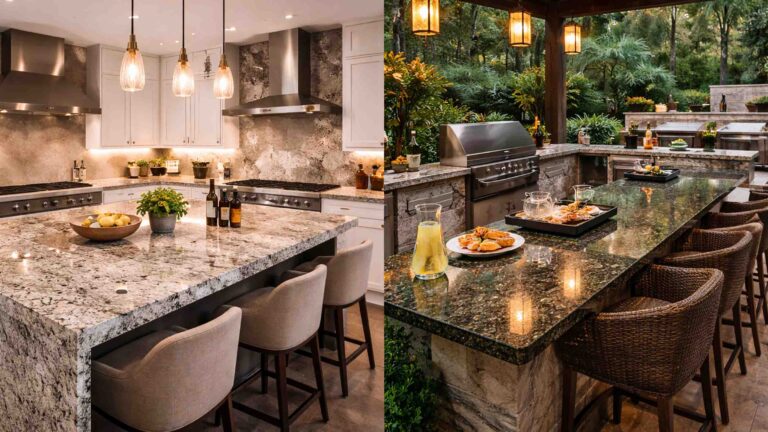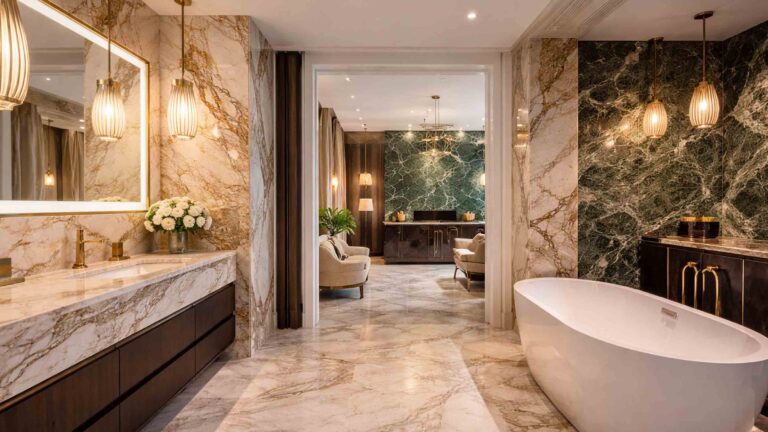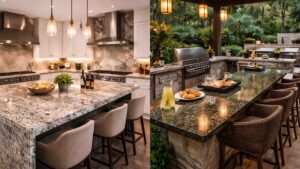
Taj Mahal Quartzite is a premium natural stone widely used in luxury kitchens for its rare combination of marble-like elegance and granite-level durability. Known for its soft beige tones, subtle veining, and high quartz content, it offers excellent resistance to heat, scratches, and daily wear when properly sealed. As design trends move toward calm, timeless interiors and long-lasting materials, Taj Mahal quartzite has become a preferred choice for kitchen countertops, islands, and full-height stone surfaces in high-end residential projects.
Introduction: Why Taj Mahal Quartzite Keeps Appearing in High-End Kitchens
In recent years, luxury kitchen design has shifted away from overly dramatic materials toward surfaces that feel calm, architectural, and timeless. Homeowners, designers, and builders increasingly seek stone materials that balance elegance with performance—materials that look refined without demanding constant maintenance. Within this shift, Taj Mahal Quartzite has emerged as one of the most requested natural stone surfaces for premium kitchens.
Often mistaken for marble at first glance, Taj Mahal quartzite offers a soft, creamy appearance with subtle veining, yet delivers durability closer to granite. This unique combination has made it especially attractive for kitchen islands, countertops, backsplashes, and full-height stone installations. Its rise is not accidental; it reflects broader changes in consumer expectations, design philosophy, and performance standards for kitchen surfaces.
This article explores what makes Taj Mahal quartzite distinctive, how it performs in real kitchen environments, and why it continues to redefine luxury kitchen design in modern homes.

Understanding Taj Mahal Quartzite as a Natural Stone
Geological Origin and Formation
Taj Mahal quartzite is a natural metamorphic stone formed from sandstone subjected to intense heat and pressure over millions of years. During this transformation, quartz grains fuse together, creating an exceptionally dense and hard surface. This geological process is what differentiates quartzite from marble, which originates from limestone and has a softer mineral structure.
The high quartz content—often exceeding 90%—gives Taj Mahal quartzite its remarkable strength while preserving a refined, marble-like aesthetic. This duality is rare in natural stone and explains its growing demand in functional yet design-forward spaces.
Color Palette and Visual Characteristics
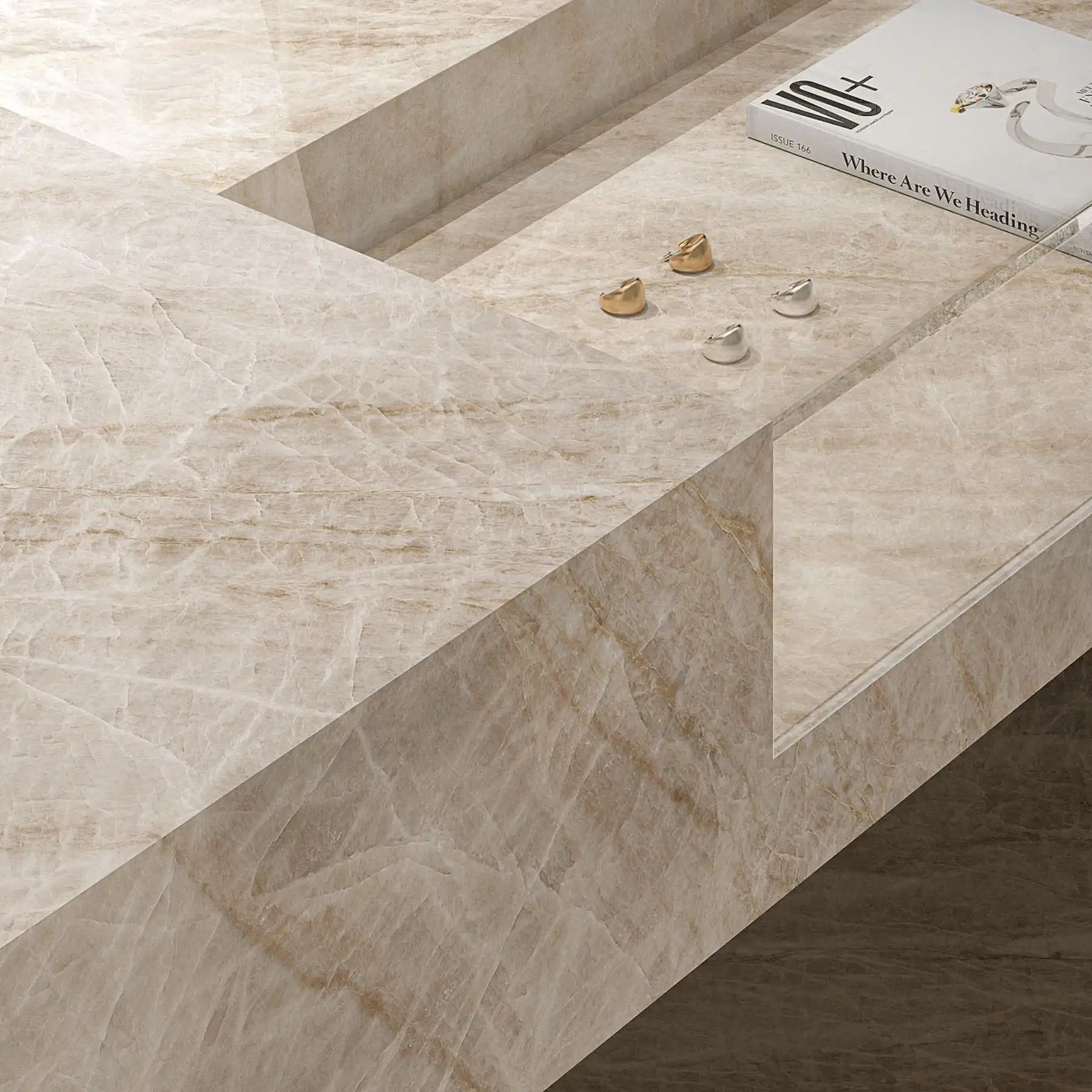
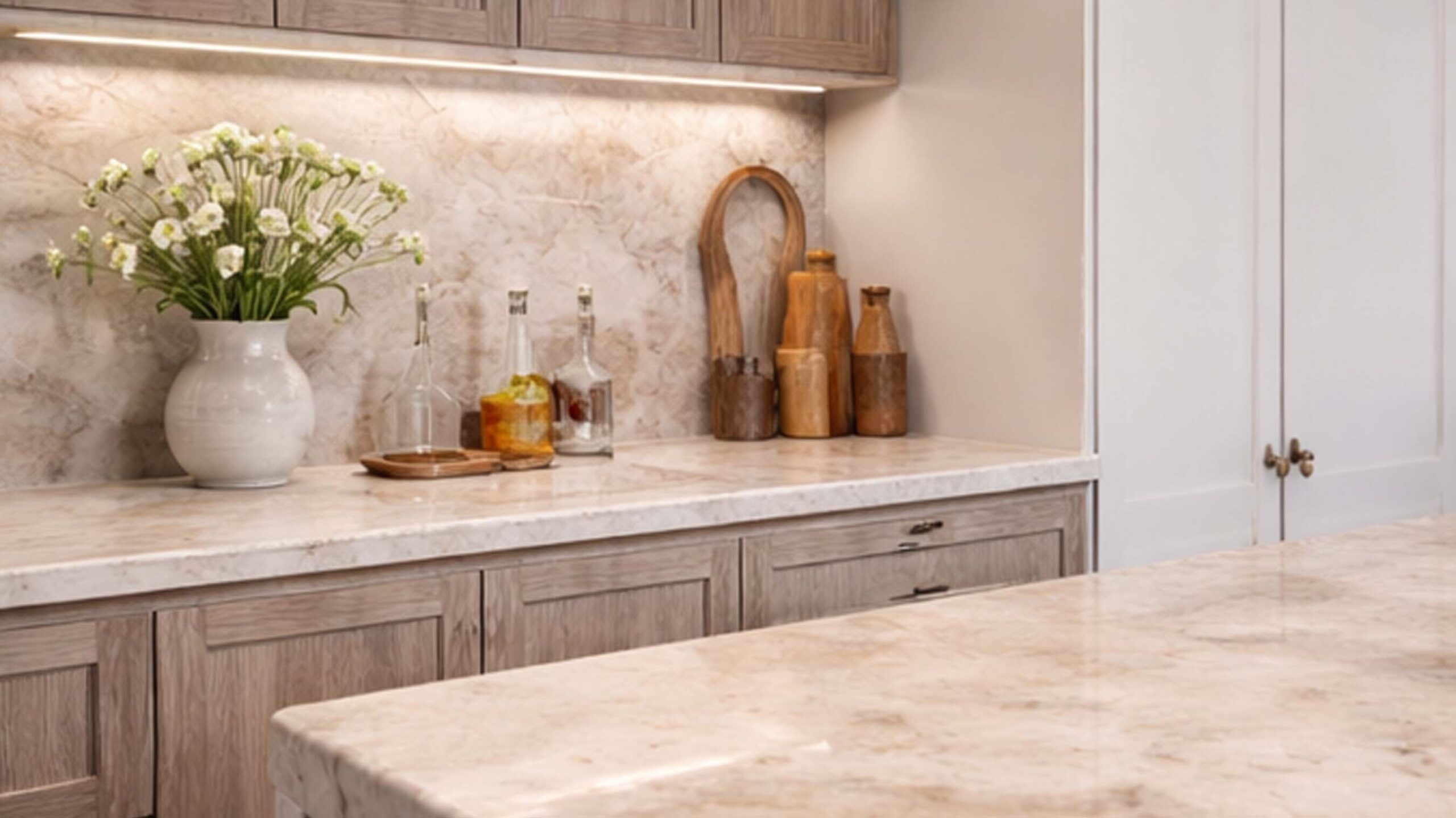
Visually, Taj Mahal quartzite is defined by warm beige, ivory, and soft taupe tones, often accented by gentle linear veining. Unlike bold marbles with dramatic contrasts, Taj Mahal quartzite delivers visual restraint. Its surface reflects light subtly, contributing to bright, open kitchen environments without overpowering surrounding elements.
This restrained elegance allows it to integrate seamlessly with various cabinetry styles, from light oak and walnut to painted shaker and slab-front modern kitchens.
Why Taj Mahal Quartzite Is Ideal for Kitchen Countertops
Strength and Resistance in Daily Use
From a performance standpoint, Taj Mahal quartzite excels in kitchen environments. With a Mohs hardness rating typically between 7 and 8, it resists scratches far better than marble and many softer stones. This makes it well-suited for food preparation areas where knives, cookware, and frequent activity are unavoidable.
Heat resistance is another critical advantage. Quartzite can tolerate hot cookware without immediate damage, reducing the risk of thermal shock compared to engineered materials. For homeowners who value both aesthetics and practicality, this balance is essential.
Porosity and Sealing Requirements
While denser than marble, Taj Mahal quartzite remains a natural stone and requires proper sealing. When sealed correctly, it demonstrates excellent resistance to staining from common kitchen substances such as wine, oil, and acidic foods. Most installations benefit from periodic resealing, typically every one to two years, depending on usage and finish.
This maintenance routine is relatively minimal when compared to softer natural stones, making Taj Mahal quartzite appealing for long-term residential use.
Design Flexibility Across Kitchen Styles
Modern Minimalist Kitchens
In contemporary kitchens, Taj Mahal quartzite complements clean lines and understated materials. Its soft veining pairs well with flat-panel cabinetry, integrated appliances, and minimal hardware. When used on waterfall islands, it reinforces architectural continuity while maintaining warmth.
Transitional and Classic Interiors
For transitional kitchens that blend traditional and modern elements, Taj Mahal quartzite acts as a unifying surface. It pairs comfortably with classic millwork, decorative lighting, and mixed metal finishes, allowing designers to bridge stylistic eras without visual conflict.
Open-Concept Living Spaces
In open-plan homes, kitchen surfaces often need to coordinate with adjacent living and dining areas. Taj Mahal quartzite’s neutral tone helps create visual flow, ensuring the kitchen remains part of a cohesive interior narrative rather than a separate design statement.
Comparing Taj Mahal Quartzite to Alternative Stone Surfaces
Taj Mahal Quartzite vs Marble
Marble is often admired for its veining and softness but criticized for its vulnerability to etching and staining. Taj Mahal quartzite delivers a similar visual elegance while offering superior durability. For homeowners seeking marble aesthetics without constant maintenance anxiety, quartzite provides a compelling alternative.
Taj Mahal Quartzite vs Granite
Granite offers strength and durability but can sometimes feel visually busy or heavy. Taj Mahal quartzite introduces a lighter, more refined aesthetic while retaining comparable structural performance. This makes it especially attractive for kitchens aiming for brightness and openness.
Taj Mahal Quartzite vs Engineered Quartz
Engineered quartz provides consistency and low maintenance but lacks the depth and variation of natural stone. Taj Mahal quartzite offers uniqueness—no two slabs are identical—while still meeting functional demands, appealing to homeowners who value authenticity.
Finishes and Edge Profiles for Taj Mahal Quartzite
Surface Finishes
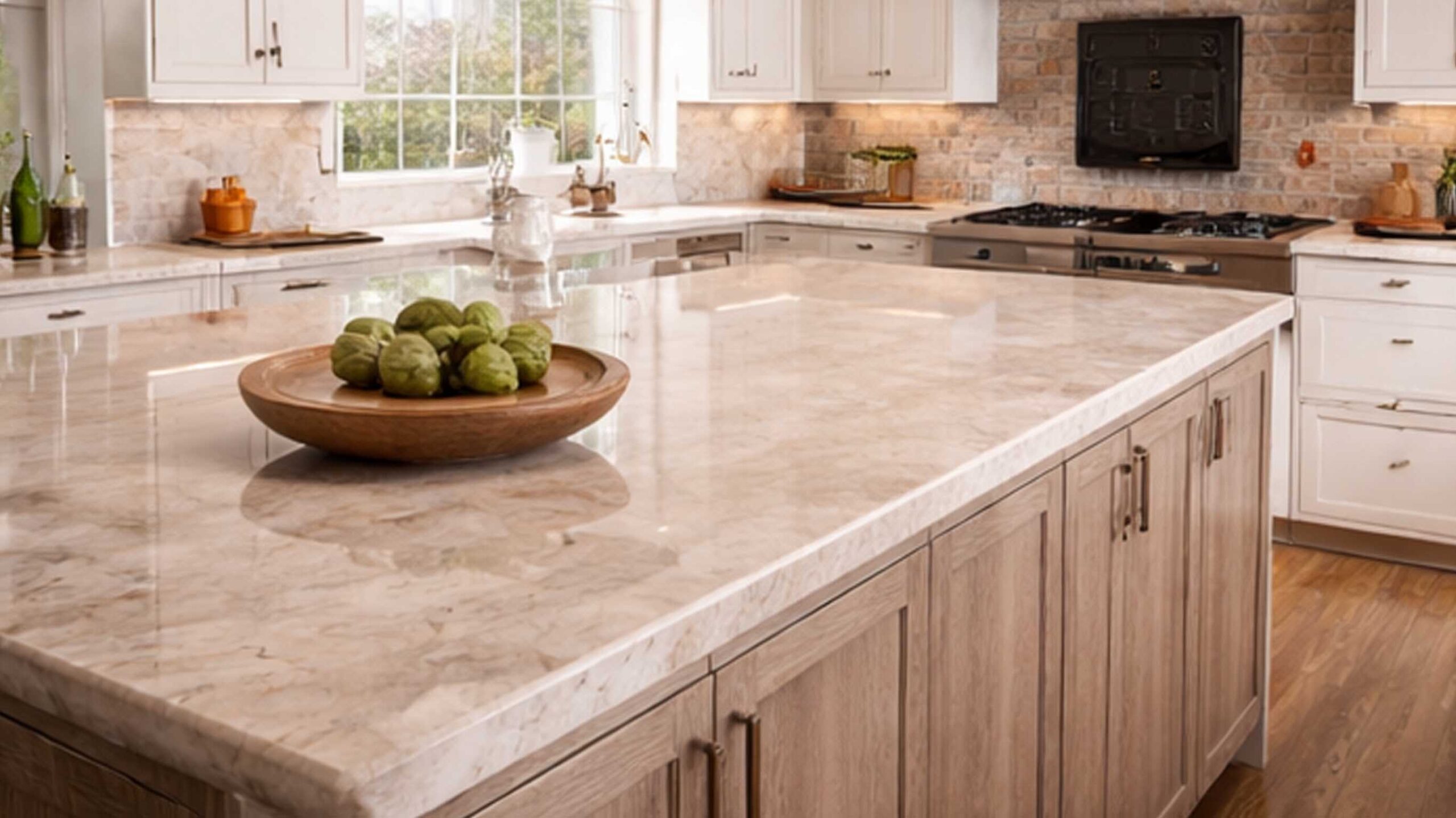
Polished finishes enhance reflectivity and highlight veining, making them popular for contemporary kitchens. Honed finishes offer a softer, matte appearance, reducing glare and emphasizing texture. Leathered finishes introduce tactile depth and subtle grip, often preferred in rustic or organic designs.
Edge Treatments
Edge profiles influence both aesthetics and safety. Straight and eased edges suit modern kitchens, while ogee and beveled edges complement more traditional spaces. Selecting the appropriate edge enhances the stone’s integration into the overall design.
Sustainability and Regulatory Considerations
Natural Stone and Environmental Impact
Natural stone surfaces like Taj Mahal quartzite benefit from longevity. Unlike short-life materials, quartzite installations can last decades, reducing the environmental impact associated with frequent replacements. This durability aligns with sustainability principles increasingly emphasized in residential construction.
Compliance and Building Standards
In many regions, kitchen materials must meet indoor air quality standards. Natural stone emits no volatile organic compounds, supporting healthier indoor environments. As regulations increasingly emphasize material safety and lifecycle impact, quartzite aligns well with evolving expectations.
Installation Best Practices and Long-Term Performance
Professional fabrication and installation are essential to maximize performance. Proper slab selection, precise cutting, and secure substrate preparation ensure structural integrity. Experienced installers also account for veining direction and slab layout, enhancing visual continuity across surfaces.
With appropriate installation and care, Taj Mahal quartzite maintains its appearance and performance for many years, reinforcing its value as a premium kitchen surface.
Why Taj Mahal Quartzite Continues to Define Luxury Kitchens
Luxury today is less about excess and more about refinement. Taj Mahal quartzite reflects this shift by offering subtle beauty, resilience, and adaptability. Its presence in high-end kitchens worldwide is not a trend but a response to evolving design priorities.
As homeowners continue to seek materials that combine authenticity, durability, and understated elegance, Taj Mahal quartzite remains a benchmark in natural stone kitchen design.
FAQ – Google Popular Questions
1. Is Taj Mahal quartzite suitable for kitchen countertops?
Yes. Taj Mahal quartzite is highly suitable for kitchen countertops due to its hardness, heat resistance, and ability to withstand daily wear when properly sealed.
2. Does Taj Mahal quartzite stain easily?
When sealed correctly, Taj Mahal quartzite resists staining from common kitchen substances. Routine sealing helps maintain its protective barrier.
3. How does Taj Mahal quartzite compare to marble in kitchens?
Taj Mahal quartzite offers a marble-like appearance with significantly greater durability, making it more practical for active kitchen environments.
4. What kitchen styles work best with Taj Mahal quartzite?
Its neutral tone and subtle veining make it compatible with modern, transitional, and classic kitchen designs.
5. How long does Taj Mahal quartzite last?
With proper installation and maintenance, Taj Mahal quartzite can last for decades, making it a long-term investment in kitchen design.
References
-
Natural Stone Institute – Quartzite Properties Guide
-
Architectural Digest – Natural Stone in Luxury Kitchens
-
U.S. Green Building Council – Material Longevity and Sustainability
-
Kitchen & Bath Design News – Countertop Material Performance
-
Building Science Corporation – Interior Surface Durability
-
Houzz Research – Kitchen Remodeling Trends
-
Stone World Magazine – Quartzite Market Overview
-
International Masonry Institute – Stone Fabrication Standards
Semantic Insight: Taj Mahal Quartzite in Modern Kitchen Design
What defines Taj Mahal Quartzite in today’s kitchen market?
Taj Mahal quartzite stands out as a natural stone that delivers visual softness without compromising structural performance. Its high quartz composition gives it strength comparable to granite, while its warm, neutral appearance aligns with modern preferences for light, architectural kitchen spaces. This balance positions it as a long-term material choice rather than a short-lived design trend.
Why has Taj Mahal quartzite replaced marble in many luxury kitchens?
Homeowners and designers increasingly prioritize durability alongside aesthetics. While marble offers classic beauty, its susceptibility to etching and staining makes it less practical for active kitchens. Taj Mahal quartzite responds to this concern by offering similar elegance with significantly improved resistance to heat, abrasion, and everyday kitchen use.
How does Taj Mahal quartzite perform in real kitchen environments?
In daily use, Taj Mahal quartzite handles cooking heat, food preparation, and frequent cleaning with minimal surface degradation when properly sealed. Its dense structure reduces liquid absorption, helping prevent staining and preserving its appearance over time. This performance consistency makes it suitable for countertops, islands, and backsplash applications.
What design options does Taj Mahal quartzite support?
Taj Mahal quartzite adapts easily to multiple kitchen styles, including modern minimalist, transitional, and classic interiors. It pairs naturally with wood cabinetry, matte metals, and neutral palettes, and works well in polished, honed, or leathered finishes. Designers often use it to create visual continuity across open-plan kitchen and living spaces.
What considerations should buyers keep in mind?
As a natural stone, Taj Mahal quartzite requires professional fabrication, proper sealing, and periodic maintenance to maintain optimal performance. Slab variation should be reviewed during selection to ensure consistent tone and veining. When sourced and installed correctly, it delivers long-term value aligned with current durability, sustainability, and indoor material standards.