Antique-inspired floor tiles are increasingly used in contemporary interiors to introduce texture, depth, and material authenticity without sacrificing modern performance standards. In 2026, designers favor aged-look stone tiles for their ability to balance clean architectural lines with warmth, visual stability, and long-term durability. When paired thoughtfully with modern fixtures, neutral palettes, and controlled material contrasts, antique-style flooring becomes a foundational element rather than a decorative accent.
Why Antique-Inspired Flooring Is Returning in Modern Design
Interior design in 2026 is moving away from overly polished, uniform surfaces toward materials that feel authentic, grounded, and enduring. Antique-inspired floor tiles—especially those based on natural stone—are gaining renewed attention not because of nostalgia alone, but because they offer visual depth, tactile warmth, and long-term performance.
In contemporary interiors, these floors act as a stabilizing element. They anchor modern spaces that might otherwise feel overly minimal or sterile. When styled correctly, antique-inspired tiles do not compete with modern design—they enhance it, creating a balanced dialogue between past and present.
This guide explains how to pair antique-inspired floor tiles with contemporary décor, focusing on texture, contrast, material choices, and emerging design standards that define 2026 interiors.
Understanding Antique-Inspired Floor Tiles
What Defines an Antique-Inspired Tile
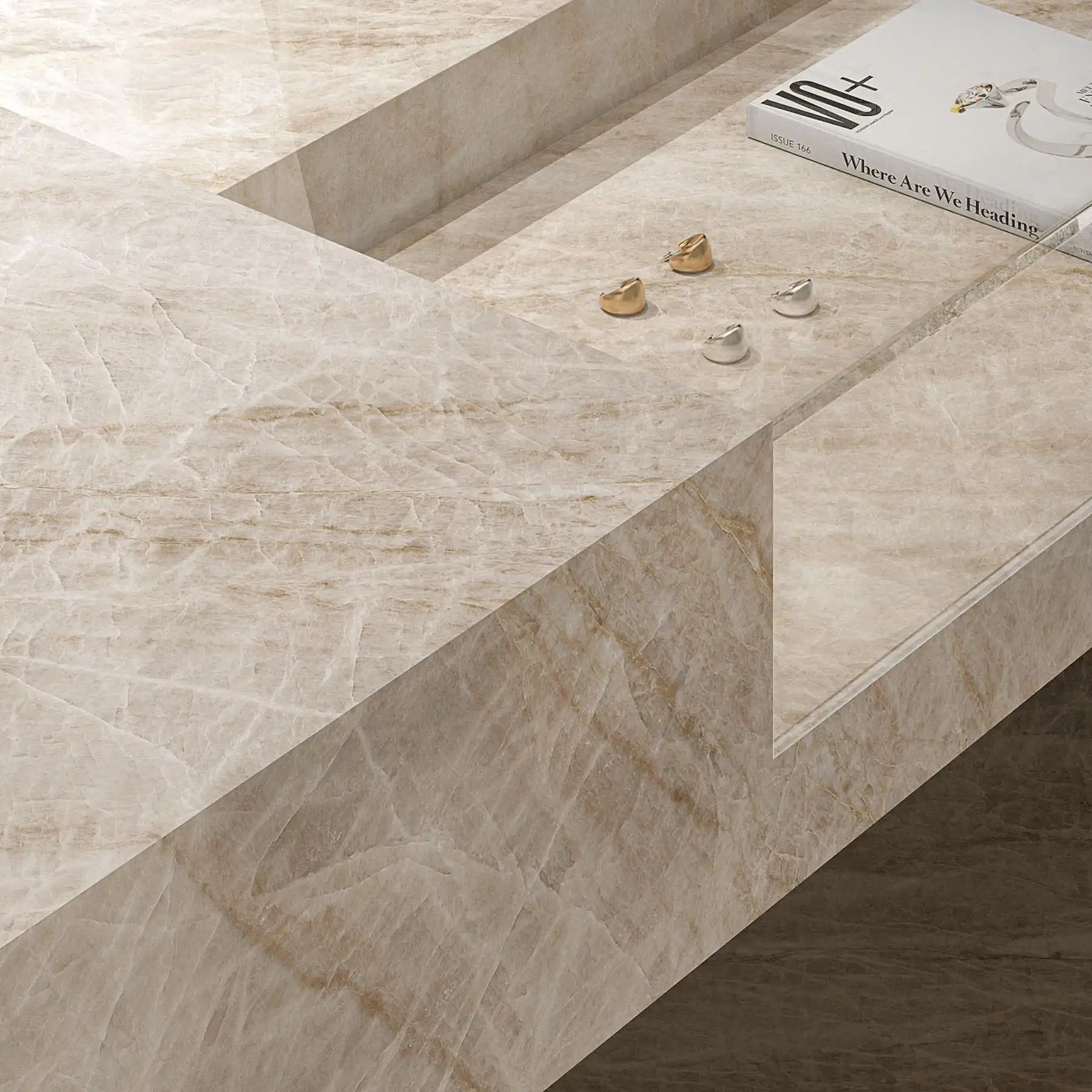
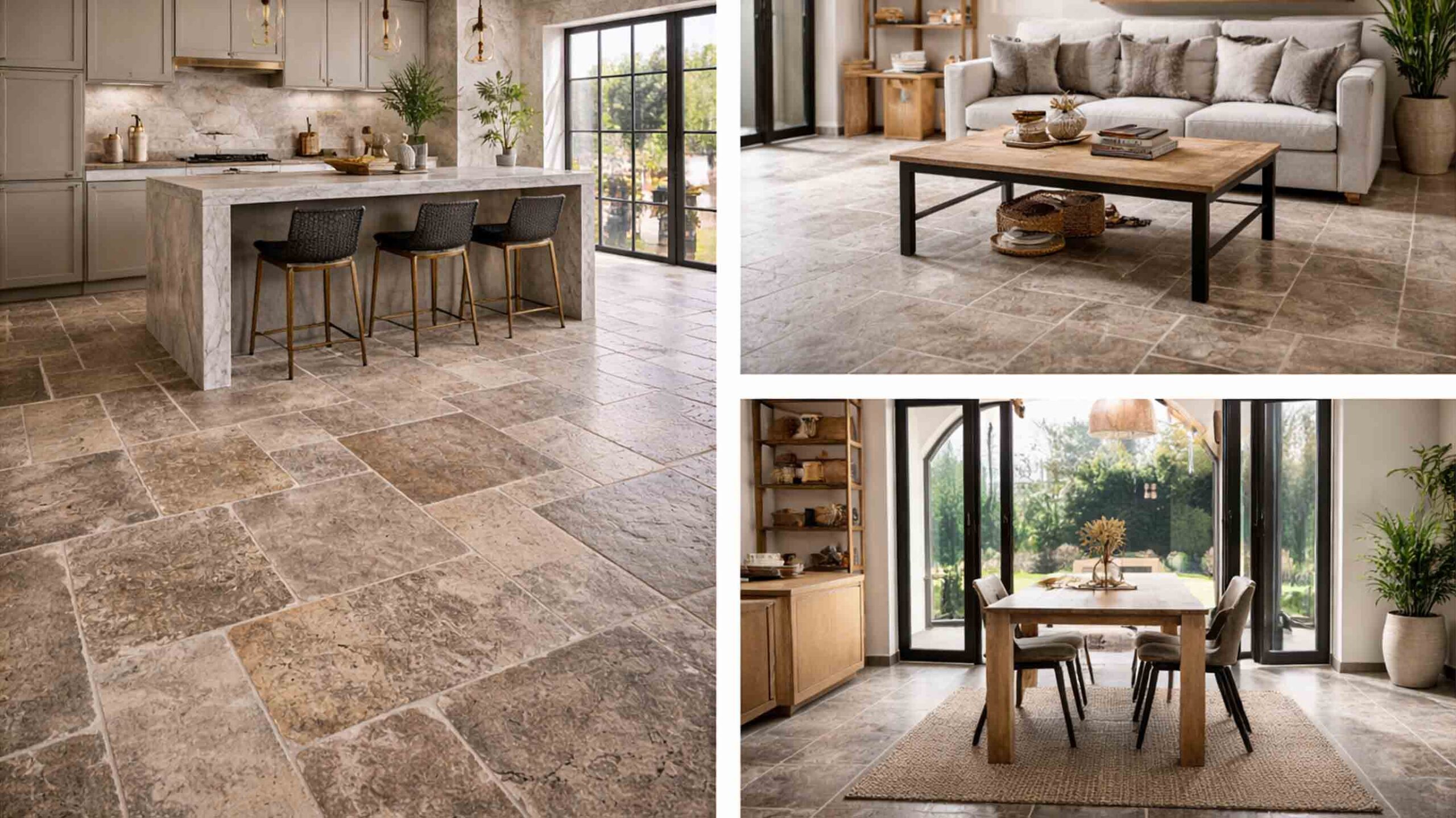
Antique-inspired floor tiles are designed to reflect the character of aged stone surfaces shaped by time, use, and natural wear. Unlike reclaimed materials, these tiles are produced with controlled finishes that replicate historical textures while meeting modern performance standards.
Common characteristics include softened edges, subtle surface variation, muted color palettes, and finishes that reduce glare. These features allow the flooring to feel established rather than newly installed.
Why Designers Are Choosing Them in Modern Spaces
Modern interiors often rely on clean lines, open layouts, and minimal ornamentation. Antique-style flooring introduces contrast without overwhelming the space. The result is a layered aesthetic where modern forms rest on a surface that feels human, tactile, and timeless.
Embrace Subtle Texture and Finish
Texture as a Design Tool
In contemporary interiors, texture plays a more important role than pattern. Antique-inspired tiles offer nuanced surface variation that adds visual interest without introducing busy graphics or bold coloration.
Honed, brushed, or lightly tumbled finishes are particularly effective in modern spaces because they interact naturally with light. These finishes soften reflections, making rooms feel warmer and more comfortable.
Finish Selection for Performance and Style
Beyond appearance, finish selection influences safety and maintenance. Matte and honed surfaces improve slip resistance and conceal minor wear, which aligns with both residential safety expectations and modern building guidelines.
Pair Antique Floors with Modern Fixtures and Hardware
Creating Balance Through Contrast
The key to successfully combining antique-inspired tiles with contemporary décor lies in contrast. Sleek cabinetry, minimal hardware, and streamlined furniture provide a visual counterpoint to the floor’s organic texture.
Metal finishes such as matte black, brushed brass, or stainless steel create a crisp edge that prevents the space from feeling overly rustic. This balance keeps the overall design intentional rather than eclectic.
Case Application: Kitchens and Living Spaces
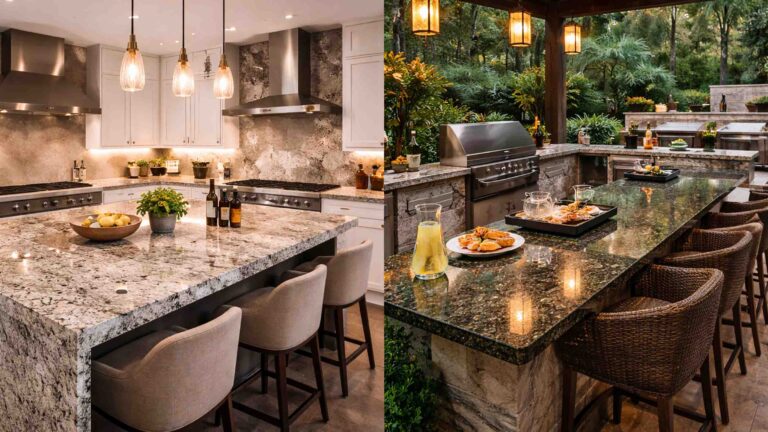
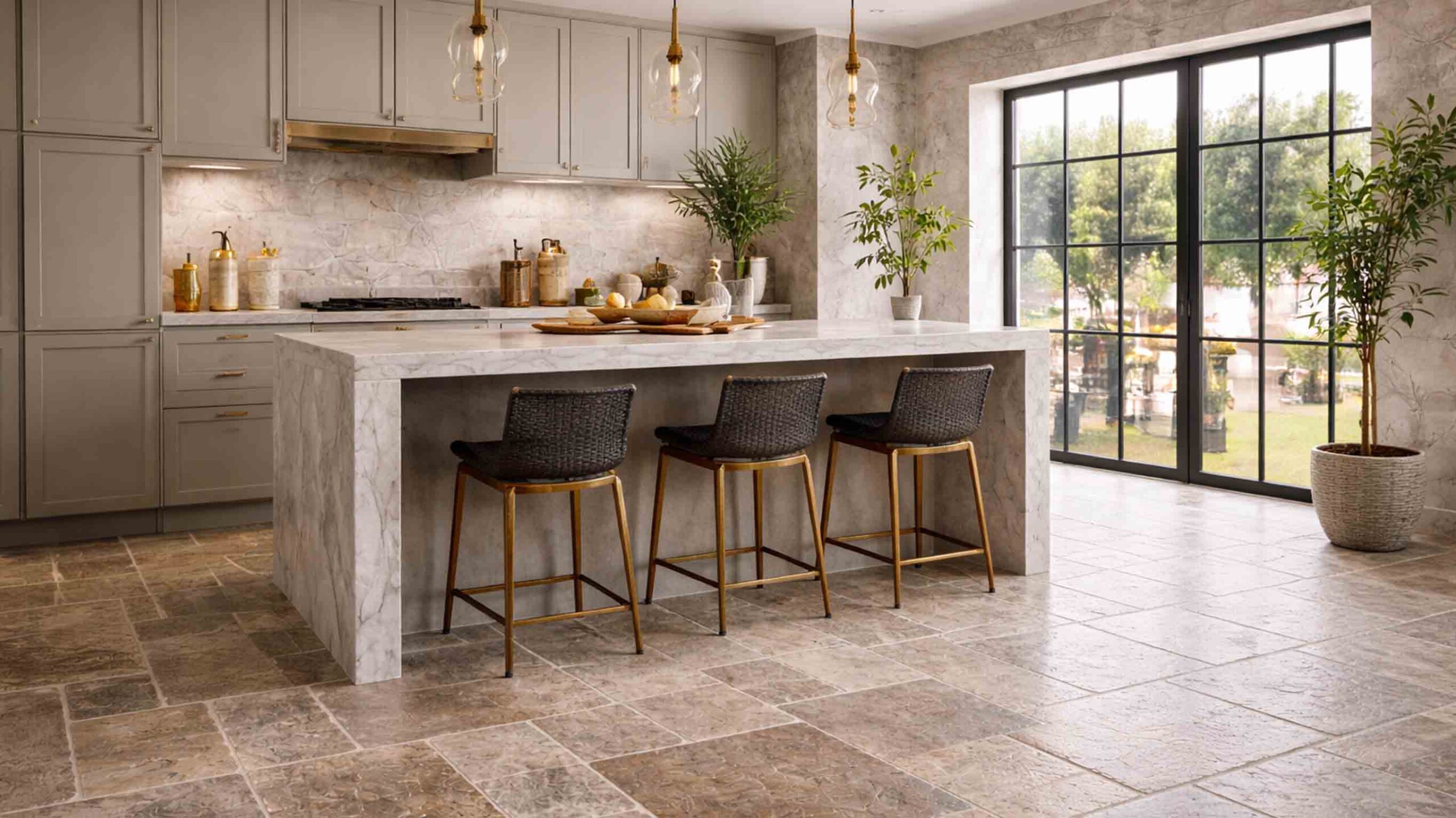
In kitchens, antique-style stone floors pair effectively with flat-panel cabinetry and integrated appliances. In living areas, modern sofas and clean-lined shelving allow the flooring to serve as a grounding element rather than a focal distraction.
Play with Material Contrast for Visual Depth
Mixing Stone, Wood, and Metal
Contemporary interiors increasingly rely on mixed materials to create depth. Antique-inspired stone flooring works particularly well alongside natural wood, concrete, and metal surfaces.
The contrast between smooth modern materials and textured stone adds dimension without requiring additional decoration. This approach supports the minimalist preference for fewer, more meaningful elements.
Avoiding Visual Overload
While contrast is essential, restraint is equally important. Limiting the color palette and allowing the flooring’s texture to remain subtle ensures that the space feels cohesive rather than fragmented.
Keep the Color Palette Clean and Neutral
Why Neutral Tones Dominate in 2026
Neutral color palettes remain central to contemporary design, particularly in open-plan spaces. Antique-inspired tiles often feature soft greys, warm beiges, and muted earth tones that complement modern interiors without overpowering them.
These tones reflect light naturally and adapt well to changing décor, seasonal styling, and evolving furniture choices.
Supporting Long-Term Design Flexibility
Neutral flooring provides long-term flexibility, allowing interiors to evolve over time without requiring material replacement. This aligns with sustainability goals and reduces renovation waste.
Use Details to Elevate the Overall Design
Grout, Edges, and Transitions Matter
Design success often lies in the details. Grout color, joint width, and edge treatments significantly influence how antique-inspired tiles integrate into modern spaces.
Subtle grout tones that blend with the tile surface create continuity, while clean transitions between rooms reinforce a contemporary aesthetic.
Lighting as a Complementary Element
Thoughtful lighting enhances the texture of antique-style flooring. Natural daylight and warm artificial lighting reveal surface variation, adding depth without additional design elements.
Sustainability, Regulations, and Modern Standards
Why Material Longevity Matters
In 2026, design decisions are increasingly evaluated through the lens of durability and environmental impact. Flooring materials that perform reliably over decades reduce the need for replacement and align with sustainability-driven building standards.
Antique-inspired stone tiles meet these expectations by offering long service life and consistent performance.
Compliance with Modern Building Expectations
Contemporary construction guidelines emphasize slip resistance, indoor air quality, and material stability. Properly finished stone flooring supports compliance with these standards while delivering timeless design value.
How to Apply Antique-Inspired Tiles Across Different Rooms
Living Areas and Open-Plan Spaces
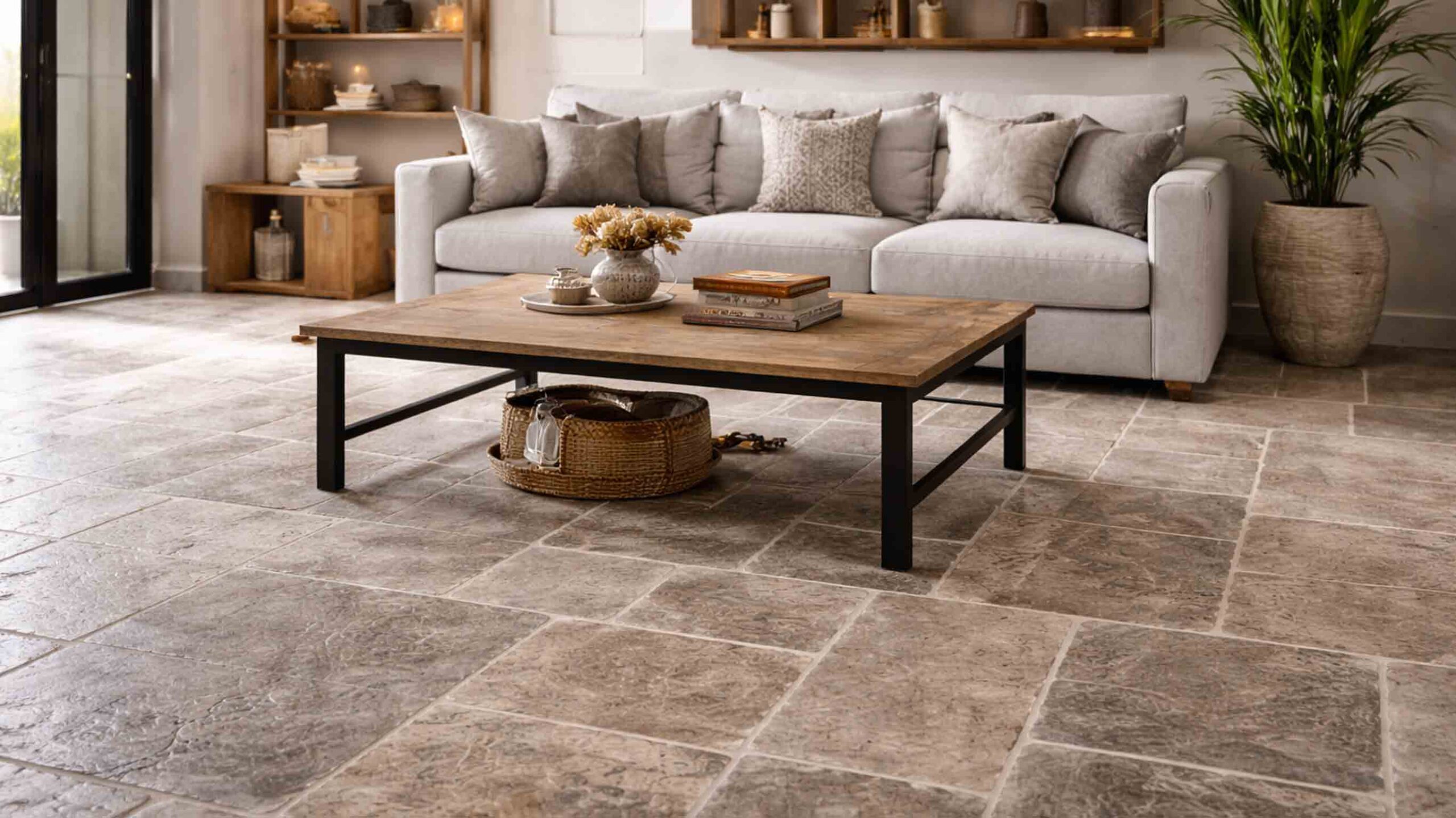
In living rooms and open-plan layouts, antique-inspired floors provide continuity and visual grounding. Their understated character allows furniture and architectural features to stand out.
Kitchens, Hallways, and Transitional Zones
In high-use areas, durability and ease of maintenance are critical. Antique-style stone tiles with appropriate finishes offer both practicality and aesthetic continuity.
Conclusion
Antique-inspired floor tiles are not a step backward in design—they represent a refined evolution toward spaces that feel authentic, comfortable, and enduring. When paired thoughtfully with contemporary décor, these floors create interiors that balance modern clarity with historical character.
In 2026, the most successful interiors are those that prioritize material integrity, visual balance, and long-term performance. Antique-inspired flooring delivers on all three.
FAQ
1. Are antique-inspired floor tiles suitable for modern interiors?
Yes. When paired with clean lines and modern materials, antique-inspired tiles enhance contemporary interiors by adding texture and depth.
2. What finishes work best for antique-style flooring?
Honed, brushed, and lightly tumbled finishes offer the best balance of aesthetics, slip resistance, and maintenance.
3. Can antique-inspired tiles be used in kitchens?
Yes. With proper sealing and finish selection, they perform well in kitchens and other high-use areas.
4. How do antique-style tiles support sustainable design?
Their long lifespan reduces replacement frequency, supporting sustainability goals and lowering material waste.
5. Do antique-inspired tiles require special maintenance?
Routine cleaning and periodic sealing are typically sufficient to maintain performance and appearance.
References
-
Architectural Digest – Contemporary Interior Materials
-
Natural Stone Institute – Stone Flooring Design Guide
-
American Institute of Architects – Residential Design Trends
-
Tile Council of North America – Flooring Standards
-
World Green Building Council – Sustainable Materials
-
Building Research Establishment – Interior Surface Performance
-
Dezeen – Material-Led Interior Design
-
Interior Design Magazine – Modern Stone Applications
Antique-Inspired Flooring and Modern Design
What role do antique-inspired floor tiles play in contemporary interiors?
In modern spaces defined by minimalism and open layouts, antique-inspired flooring acts as a grounding surface. Its subtle irregularity and softened texture introduce visual depth that prevents interiors from feeling overly sterile or transient.
Why are designers reintroducing aged stone aesthetics in new construction?
Designers are responding to a growing preference for materials that feel permanent and authentic. Antique-style tiles provide a sense of continuity and longevity while meeting modern expectations for consistency, safety, and performance.
How do antique-inspired tiles integrate with modern architectural elements?
These floors integrate most successfully when paired with clean-lined cabinetry, minimal hardware, and restrained color palettes. The contrast between refined forms and textured surfaces creates balance rather than visual conflict.
What flooring options best support an antique look with modern reliability?
Engineered stone tiles with honed or brushed finishes offer the appearance of aged materials while delivering predictable thickness, slip resistance, and ease of installation. This makes them suitable for kitchens, living areas, and transitional zones.
What considerations matter most when specifying antique-inspired flooring today?
Surface finish, slip resistance, maintenance requirements, and material longevity are critical factors. Flooring that performs consistently over decades aligns better with sustainability goals and modern building standards than short-lived decorative solutions.
How is the role of antique-style flooring evolving in future interiors?
Antique-inspired flooring is shifting from a stylistic choice to a strategic design foundation. Its ability to age gracefully, support neutral interiors, and reduce renovation frequency positions it as a long-term solution in contemporary residential design.