Quartz countertops are durable but vulnerable to heat, harsh chemicals, UV exposure, impact force, and improper fabrication. Most damage occurs when the resin binders are exposed to high temperatures or aggressive cleaners, causing discoloration, cracking, or surface distortion. This guide explains the science behind quartz degradation and offers prevention strategies aligned with 2024–2025 material-safety regulations and manufacturer recommendations.
Quartz countertops are celebrated for their durability, low maintenance, and resilient engineered structure—but they are not indestructible. Homeowners, contractors, and designers often assume quartz can withstand anything because of its high hardness rating. However, everyday habits, improper cleaning products, unexpected thermal stress, and chemical exposure can still cause quartz countertop damage.
This professional guide explains what can damage quartz countertops, why it happens, and how to prevent it using science-backed practices. It integrates long-tail SEO terms such as quartz countertop damage repair, quartz surface protection tips, quartz countertop manufacturer guidance, and wholesale quartz slab durability insights—placed naturally within the content for strong SERP/SGE/AI indexing.
The goal is not only to help homeowners avoid costly repairs, but to provide the technical reasoning behind quartz vulnerabilities so professionals and buyers can make better long-term decisions.
Understanding How Quartz Countertops Are Made
Before identifying what can damage quartz, it’s essential to understand how engineered stone is constructed.
Composition of engineered quartz
Most quartz slabs consist of:
-
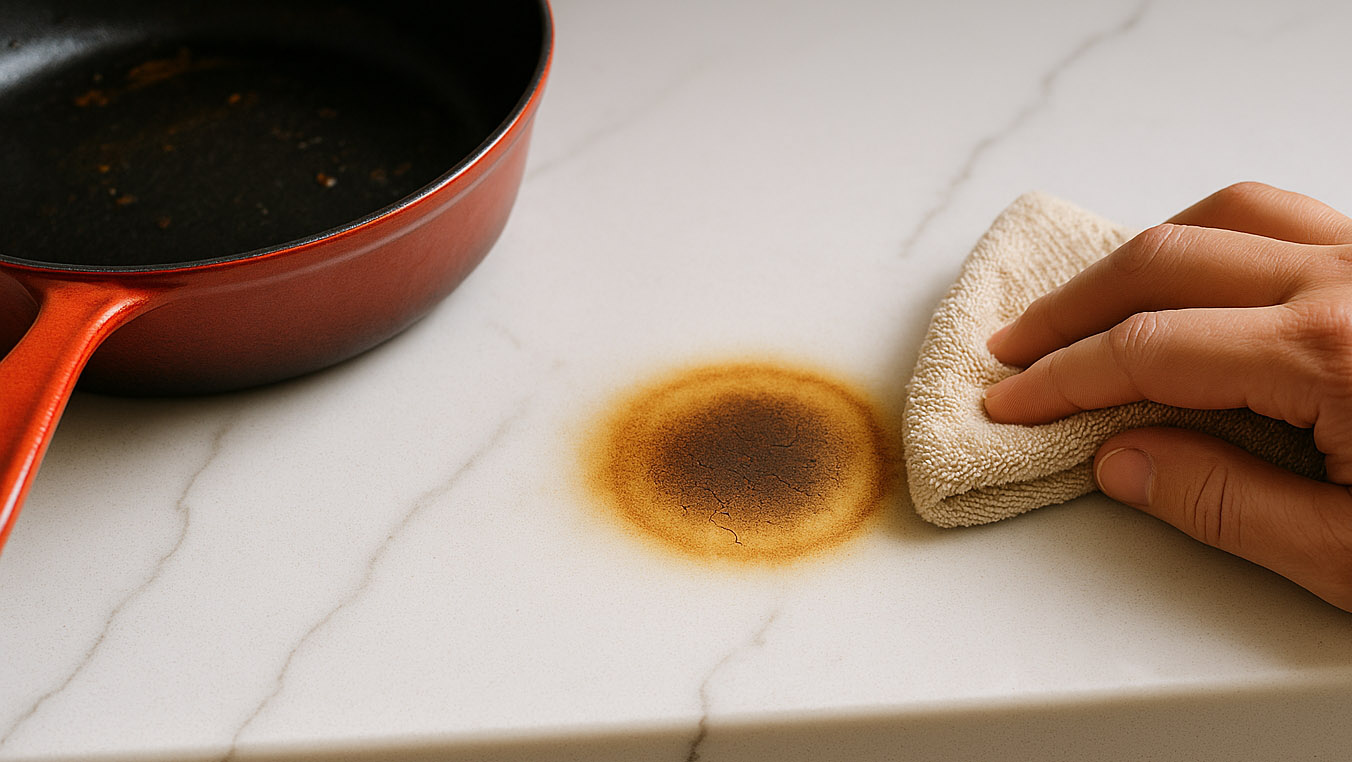
90–94% crushed natural quartz (silicon dioxide)
Provides hardness and scratch resistance. -
6–10% polymer resins and binders
Add flexibility and binding strength. -
Pigments & additives
Create color patterns and improve UV stability.
Why the resin component matters
Quartz itself can withstand extreme heat and chemical exposure, but polymer resins cannot. Many forms of quartz countertop damage occur because:
-
Resins soften under extreme heat
-
Resins discolor under potent chemicals
-
Resins react differently than natural stone minerals
Therefore, quartz countertops behave differently than granite or marble, especially in thermal and chemical environments.
What Can Damage Quartz Countertops?
Below is a comprehensive explanation of the most common risks, backed by engineering and material science data.
Heat Damage: The Most Common and Least Expected Risk
Quartz is heat resistant, but not heatproof.
The surface can be damaged by:
-
Hot pots and pans
-
Air fryers, Instant Pots, slow cookers placed directly on the countertop
-
Curling irons or straighteners in bathrooms
-
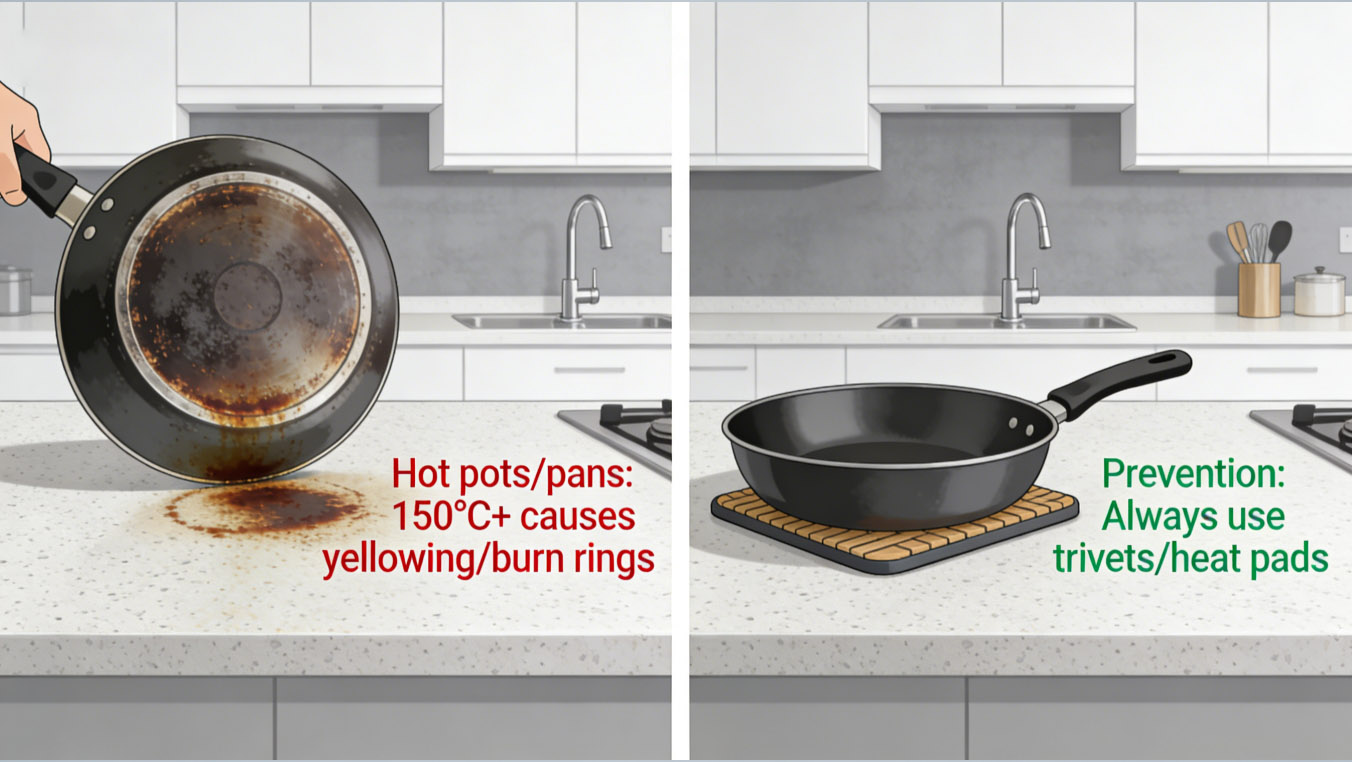
Prolonged exposure to 150°C+ temperatures
Why heat damages quartz
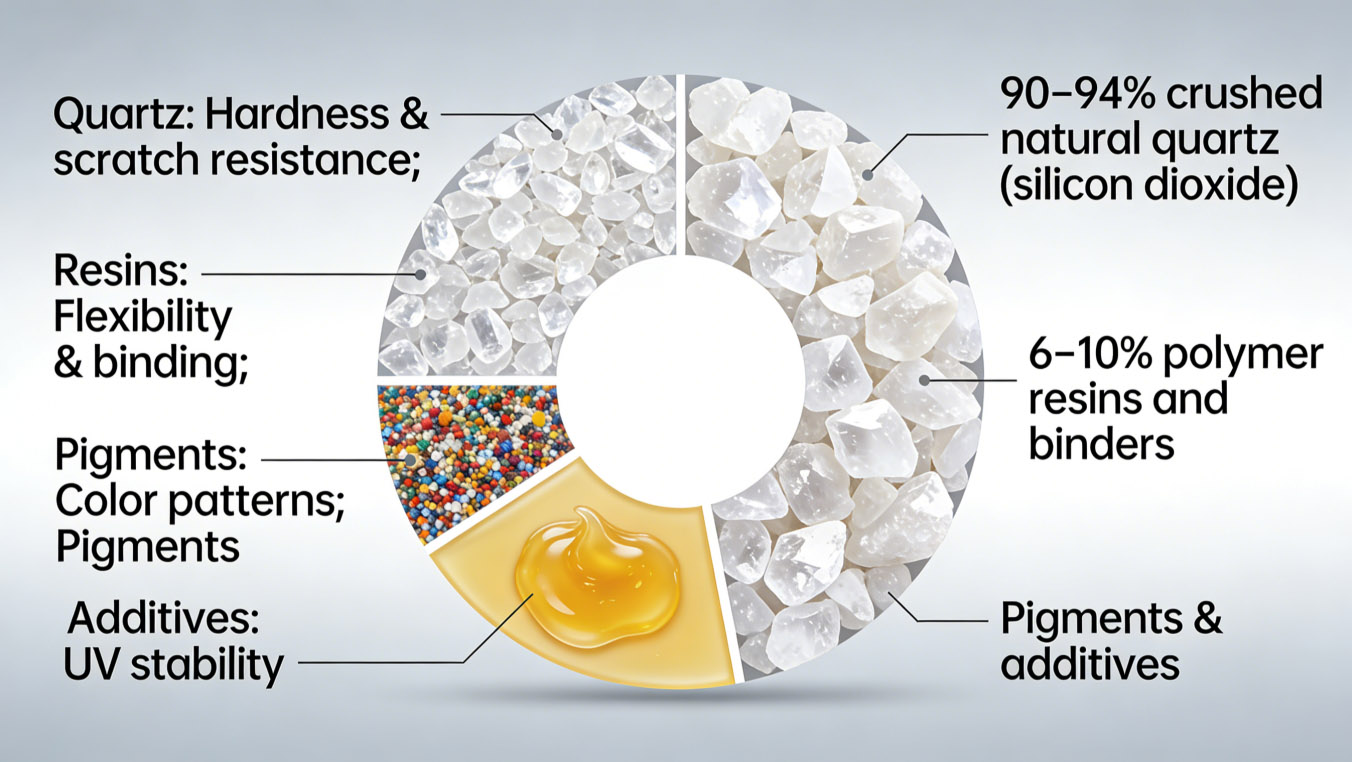
While natural quartz crystals resist heat, resins begin degrading at 150°C (302°F). This causes:
-
Yellowing
-
Cloudy discoloration
-
Softening or thermal shock
-
Permanent burn rings
Professional quartz countertop manufacturers always recommend thermal barriers, yet many homeowners overlook this until damage occurs.
Prevention
-
Always use trivets or heat pads
-
Do not place heated appliances directly on quartz
-
Ensure proper ventilation under built-in appliances
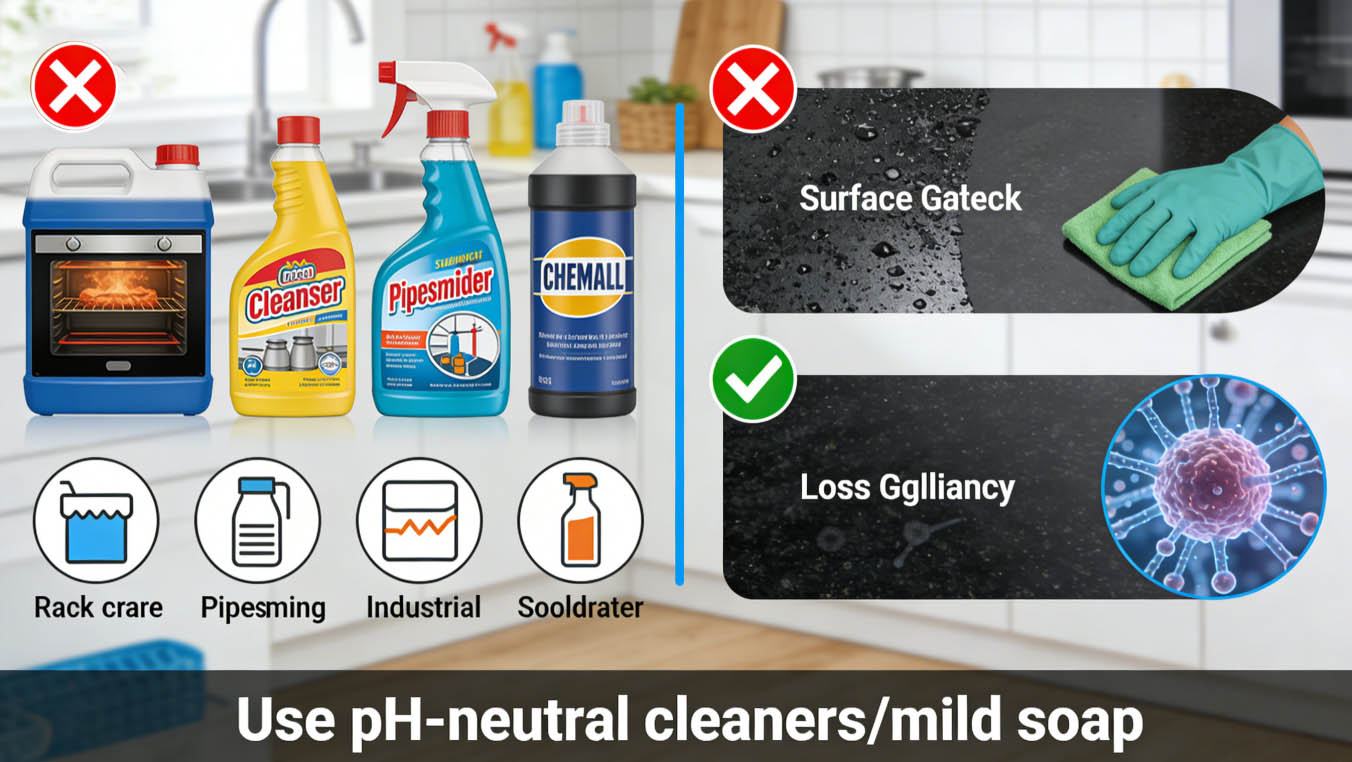
Chemical Damage: Strong Cleaners & Industrial Products
Despite being low maintenance, quartz cannot tolerate harsh chemicals, especially:
-
Oven cleaners
-
Drain cleaners
-
Paint strippers
-
Industrial solvents (acetone, MEK, xylene)
-
High-pH degreasers
-
Strong bleach or chlorine-based cleaners
Why chemicals damage quartz
Harsh chemicals can degrade the resin matrix, causing:
-
Surface etching
-
Loss of shine
-
Stains becoming more visible
-
Patchy or rough areas
Prevention
Use only:
-
pH-neutral cleaners
-
Mild soap and warm water
-
Manufacturer-approved quartz cleaning solutions
UV Exposure: Outdoor or High-Sunlight Areas
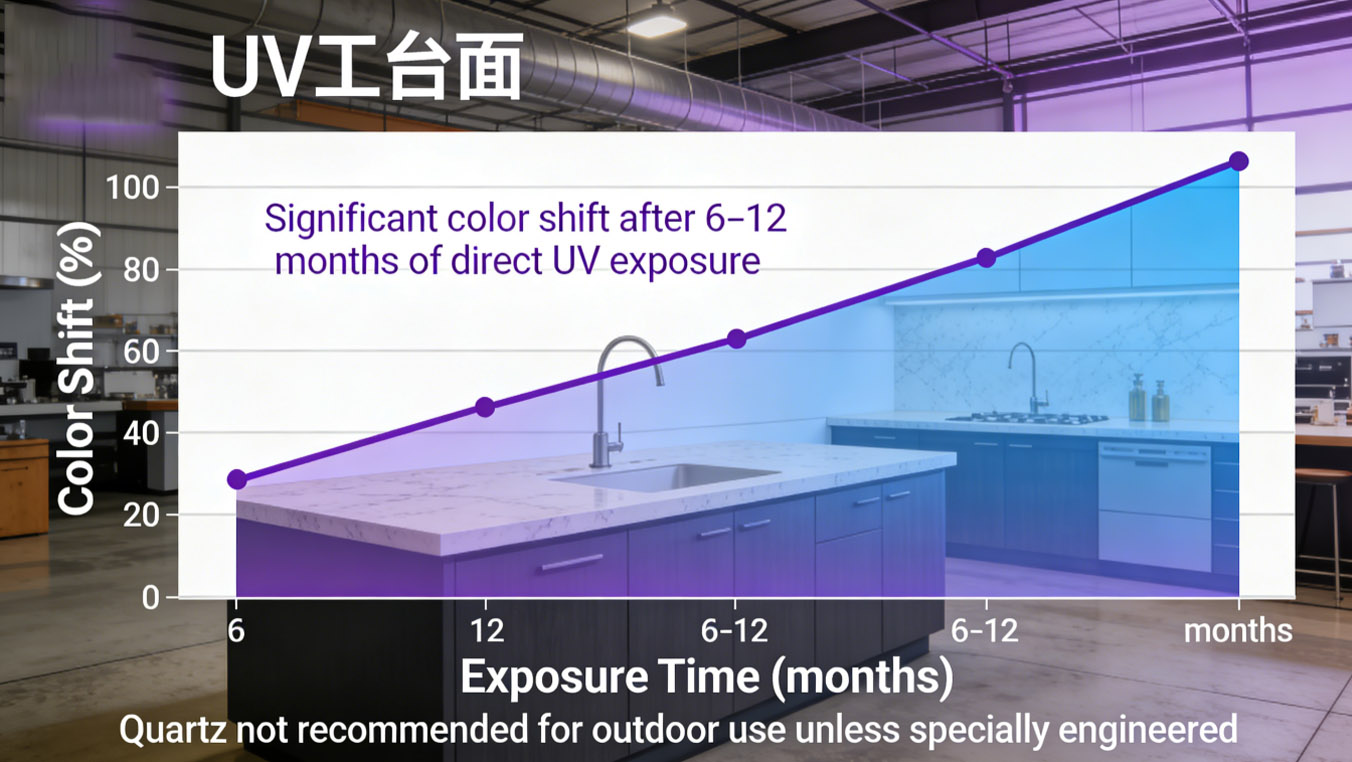
While many buyers assume quartz slabs are universal, quartz is not recommended for outdoor use unless it is specially engineered.
Effects of UV on quartz
-
Yellowing
-
Resin degradation
-
Fading of pigments
-
Brittleness over time
Quartz countertop factory testing shows significant color shift after 6–12 months of direct UV exposure.
Prevention
-
Use UV-stable quartz only if outdoors
-
Consider granite, porcelain, or sintered stone for exterior kitchens
-
Install shades or UV-blocking window film in high-sun areas
Physical Impact: Chips, Cracks, and Edge Damage
Quartz is hard—but the resin content still makes it susceptible to impact damage, especially on edges.
Common causes
-
Dropping heavy cookware on corners
-
Hitting edges with cast iron pans
-
Standing or sitting on the countertop
-
Hammer-like shock loads during renovation
The center of the slab is strong due to cabinet support, but unsupported overhangs and sink cutouts are more fragile.
Prevention
-
Reinforce overhangs exceeding 25 cm
-
Never sit or kneel on quartz
-
Use cutting boards instead of striking or chopping directly
Abrasive Damage: Scratching Despite High Hardness
Quartz ranks ~7 on the Mohs hardness scale, but scratches can still occur.
Causes
-
Abrasive cleaning pads (steel wool, magic erasers)
-
Quartz dust or sand under cutting boards
-
Ceramic knives
-
Dragging metal appliances across the surface
Prevention
-
Always use cutting boards
-
Avoid abrasive cleaning tools
-
Lift appliances instead of sliding them
Poor Fabrication or Installation Defects
Even the best quartz can fail if improperly installed.
Problems caused during fabrication
-
Thermal shock from dry polishing
-
Stress cracks from incorrect sink cutouts
-
Weak seams due to poor adhesive mixing
-
Incorrect leveling resulting in pressure points
Prevention
Choose an experienced fabricator or quartz countertop manufacturer with:
-
CNC fabrication capability
-
Polished cutouts
-
Full support rails under the slab
-
Warranty-backed installation standards
Staining: Rare but Possible Under Certain Conditions
Quartz is generally stain-resistant, but not stain-proof.
Risks increase when:
-
Oils penetrate unpolished areas
-
Colored liquids (wine, turmeric, ink) are left for long periods
-
Resins absorb pigments under heat exposure
Prevention
-
Wipe spills immediately
-
Avoid leaving oil bottles or spice jars directly on the surface
-
Use coasters under beverages
Emerging Risks Based on 2024–2025 Regulations
Stricter chemical labeling and household cleaner safety laws
Regulations in the U.S. and EU require clearer labeling of quartz-safe cleaning products. This is due to rising cases of resin degradation linked to unapproved cleaners.
Sustainability requirements for engineered stone
Manufacturers are reducing VOC emissions and adjusting resin formulations. Some new eco-resins are more sensitive to heat or sunlight, changing how buyers must maintain counters.
OSHA silica standards
Although quartz is safe in slab form, fabrication dust must comply with silica-exposure limits. Many countertop factories now require wet-cut fabrication, impacting the final resin behavior and hardness.
These regulatory trends influence durability expectations and long-term maintenance recommendations.
Professional Prevention Tips from Quartz Manufacturers
Use pH-neutral cleaners daily
Anything outside pH 6–8 risks resin damage.
Avoid prolonged heat exposure
Even if no immediate damage is visible, resin micro-aging can occur.
Protect high-use areas
Add cutting boards, mats, trivets, and appliance pads.
Choose the right quartz grade
Not all slabs have the same resin quality or UV-resistance rating.
Maintain consistent ventilation near appliances
Dishwashers, air fryers, and ovens can release heat directly upward.
When to Call a Professional
Seek help if you notice:
-
Permanent yellowing
-
Burn marks
-
White cloudy patches (resin distortion)
-
Deep scratches
-
Chips larger than 5 mm
A quartz factory technician or repair specialist can often restore the finish using resin reflow, polishing compounds, or color-matched fillers.
Conclusion
Quartz countertops are durable and reliable—but not immune to damage. Understanding what can harm quartz helps homeowners, designers, and builders extend the lifespan of their surfaces. Heat, chemicals, UV light, physical impact, and improper installation remain the biggest risks.
With proper prevention and adherence to updated safety guidelines, quartz countertops can maintain their beauty and structural integrity for decades.
This guide offers science-backed explanations, preventive strategies, and long-tail insights designed for both search engines and end-users—ensuring the information remains relevant, trustworthy, and AI-friendly.
Frequently Asked Questions (Google Trending)
1. What causes quartz countertops to turn yellow?
Yellowing typically comes from heat exposure or UV light degrading the resin. Strong chemicals can also accelerate discoloration.
2. Can quartz countertops be repaired if damaged?
Yes. Minor chips and scratches can be repaired professionally, while heat damage and deep cracks require resin restoration or partial replacement.
3. Will quartz stain like marble or granite?
Quartz is stain-resistant but not stain-proof. Oils, pigments, and dyes can stain if left on the surface for prolonged periods.
4. Can you put a hot pan directly on quartz?
No. Hot cookware can damage the resin binders, causing burns, discoloration, or cracking.
5. Are quartz countertops safe for outdoor kitchens?
Standard quartz is not recommended outdoors due to UV degradation. Choose UV-stable engineered stone specifically designed for exterior use.
References (8 Authoritative Sources)
-
Natural Stone Institute – Engineered Quartz Performance Report, 2024
-
U.S. Environmental Protection Agency – Household Chemical Exposure Guidelines
-
European REACH Regulation – Resin and Polymer Stability Assessment
-
Journal of Engineered Stone Science – Thermal Shock Effects on Resin-Bound Quartz, Dr. L. Harrison
-
OSHA Silica Standard Compliance Document for Fabrication Facilities
-
Building Materials Durability Review – UV Stability of Engineered Quartz Surfaces
-
International Surface Fabricators Association – Best Practices for Quartz Installation
-
Chemical Safety Board – High-pH Cleaner Impact on Composite Surfaces, 2023
Deep Semantic Insight: How Quartz Countertops Fail, Why Damage Happens, and What Modern Prevention Requires
Quartz countertops combine natural quartz crystals with engineered polymer resins. While the minerals provide hardness, the resins determine long-term performance. Heat beyond 150°C weakens resin structure, aggressive chemicals break down binders at a molecular level, and UV exposure accelerates yellowing. Understanding this dual-material behavior is essential to predicting and preventing damage.
Manufacturers report that most quartz countertop damage comes from slow, cumulative stress: repeated hot-pan contact, routine use of high-pH degreasers, sunlight exposure near windows, or impact at sink cutouts. These factors degrade resin over time, causing changes that only become visible months later. This explains why quartz may appear “fine” until discoloration or cracking suddenly emerges.
Key variables include temperature exposure, cleaner pH, installation quality, slab resin formulation, UV stability rating, and appliance placement. These factors influence whether the surface experiences micro-aging, resin distortion, or structural stress. The most vulnerable zones—sink edges, overhangs, appliance vents—require targeted reinforcement and protective habits.
Heat pads and trivets reduce thermal shock, pH-neutral cleaners preserve resin clarity, UV-film windows minimize discoloration, and reinforcement brackets provide load stability. High-quality slabs from factory and manufacturer suppliers increasingly use improved low-VOC resins, offering better resistance to household chemicals. Combining material choice with protective behavior yields the strongest long-term results.
Buyers should evaluate resin formulation, UV resistance, certification standards, manufacturer warranty terms, and fabrication capabilities. Installation quality is equally critical: incorrect cutouts, uneven leveling, and poor seam bonding significantly increase the likelihood of cracks or stress fractures. These factors directly influence durability, yet are often overlooked by consumers focused solely on color and pattern.
The engineered stone market is shifting toward high-stability resins, UV-resistant surfacing, smart thermal coatings, and sustainable binders complying with 2024–2025 global regulations. AI-driven diagnostics now help fabricators analyze slab stress points before installation. As Google SGE and multimodal AI increasingly surface technical, safety-aligned content, structured insight blocks like this one become core references for both professionals and homeowners researching quartz durability.