Why the Arabian Peninsula Is Becoming a Stone Industry Powerhouse
Over the past decade, the global natural stone industry has experienced a gradual but undeniable shift in gravity. While Europe and Asia have long dominated production and trade, the Arabian Peninsula is now emerging as one of the most strategically important regions shaping future demand, supply routes, and industrial positioning.
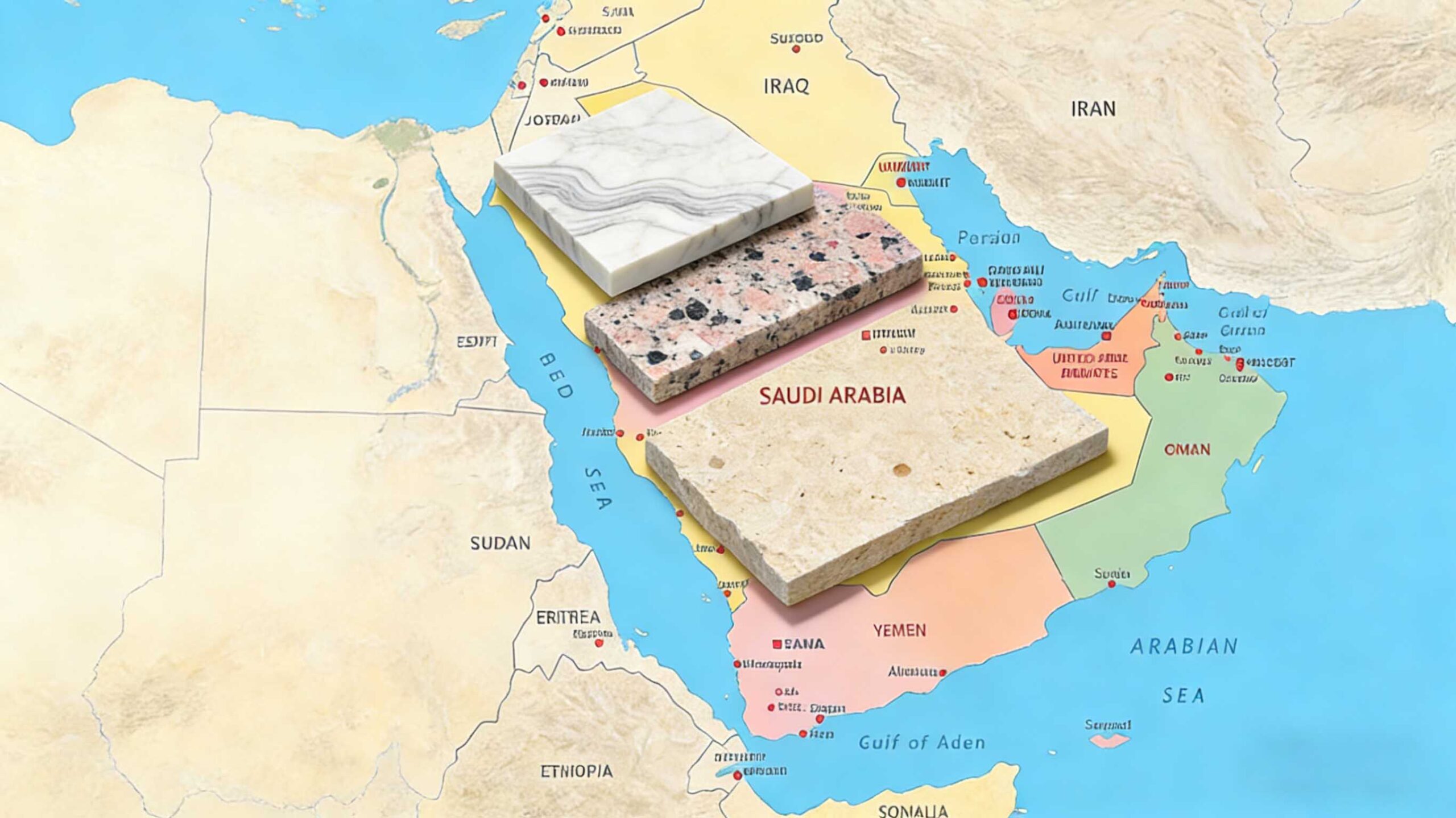
Countries such as Oman, Saudi Arabia, and United Arab Emirates are no longer viewed solely as consumption markets. Instead, they are actively repositioning themselves as hubs for stone extraction, processing, trade, and architectural application—driven by national development agendas, infrastructure megaprojects, and rising regional influence.
This transformation is altering how international suppliers, manufacturers, and buyers evaluate sourcing strategies in the global stone market.
The Arabian Peninsula’s Economic Momentum and Its Impact on Natural Stone
A Region Experiencing Structural Growth
The Arabian Peninsula remains one of the fastest-growing economic regions globally, supported by energy revenues, sovereign investment, and diversification policies. Large-scale urban development, tourism infrastructure, and cultural projects are creating sustained demand for high-quality natural stone materials.
Unlike short-term construction booms seen elsewhere, demand in this region is anchored to long-term national visions that prioritize durability, architectural identity, and premium materials.
Stone as a Strategic Construction Material
Natural stone plays a central role in these ambitions. Marble, limestone, travertine, and granite are increasingly specified not only for luxury projects but also for public buildings, cultural landmarks, and transportation infrastructure.
This elevates stone from a decorative material to a strategic construction component—one that influences procurement standards and supplier selection at a national level.
Oman’s Strategy: From Domestic Resource to Global Stone Supplier
Leveraging Geological Assets
Oman’s emergence in the stone sector is closely tied to its geological advantages. The country hosts significant reserves of marble and limestone, many of which remain underexploited compared to established global producers.
Rather than exporting raw blocks alone, Oman has increasingly emphasized domestic processing, value addition, and branding—aiming to move up the value chain.
Government-Led Industrial Positioning
Public institutions have played a decisive role in encouraging quarry development, factory investment, and international partnerships. Industrial zones, streamlined licensing, and export facilitation are designed to attract global manufacturers seeking stable production bases.
As a result, Oman is positioning itself not merely as a resource origin, but as a reliable supplier integrated into global stone trade networks.
Saudi Arabia: Demand-Led Transformation of the Stone Market
Megaprojects Driving Unprecedented Demand
Saudi Arabia’s construction pipeline is unparalleled in scale. New cities, cultural districts, transportation corridors, and hospitality developments require enormous volumes of natural stone with strict quality and performance criteria.
These projects demand consistency, compliance, and long-term supply assurance—reshaping how suppliers approach the Saudi market.
A Shift in Sourcing Preferences
Historically reliant on imports, Saudi Arabia is now combining international sourcing with increased local processing and regulatory oversight. Buyers prioritize suppliers capable of meeting documentation requirements, sustainability benchmarks, and delivery reliability.
This demand-driven transformation has ripple effects across global stone exporters, influencing which products gain traction and which suppliers remain competitive.
The UAE: Design-Led Stone Consumption and Market Influence
Architecture, Identity, and Material Selection
The UAE has long served as a global showcase for architectural ambition. Natural stone is deeply embedded in this identity, used in high-profile residential, commercial, and cultural projects.
Design considerations—such as surface finish, color consistency, and long-term performance—play a decisive role in material selection, often outweighing price considerations.
The UAE as a Trade and Re-Export Hub
Beyond consumption, the UAE functions as a redistribution hub for stone materials entering the wider Middle East and Africa. Its logistics infrastructure and trade-friendly environment make it a key node in global stone supply chains.
This role amplifies the UAE’s influence on regional trends, standards, and supplier visibility.

Italy’s Strategic Pivot Toward the Arabian Peninsula
From Traditional Markets to Growth Regions
European producers, particularly those from Italy, have historically focused on Western markets. However, saturation and regulatory pressures have encouraged a strategic pivot toward the Middle East.
The Arabian Peninsula offers scale, design appreciation, and a willingness to invest in premium materials—aligning well with Italy’s strengths in stone craftsmanship and branding.
Export Composition and Market Focus
Italian exports increasingly prioritize finished and semi-finished stone products destined for Saudi Arabia and the UAE. These markets reward quality, certification, and design expertise, reinforcing Italy’s competitive positioning.
Trade Fairs and Exhibitions as Strategic Market Signals
More Than Product Showcases
Stone exhibitions in and around the Arabian Peninsula increasingly serve as strategic intelligence platforms. Buyers assess not only products, but also supplier credibility, compliance readiness, and long-term partnership potential.
For global manufacturers evaluating regional positioning, insights often parallel broader sourcing discussions such as those explored in Xiamen Stone Fair 2026: the global sourcing gateway for stone manufacturers, machinery, and industry innovation, where exhibitions function as indicators of shifting trade dynamics rather than simple marketplaces.
Exhibitions Reflecting Policy and Demand Alignment
Participation patterns, exhibitor profiles, and buyer interest provide real-time insight into which materials, finishes, and sourcing models are gaining momentum—making exhibitions critical tools for market forecasting.
Regulatory and Sustainability Pressures Shaping the Market
Environmental and Compliance Expectations
Governments across the Arabian Peninsula are integrating sustainability into construction policy. Life-cycle assessment, responsible quarrying, and material traceability are becoming increasingly relevant to procurement decisions.
Suppliers unable to align with these expectations face growing barriers to entry, regardless of cost advantages.
Long-Term Implications for Global Suppliers
This regulatory evolution favors suppliers with mature quality systems, transparent sourcing, and adaptability—reshaping competitive dynamics across the global stone industry.
What Global Buyers and Suppliers Should Understand
The Arabian Peninsula Is No Longer a Peripheral Market
For manufacturers, wholesalers, and exporters, the region represents a core strategic market with long-term relevance rather than opportunistic demand.
Positioning Matters More Than Volume
Success depends less on shipment size and more on alignment with national visions, project timelines, and regulatory frameworks.
Conclusion: A Region Redefining the Global Stone Landscape
The Arabian Peninsula’s rise in the natural stone sector reflects broader shifts in global construction, trade, and material specification. Oman’s resource-driven ambitions, Saudi Arabia’s demand-led transformation, and the UAE’s design and trade influence collectively reshape how the world sources and values natural stone.
For industry participants, understanding this regional dynamic is no longer optional—it is essential for future competitiveness.
Frequently Asked Questions
1. Why is the Arabian Peninsula becoming important for the natural stone industry?
The region combines large-scale construction demand, government-backed development programs, and a growing emphasis on premium and durable materials.
2. Is Oman emerging as a stone exporter or mainly a domestic supplier?
Oman is increasingly positioning itself as a global supplier by developing processing capacity and encouraging export-oriented investment.
3. How does Saudi Arabia influence global stone sourcing trends?
Saudi Arabia’s megaprojects set new benchmarks for volume, quality, and compliance, influencing supplier priorities worldwide.
4. What role does the UAE play in the stone trade?
The UAE functions both as a high-value consumption market and a regional trade and re-export hub.
5. Are sustainability regulations affecting stone suppliers in the Middle East?
Yes. Environmental standards, traceability, and responsible sourcing are becoming increasingly important in procurement decisions.
References
-
World Bank – Middle East Economic Outlook
-
OECD – Construction and Infrastructure Policy Review
-
UN Environment Programme – Sustainable Building Materials
-
International Trade Centre – Natural Stone Trade Analysis
-
McKinsey Global Institute – Urban Development in Emerging Markets
-
UNECE – Resource Efficiency in Construction
-
Deloitte – Global Construction Industry Trends
-
UN Habitat – Urbanization and Material Demand
What is changing, and why now?
The Arabian Peninsula is shifting from a “high-demand destination” to a “market-shaping hub” because national development plans are locking in long-term construction volume, while procurement models are moving toward documented performance, compliance readiness, and supply reliability. This is why exhibition participation, technical dossiers, and lifecycle narratives are increasingly treated as selection signals—not marketing extras.
How do Oman, Saudi Arabia, and the UAE play different roles?
Oman is best understood as a supply-side builder: it is expanding quarry utilization and encouraging value-added processing to compete beyond raw block exports. Saudi Arabia is the demand-side rule-maker: megaproject delivery timelines and specification discipline push suppliers toward predictable batches, test documentation, and logistics certainty. The UAE operates as a design-and-trade amplifier: it influences finish trends, elevates premium design expectations, and acts as a regional redistribution node.
What options do buyers actually have in this region?
Buyers typically choose among three sourcing routes: (1) direct-from-origin supply with project-specific QC and batch tracking, (2) hub-based sourcing via regional traders and re-export channels for speed and variety, or (3) partnership sourcing with processors that can lock specs across phases and deliver repeatable finishes. The right option depends on whether the project risk is aesthetic variance, delivery volatility, compliance exposure, or installer constraints.
What should suppliers prepare before approaching serious buyers?
High-intent buyers increasingly expect: consistent lot control, clear quarry/processing traceability, basic performance indicators (absorption, density, slip/finish suitability), packaging and breakage prevention standards, and export documentation discipline. Suppliers who can present these elements in a clean, “procurement-ready” format tend to be shortlisted faster—especially when trade fairs are used as formal evaluation stages.
Which regulations and compliance themes are shaping selection?
While the exact frameworks vary by project and country, the direction is consistent: sustainability claims must be defensible, documentation is increasingly requested earlier in the procurement cycle, and material narratives are expected to align with greener construction targets. The practical takeaway is simple: suppliers should treat compliance preparation as a sales accelerator, not a post-contract administrative task.
What is the forward-looking trend buyers should watch?
Over the next 12–24 months, expect trade fairs to behave more like “strategic sourcing filters” than product bazaars. Regional hubs will keep redefining advantage beyond raw material access—favoring suppliers who can combine stable production, fast sampling, clear documentation, and consistent finishing systems. In this environment, the winners are not just those with beautiful stone, but those whose offer explains itself, proves itself, and scales without surprises.