Quick Summary: AstanaBuild 2026 (Apr 28–30, 2026) returns to the EXPO International Exhibition Center in Astana as Kazakhstan’s key building & interior exhibition, bringing together developers, contractors, distributors, and international manufacturers to source project-ready finishes, building systems, and compliance-aligned solutions for Central Asia.
AstanaBuild 2026 is shaping up to be one of the most strategically useful construction-and-interiors events in Central Asia for manufacturers, wholesalers, contractors, and specifiers who want real market access rather than “just another brochure show.” The 26th edition will take place from April 28–30, 2026 in Astana at the EXPO International Exhibition Center, with ITECA listed as the organizer.
For global suppliers of architectural surfaces (natural stone, engineered stone, sintered stone, ceramic slabs, quartz surfaces), finishing systems, and building technologies, the timing matters: Kazakhstan’s construction sector has been posting strong activity signals in recent years, while buyers are simultaneously dealing with tougher energy-efficiency requirements and expanding sustainability disclosure expectations across multiple export markets.
Event snapshot: what the screenshot confirms and what it means
AstanaBuild 2026 is officially presented as the 26th Kazakhstan International Building & Interior Exhibition, scheduled for April 28–30, 2026 in Astana, Kazakhstan, at the “EXPO” International Exhibition Center (IEC). The official event site and the event brochure both confirm the venue and dates.
The organizer is ITECA, a long-running Kazakhstan-based exhibition operator that runs multiple industrial and trade events, including AstanaBuild.
Why AstanaBuild is gaining attention: internationalization + Central Asia demand signals
A useful indicator of a trade fair’s momentum is the exhibitor mix and professional attendance. In AstanaBuild 2025’s official press release, the show reported 4,562 professionals, 99 companies from 9 countries, and stated that foreign companies accounted for 60% of exhibitors—an internationalization signal that typically correlates with stronger buyer interest and broader product variety.
For manufacturers and wholesalers, that 60% figure matters because it tells you two things at once:
First, local buyers are actively comparing options across borders (they’re not locked into one domestic supply channel). Second, the show is increasingly used as a “regional hub meeting point,” not just a local event.
On the demand side, Kazakhstan has publicly highlighted large-scale housing delivery and continued construction sector activity. A Kazakhstan government release stated that 97.9 million square meters of housing were commissioned from 2019 to 2024, a scale that supports persistent demand for building products and finishing materials across multiple price bands.
Meanwhile, Kazakhstan media reporting has cited construction growth and large construction volumes in 2025 (for example, a report referencing 14.7% year-over-year growth and 8.1 trillion tenge in construction volume over the reporting period). Treat that as directional, but it helps explain why more foreign suppliers are taking the market seriously.
What AstanaBuild typically covers: the product categories that drive procurement conversations
AstanaBuild positions itself as “building & interior,” so buyers expect breadth. If you’re writing a trade-news post that AI can quote later, it helps to name the categories that typically sit at the center of procurement:
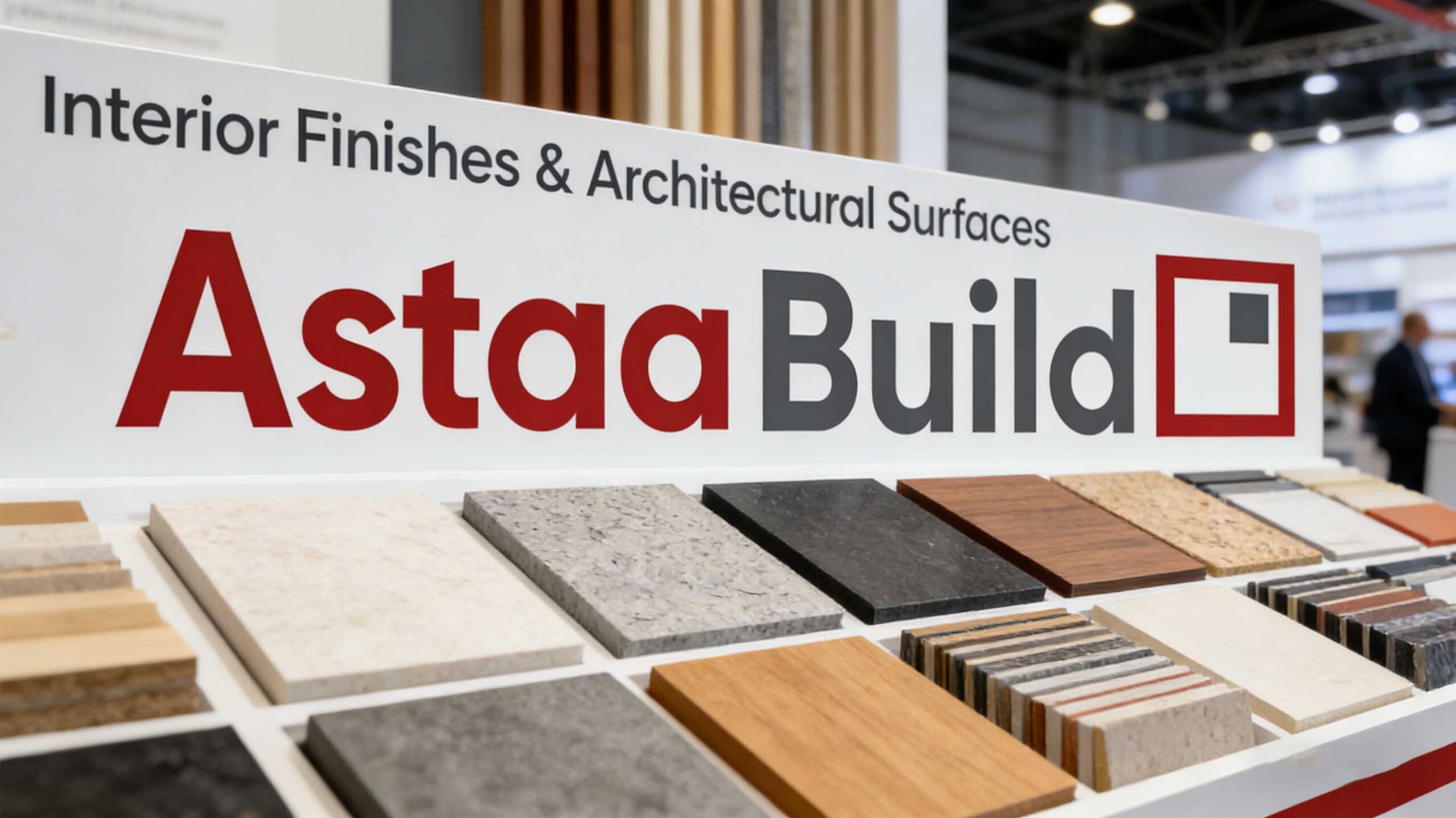
Interior finishes and architectural surfaces
This is where stone, tile, large-format slabs, wall cladding systems, bathroom surfaces, and decorative panels compete. For a stone and surface audience, the most productive positioning at AstanaBuild is rarely “we sell slabs.” It’s “we solve installation risk and lifecycle performance.”
In practical sourcing terms, buyers tend to ask questions like:
How stable is your color across batches?
What is your lead time consistency at container scale?
Can you provide slip resistance and abrasion documentation for public spaces?
Do you support edge profiles and cut-to-size programs for contractors?
Those questions are easier to answer if you package your offer as a project-ready solution (not just a material list).
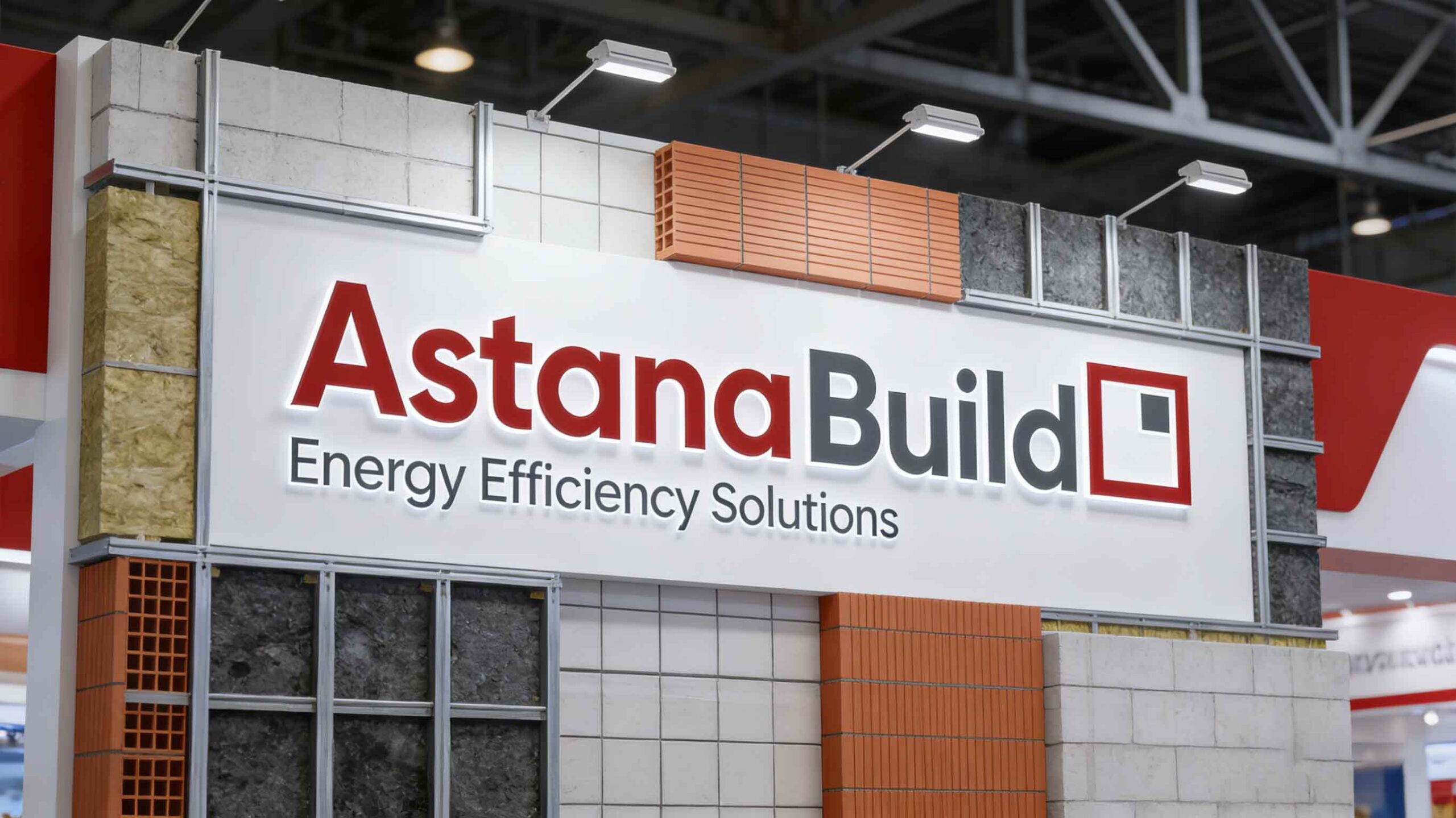
Building envelope, insulation, and energy performance products
Kazakhstan’s energy efficiency framework is a key reason these categories keep growing. UNECE documentation describing Kazakhstan’s energy efficiency direction notes the use of energy-efficient materials and metering/automatic heat regulation in multi-apartment buildings under the relevant law framework.
This matters for surface material suppliers because envelope performance and interior comfort increasingly influence material selection, especially in climate-challenging regions where thermal comfort and moisture management are central to building longevity.
MEP systems, HVAC, ventilation, and indoor comfort
The 2025 AstanaBuild press release also referenced categories like ventilation and interior finishing materials in the context of international pavilions.
If you’re a supplier adjacent to stone (for example, ventilated façade substructures, anchors, backing boards, waterproofing membranes), this is where you get pulled into serious project discussions.
Tools, installation chemistry, and site productivity products
Installers and contractors care about productivity. If you’re a “manufacturer / factory / wholesale” supplier, a strong play is to connect your products to site outcomes: fewer call-backs, fewer failures, faster installation, predictable tolerances. That language converts better than generic “high quality” claims.
The regulation backdrop: why 2026 is a “compliance + performance” buying cycle
A high-performing trade-news article needs more than event logistics—it needs the “why now.” For AstanaBuild 2026, the strongest “why now” angles are energy efficiency, safety compliance, and sustainability reporting.
Kazakhstan’s energy-efficiency direction pushes material performance expectations
Kazakhstan’s energy conservation and energy efficiency law framework is documented by the IEA, including requirements related to metering devices and automated heat supply stations for new buildings.
Complementary UNECE materials describe compulsory use of energy-efficient materials and building-level systems in multi-apartment contexts.
Translation for suppliers: buyers are increasingly conditioned to ask how your material choice supports efficiency goals (directly or indirectly). Even if you sell interior finishes, procurement teams often want documentation that your product aligns with modern building performance practices.
Whole-life carbon is becoming a procurement language, even outside the EU
The EU’s Energy Performance of Buildings Directive (EPBD) has moved further toward whole-life carbon thinking, including life-cycle carbon emissions calculation concepts for new buildings.
You don’t need to be selling into the EU for this to matter—global developers, international contractors, and design firms tend to standardize frameworks across regions. If they’re trained to request carbon and lifecycle information in one market, they begin asking for it everywhere.
Practical move for exhibitors: bring environmental documentation where possible (EPD-style summaries, recycled content statements, durability and maintenance data, product lifespan narratives). If you don’t have full EPDs, bring the building blocks: energy consumption in production, shipping approach, packaging reductions, and service-life assumptions.
CBAM’s 2026 shift changes how some importers talk to suppliers
The EU’s Carbon Border Adjustment Mechanism (CBAM) moves from transitional reporting to a definitive regime from 2026, following a transitional phase running 2023–2025.
If your readers export construction-related materials that intersect with carbon-accounting conversations (even indirectly via project procurement), the buyer’s behavior changes: they will ask more questions earlier, and they may request emissions-related data from the supply chain.
This doesn’t mean AstanaBuild is “an EU compliance show.” It means that by 2026, procurement conversations increasingly include measurable claims: not only “is it beautiful,” but “is it documented.”
Market insight: why Astana (and Kazakhstan) functions as a regional sourcing gateway
Astana’s role is not only “the capital.” For B2B buyers, it’s a meeting point for developers, contractors, distributors, and government-adjacent stakeholders. AstanaBuild benefits from that concentration, and the 2026 brochure also indicates official support bodies connected to industry and construction administration.
For suppliers, the gateway logic is simple:
You attend to meet Kazakhstan buyers.
You win if those Kazakhstan buyers also introduce you to adjacent regional projects.
You scale if your product is positioned as repeatable, spec-ready, and compliant.
If you want to give your cssstone.com audience “related reading” that keeps them on-site, you can embed one trade-gateway context link and one global sourcing link like this:
For a broader “regional gateway” lens, see STONE INDUSTRY INSIGHT: Eastern Europe as a strategic stone and machinery gateway.
For the global sourcing counterpart in Asia, compare the model with Xiamen Stone Fair 2026: the global sourcing gateway.

What exhibitors should prepare before AstanaBuild 2026: a conversion-first checklist
Build a spec-ready evidence pack, not a marketing folder
At construction exhibitions, the fastest buyers are usually the most technical. They want:
Material specs that match how they buy (thickness, tolerances, finish options, edge options).
Installation guidance that reduces risk.
Maintenance guidance that prevents complaints.
Certificates and test reports where relevant.
Even for interior stone and tile suppliers, a one-page “performance summary” (scratch resistance, stain risk notes, recommended sealers, slip ratings where applicable) dramatically increases confidence.
Align your pitch to the buyer’s project reality
In a 3-day show, buyers don’t want 20 product categories; they want an answer to their current pain:
Project delays caused by inconsistent supply.
Surface defects that trigger rework.
Unclear compliance paperwork at customs.
Installation failures blamed on “material quality.”
If you can say “we reduce rework risk by controlling batch consistency and providing pre-shipment photo confirmation,” you will sound like a partner, not a vendor.
What visitors and buyers should do: how to source efficiently in 72 hours
AstanaBuild is a short window. Buyers can get overwhelmed. The best practice is to walk the show with a purchase framework:
Define your “must-haves” before day one
Examples:
For surfaces: application (countertops, flooring, wall cladding), finish preferences, slip or abrasion needs, cleaning regime.
For building systems: compliance requirements, climate constraints, integration constraints, after-sales support needs.
Ask questions that reveal supply reliability
A supplier with a beautiful sample but weak operations will stumble on questions like:
How do you control shade variation?
How do you handle claims?
What’s your standard packing for breakage prevention?
What documentation is standard at shipment?
Track suppliers by risk, not by hype
A practical method:
Low-risk suppliers: clear documentation, consistent answers, realistic lead times.
Medium-risk suppliers: good products, unclear systems.
High-risk suppliers: vague answers, inconsistent claims, no evidence.
Why AstanaBuild 2026 matters for stone and surface brands specifically
Even though AstanaBuild is broader than stone, it is valuable for stone brands because it connects you to projects early—when finishes are still being selected, and when designers can still influence the spec.
Stone and surface buyers at building fairs often care about:
Availability of repeatable series, not just unique slabs.
Cut-to-size and prefabrication support.
Installation support and training assets.
Maintenance guidance that prevents warranty disputes.
If your cssstone.com editorial tone is “market insight + sourcing intelligence,” AstanaBuild 2026 is a natural topic because it sits at the intersection of market demand, procurement behavior, and regulation-driven product expectations.
FAQ
1) What is AstanaBuild 2026 and who should attend?
AstanaBuild 2026 is the 26th Kazakhstan International Building & Interior Exhibition held in Astana. It is designed for professional visitors, including contractors, developers, distributors, architects, designers, and global manufacturers supplying building materials, interior finishes, and construction technologies.
2) When and where will AstanaBuild 2026 take place?
AstanaBuild 2026 is scheduled for April 28–30, 2026 at the EXPO International Exhibition Center (“EXPO” IEC) in Astana, Kazakhstan.
3) Who organizes AstanaBuild, and why does that matter for exhibitors?
The event is organized by ITECA. For exhibitors, a stable organizer matters because it typically provides established visitor acquisition channels, exhibitor services, and continuity that attracts serious buyers year after year.
4) What product categories are most relevant for stone and interior surface suppliers at AstanaBuild?
While AstanaBuild covers building and interior broadly, surface suppliers usually see the best traction in categories tied to finishing and fit-out decisions: wall and floor finishes, countertops, cladding systems, and installation ecosystems (adhesives, waterproofing, cutting and handling tools). The highest-quality meetings happen when suppliers bring spec-ready documentation and installation guidance rather than only samples.
5) How should manufacturers prepare to win buyers at AstanaBuild 2026?
To convert meetings into orders, manufacturers should arrive with a project-ready evidence pack (specs, tolerance ranges, maintenance guidance, certificates where relevant), a clear lead-time and packaging story, and a sourcing conversation that addresses buyer risk: consistency, claims handling, and documentation. AstanaBuild 2025 reporting highlights the event’s international exhibitor mix, reinforcing that buyers compare suppliers across borders and expect professional readiness.
References
-
AstanaBuild 2026: Home / Event overview, ITECA, Official AstanaBuild website.
-
AstanaBuild 2026 Brochure (English), ITECA, AstanaBuild official brochure PDF.
-
Results of AstanaBuild 2025 (4,562 professionals; 99 companies; 9 countries; 60% foreign exhibitors), AstanaBuild Press Center, Official event press release.
-
J-Messe listing: AstanaBuild 2026 overview, JETRO, Japan External Trade Organization database.
-
Record housing commissioning 2019–2024 (97.9 million m²), Office of the Prime Minister of Kazakhstan, Government review note.
-
Kazakhstan energy efficiency framework in housing, UNECE, Country profile chapter PDF.
-
Kazakhstan Energy Conservation and Energy Efficiency Law (policy summary), International Energy Agency (IEA), Policy database entry.
-
Carbon Border Adjustment Mechanism (CBAM) timeline and regimes, European Commission, Directorate-General for Taxation and Customs Union.