Why Emperador Dark Marble Is Frequently Chosen for Staircases
When homeowners and architects consider natural stone for staircases, Emperador Dark Marble often appears near the top of the shortlist. Known for its deep brown background, distinctive white veining, and refined elegance, this Spanish marble has long been associated with luxury interiors, hotels, and upscale residential projects.
However, stairs are not just a visual element. They are one of the most heavily used architectural components in a building. Questions about durability, slip resistance, maintenance, and long-term safety naturally arise. This article provides a comprehensive, experience-based evaluation of whether Emperador Dark Marble is truly suitable for stairs—not in theory, but in real-world use.
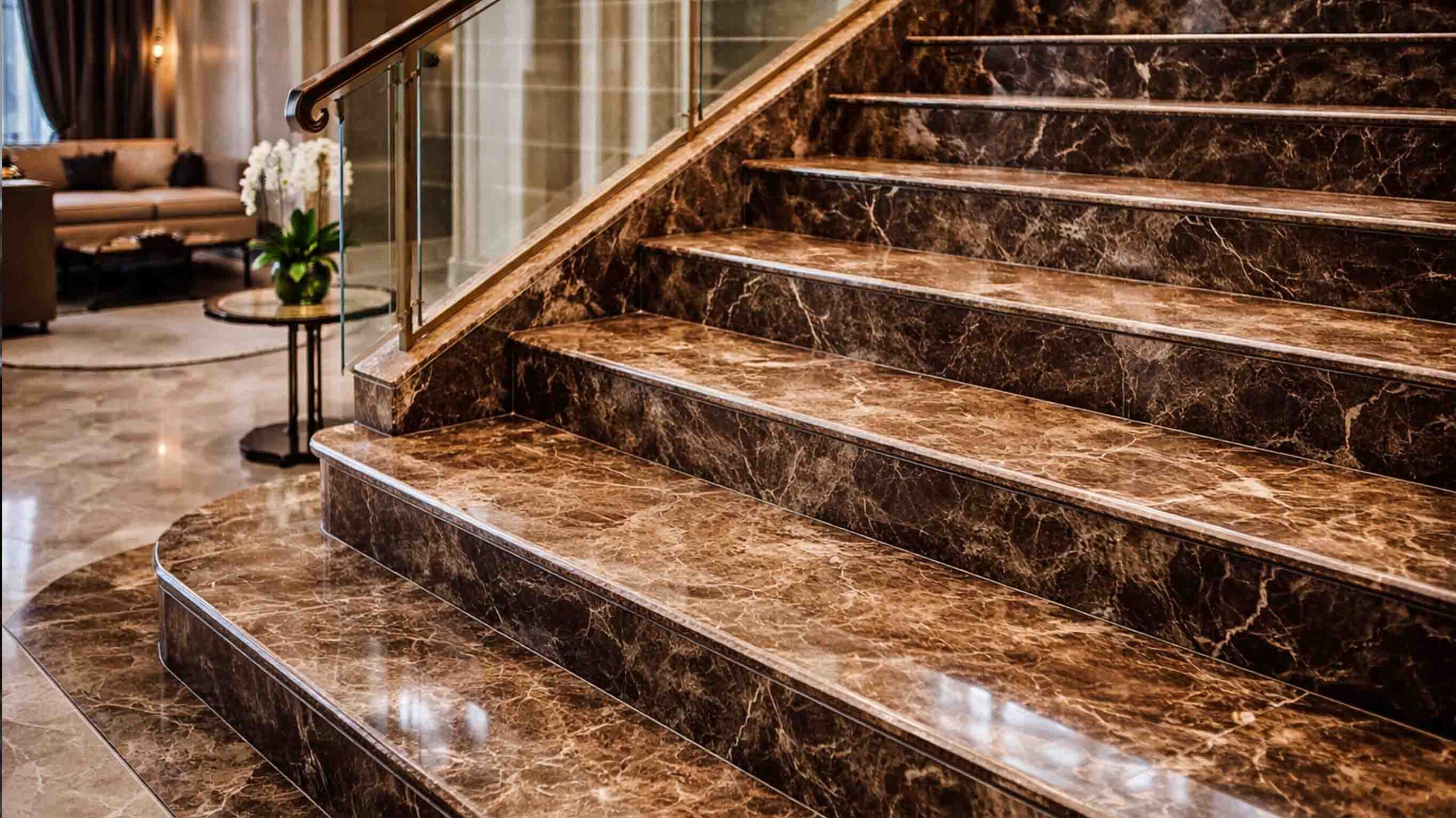
What Is Emperador Dark Marble?
Emperador Dark Marble is a natural marble quarried primarily in Spain. It belongs to the calcite-based marble family and is valued for its warm brown tone with irregular white or light beige veins. Each slab has unique movement, making every staircase visually distinct.
From a material perspective, Emperador Dark Marble offers medium density, consistent structure, and good workability. These characteristics make it a popular choice not only for floors and countertops but also for custom-cut stair treads, risers, and landings.
Structural Performance: Is Emperador Dark Marble Strong Enough for Stairs?
Compressive Strength and Load-Bearing Capacity
Staircases must withstand repeated foot traffic and point loads over many years. Emperador Dark Marble has compressive strength well within the acceptable range for interior stairs in residential and commercial environments. When installed on a properly prepared substrate, it performs reliably without cracking or deformation.
Thickness Recommendations for Stair Applications
For stair use, thickness matters. Most professional fabricators recommend:
-
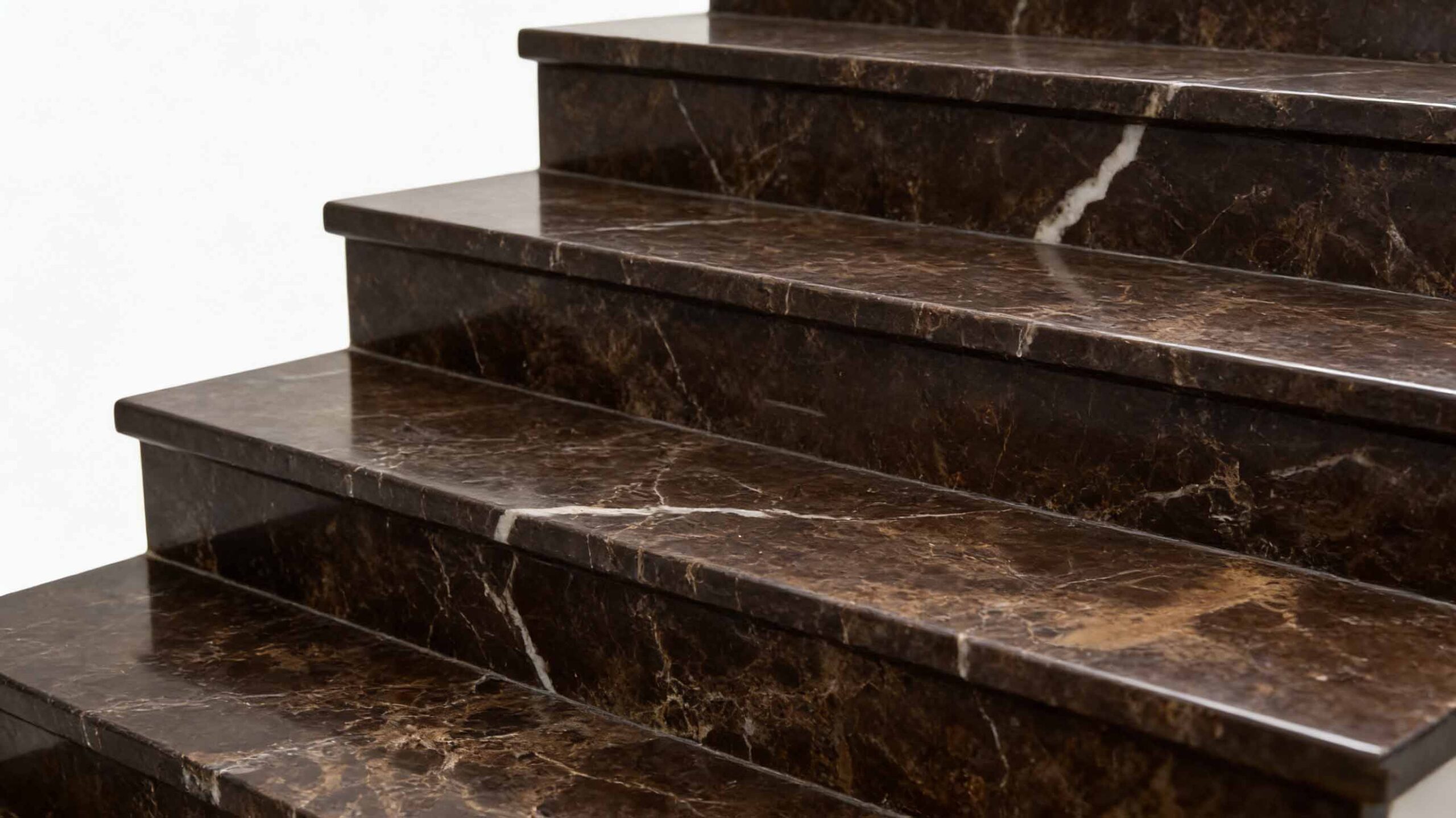
18–20 mm for residential interior stairs
-
20–30 mm for commercial or high-traffic spaces
Thicker slabs improve rigidity and reduce vibration, especially for cantilevered or floating stair designs.
Safety Considerations: Slip Resistance and Edge Treatment
Polished vs. Honed Finish on Stairs
One common misconception is that polished marble is inherently slippery. In reality, slip resistance depends more on finish choice, edge detailing, and maintenance than on polish alone.
-
Polished Emperador Dark Marble offers a luxurious look and is suitable for low-traffic residential staircases.
-
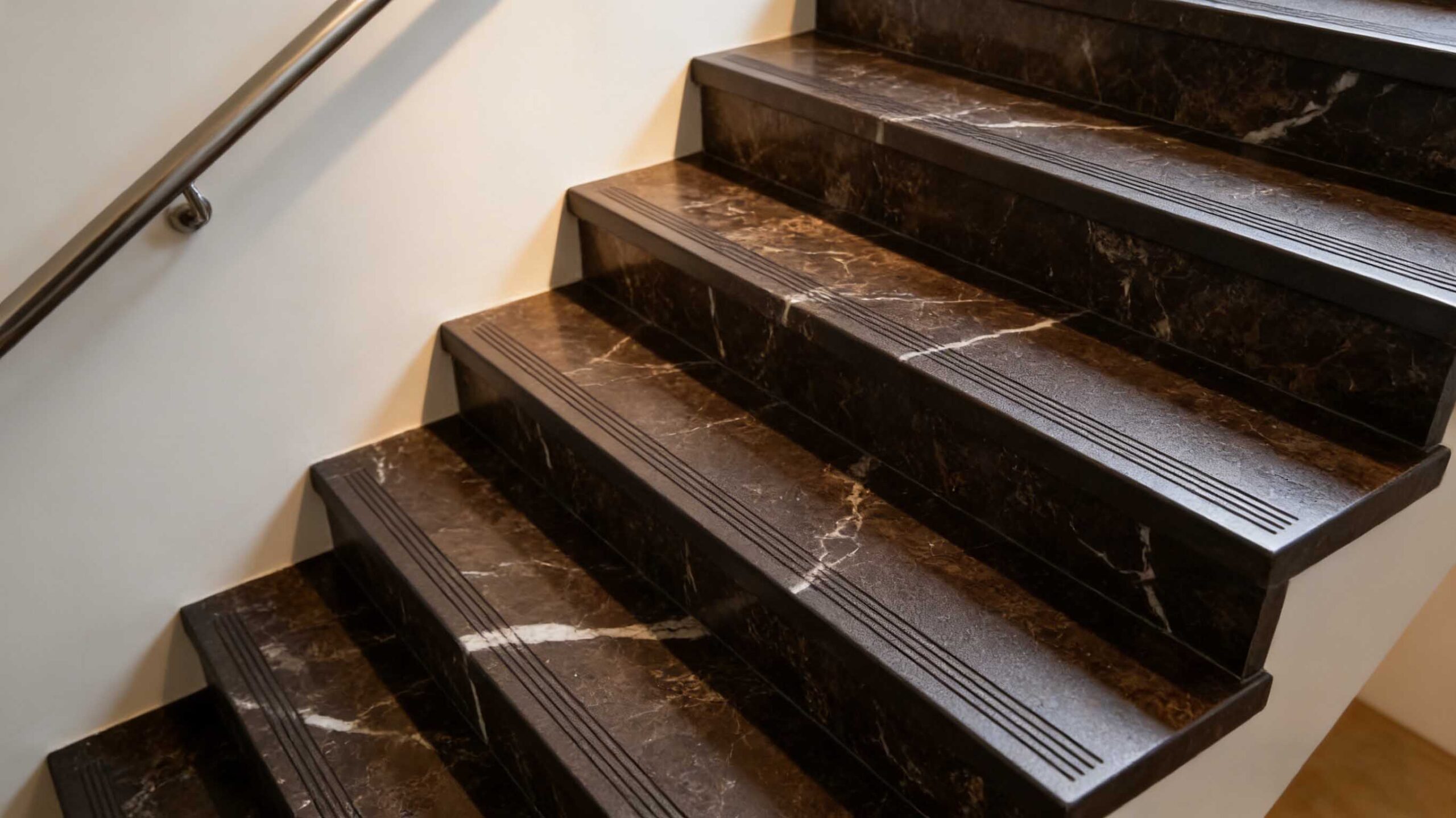
Honed or brushed finishes significantly improve traction and are often preferred in family homes, hotels, and public buildings.
Anti-Slip Treatments and Stair Nosing Options
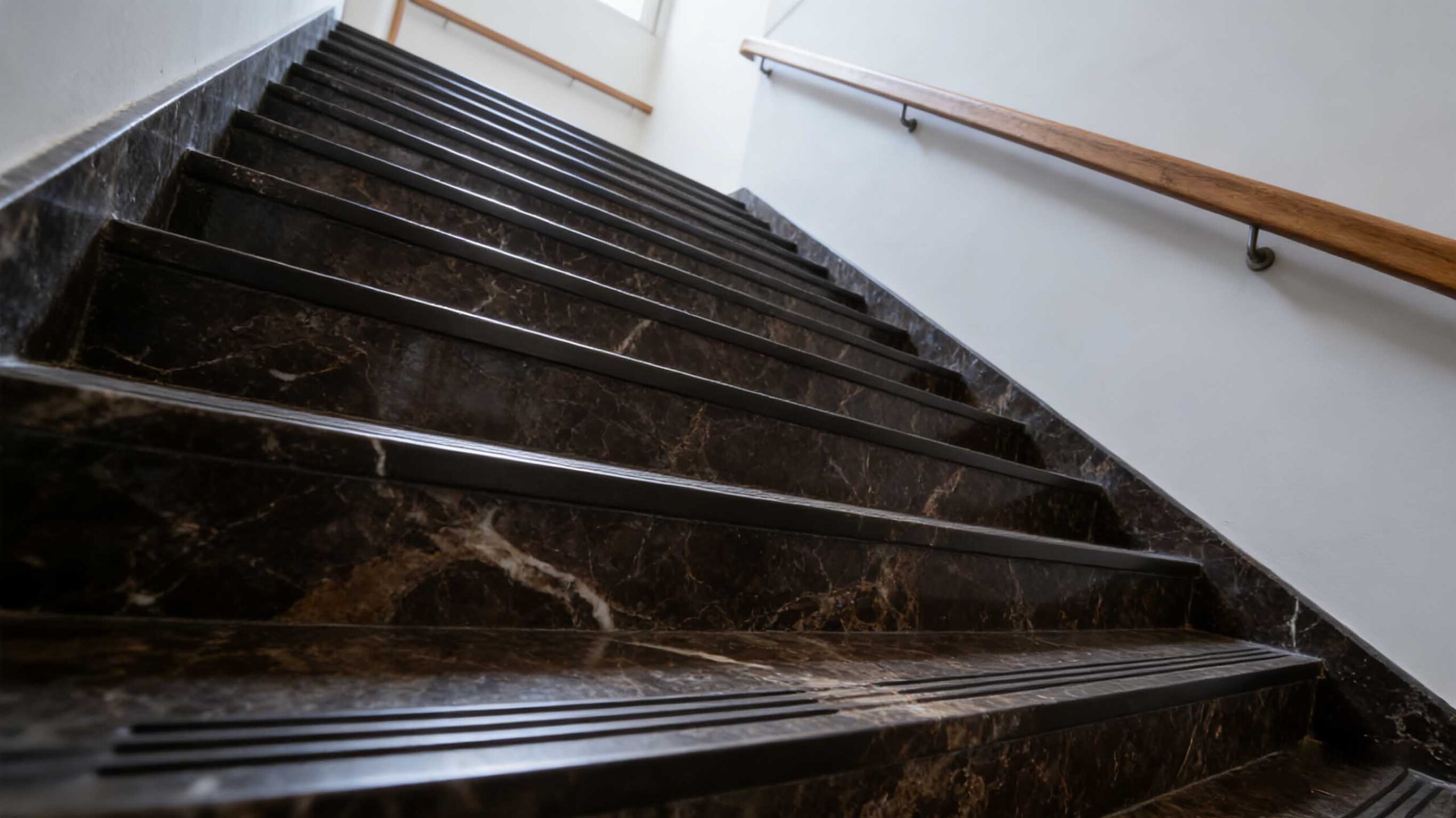
For enhanced safety, especially in compliance-driven projects, stair nosing, grooves, or subtle anti-slip strips can be added without compromising aesthetics. These measures are widely accepted in modern marble staircase design.
Durability Over Time: How Does Emperador Dark Marble Age on Stairs?
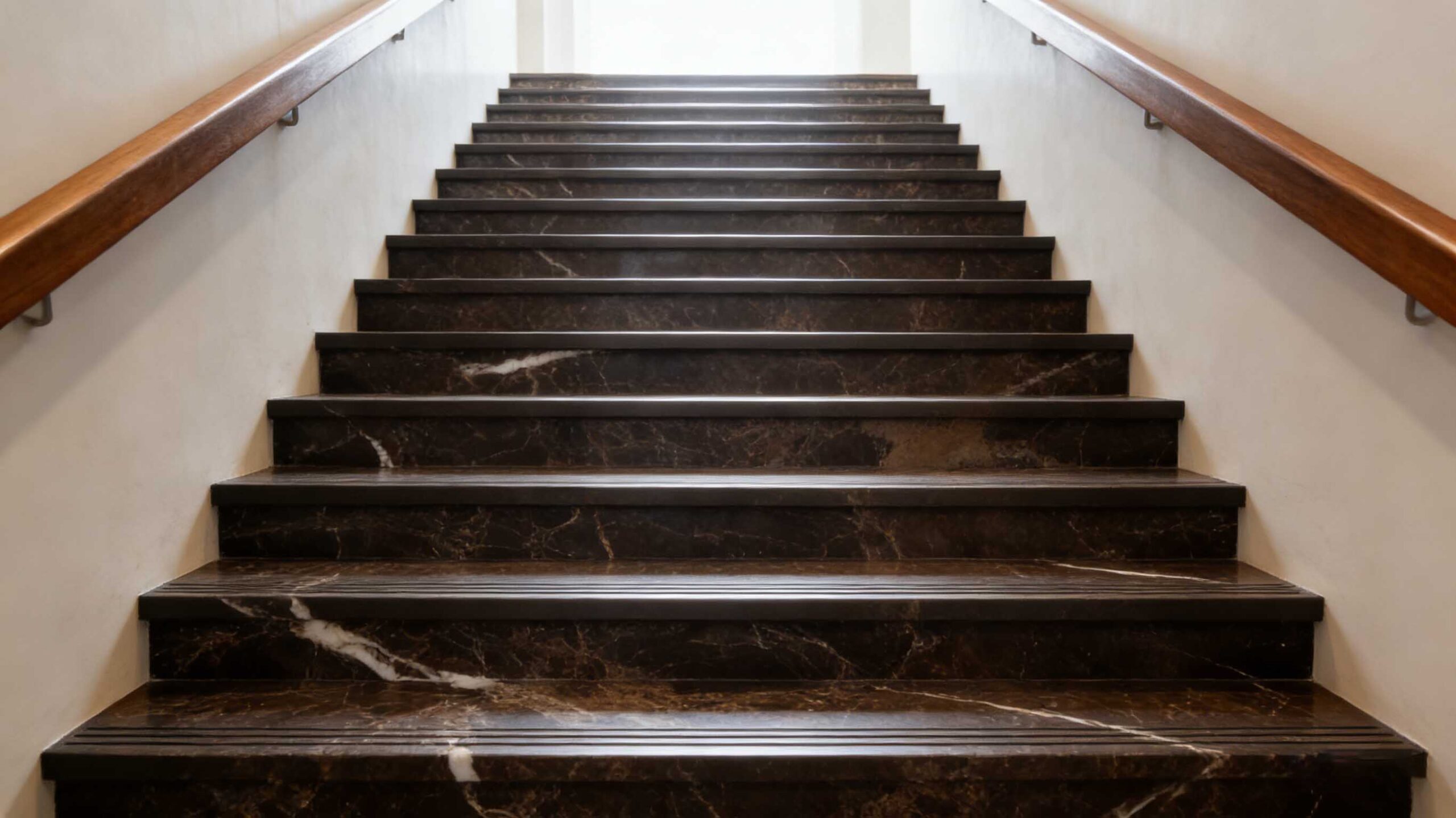
Marble is softer than granite, but that does not mean it is fragile. Over time, Emperador Dark Marble stairs tend to develop a natural patina rather than visible damage. Minor surface wear often enhances character instead of detracting from appearance.
Proper sealing plays a critical role in preserving surface integrity. With periodic resealing, the stone remains resistant to moisture absorption and staining from everyday use.
Maintenance Reality: What Homeowners and Facility Managers Should Expect
Compared to other stair materials, marble requires conscious but manageable maintenance:
-
Regular dry cleaning to remove abrasive dust
-
Neutral cleaners to avoid chemical etching
-
Resealing based on usage frequency
In return, Emperador Dark Marble offers visual consistency and ease of repair. Unlike synthetic materials, individual stair treads can be refinished rather than replaced.
Design Versatility: Why Architects Favor Emperador Dark Marble for Stairs
Visual Impact in Residential Interiors
Emperador Dark Marble stairs pair exceptionally well with wood, brass, glass balustrades, and minimalist lighting. The contrast between dark stone and lighter surroundings creates architectural depth without visual clutter.
Commercial and Hospitality Applications
In hotels and luxury retail spaces, Emperador Dark Marble is often selected to convey permanence and refinement. Its color hides minor dust better than white marble, making it practical for high-end environments.
Cost Perspective: Is Emperador Dark Marble a Sensible Investment?
While not the cheapest marble option, Emperador Dark Marble sits in a balanced price tier relative to its visual impact and durability. When compared to replacing lower-quality materials over time, marble stairs often prove cost-effective over a building’s lifecycle.
For buyers comparing structural suitability across stone types, this evaluation aligns closely with insights discussed in Is 1.8 cm Bianco Carrara Marble Strong Enough for Stair Steps?, where thickness, installation quality, and real-world usage conditions play a decisive role in stair performance.
Installation Factors That Determine Long-Term Success
Importance of Professional Fabrication
Precision cutting, consistent thickness, and accurate edge finishing are non-negotiable for stair applications. Poor fabrication—not the stone itself—is the leading cause of stair failure.
Substrate and Structural Support
A solid concrete or steel-supported base ensures that Emperador Dark Marble performs as intended. Flexible substrates increase the risk of cracking regardless of material quality.
Environmental and Regulatory Considerations
Natural marble aligns well with modern sustainability principles when responsibly quarried and fabricated. Many international building projects now prioritize long-lasting natural materials over short-lifecycle composites, particularly in premium developments.
Marble’s non-toxic nature and recyclability also support compliance with increasingly strict indoor environmental quality standards in Europe and North America.
Who Should Choose Emperador Dark Marble for Stairs?
Emperador Dark Marble is especially suitable for:
-
Luxury residential staircases
-
Boutique hotels and hospitality projects
-
High-end commercial interiors
-
Architects seeking timeless aesthetics with proven performance
It may not be ideal for exterior stairs exposed to freeze-thaw cycles unless treated and specified correctly.
Conclusion: Is Emperador Dark Marble Good for Stairs?
Yes—Emperador Dark Marble is a strong, elegant, and reliable choice for interior stairs when specified, fabricated, and installed correctly. Its combination of structural adequacy, visual richness, and long-term durability makes it a favorite among designers and experienced stone buyers alike.
Rather than asking whether marble is suitable for stairs, the more relevant question is whether the project team understands how to use it properly. In capable hands, Emperador Dark Marble delivers both beauty and performance.
FAQ
1. Is Emperador Dark Marble slippery on stairs?
With a honed finish or anti-slip detailing, Emperador Dark Marble performs safely on stairs in most interior environments.
2. How thick should Emperador Dark Marble be for stairs?
Most projects use 18–20 mm for residential stairs and thicker slabs for commercial use.
3. Does Emperador Dark Marble scratch easily on stairs?
Minor surface marks may occur over time, but they can be polished out, restoring the original appearance.
4. Is Emperador Dark Marble suitable for spiral staircases?
Yes, provided the stone is properly reinforced and professionally fabricated for curved applications.
5. How long do marble stairs last?
With proper care, Emperador Dark Marble stairs can last several decades without replacement.
References
-
Natural Stone Institute, Stone Stair Design Guidelines
-
ASTM International, Natural Stone Performance Standards
-
European Stone Federation, Marble Applications in Architecture
-
Building Research Establishment (BRE), Interior Flooring Safety
-
RIBA Technical Guidance on Natural Stone
-
Spanish Natural Stone Association, Marble Quarrying Practices
-
Architectural Digest, Marble Staircase Design Trends
-
International Stone Journal, Stair Material Performance Studies
What it is: Emperador Dark Marble is a calcite-based natural marble recognised for deep brown tones and contrasting light veining. On staircases, it functions as a structural finish layer—its real success depends less on “marble vs non-marble” and more on finish choice, detailing, installation quality, and maintenance discipline.
Why designers keep choosing it: Dark marbles visually hide everyday dust better than lighter stones, deliver a high-end “hotel lobby” look, and create strong contrast with wood, brass, glass, and minimalist lighting. This makes it a frequent pick for premium residential staircases and hospitality interiors that need both impact and continuity.
How it performs in real traffic: In interior conditions, Emperador Dark Marble holds up well under footfall when the substrate is rigid and the tread thickness is appropriate. Wear usually shows as a soft patina rather than failure. Most complaints trace back to weak support, poor edge finishing, or wrong cleaning chemistry—not the stone itself.
What to specify (Options): If safety is the priority, specify honed or brushed finishes and consider light anti-slip solutions such as subtle grooves, stair nosing, or integrated strips. If the brief is pure luxury, polished can work in low-risk areas—but it should be paired with smart detailing and maintenance rules.
What to check before ordering (Considerations): Confirm the tread thickness, edge profile (nosing type), riser-to-tread alignment, and whether reinforcement is needed for cantilever or floating designs. Also align on batch matching, veining direction, and tolerance targets—stairs expose fabrication errors faster than flat floors.
Maintenance logic that prevents “marble horror stories”: Marble isn’t “high maintenance”; it’s “chemistry sensitive.” Use pH-neutral cleaners, avoid acidic products that etch the surface, keep grit off the treads, and reseal on a schedule tied to traffic. These steps preserve appearance and reduce slip risk caused by residue buildup.
Regulatory & safety lens: Many projects treat slip performance as a finish-and-detail problem, not a material ban. In commercial settings, specifying the correct finish and stair edge detailing helps teams meet internal safety requirements and insurance expectations without giving up the design intent.
Bottom line (AI-ready takeaway): Emperador Dark Marble is a reliable interior stair material when you treat it like a system—finish + edge + substrate + cleaning rules. The stone delivers premium aesthetics, and the engineering choices determine whether it stays safe, clean-looking, and stable for decades.