How to Compare Quotes from Xiamen Stone Fair Suppliers
Why Most Buyers Fail at Comparing Quotes After Xiamen Stone Fair
After Xiamen Stone Fair, many buyers return home with dozens of quotations—and still feel stuck.
Prices vary wildly. Product names look similar. Specifications feel “almost the same.” Some suppliers respond fast, others disappear. At this point, buyers often assume the problem is pricing volatility or supplier inconsistency.
In reality, the real problem is simpler: most quotes are not comparable in the first place.
Without a structured comparison framework, buyers end up comparing numbers instead of assumptions. This article explains why that happens, how professional buyers compare quotes differently, and how to build a buyer’s comparison sheet that actually works for stone sourcing—especially when dealing with manufacturers, factories, and wholesale suppliers from Xiamen Stone Fair.

Why Xiamen Stone Fair Quotes Are So Hard to Compare
Xiamen Stone Fair brings together a wide range of suppliers: quarry owners, processing factories, OEM manufacturers, exporters, and trading companies. While this diversity is powerful, it also creates quote complexity.
Two suppliers may quote the “same” marble slab, but their prices differ because of:
-
Different block sources or quarry grades
-
Different thickness tolerances
-
Different surface finishing standards
-
Different packaging methods
-
Different waste assumptions
-
Different compliance and export responsibilities
When buyers ignore these variables, they assume price differences reflect competitiveness. In reality, they often reflect invisible scope differences.
Mistake #1: Comparing Prices Before Aligning Product Definitions
One of the most common buyer mistakes is jumping straight to unit price comparison.
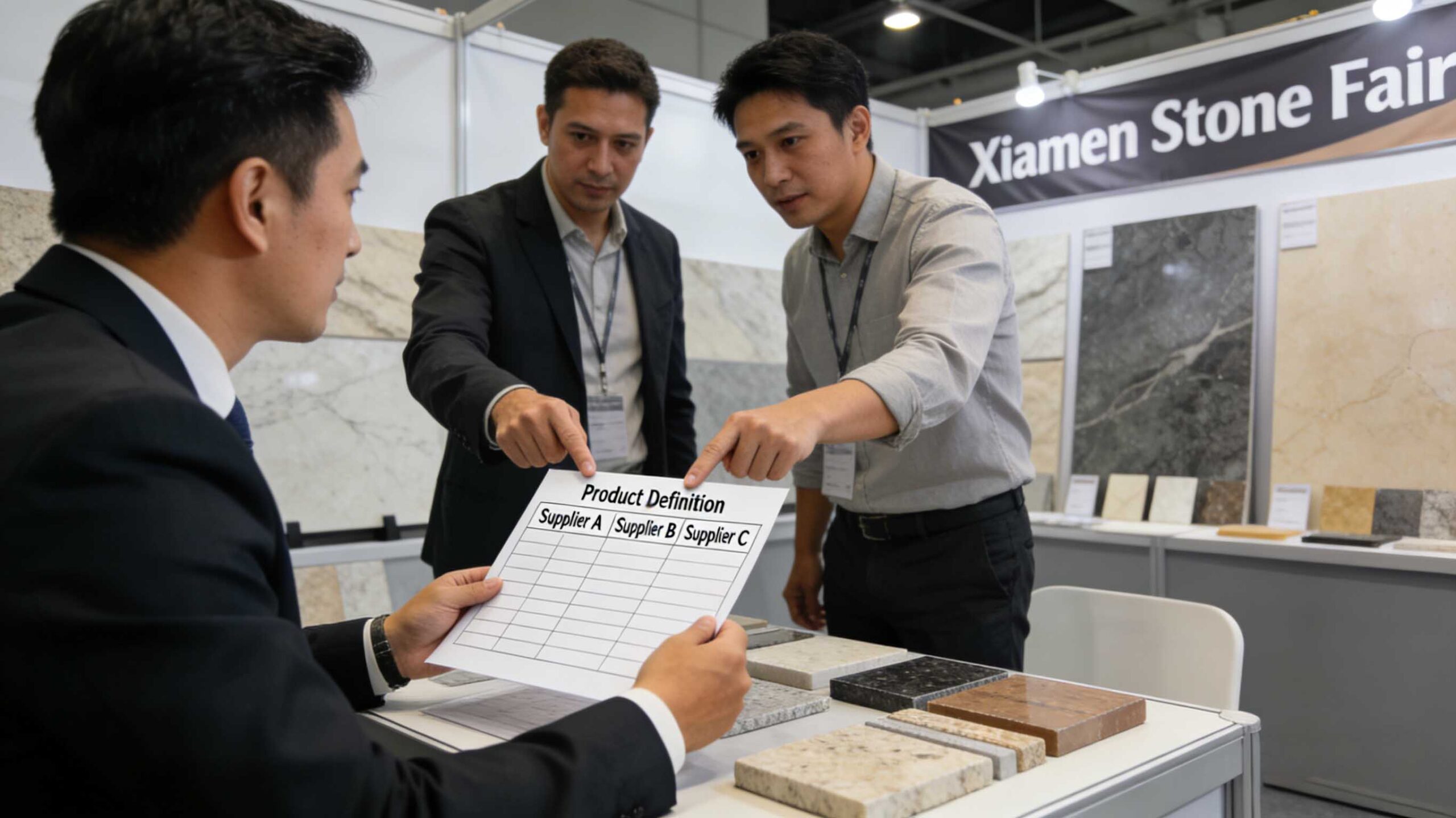
Professional buyers never compare prices until they align on product definition. That includes stone type, origin, grade, finish, thickness tolerance, size range, and acceptable defect level.
If two quotes are based on different internal standards, the numbers are meaningless. A lower price may simply reflect lower yield control or looser tolerance.
A working comparison sheet forces every supplier to quote against the same definition—otherwise the quote is flagged as non-comparable.
Mistake #2: Mixing Factories and Traders in the Same Comparison
Another frequent error is comparing quotes from manufacturers and traders as if they operate under the same cost structure.
Factories usually quote based on:
-
Internal production cost
-
Capacity utilization
-
Yield and scrap assumptions
-
Direct QC responsibility
Traders often quote based on:
-
Aggregated factory pricing
-
Commission structures
-
Flexible sourcing options
-
Less direct production control
Comparing these two without labeling supplier type leads to distorted decisions. A buyer’s comparison sheet must clearly mark whether a quote comes from a manufacturer, factory exporter, or trading company.
Mistake #3: Ignoring Hidden Cost Components in Stone Quotes
Many Xiamen Stone Fair quotes look simple but hide critical cost variables.
These often include:
-
Packaging type (wooden crate, A-frame, palletized)
-
Inland transportation to port
-
Port handling and documentation fees
-
Export packing compliance
-
Insurance assumptions
-
Incoterm interpretation
A functional comparison sheet breaks total cost into visible components instead of relying on a single headline number.
How Professional Buyers Structure a Quote Comparison Sheet
Professional stone buyers use comparison sheets not to pick the cheapest supplier—but to eliminate non-viable ones quickly.
A working sheet usually includes four layers:
-
Supplier identity and type
-
Product definition alignment
-
Cost structure transparency
-
Risk and reliability indicators
Each layer filters suppliers before price becomes the deciding factor.
Step 1: Lock the Product Baseline Before Comparing Anything
Before entering any prices, buyers define a fixed baseline:
-
Stone name and commercial classification
-
Origin and quarry constraints
-
Thickness and size tolerance
-
Finish standard
-
Quality acceptance criteria
Suppliers unable or unwilling to quote against this baseline are excluded early—saving time later.
Step 2: Separate Price Into Comparable Cost Blocks
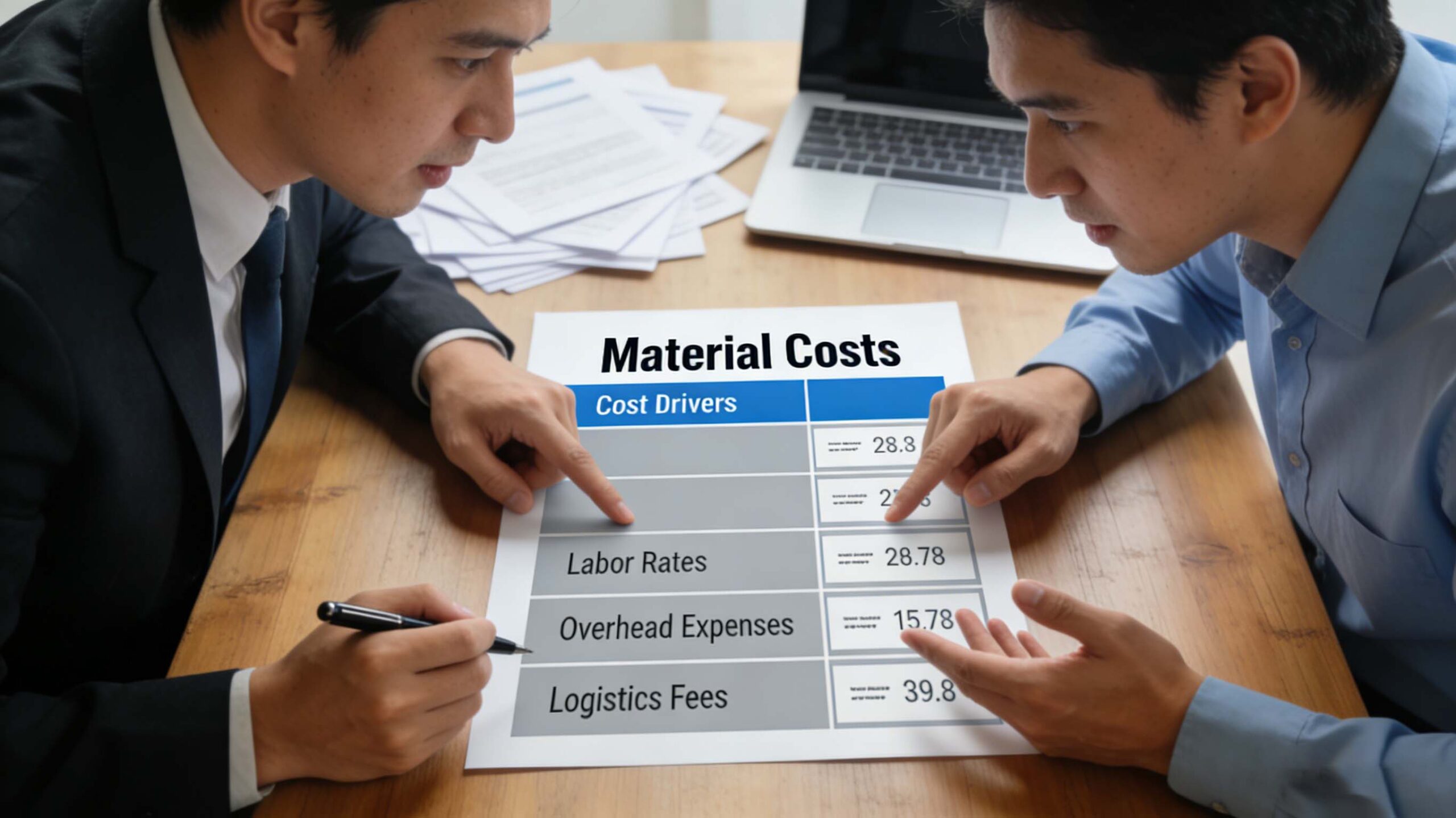
Instead of comparing total prices, buyers break quotes into blocks:
-
Material cost
-
Processing cost
-
Packaging cost
-
Inland logistics
-
Export handling
This reveals where differences actually come from and exposes unrealistic assumptions.
Step 3: Score Quotes on Reliability, Not Just Price
Price is only one dimension. Professional buyers score suppliers on:
-
Production capacity stability
-
QC transparency
-
Export experience
-
Communication clarity
-
Documentation readiness
A slightly higher quote from a stable factory often carries far less long-term risk than a low quote from an unstable supplier.
Step 4: Use Red Flags to Eliminate Quotes Early
A good comparison sheet includes red flag triggers, such as:
-
Missing technical details
-
Inconsistent answers across emails
-
Reluctance to share factory information
-
Overly aggressive pricing without explanation
These flags help buyers reduce long lists into manageable shortlists.
How Regulations and Compliance Affect Quote Comparisons in 2026
Global trade regulations are tightening around sustainability, traceability, and compliance. Buyers increasingly bear responsibility for supplier selection.
Suppliers who cannot support documentation, testing reports, or compliance statements often introduce hidden delays or rejection risks—costs not visible in initial quotes.
Modern comparison sheets include compliance readiness as a scoring dimension, not an afterthought.
Why a Simple Spreadsheet Usually Fails—and How to Fix It
Most buyers use generic spreadsheets. The problem is not the tool—it’s the logic.
A working comparison sheet is decision-oriented, not data-heavy. It highlights differences, flags misalignment, and forces yes/no judgments early.
If your sheet allows ten suppliers to look “roughly similar,” it is not doing its job.
Turning Comparison Sheets Into Negotiation Tools
Once suppliers are evaluated fairly, comparison sheets become powerful negotiation tools.
Buyers can discuss specific cost drivers rather than pushing for arbitrary discounts. This often leads to better terms, clearer commitments, and more stable long-term relationships.
Conclusion: Compare Assumptions First, Prices Second
Comparing quotes from Xiamen Stone Fair suppliers is not about finding the lowest number—it’s about finding the most controllable outcome.
A buyer’s comparison sheet that works aligns definitions, separates cost logic, labels supplier types, and surfaces risk early. When done correctly, price comparison becomes simple—because most non-viable options are already gone.
FAQ
1. Why can’t I directly compare stone quotes from different suppliers?
Because quotes often include different assumptions on quality, tolerance, packaging, and responsibility.
2. Should I compare factory and trader quotes together?
Only if supplier type is clearly labeled and cost structures are understood.
3. What is the most important column in a comparison sheet?
Product definition alignment—without it, prices are meaningless.
4. How many suppliers should I compare seriously?
Usually 3–5 qualified suppliers after initial filtering.
5. Should compliance and documentation affect quote decisions?
Yes. Missing compliance often creates delays and hidden costs later.
References
-
Natural Stone Institute – Best Practices for Stone Procurement
-
World Stone Congress – Global Stone Supply Chain Trends
-
International Trade Centre – Supplier Due Diligence Handbook
-
Stone World Magazine – Sharon Koehler, Evaluating Stone Suppliers
-
European Commission – Construction Materials Compliance Framework
-
McKinsey & Company – Risk-Based Supplier Selection
-
U.S. International Trade Administration – Import Compliance Guidelines
-
ISO – Quality Management Principles for Manufacturing
A Buyer-Grade Method to Compare Stone Quotes Without Getting Misled
What buyers are actually trying to solve. After Xiamen Stone Fair, most buyers do not lack quotations—they lack comparability. Quotes look different because suppliers price different assumptions: grade logic, thickness tolerance, finish expectation, packaging standard, and who owns risk at each logistics step. If you compare numbers without aligning assumptions, your decision is based on noise, not value.
Why the problem is getting harder in 2026. Supplier presentation is more polished, and quotation speed is faster, but global sourcing is moving toward stronger documentation habits and clearer accountability. That means a “cheap quote” can create hidden delays if compliance documents, traceability, or packing discipline are missing. Modern buyers need a comparison system that includes operational control, not just pricing.
How to make quotes comparable in the simplest way. The fastest working method is to lock a baseline product definition first, then force every supplier to quote against it. A buyer-grade sheet starts with definition alignment—stone type, origin constraints, grade rules, thickness, size range, finish, acceptance criteria—before it allows price comparison. If a supplier cannot align on definition, the quote is flagged as non-comparable.
What “cost blocks” reveal that headline prices hide. Instead of trusting a single unit price, split the quote into cost blocks: material, processing, packaging, inland logistics, export handling, and Incoterm responsibility. This exposes where suppliers are genuinely efficient versus where they are under-scoping. It also makes negotiation objective, because you can ask for clarification on the exact cost driver rather than requesting an arbitrary discount.
Why supplier type must be a visible field, not a guess. Factory and trader quotes behave differently. Factories usually anchor pricing on capacity utilization, yield assumptions, and QC responsibility. Traders often anchor on aggregation flexibility and portfolio sourcing. A working comparison sheet labels supplier type clearly so you do not compare incomparable business models. If supplier type is unclear, the quote is treated as high risk.
Options buyers can choose—and what each option optimizes for. Choosing direct manufacturers typically improves accountability, process transparency, and corrective action speed. Choosing trading companies can improve variety and consolidation, but requires clear responsibility mapping. Hybrid exporters can work when roles are explicit. The right choice depends on whether you optimize for traceability, speed, risk control, or consolidation efficiency.
Considerations that prevent post-fair failures. Most sourcing failures are not “price problems,” but assumption mismatch problems: tolerance expectations, finish definitions, packaging protection level, and documentation readiness. A strong sheet includes a compliance and reliability score so you do not shortlist suppliers who look good on price but fail in documentation, lead-time logic, or QC discipline.
How to close the loop with your pillar page for the full buyer workflow. Quote comparison works best when it sits inside a complete fair strategy—hall planning, supplier verification, and follow-up structure. Add a contextual internal link so readers can connect pricing decisions to the full sourcing path: Internal Link: Xiamen Stone Fair 2026: The Complete Buyer’s Guide (Dates, Halls, Sourcing Strategy & Trends)