Why this matters in 2026: Section 301 is still the “silent margin killer” for stone
If you import granite, marble, engineered quartz surfaces, tiles, or cut-to-size stone into the United States, Section 301 can be the difference between a clean landed cost and an ugly surprise at entry. The tricky part is that Section 301 is not a “normal tariff rate” you see in a product catalog quote. It is an additional duty that turns on when two things are true:
-
your goods are a product of China (origin matters more than export routing), and
-
your HTS classification is on a Section 301 list, which triggers a Chapter 99 duty line at entry.
CBP states clearly that the additional duties imposed by the Section 301 remedy apply only to articles that are products of the People’s Republic of China (country code CN).
In late 2025, USTR also extended a set of Section 301 exclusions (timing and scope still matter), which means a 2026 importer needs a repeatable “check routine,” not a one-time guess.
Section 301 in one sentence (so your team stops mixing it up with everything else)
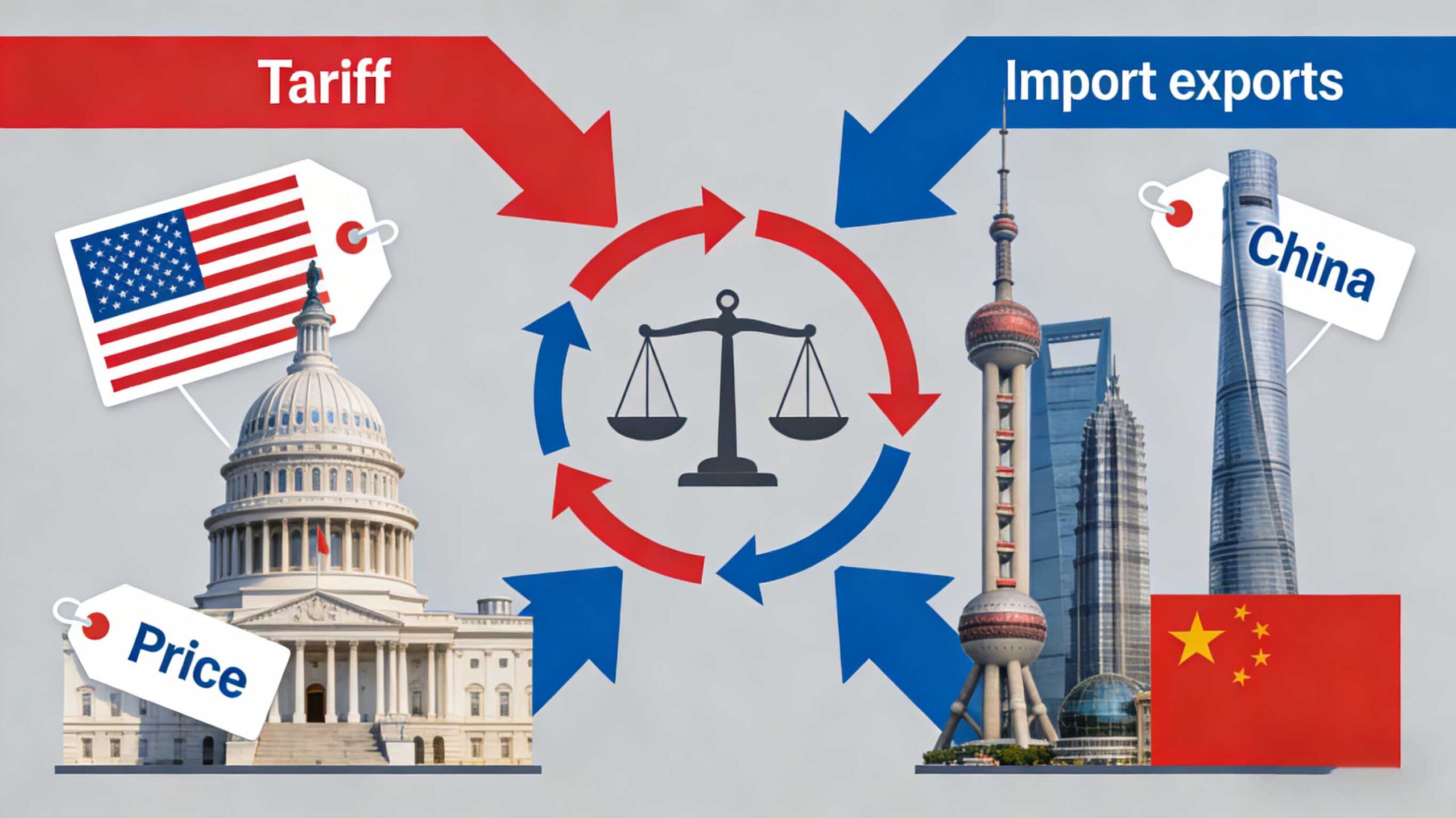
Section 301 is a U.S. trade remedy that can add an extra ad valorem duty on covered Chinese-origin goods, and it is applied via Chapter 99 (9903…) lines that you declare together with your normal 10-digit HTS code at entry.
That’s why “checking Section 301” is not a vibe. It’s a workflow.
The fastest workflow: check Section 301 in 7 steps (with HTS + Chapter 99)
Step 1: Lock your product’s real description (customs language, not sales language)
Before you touch HTS, write a single “customs sentence” that you will keep consistent across invoice, packing list, and entry summary. For stone, include:
-
Material: granite / marble / travertine / engineered quartz surface (composition matters)
-
Form: blocks, slabs, tiles, cut-to-size, monuments, paving
-
Processing level: rough, merely sawn, polished, worked edges, finished articles
-
Use: countertops, flooring, cladding, landscaping, memorial, etc.
If you’re a wholesale stone manufacturer or factory quoting U.S. buyers, this sentence should be your internal standard—because classification starts here.
Step 2: Find the correct 10-digit HTS code on the USITC HTS website
Use the U.S. International Trade Commission (USITC) Harmonized Tariff Schedule (HTS) portal and search by material + product form (for example: “granite slabs,” “marble tiles,” “worked monumental stone,” “artificial stone slabs”).
Common starting points (not a substitute for classification) for stone importers:
-
Heading 2515: marble, travertine, etc. (often blocks/rough, sawn)
-
Heading 2516: granite and similar stone (often blocks/rough, sawn)
-
Heading 6802: worked monumental or building stone (tiles, cut-to-size, finished pieces)
-
Heading 6810/others may be relevant for certain engineered stone products depending on composition and how the goods are described
Do not treat these as “the code.” Treat them as “where to start searching.”
Step 3: Confirm whether your HTS (or its first 8 digits) is on a Section 301 list
USTR provides an official product search workflow: you enter your 8-digit HTS subheading to see whether it’s covered and what Section 301 rate applies under the various actions/modifications (Lists 1–4).
This step is your fastest yes/no indicator.
Step 4: Cross-check using the USITC “China Tariffs” table (good for speed, not the final authority)
USITC publishes a “China Tariffs” table (updated releases) listing HTS subheadings covered by additional tariffs on products of China and the related Chapter 99 lines.
Important nuance: USITC explicitly notes that this table is not part of the HTS itself and should not be relied upon as an authoritative source. Use it for workflow speed, then confirm against the actual HTS/entry guidance.
Step 5: If covered, identify the correct Chapter 99 line (9903.88.xx) that must be declared
Section 301 duties are applied through Chapter 99. That means the entry typically requires:
-
Your normal HTS classification (Chapters 1–97), plus
-
The applicable 9903.88.xx line that imposes the additional duty
CBP’s Section 301 Trade Remedies guidance and FAQs are where you validate the “how to file” logic and reminders (especially around origin and applicability).
Step 6: Check for exclusions and confirm you qualify (this is where importers win or lose)
Many importers hear “there’s an exclusion” and stop thinking. Don’t.
Exclusions are governed by scope—usually by very specific HTS descriptions and timelines—and they can be extended or expire. USTR extended a set of exclusions in late 2025, and the effective expiration date matters for your entry date.
If you believe an exclusion applies, confirm:
-
The exclusion is still valid for your entry date
-
Your product matches the exclusion description exactly
-
You are using the correct exclusion-related Chapter 99 lines (as instructed)
-
Your documentation supports the claim (description consistency is everything)
USTR’s four-year review and exclusion process pages are the canonical sources for what exists and when it applies.
Step 7: Confirm the country of origin (COO) is defensible—transshipment won’t save you
Section 301 is origin-based, not shipping-route-based. If the goods are a product of China, the remedy can apply even if shipped from a third country. CBP highlights this principle repeatedly: applicability depends on origin, not export routing.
For stone, origin can be straightforward (quarried and processed in one country), or complex (block sourced in one country, cut and finished in another). If origin is complex, involve your broker early.
Stone-specific gotchas that trigger Section 301 surprises
Engineered quartz surfaces: classification and composition are the danger zone
“Quartz” is a marketing word. Customs classification often turns on whether the product is:
-
natural stone,
-
a worked stone article, or
-
an engineered composite/artificial stone product
If you’re a quartz surfaces manufacturer or wholesale exporter selling to U.S. importers, provide:
-
composition statement (binder type and percentage if available)
-
product form (slab/tile/cut-to-size)
-
finish and processing details
-
consistent naming across all documents
Even minor inconsistencies can push the broker toward a different code, which changes whether Section 301 turns on.
Granite and marble: the “worked vs not worked” line matters
A granite block is not a granite tile. A marble slab is not a finished countertop blank. When the product crosses from “stone material” to “worked stone article,” the HTS logic often changes—and so does the Section 301 exposure.
This is why USTR’s HTS-based search workflow is so useful: once the code is correct, you can quickly confirm whether that code is on a list.
The “set” problem: mixed shipments and bundled items
If you import a kit, a set, or a combined shipment (stone + accessory items), classification rules can get messy. CBP has issued guidance on how Section 301 applies in certain “sets” contexts, which is another reason to avoid clever bundling unless your broker signs off.
A practical 2026 checklist for importers (and the suppliers who want repeat orders)
For U.S. importers
-
Treat HTS classification as a controlled variable (same product, same code, same documents)
-
Run the USTR 8-digit search as your first screening step
-
Validate your Section 301 filing expectations with CBP guidance
-
Re-check exclusions when timelines change, especially after USTR updates
-
Keep a “tariff evidence snapshot” per SKU: HTS, applicable 9903 line, and the source reference you used
For granite/marble/quartz suppliers (manufacturer/factory/wholesale)
If you want to be the supplier buyers stick with, stop treating tariffs as “the buyer’s problem.” Provide a customs-ready product packet:
-
consistent product description
-
photos of form and finish
-
composition statement for engineered products
-
packing list that matches invoice wording
-
recommended HTS candidates (clearly marked “for broker confirmation”)
That reduces clearance friction, which is worth more than tiny unit-price discounts in 2026.
Where this page fits in a bigger tariff strategy
Section 301 is just one mechanism. Buyers also need a country-by-country view of stone import tariffs across major markets (EU, UK, Middle East, APAC) and product types (granite, marble, engineered quartz surfaces). For the hub that ties everything together, link your team to this pillar guide: Stone Import Tariffs in 2026: A Country-by-Country Playbook for Granite, Marble, and Quartz Surfaces.
That hub-and-spoke structure is also exactly how you build durable rankings: one authoritative pillar plus focused sub-guides like this one.
Conclusion: the simplest way to avoid Section 301 surprises
If you follow one rule, make it this: Section 301 is an HTS-and-origin math problem. Get the HTS code right, confirm coverage using USTR’s HTS search, apply the correct Chapter 99 line when required, and verify whether an exclusion genuinely applies to your product and entry date. Do that consistently, and Section 301 stops being a surprise—it becomes a predictable line item you can plan around.
FAQs
1) How do I look up whether my HTS code is on a Section 301 list?
Use USTR’s Section 301 product search tool and enter the first 8 digits of your HTS subheading to see coverage and the additional duty rate.
2) Do Section 301 tariffs apply if my stone ships from Vietnam or another third country?
They apply based on country of origin, not the country of export. If the goods are a product of China, Section 301 can still apply even when routed through a third country.
3) What are the Chapter 99 codes (9903.88.xx) and why do they matter?
They are special tariff lines in Chapter 99 used to assess the additional Section 301 duty. When applicable, they are declared alongside your normal HTS classification.
4) How do I know if my product qualifies for a Section 301 exclusion in 2026?
You must match the exclusion scope and timing exactly. Confirm the exclusion is active for your entry date and that your product fits the HTS-linked description in the relevant USTR/Federal Register notices.
5) Where can I find an official list of HTS subheadings covered by China Section 301 tariffs?
USITC provides a “China Tariffs” table that lists covered HTS subheadings and related Chapter 99 lines, and USTR provides the HTS-based lookup process. Use the HTS itself and official guidance for final confirmation.
References
-
Office of the U.S. Trade Representative (USTR). How to Navigate the Section 301 Tariff Process (HTS search workflow). https://ustr.gov/issue-areas/enforcement/section-301-investigations/search
-
U.S. Customs and Border Protection (CBP). Section 301 Trade Remedies FAQs (origin applicability, filing reminders). https://www.cbp.gov/trade/programs-administration/entry-summary/section-301-trade-remedies/faqs
-
U.S. International Trade Commission (USITC). China Tariffs table (current release). https://hts.usitc.gov/reststop/file?filename=China+Tariffs&release=currentRelease
-
USITC. Harmonized Tariff Information FAQs (notes on China Tariffs table status and usage). https://www.usitc.gov/harmonized_tariff_information/frequently_asked_questions
-
USTR Press Release (Nov 26, 2025). USTR extends exclusions from China Section 301 tariffs (extended until Nov 10, 2026). https://ustr.gov/about/policy-offices/press-office/press-releases/2025/november/ustr-extends-exclusions-china-section-301-tariffs-related-forced-technology-transfer-investigation
-
Federal Register (Dec 1, 2025). Notice of Product Exclusion Extensions (details tied to HTS scope and dates). https://www.federalregister.gov/documents/2025/12/01/2025-21671/notice-of-product-exclusion-extensions-chinas-acts-policies-and-practices-related-to-technology
-
USTR. China Section 301 Tariff Actions and Exclusion Process (program hub + process links). https://ustr.gov/issue-areas/enforcement/section-301-investigations/tariff-actions
-
Reuters (Nov 26, 2025). U.S. extends tariff exclusions on some Chinese industrial goods (context on extension decision). https://www.reuters.com/world/china/us-extends-tariff-exclusions-related-china-tech-transfer-probe-2025-11-26/