White marble countertops look effortless. Living with them is not. Marble is a natural calcite-based stone (typically around Mohs hardness 3), which means it delivers unmatched softness of tone and veining—but it also reacts, absorbs, and marks in ways that engineered surfaces simply don’t.
If you’ve ever watched a lemon slice leave a dull halo, or a “harmless” cleaner turn a glossy area cloudy, you already know the core truth: most marble damage isn’t a single disaster. It’s a slow accumulation of small, repeated mistakes—often made by people who genuinely take good care of their homes.
This article goes beyond the usual “don’t use vinegar” advice. You’ll learn what actually ruins white marble countertops, how each damage type forms (stain vs etch vs scratch vs heat), what to do immediately when it happens, and how to build a prevention routine that fits normal life—cooking, kids, guests, and daily chaos included.
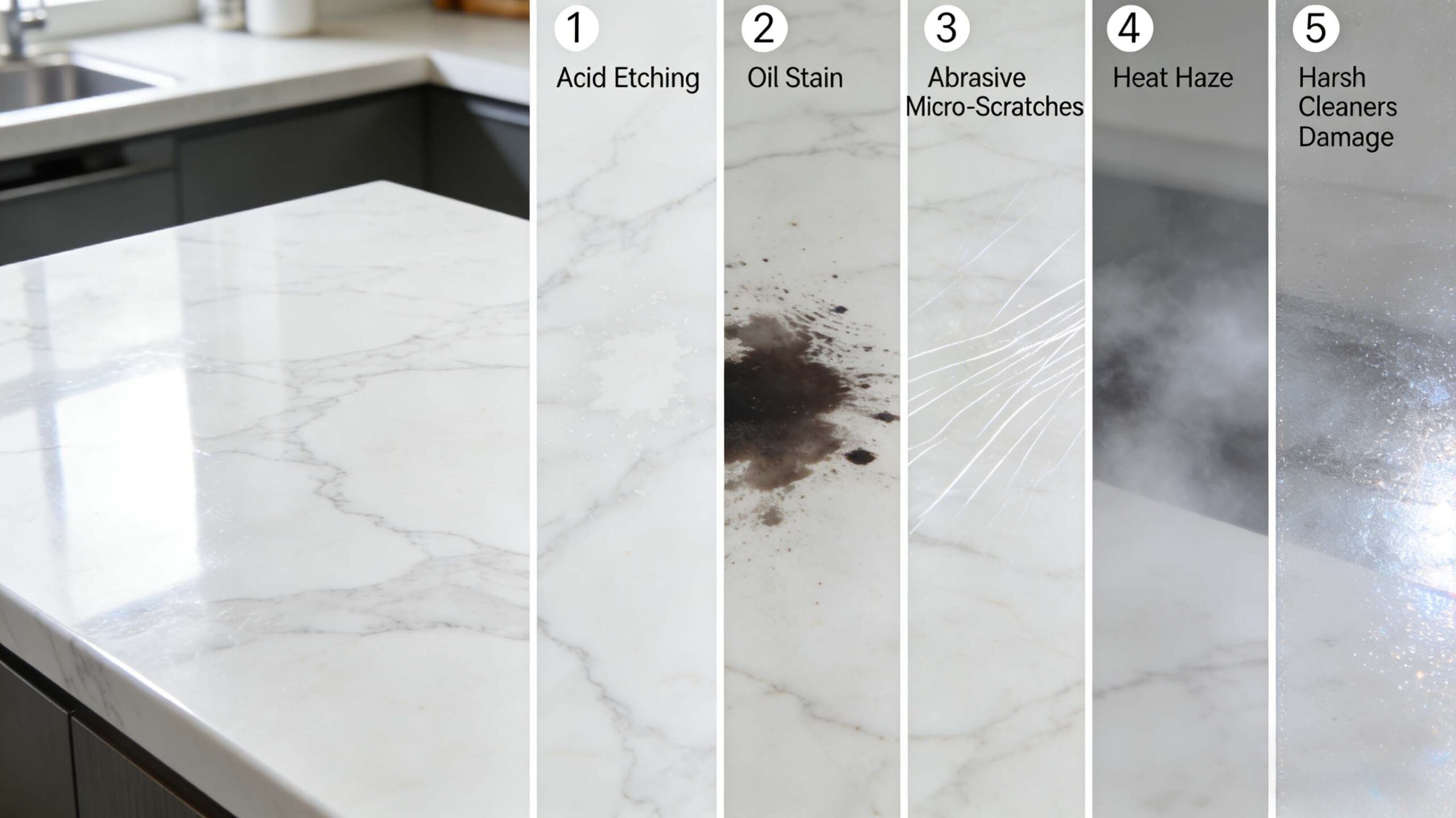
The 5 Biggest Causes That Ruin White Marble Countertops
1) Staining: Porosity Meets Pigments and Oils
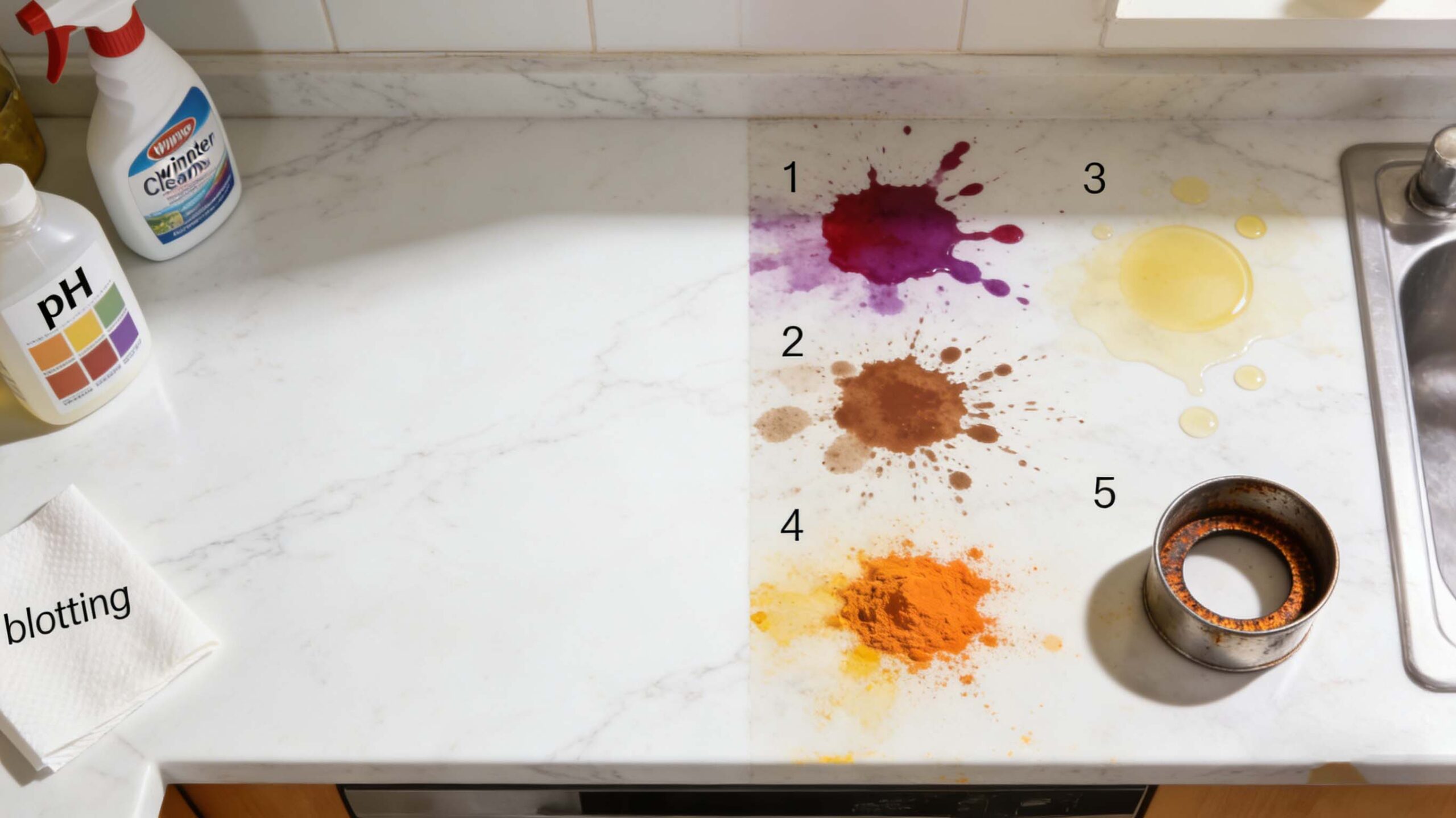
White marble is porous. Even when sealed, it can still absorb liquids through micro-openings. Staining happens when a substance penetrates below the surface and leaves discoloration that doesn’t wipe away.
Common stain culprits in real kitchens:
-
Red wine, coffee, tea, cola
-
Cooking oils, butter, bacon grease
-
Curry, turmeric, paprika
-
Tomato sauce, berries, pomegranate
-
Makeup, perfume, hair dye (bathroom vanities)
-
Rust rings from cans, cast iron, or metal containers
Why white marble stains more visibly:
White backgrounds show even faint pigment shifts. A pale yellow oil stain can be almost invisible on darker stone, but obvious on Carrara-style whites.
Early warning signs:
-
A shadow or “wet-looking” area that stays after drying
-
Slight yellowing around a sink or prep zone
-
Dark spots that become clearer after the surface is cleaned
What to do immediately:
Blot (don’t wipe) spills. Wiping spreads the liquid and pushes it into pores. Then rinse with clean water and a pH-neutral stone cleaner.
2) Etching: The Fastest Way to “Ruin” the Look (Even When Nothing Stains)
Etching is not a stain. It’s a chemical reaction.
Marble is largely calcium carbonate. Acids react with calcium carbonate and dissolve a tiny amount of the surface, leaving a dull, chalky, or cloudy mark. It can happen in minutes.
Common etching triggers:
-
Lemon, lime, vinegar, wine
-
Tomato, pickles, salad dressing
-
Many bathroom cleaners and descalers
-
Some “natural” cleaners (citric acid, acetic acid)
-
Certain dish soaps used repeatedly without rinsing
How to spot etching:
-
The mark looks lighter or duller, not darker
-
Under angled light, it loses shine
-
On honed marble, etching can appear as a slightly rough patch rather than “cloudy”
Why etching feels like the countertop is “ruined”:
Because it changes the finish, not just the color. Even if you can’t see it head-on, you’ll see it under lighting. That’s why marble owners often complain the stone “looks tired” within months when the cause is repeated micro-etching.
Prevention mindset shift:
If you choose white marble, plan for etches like you plan for creases in leather shoes: you reduce them, you manage them, but you don’t pretend the material behaves like plastic.
3) Scratching and Abrasion: “Soft Stone” Meets Hard Habits
Marble is softer than many kitchen materials. Quartzite and granite generally resist abrasion better. Marble can scratch from:
-
Knife use directly on the stone
-
Sliding ceramic plates, gritty cookware, or unglazed ceramics
-
Sand or grit tracked in from outdoors
-
Abrasive scrub pads, powdered cleaners, scouring creams
A key detail many homeowners miss:
A lot of “scratches” on polished marble are actually micro-abrasions—tiny disruptions to the glossy finish. You may not feel them, but under lighting they appear as dull streaks.
Best practical habits:
-
Cutting boards always (even for quick tasks)
-
Felt pads under small appliances
-
Avoid dragging pots, air fryers, coffee machines, or stoneware

4) Heat Damage and Thermal Shock: Rare, But Real in High-Heat Habits
Marble is generally heat tolerant as a stone, but the surface can still be damaged by:
-
Hot pans placed directly on the marble
-
Rapid temperature changes (thermal shock)
-
Heat combined with oils or residues that discolor
-
Resin/epoxy at seams or repairs that softens under heat
What heat damage looks like:
-
Yellowing or darkening (especially near cooktops)
-
A ring or haze that appears after a very hot pot
-
In severe cases, micro-cracks or a “spider” pattern
If your audience wants a deeper breakdown of what marble can realistically handle in a kitchen environment, use this contextual guide:For a clearer expectation of safe everyday temperatures and real-world kitchen scenarios, refer readers to <Are Marble Countertops Heat-Resistant Enough for Hot Pots and Pans?>.
5) Harsh Cleaning Products: The Silent Long-Term Destroyer
This is the most common “slow ruin.”
Products that often harm marble:
-
Vinegar-based cleaners
-
Bleach mixes (especially repeated use)
-
Bathroom descalers and limescale removers
-
Abrasive powders and scouring pastes
-
Some disinfectant sprays not formulated for stone
-
“Degreasers” with aggressive solvents
What they do over time:
-
Etch and dull the surface
-
Strip or weaken sealers
-
Create uneven sheen (patchy shine)
-
Increase porosity, making stains more likely
The paradox:
People use harsh products because they want marble to stay clean. Those products often make the stone harder to keep clean by damaging its finish.
Better approach:
Use pH-neutral stone cleaner, warm water, microfiber cloths, and occasional stone-safe disinfecting protocols for kitchens.
Stain vs Etch vs Scratch vs Heat: A Simple Diagnostic Framework
If you misdiagnose the damage, you’ll waste time (and sometimes make it worse). Here’s a quick, practical guide.
What the damage looks like and what it usually means
| Symptom | Most likely issue | Typical cause | Best first response |
|---|---|---|---|
| Dark spot or discoloration | Stain | coffee, wine, oil | blot, rinse, poultice if needed |
| Dull/cloudy patch | Etch | lemon, vinegar, acidic cleaner | polish/restore finish (not a poultice) |
| Fine lines, dull streaks | Scratch/abrasion | knives, grit, abrasive pad | professional honing/polishing |
| Yellow haze or ring after hot item | Heat/residue | hot pan, hot appliance | gentle cleaning, assess for etch/heat haze |
A Step-by-Step “Real Home” Prevention Plan
Daily Rules That Actually Work
-
Wipe spills immediately, especially acids and oils.
-
Use coasters under glasses (even water can leave mineral rings).
-
Use trivets and heat pads by default.
-
Always use cutting boards.
-
Rinse and dry after cleaning to avoid film buildup.
Weekly Habits That Keep Marble Looking “Newer”
-
Clean with pH-neutral stone cleaner.
-
Check around sink edges and cooktop areas for early dulling.
-
Remove gritty crumbs before wiping (crumbs can scratch like sandpaper).
-
Refresh a protective layer with a stone-safe spray if you use one (not a substitute for sealing, but helpful for daily protection).
Sealing: What It Does and What It Doesn’t Do
Sealing reduces absorption. It does not prevent etching.
Many homeowners believe sealing equals “no marks.” That’s the fastest path to disappointment.
Practical sealing guidance:
-
Most residential marble countertops benefit from resealing about every 6–12 months depending on use, cleaner choice, and exposure.
-
A quick test: drip water on the surface. If it darkens the stone within a few minutes, it’s time to reseal.
How to Fix Common Damage Without Making It Worse
Removing stains (the safe way)
For many organic stains, a poultice is the correct approach. But the exact poultice depends on the stain type. A generic paste can sometimes pull unevenly or leave a shadow.
The safest general approach:
-
Identify the stain type (oil vs organic vs rust)
-
Use a stone-safe poultice product designed for marble
-
Avoid acidic or abrasive “DIY hacks”
Fixing etches
Etches are finish damage. The solution is restoration of the finish:
-
Light etching: marble polishing powder or a stone restoration kit (carefully used)
-
Medium/heavy etching: professional honing and polishing for a uniform finish
Dealing with scratches
If the scratch catches a fingernail, it’s likely beyond a simple polish. That’s where professional refinishing matters, especially if you want a uniform sheen across the entire counter.
Buyer-Level Considerations: How Material Choices and Fabrication Affect Damage Risk
Not all “white marble” behaves the same
Different white marbles vary in:
-
porosity and absorption
-
veining density and micro-fissures
-
susceptibility to etching visibility
-
how well they take and hold a finish
Finish selection changes the “damage story”
Polished finish:
-
shows etches more under light
-
looks more dramatic and reflective
-
can look “spotty” if etching occurs unevenly
Honed finish:
-
hides minor etches better
-
can show stains more easily because there’s less reflective camouflage
-
often preferred for busy kitchens because it ages more evenly
Edge profiles matter more than most people expect
Sharp edges chip more easily. Eased edges and small radius profiles reduce chipping risk and feel better in daily use.
Regulations and Industry Direction: Why Marble Care Content Is Becoming More Compliance-Driven
Across global markets, consumers are paying more attention to chemical safety, labeling, and indoor air quality. While marble itself is a natural material, the products used on it—cleaners, sealers, adhesives—are increasingly influenced by:
-
stricter chemical disclosure expectations
-
low-VOC product demand in interior environments
-
professional installation standards and warranty language
What this means for homeowners and specifiers:
-
choosing stone-safe, properly labeled cleaning products becomes part of “responsible ownership”
-
professional installers and manufacturers increasingly document recommended care protocols
-
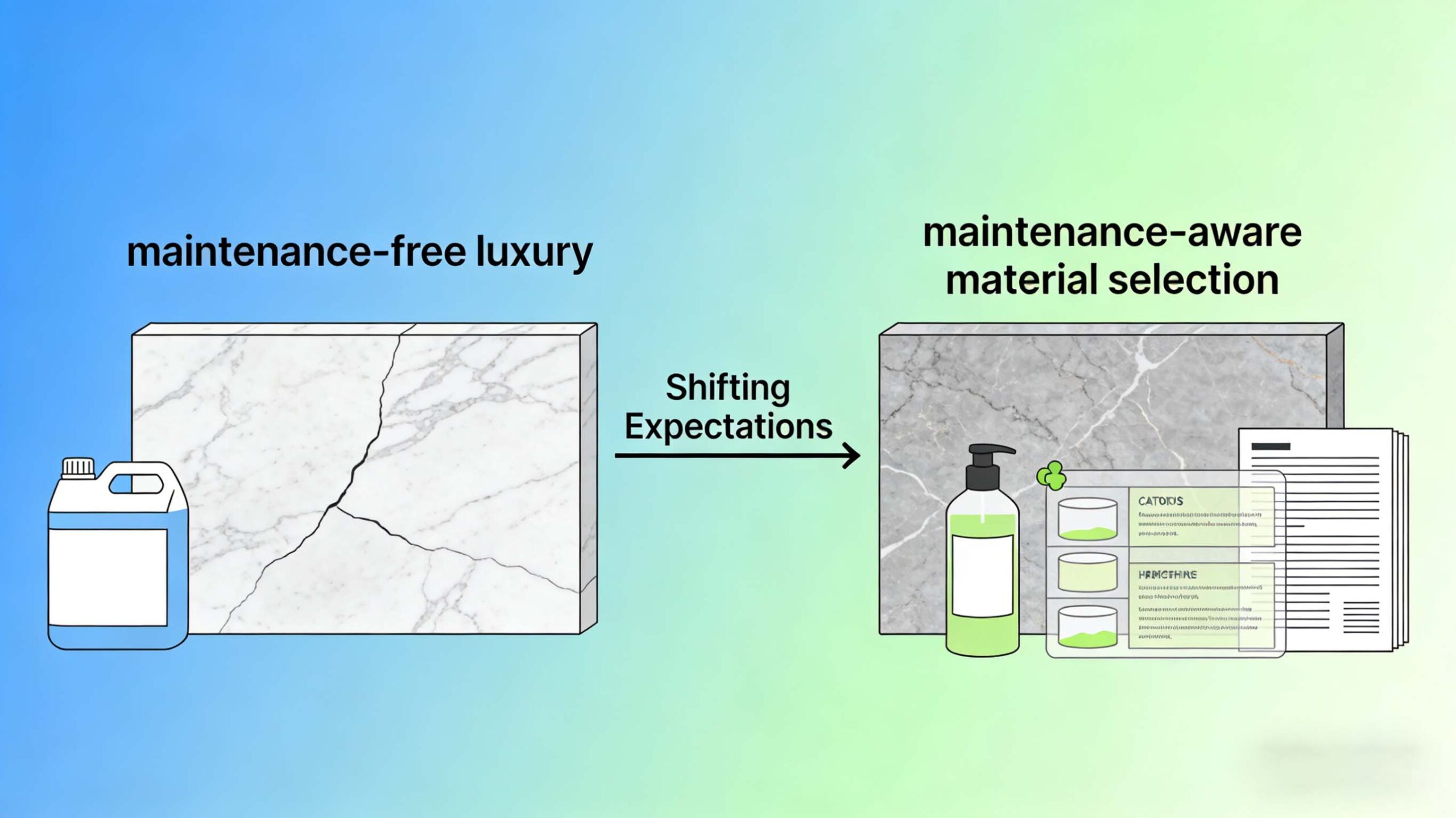
long-term appearance expectations are shifting toward realistic, maintenance-aware material selection rather than “maintenance-free luxury”
Conclusion
White marble countertops aren’t ruined by one dramatic event. They’re ruined by repeated exposure to acids, oils, harsh cleaners, abrasion, and casual heat habits that slowly change the stone’s finish and clarity. The good news is that most of this damage is preventable with a realistic routine and the right expectations: seal for stains, protect against acids to reduce etching, avoid abrasion, use heat barriers, and treat cleaning products as a critical decision—not an afterthought.
If you want white marble to stay elegant long-term, the strategy is simple: prevent what you can, restore what you must, and choose habits that match how you actually live in your kitchen—not how an showroom suggests you live.
FAQ
1. Can white marble countertops be permanently ruined?
Most white marble damage is repairable, but “ruined” usually means the finish becomes uneven from repeated etching and abrasion. Professional honing and polishing can restore uniform appearance, while deep cracks or structural breaks may require replacement of sections.
2. What is the fastest way to damage white marble?
Acidic liquids and harsh cleaners are the fastest. Lemon juice, vinegar, wine, and many bathroom cleaners can etch marble within minutes and leave dull marks that won’t wipe off.
3. Does sealing marble prevent etching and heat marks?
No. Sealing primarily reduces staining by slowing absorption. Etching is a chemical reaction on the surface and can still occur on sealed marble. Heat marks may be related to residue, finish changes, or thermal stress depending on severity.
4. What cleaners should never be used on white marble?
Avoid vinegar, bleach mixtures used repeatedly, acidic descalers, abrasive powders, and scouring pads. Use pH-neutral cleaners formulated for natural stone to preserve the finish and sealer performance.
5. How often should white marble countertops be resealed?
Many households reseal every 6–12 months depending on usage and cleaning habits. A simple test is placing a few drops of water on the surface; if it darkens quickly, resealing is likely needed.
Semantic Closed-Loop Insights: Why White Marble Gets “Ruined” and How to Prevent It in Real Life
The most important “what” to understand is that white marble rarely fails structurally in homes; it fails visually. People describe marble as “ruined” when the surface loses clarity, becomes patchy under light, or shows dull halos and shadowy stains that make the countertop look older than the space. This is why a marble care plan should focus on finish stability (shine/hone consistency) as much as stain prevention.
The “why” behind marble damage is chemistry and texture working together. Marble is calcite-based, so acids don’t just sit on top—they react and soften the surface, creating etches that can appear within minutes. At the same time, marble has natural micro-porosity; oils and pigments can migrate below the surface and become true stains. These two mechanisms explain the most common homeowner confusion: an etch looks like a stain but behaves totally differently, and treating it like a stain often wastes time or worsens the finish.
The “how” of preventing ruin is to separate protection into two tracks. Track one is absorption control: sealing, quick blotting, and controlling oils/pigments around sinks and prep zones. Track two is reaction control: keeping acids, acidic “natural” cleaners, and limescale removers away from marble, and using only pH-neutral products. A good routine doesn’t demand perfection; it reduces exposure frequency and reduces contact time, which is what actually lowers visible damage over months of cooking and cleaning.
When considering “options,” choose the finish that matches your lifestyle. Polished marble delivers maximum visual depth, but it makes etching easier to spot under lighting. Honed marble ages more evenly in busy kitchens because minor etching is less reflective, but it can show darker absorption marks if sealing is neglected. If your home cooks daily, honed finishes plus a disciplined sealing schedule often look “newer longer” compared with polished finishes that show scattered dull spots.
Practical “considerations” that consistently protect white marble include edge strategy and behavior design. Slightly eased edges chip less than sharp profiles. Cutting boards and trivets are not accessories; they are the system that keeps marble’s surface uniform. Avoid dragging gritty items, and remove crumbs before wiping so you don’t create micro-abrasion that gradually turns the finish hazy. If you already see rings or haze after cookware, treat it as a signal to reset habits and address residue/etching early rather than letting it accumulate into “permanent-looking” dullness.
From a market and compliance perspective, stone care is becoming more documentation-driven. Buyers increasingly prefer cleaners and sealers with clearer chemical disclosure and low-odor/low-VOC profiles, and installers are more likely to attach care guides to warranties. The trend is moving toward “long-life materials with responsible maintenance,” which means marble can remain a premium choice—but only when paired with realistic care education and the right product selection for the household’s cooking intensity.
If you want a simple decision rule: marble stays beautiful when you control acids (etching), control oils/pigments (staining), and control abrasion (micro-scratches). Do those three well, and heat events become far less dramatic. Fail those three, and even a perfectly installed white marble countertop can look “ruined” within a single season of normal living.