Why Cersaie 2025 Matters More Than Ever
Every year, Cersaie in Bologna offers a snapshot of where the global ceramics industry is heading. But Cersaie 2025 stands apart. Rather than focusing on color palettes or surface finishes alone, this year’s exhibition highlighted a deeper shift—sustainability is no longer an option, it is the industry’s operating framework.
From production technologies to material composition, from energy usage to logistics optimization, sustainability has become the central narrative shaping decisions across the ceramics value chain. Manufacturers, architects, and material buyers are no longer asking whether sustainability matters, but how fast it can be implemented without compromising performance, scalability, or design freedom.
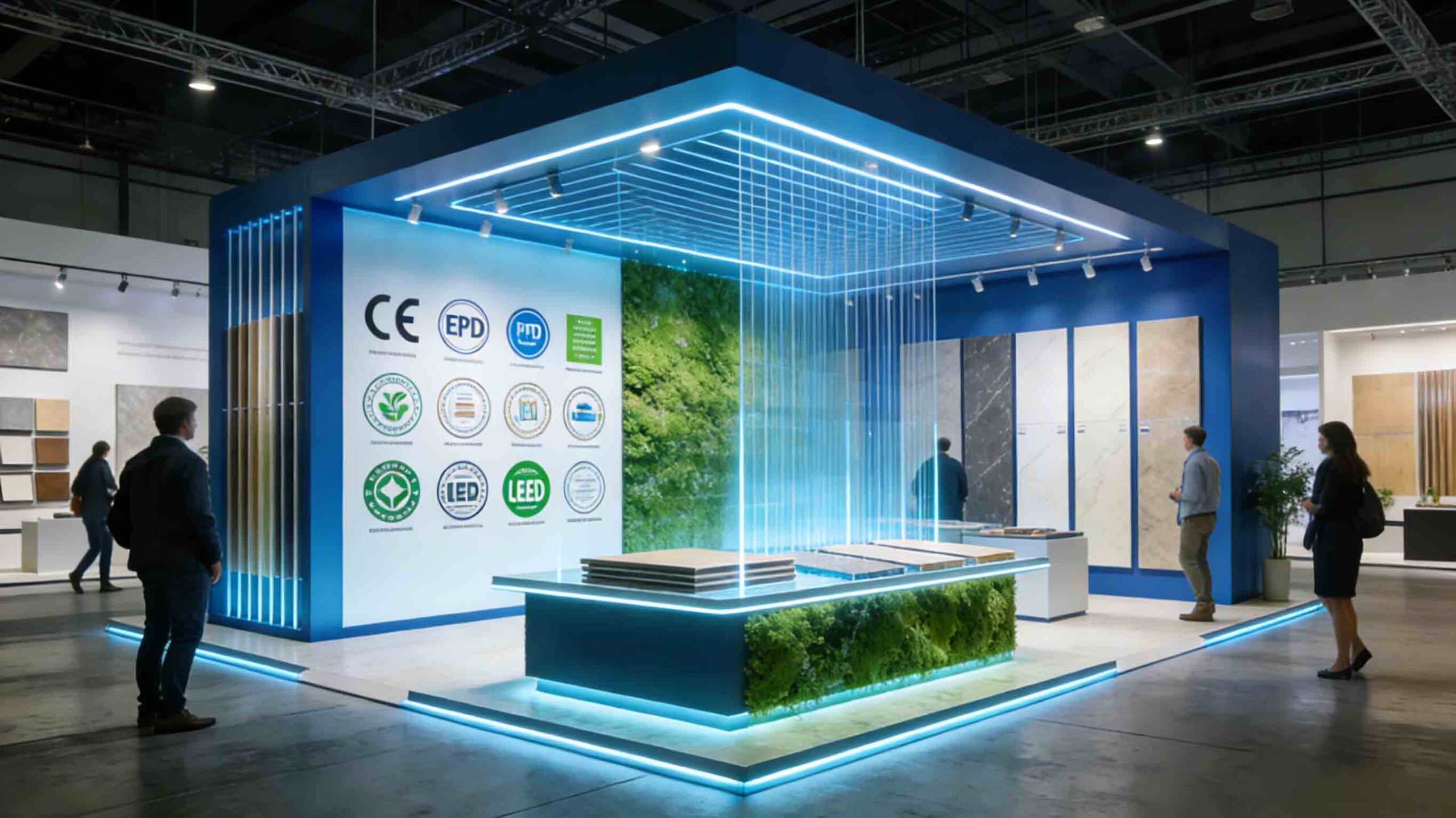
The Sustainability Narrative Moves from Vision to Execution
Over the past decade, sustainability in ceramics was often discussed in abstract terms—carbon neutrality targets, recycled content ambitions, or future innovation roadmaps. At Cersaie 2025, the tone changed.
What stood out was execution.
Manufacturers showcased measurable progress in:
-
Reduced material thickness without sacrificing mechanical strength
-
Optimized firing cycles that significantly lower energy consumption
-
Increased use of recycled mineral inputs
-
Production systems designed to minimize waste and emissions
Sustainability was no longer framed as marketing language, but as engineering reality.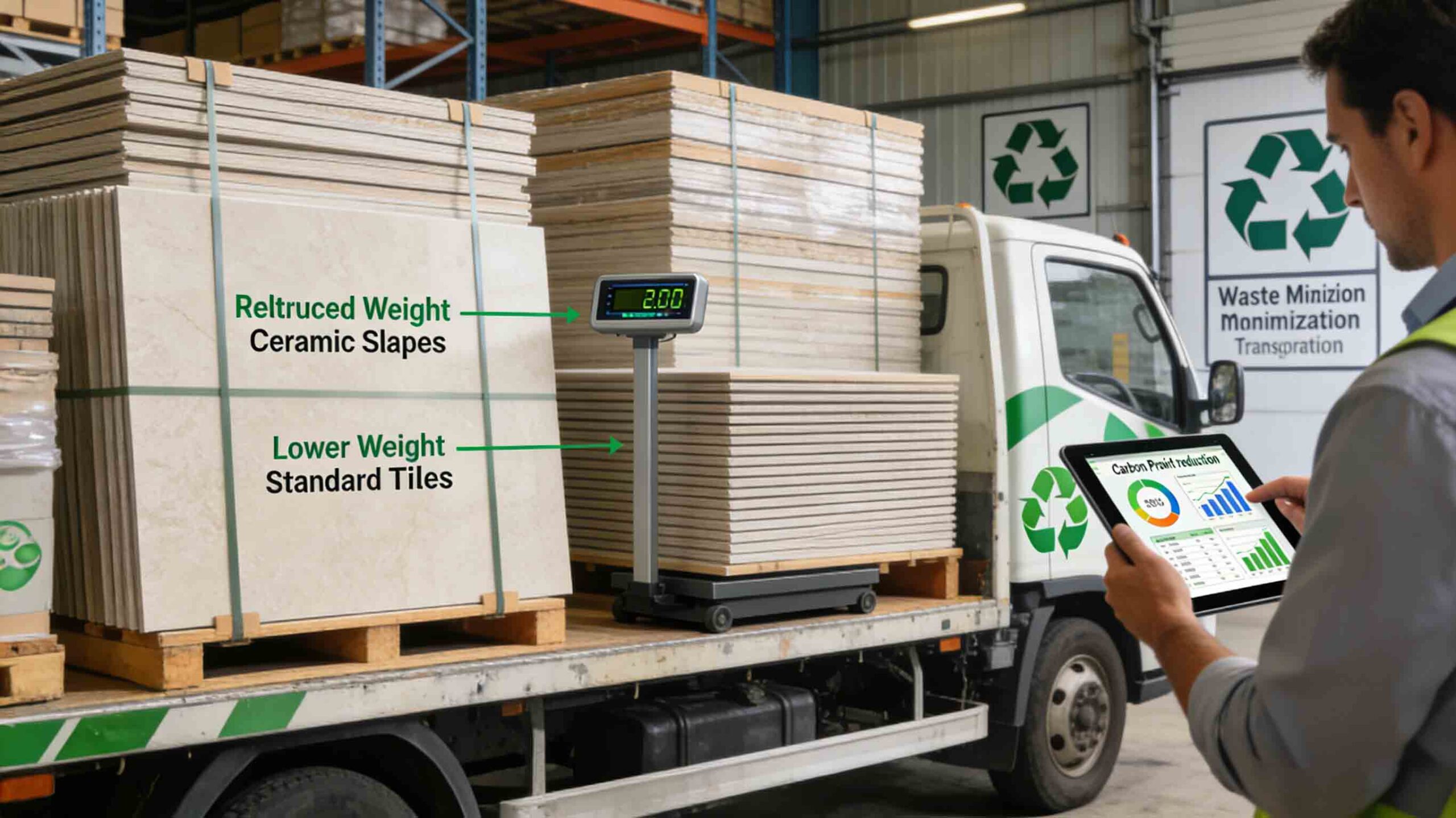
Thinner Tiles, Bigger Impact: Rethinking Material Efficiency
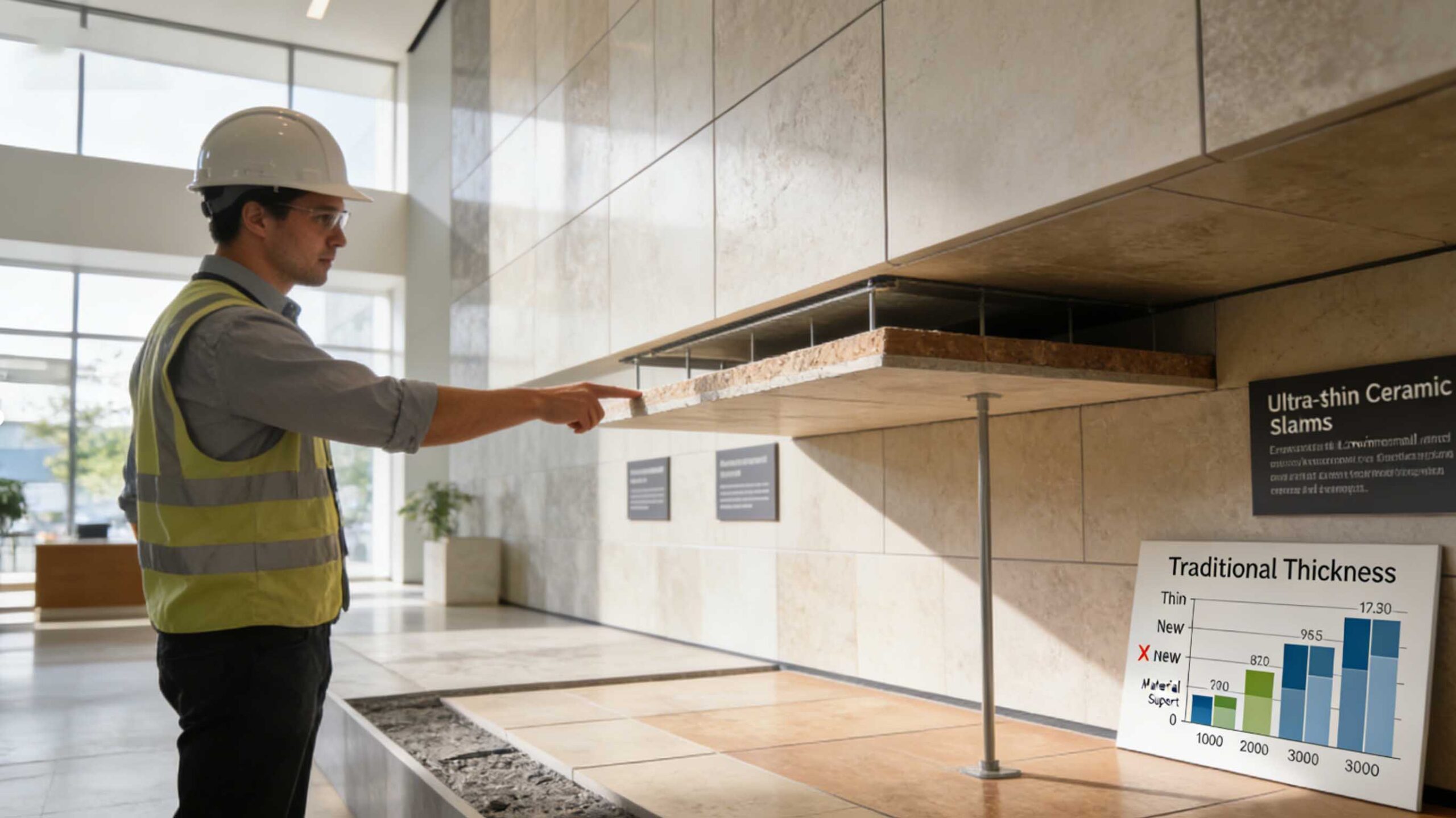
One of the most visible trends at Cersaie 2025 was the widespread adoption of ultra-thin ceramic slabs, with thicknesses approaching levels once considered structurally impractical.
This shift is driven by multiple factors:
-
Lower raw material consumption per square meter
-
Reduced energy required during firing
-
Lighter products leading to lower transportation emissions
-
Easier handling and installation on-site
Importantly, manufacturers emphasized that thinner formats are not a compromise. Through advances in pressing techniques and kiln optimization, these products meet the same performance expectations demanded in architectural and commercial applications.
Full-Body Ceramic Technology Gains Strategic Importance
Beyond thickness reduction, full-body ceramic technology emerged as a defining innovation discussed across exhibition halls.
Unlike surface-only decorative tiles, full-body ceramics integrate color and structure throughout the entire slab. This approach delivers several sustainability advantages:
-
Improved durability and lifespan
-
Reduced need for replacement over time
-
Greater flexibility for cutting, shaping, and reprocessing
-
Enhanced consistency across production batches
For manufacturers, full-body technology also opens the door to broader application scenarios, expanding ceramics beyond traditional flooring and wall cladding into furniture components, architectural elements, and long-term structural solutions.
Energy Consumption Under the Spotlight
Energy usage remains one of the most critical challenges facing ceramic tile manufacturers globally. At Cersaie 2025, energy efficiency was no longer discussed in isolation—it was directly linked to competitiveness.
Exhibitors highlighted:
-
Advanced kiln systems with lower peak energy demand
-
Smarter firing schedules aligned with renewable energy availability
-
Heat recovery systems integrated into production lines
-
Digital monitoring tools that optimize real-time energy consumption
These developments reflect a broader reality: sustainability and cost efficiency are increasingly aligned. Lower emissions often mean lower operating costs, creating a strong incentive for manufacturers to invest in cleaner production models.
Regulatory Pressure Accelerates Industry Transformation
Another recurring theme was regulation. European environmental frameworks continue to influence not only local producers but also global suppliers serving the EU market.
Key regulatory drivers shaping the ceramics industry include:
-
Carbon reporting requirements
-
Environmental product declarations
-
Material traceability standards
-
Lifecycle assessment expectations
Rather than resisting regulation, many manufacturers at Cersaie 2025 positioned compliance as a competitive advantage—particularly when working with architects, developers, and institutional buyers who prioritize transparent sourcing and verified environmental performance.
Design Freedom Meets Environmental Responsibility
Contrary to earlier assumptions, sustainability did not restrict design at Cersaie 2025—it expanded it.
Designers showcased ceramic surfaces inspired by:
-
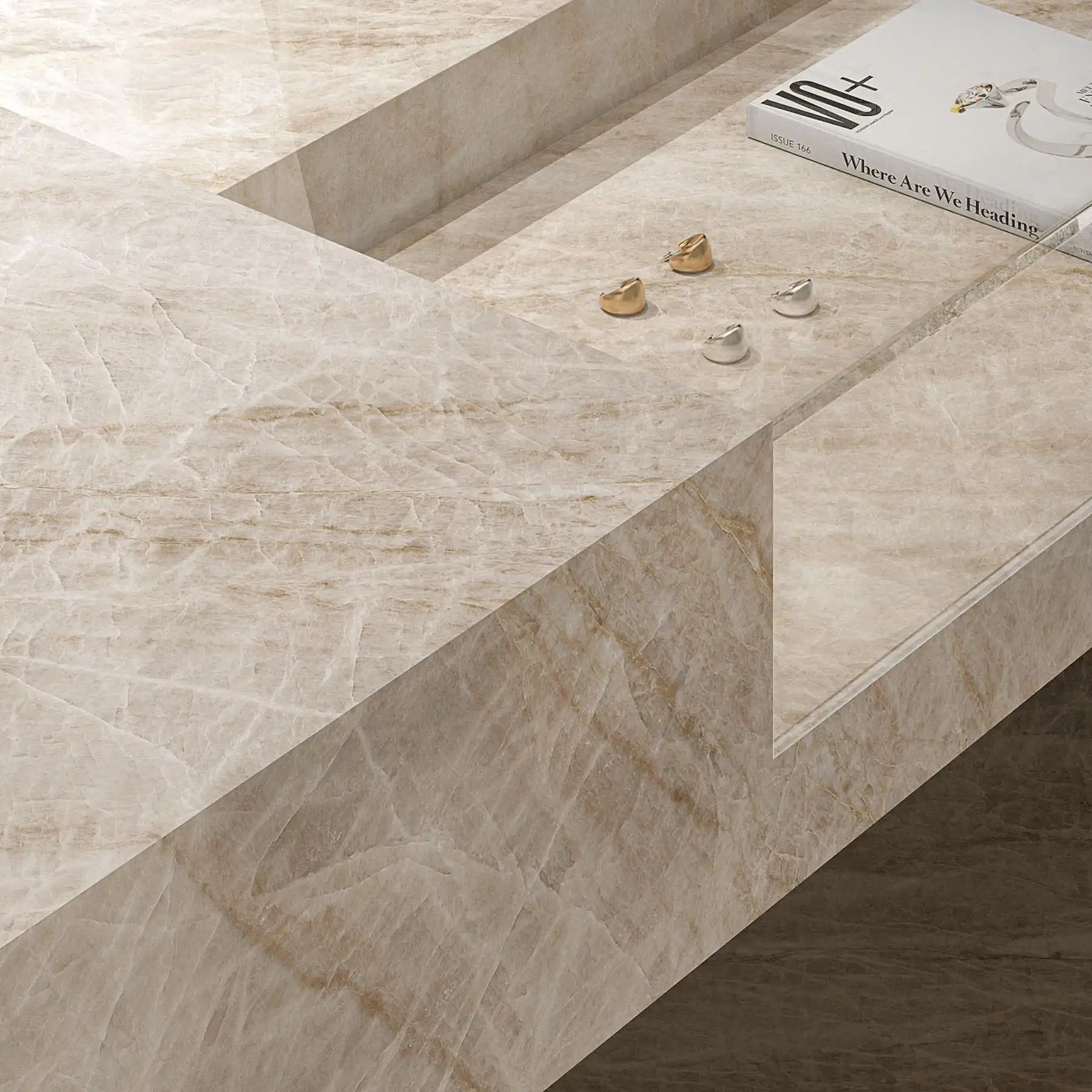
Natural stone textures
-
Wood aesthetics without deforestation concerns
-
Minimalist architectural forms
-
Multi-material compositions that blend ceramics with other sustainable elements
This evolution reinforces an important message: environmental responsibility does not mean visual compromise. On the contrary, it encourages innovation at both material and aesthetic levels.
Logistics, Weight, and the Carbon Equation
Sustainability discussions extended beyond factory walls. Logistics optimization emerged as a critical component of the carbon equation.
By reducing tile thickness and overall product weight, manufacturers are achieving:
-
Lower fuel consumption per shipment
-
Reduced packaging requirements
-
More efficient container utilization
-
Improved handling efficiency across supply chains
For global buyers, this translates into both environmental and economic benefits—particularly in long-distance exports.
What This Means for Global Buyers and Specifiers
For architects, contractors, and material buyers, Cersaie 2025 sent a clear signal: sustainability is becoming a baseline expectation, not a differentiator.
Future sourcing decisions will increasingly consider:
-
Verified environmental performance
-
Long-term durability over short-term cost
-
Compatibility with green building certifications
-
Transparency in manufacturing processes
Suppliers who fail to adapt may find themselves excluded from major projects, particularly in regulated markets.
The Ceramics Industry Enters a New Phase
Cersaie 2025 did not announce a revolution—it confirmed one already underway. The ceramics industry is transitioning from incremental sustainability efforts to systemic transformation.
What was once experimental is now industrialized. What was once optional is now expected. And what was once local is now global.
The exhibition made one thing clear: the future of ceramics will be shaped by sustainability-driven innovation, measurable performance, and responsible manufacturing at scale.
FAQ
1. Why is sustainability becoming central in the ceramics industry?
Sustainability is driven by regulatory pressure, rising energy costs, and demand from architects and developers for environmentally responsible materials with long-term performance.
2. Are thinner ceramic tiles less durable?
Modern production technologies allow thinner tiles to meet the same structural and performance standards as traditional formats while reducing material and energy use.
3. What is full-body ceramic technology?
Full-body ceramics integrate color and structure throughout the slab, improving durability, consistency, and lifecycle sustainability compared to surface-only designs.
4. How do ceramics contribute to lower carbon construction?
Ceramics offer long lifespans, low maintenance needs, reduced replacement cycles, and compatibility with energy-efficient building systems.
5. Will sustainability increase ceramic tile costs?
While initial investments may be higher, long-term savings in energy, logistics, and durability often offset upfront costs.
References
-
European Ceramic Industry Sustainability Outlook – Cerame-Unie
-
Energy Efficiency in Ceramic Manufacturing – International Energy Agency
-
Lifecycle Assessment of Ceramic Building Materials – European Commission
-
Sustainable Construction Materials Report – World Green Building Council
-
Full-Body Ceramics: Performance and Applications – Technical Ceramics Review
-
Low-Carbon Manufacturing Pathways – McKinsey Industrial Sustainability
-
Building Materials and Circular Economy – OECD
-
Industrial Decarbonization in Europe – European Environment Agency
How Cersaie 2025 Redefines “Sustainable Ceramics” for Global Sourcing
What Cersaie 2025 clarified is that “sustainability” in ceramics is no longer a single feature (like recycled content). It is a system: thinner material design, lower-energy firing, more transparent compliance documentation, and logistics efficiency working together to reduce lifecycle impact while protecting performance in real projects.
Why this matters now is timing. European policy pressure around carbon reporting, product transparency, and environmental claims is accelerating, and large developers increasingly require verifiable documentation from suppliers. In practice, this means the ceramics supply chain is shifting from “beautiful surfaces” to “beautiful surfaces with auditable footprints.”
How manufacturers are responding is visible in three technical moves. First, ultra-thin slabs reduce raw material use and shipping weight without giving up architectural scale. Second, kiln and firing optimisation targets energy intensity directly—often the biggest emissions driver in ceramics. Third, full-body ceramic technology improves wear life and appearance consistency, which strengthens the sustainability argument through longer service life and fewer replacements.
What buyers should look for next is proof, not promises. Ask for product environmental declarations and transparent performance documentation. Prioritise suppliers that can explain energy strategy, production stability, batch consistency, and how they prevent greenwashing in marketing claims. Sustainability is increasingly becoming a procurement filter, not a branding statement.
Options are also expanding, not shrinking. The show reinforced that low-carbon goals do not automatically reduce design freedom. More manufacturers are offering natural-stone looks, wood aesthetics, and minimalist architectural textures while tightening manufacturing controls. The real competitive edge is delivering premium aesthetics while improving measured environmental outcomes.
Consideration for global sourcing is simple but strict: lighter products and better process control can reduce carbon and cost at the same time, but only if quality remains stable at scale. For wholesale buyers and specification teams, the next wave of preferred partners will be sustainable ceramic tiles manufacturers that can produce consistently, document clearly, and ship efficiently without compromise.
The broader trend signal from Cersaie 2025 is a redefinition of leadership. The industry leaders are no longer just the brands with the best visuals; they are the factories and manufacturers that can prove cleaner production, deliver predictable performance, and meet compliance expectations as standard practice.