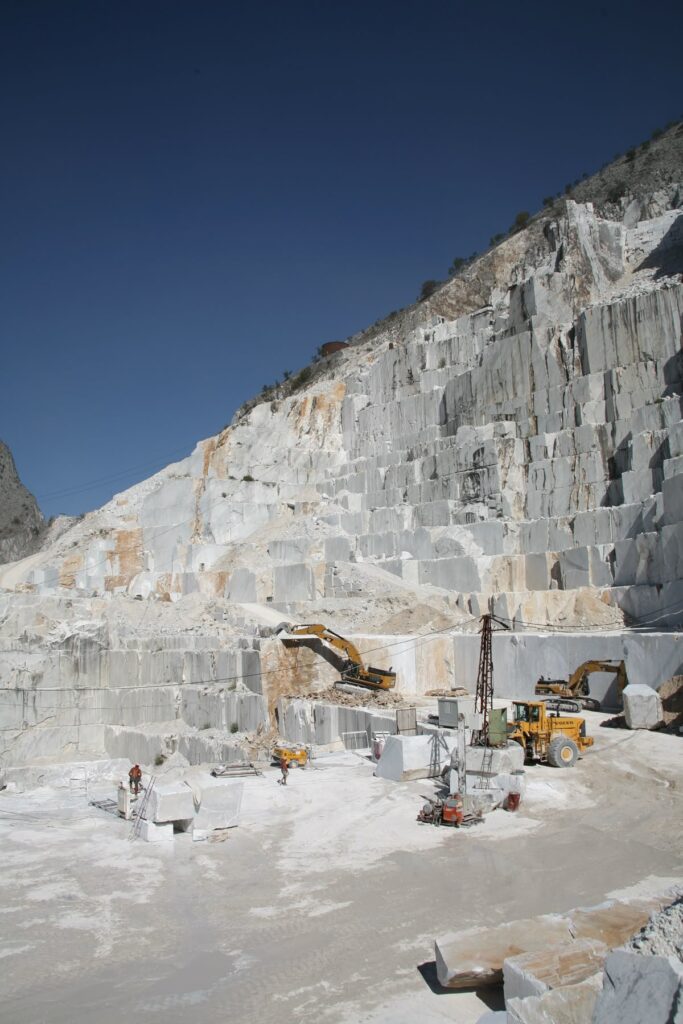
Nestled in the northern reaches of Tuscany, the municipality of Carrara and the majestic Apuan Alps have long been synonymous with the world-famous white marble known as Carrara marble. The mountain slopes, carved and marred by centuries of extraction, now stand at a crossroads — between the economic legacy of stone mining and the urgent need for ecological restoration, cultural preservation and sustainable development. In early 2025, Carrara’s municipal council approved a significant policy shift: a new quarry restoration regulation aiming to protect the territory’s heritage sites, mitigate environmental damage, and reposition the region’s stone industry for the 21st century.
In this article for the industry platform China Stone Select (CSS), we unpack the new regulation, examine its drivers, analyse its implications for quarry operators and global buyers, and assess the opportunities it presents for sustainable stone sourcing and heritage-conscious supply chains.

Background: Carrara’s Marble Legacy and Emerging Tensions
The New Restoration Regulation: What’s in the Policy?
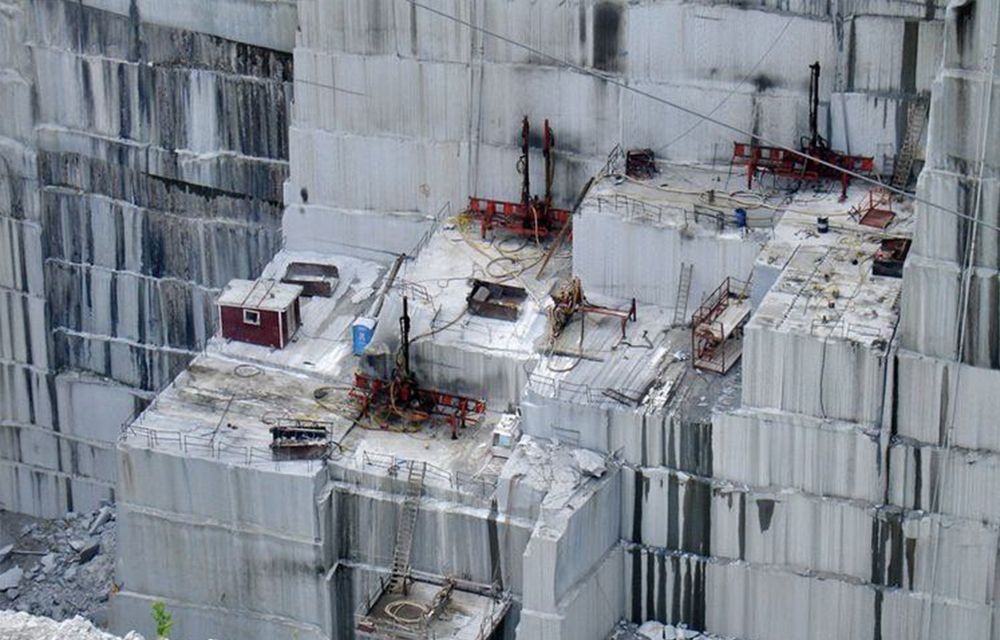
The Carrara region has mined marble since Roman times; the white or blue-grey statuario marble from this region has adorned Roman monuments, Renaissance sculptures and high-end architecture worldwide. At the same time, the physical and cultural landscape has borne the scars of intensive extraction: more than one hundred quarries in the basin, a fragile ecosystem of alpine terrain, erosion, waste rock accumulation and widespread community concern.
Public awareness of the environmental, cultural and socio-economic impacts escalated in recent years. In 2025, a feature by Al Jazeera described how “in a place where natural beauty and industrial extraction collide, people are fighting for an Italian town threatened by decline”.
Key issues include:
Landscape degradation, deforestation and soil denudation caused by open-pit quarrying.
High volumes of marble waste and fines, which pose risks of runoff and pollution.
Local disquiet over heritage loss, community impact and a perceived weakening of the link between extraction and regional value-creation.
In this context, the new restoration policy emerges not just as regulatory housekeeping but as a strategic pivot—from unrestrained quarrying to conscious restoration and heritage-aware growth.
The regulation approved by Carrara’s municipal council (17 votes in favour, 4 against) introduces several detailed measures aimed at ensuring that new quarry permits and ongoing operations comply with restoration obligations, heritage protections and ecological safeguards.
Key Provisions
Every quarry operator must submit a detailed “piano di ripristino ambientale” (environmental restoration plan) covering whole-life extraction, waste management and post-closure land use. Restoration plans must identify heritage or protected landscape zones and include mitigation measures for biodiversity, soil stability and visual impact.
Permit renewal is now contingent on demonstrable progress in restoration and compliance with prior restoration commitments.
Quarry waste must be reused or recycled wherever feasible; operators are required to account for waste streams and reuse rates.
The regulation creates a monitoring and reporting regime, requiring operators to provide regular updates and to allow for inspections by regional authorities.
A mechanism is introduced to “unlock” dormant quarry sites: quarries that have ceased activity but have not undergone restoration may face public reassignment or closure under the new regime.
Why now?
The policy aligns with European Union nature restoration goals and Italy’s increasing regulatory emphasis on mining-site rehabilitation. In Carrara’s case, the urgency is heightened by the visible scars on the Apuan Alps, activist pressure (see the No Cav movement) and the strategic desire to maintain global prestige in a changing market for natural stone.
Implications for the Stone Industry: Local and Global
From the vantage point of quarry operators, architects, buyers and exporters alike, the new regulation introduces both challenges and opportunities.
For quarry operators
Operators will face higher upfront costs: preparing comprehensive restoration plans, tracking waste, coordinating with environmental agencies, and engaging with heritage stakeholders. Non-compliance may result in permit delays or even closure. On the flip side, operators who adapt early can gain first-mover advantage: enhanced reputational capital, better access to premium markets demanding responsibly-sourced stone, and a stronger competitive position in a niche where heritage and sustainability matter.
For global buyers and specifiers (including B2B Si/Stone importers)
Buyers sourcing from Carrara—or procuring white/grey marbles for upscale interior, architectural or sculpture applications—must now factor restoration credentials into due diligence. Stone blocks labeled “Carrara” or “statario” may carry additional value if accompanied by documentation showing compliance with the region’s restoration-scheme. Platforms like ForusStone publish features on valuable natural granites and marbles, and indicate growing buyer interest in traceability. (See https://forustone.com/ )
For sustainability, heritage and brand-value
The regulation reinforces a narrative: the extraction of luxury stone cannot remain divorced from environmental stewardship. For high-end brands, architects and specifiers, sourcing from Carrara under a restoration-compliant regime becomes a value statement—heritage stone, responsibly managed, globally traded.
For regional development and alternative revenue streams
Within Carrara, the policy may act as a catalyst for diversifying the local economy: quarry-tourism, heritage trails of marble landscapes, adaptive reuse of exhausted sites, and high-value smaller-scale artisan extraction. This is important because extraction-based employment in the region has declined dramatically even as raw volumes increased. The Dial
Case Study: How Restoration Works in Practice
To illustrate how the policy plays out on the ground, consider a sample scenario: a medium-sized open-pit marble quarry in the Torano basin near Carrara. The operator submits a restoration plan outlining the following steps:
Pre-excavation baseline survey of flora/fauna, soil stability and water flows.
Extraction phased block plan, limiting large scale open-pit scar once desired blocks extracted.
Waste-rock tapering and covered terraces to reduce visual and erosion impact.
After-use land-form design: terraced slopes regrown with native alpine species, a small artificial lake for runoff control, and a heritage trail interpreting the stone-extraction process.
Re-employment of processed fine marbles as aggregates or decorative fill within the site, reducing external waste output.
Monitoring plan over 10 years post-closure: soil stability, vegetation cover, water run-off quality.
This method mirrors practices discussed in ecological restoration literature that highlight early successional habitats and substrate-specific revegetation as key success factors for former mining/quarrying sites. SpringerLink+1
If the operator meets restoration milestones, permit renewal becomes smoother; if not, the region reserves the right to assign the site to a public body or shut extraction entirely.

Global Trends and How Carrara Fits In
Globally, the ornamental stone sector is moving toward higher standards of traceability, environmental responsibility and heritage-linked sourcing. Regions such as Brazil, India and the Middle East are expanding capacity—but often without equivalent restoration obligations or heritage constraints. By contrast, Carrara is positioning itself as an exemplar of premium heritage stone with ecological accountability.
In Europe, the implementation of the EU Nature Restoration Regulation is increasing scrutiny on mining and quarrying sites’ after-life. Carrara’s policy aligns with this shift and could raise the value proposition of “restored-quota” Carrara marble for architecture, sculpture and luxury interiors.
For buyers in China, North America, the Middle East and beyond, this means two things: one, due diligence now must include restoration documentation when sourcing from Carrara; two, there is potential to market “heritage-responsibly sourced Carrara marble” as a higher-margin differentiator.
Challenges and Considerations Ahead
No policy of this kind is without its hurdles. Key challenges include:
Verification and enforcement: Restoration plans are only as good as their execution and monitoring—local capacity for inspection and long-term oversight needs to be robust.
Cost-pass-through: Operators may attempt to pass added cost of restoration to buyers. Transparent contractual terms and traceability are vital.
Balancing extraction with heritage: While restoration is crucial, if extraction is overly restricted without alternative value streams, there could be negative impacts on regional employment and supply chain stability.
Global sourcing implications: Some buyers may shift to lower-cost stone sources in countries with weaker restoration obligations—unless Carrara’s premium positioning is compelling enough.
Climate and geological realities: Alpine environments like the Apuan Alps pose technical challenges for restoration (e.g., steep slopes, fracturing, hydro-geology). Restoration must be realistic and scientifically informed. Research shows that post-mining/quarrying sites can serve as surrogate habitats, but require tailored design.


Implications for Exporters, Designers & Buyers
For manufacturers and traders in the stone industry—especially those in China or exporting from China—this policy signals a necessary shift in sourcing mindset. Here’s a rundown of what to watch:
Ensure certified restoration compliance when procuring premium marble from Carrara; traceability documentation will become standard.
Use the policy as a marketing asset: “Carrara marble sourced under new heritage-restoration policy” can enhance brand narrative.
Reassess cost structure: premium for restoration-compliance may become non-negotiable in certain markets (e.g., luxury residential, heritage hotels).
For designers specifying white or statuario marble: integrate the restoration story into project briefs to align with ESG and sustainability goals.
For stone exporters: consider partnerships with Carrara quarries that embrace restoration, and highlight this in brochures and case studies.
Align with digital content: platforms like CSS can publish features on restoration plans, operator best-practices and heritage stories to strengthen buyer-education and demand.
Outlook: What to Expect in the Coming Years
Over the next 3-5 years, the Carrara restoration policy may lead to several observable shifts:
A higher proportion of quarry permits will require combined extraction-restoration business models, with shorter extraction cycles and earlier post-closure reuse planning.
Sustainability-driven buyers (especially in North America, Europe, Middle East) will increasingly reward responsibly-sourced Carrara marble, creating a value-tier differentiation.
We may see ecotourism linked to restored quarry sites, creating alternative revenue streams for the region: heritage walks, museum installations, interactive quarry-to-finished-stone experiences.
Some smaller or non-compliant quarries may cease operations or be consolidated, potentially reducing overall block volume but improving quality and tracing.
Exporters from China and elsewhere will need to integrate “restoration-credentials” into their procurement criteria if dealing with Carrara blocks.

The Carrara region’s new quarry restoration regulation signals a bold, necessary pivot from unconstrained marble extraction to heritage-conscious, sustainably managed stone production. For global stakeholders—quarry operators, buyers, designers, exporters—this is more than regulatory housekeeping: it’s a strategic inflection point.
By embracing restoration, traceability and heritage value, Carrara positions itself as a premium source in a crowded global stone market; for buyers and exporters, aligning with this paradigm offers brand uplift, supply-chain resilience and access to luxury markets increasingly attuned to ESG factors.
As the extraction scars of the Apuan Alps are slowly healed, the future of Carrara marble becomes not just about raw brilliance, but also about responsible elegance.
The Carrara municipal council’s new quarry restoration policy mandates detailed restoration plans, waste-reuse obligations and monitoring mechanisms. This positions Carrara marble as a heritage-sourced, sustainability-compliant product—raising both challenges and premium opportunities for global stone supply chains. Field Insight: For stone exporters and buyers, the key takeaway is this: going forward, sourcing Carrara marble without documentation of restoration compliance may become a competitive disadvantage. Integrate restoration-credentials into your procurement process now.