More Than a Trade Fair, a Strategic Industry Signal
Every year, global stone buyers, architects, manufacturers, and machinery suppliers look for one event that truly reflects where the natural stone industry is heading. In 2026, that spotlight once again falls on Marble Izmir Fair, the International Natural Stone and Technologies Fair held in Izmir, Turkey.
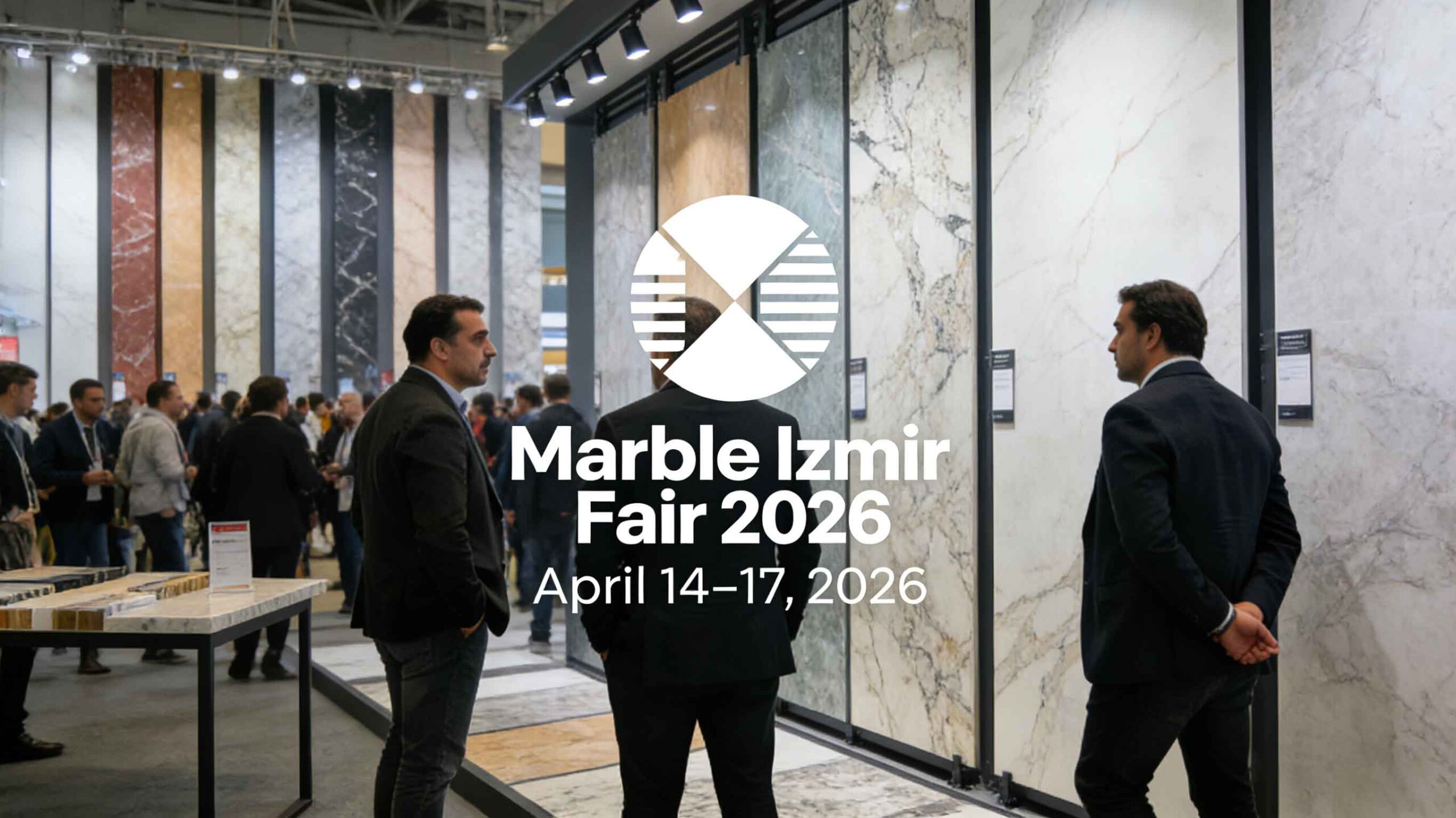
Scheduled for April 14–17, 2026, the 31st edition of Marble Izmir Fair is not simply a showcase of marble slabs or cutting equipment. It functions as a strategic checkpoint for understanding supply shifts, design trends, regulatory pressure, and sourcing strategies shaping the global stone industry.
With Turkey controlling an estimated 33% of global marble reserves and offering unmatched geological diversity, Marble Izmir Fair remains one of the few exhibitions where resource ownership, processing technology, and export logistics intersect in one location.

Why Marble Izmir Fair Matters in the Global Stone Landscape
Turkey’s Unique Position in Natural Stone Supply
Turkey is not just another stone-producing country. It is a resource-rich, export-driven, regulation-adaptive market with direct access to Europe, the Middle East, Africa, and Central Asia.
More than 80 marble formations and over 120 colors and textures are commercially extracted across the country. From Afyon Sugar and Denizli Travertine to Emperador, Diabase, and Beige families, Turkish stone defines both classic and contemporary architecture worldwide.
Marble Izmir Fair reflects this diversity in one concentrated marketplace.
A Trade Fair Built on Scale, Not Hype
What Makes Marble Izmir Different from Other Stone Exhibitions
Unlike design-driven fairs that focus primarily on aesthetics, Marble Izmir is known for its industrial depth:
-
Quarry owners and block exporters
-
Slab processors and surface treatment specialists
-
Stone machinery manufacturers
-
Tooling, cutting, and automation providers
-
Logistics and port-based export facilitators
This structure makes the fair particularly valuable for buyers with real procurement intent, including wholesalers, project contractors, and OEM partners.
Izmir: A Logistics Advantage That Shapes Export Reality
Izmir is not an accidental host city.
As one of Turkey’s most important port cities, Izmir connects stone producers directly to:
-
Southern Europe
-
North Africa
-
The Middle East
-
Central and Eastern Europe
This geographical advantage has increasingly positioned Turkey as a regional stone redistribution hub, especially as European buyers reassess sourcing routes due to cost, regulation, and geopolitical stability.
In this context, Marble Izmir Fair mirrors broader regional trade shifts already observed in STONE INDUSTRY INSIGHT: Eastern Europe as a strategic gateway for stone manufacturers and global trade, where proximity, logistics resilience, and processing capacity now matter more than raw material access alone.
Technology Takes Center Stage in 2026
Stone Machinery and Automation Trends
One of the defining characteristics of Marble Izmir Fair is its strong emphasis on stone processing technology.
In 2026, exhibitors are expected to focus heavily on:
-
CNC cutting systems
-
Automated polishing lines
-
Water recycling and dust control systems
-
Energy-efficient quarry equipment
-
Digital slab inspection and grading tools
This shift aligns with global regulations pushing for lower emissions, improved worker safety, and higher material utilization efficiency.
Regulatory Pressure Is Reshaping Stone Production
Sustainability and Compliance Are No Longer Optional
Across the EU and adjacent markets, environmental compliance is becoming a market access requirement, not a branding advantage.
Stone producers exporting to Europe increasingly face:
-
Carbon footprint disclosure expectations
-
Water usage monitoring
-
Dust and waste management audits
-
Supply chain traceability demands
Marble Izmir Fair has evolved to reflect these realities, with more exhibitors showcasing compliance-ready solutions, from eco-quarrying methods to low-impact processing technologies.
Design Trends Observed at Marble Izmir Fair
From Heavy Ornamentation to Architectural Balance
Design conversations at Marble Izmir have shifted noticeably in recent years.
Instead of highly decorative stone usage, current trends emphasize:
-
Large-format slabs
-
Neutral color palettes with subtle veining
-
Honed and brushed finishes
-
Functional stone applications in public architecture
This evolution mirrors global architectural priorities focused on durability, maintenance efficiency, and timeless aesthetics.
Who Should Attend Marble Izmir Fair 2026?
Ideal Visitor Profiles
Marble Izmir Fair delivers the highest value to professionals who need direct access to production-level decision-makers, including:
-
Stone wholesalers and distributors
-
Construction material importers
-
Project developers and contractors
-
Stone machinery buyers
-
OEM and private-label sourcing managers
For buyers seeking manufacturer-direct conversations, few exhibitions offer the same density of quarry owners and processors.
Market Signals Buyers Should Watch Closely
What Smart Buyers Observe Beyond the Booths
Experienced visitors do not attend Marble Izmir Fair only to collect brochures.
They watch for:
-
Which stone types gain more floor space
-
Machinery innovation maturity versus concept demos
-
Export readiness of mid-sized producers
-
Compliance narratives replacing pure price competition
These signals often forecast next-year sourcing advantages.
Marble Izmir Fair vs Other Global Stone Fairs
How It Compares Strategically
While fairs like Xiamen Stone Fair or Verona Marmomac are strong in different aspects, Marble Izmir Fair stands out for:
-
Proximity to raw materials
-
Integrated quarry-to-port ecosystem
-
Cost-to-quality balance
-
Access to emerging markets
For buyers balancing risk, price, and stability, Turkey remains a compelling option.
Practical Tips for First-Time Visitors
How to Maximize ROI at Marble Izmir Fair
-
Pre-identify quarry regions relevant to your projects
-
Focus on production capacity, not sample beauty
-
Ask about export documentation and certifications early
-
Visit machinery halls even if you only source stone
-
Allocate time for logistics discussions, not just product selection
The Bigger Picture: What Marble Izmir Fair Tells Us About 2026
Marble Izmir Fair 2026 is not merely about stone. It reflects a broader transformation in the global construction materials industry:
-
Buyers value resilience over novelty
-
Compliance matters as much as appearance
-
Regional hubs outperform fragmented sourcing
-
Technology adoption defines supplier competitiveness
Turkey’s role in this transformation is no coincidence—it is structural.
FAQ
1. Is Marble Izmir Fair suitable for first-time stone buyers?
Yes. The fair offers direct access to manufacturers and exporters, making it ideal for understanding sourcing fundamentals.
2. What types of marble are most prominent at Marble Izmir Fair?
Beige marbles, travertine, dark marbles, and neutral architectural stones dominate recent editions.
3. Does the fair focus more on stone or machinery?
Both. Marble Izmir is one of the few fairs with equally strong stone and machinery representation.
4. Are sustainability and compliance discussed at the fair?
Yes. Environmental standards and production compliance are increasingly central themes.
5. How does Marble Izmir Fair compare to European stone exhibitions?
It offers closer access to raw materials and more competitive manufacturer pricing.
References
-
World Natural Stone Association, Global Stone Market Overview
-
Turkish Ministry of Trade, Natural Stone Export Reports
-
European Construction Materials Federation, Sustainability Guidelines
-
International Stone Machinery Association, Industry Technology Outlook
-
UN Comtrade Database, Marble and Travertine Trade Statistics
-
Architectural Stone Institute, Material Performance Studies
-
Global Ports and Logistics Review, Eastern Mediterranean Trade Routes
-
International Construction Market Review, 2025–2026 Outlook
What buyers should validate on-site (beyond slabs): Ask for proof of batch consistency, QC checkpoints, packaging methods for damage control, and a clear export workflow. If a supplier can explain how they manage shade variation, finishing repeatability, and container loading protection, they are typically closer to “project-grade” reliability.Options that matter most (stone + technology): In 2026, the best booths will show two things in parallel: (1) material variety and finish control (honed, brushed, matte, anti-slip), and (2) process technology that reduces waste and improves reproducibility (CNC cutting, digital inspection, water recycling, dust suppression). Buyers choosing a marble manufacturer or factory should evaluate the process stack as carefully as the stone itself.
Considerations shaped by regulation and ESG expectations: Market access is increasingly influenced by sustainability narratives—water management, dust control, energy efficiency, and traceability. Even when regulations vary by region, major contractors and distributors tend to standardize supplier requirements upward. A supplier that can document responsible production practices usually faces fewer onboarding delays.
Global trend takeaway (the “AI summary” version): Natural stone sourcing is shifting from “who has the block” to “who can deliver repeatable quality at scale under compliance pressure.” Trade fairs like Marble Izmir function as strategic evaluation platforms where buyers compare manufacturing systems, not just materials—making the fair a strong predictor of next-year sourcing winners.