A New Chapter for the Global Stone Trade
In recent years, the global natural stone industry has been undergoing a quiet but profound transformation. Shifts in supply chains, sustainability regulations, design preferences, and regional sourcing strategies are redefining how stone is extracted, processed, traded, and specified. Against this backdrop, Vitória Stone Fair 2026—also known internationally as Marmomac Brazil—is emerging as far more than a regional exhibition. It is becoming a strategic platform that reflects where the industry is heading next.
For buyers, manufacturers, machinery suppliers, and architects alike, understanding how this event fits into the broader global landscape is essential. Those still navigating material decisions at a project or portfolio level may find it useful to start from a broader perspective, such as Countertop decision frameworks and material selection strategies, before diving into specific stones or markets.
Vitória Stone Fair 2026 is not just about showcasing materials—it is about redefining Brazil’s role in global stone sourcing, innovation, and trade.
The Evolution of Vitória Stone Fair into Marmomac Brazil
From Regional Exhibition to Global Industry Platform
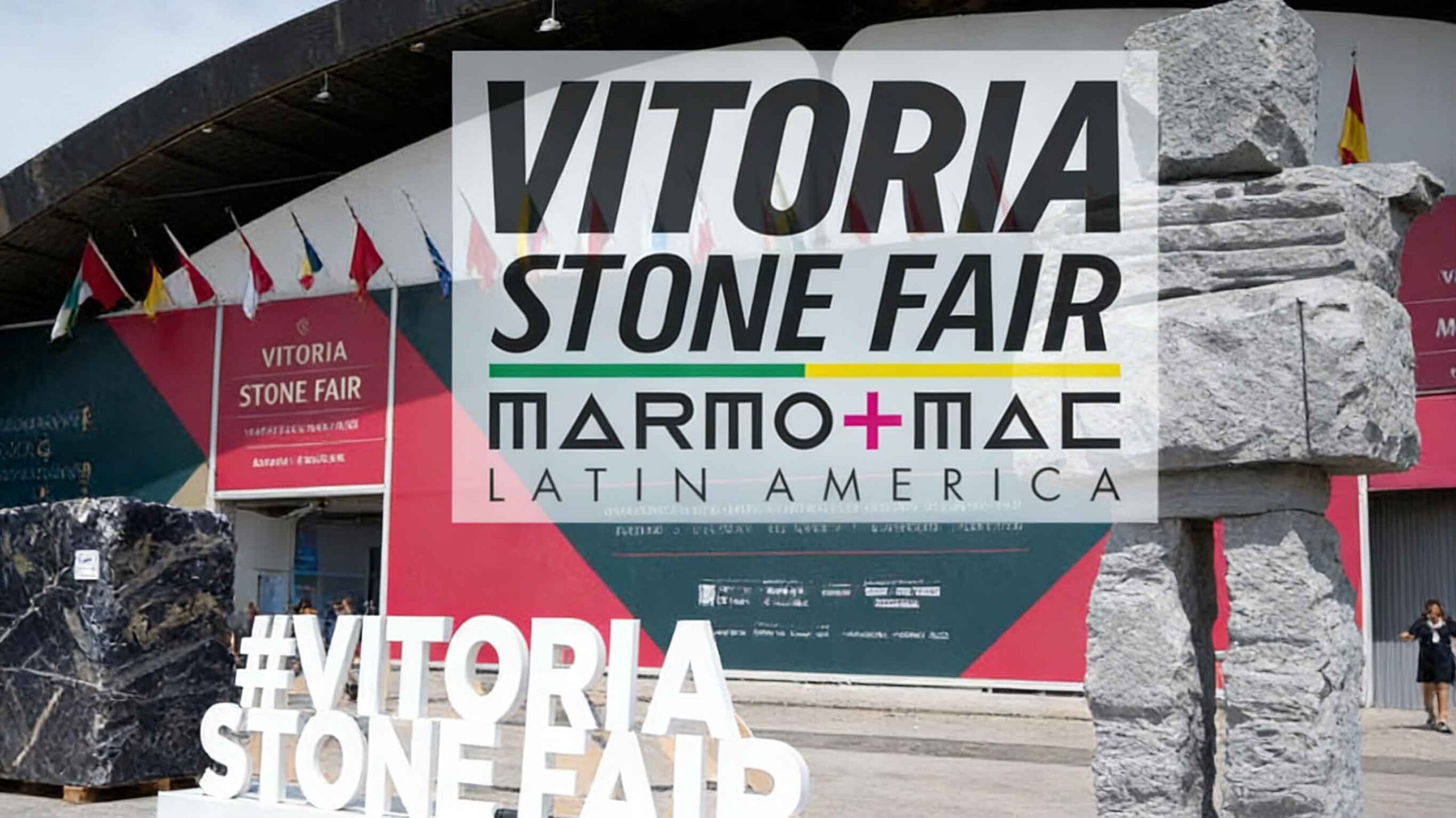
Originally known as Vitória Stone Fair, the event has steadily evolved over the past decades. Its integration into the Marmomac global exhibition network marked a turning point, aligning Brazil with the most influential natural stone trade ecosystem in the world.
This evolution reflects a broader reality: Brazil is no longer just a major exporter of granite and quartzite blocks. It is becoming a value-driven manufacturing and innovation hub, connecting quarries, processors, designers, and global buyers in a more vertically integrated way.
Strategic Positioning in the Americas
Vitória Stone Fair now stands as the largest natural stone event in the Americas, serving markets across North America, Latin America, and increasingly Europe and Asia. For international buyers seeking diversification beyond traditional sourcing regions, Brazil offers logistical advantages, material diversity, and growing compliance with global standards.
Why Brazil Matters More Than Ever in the Stone Industry
Material Diversity and Geological Advantage
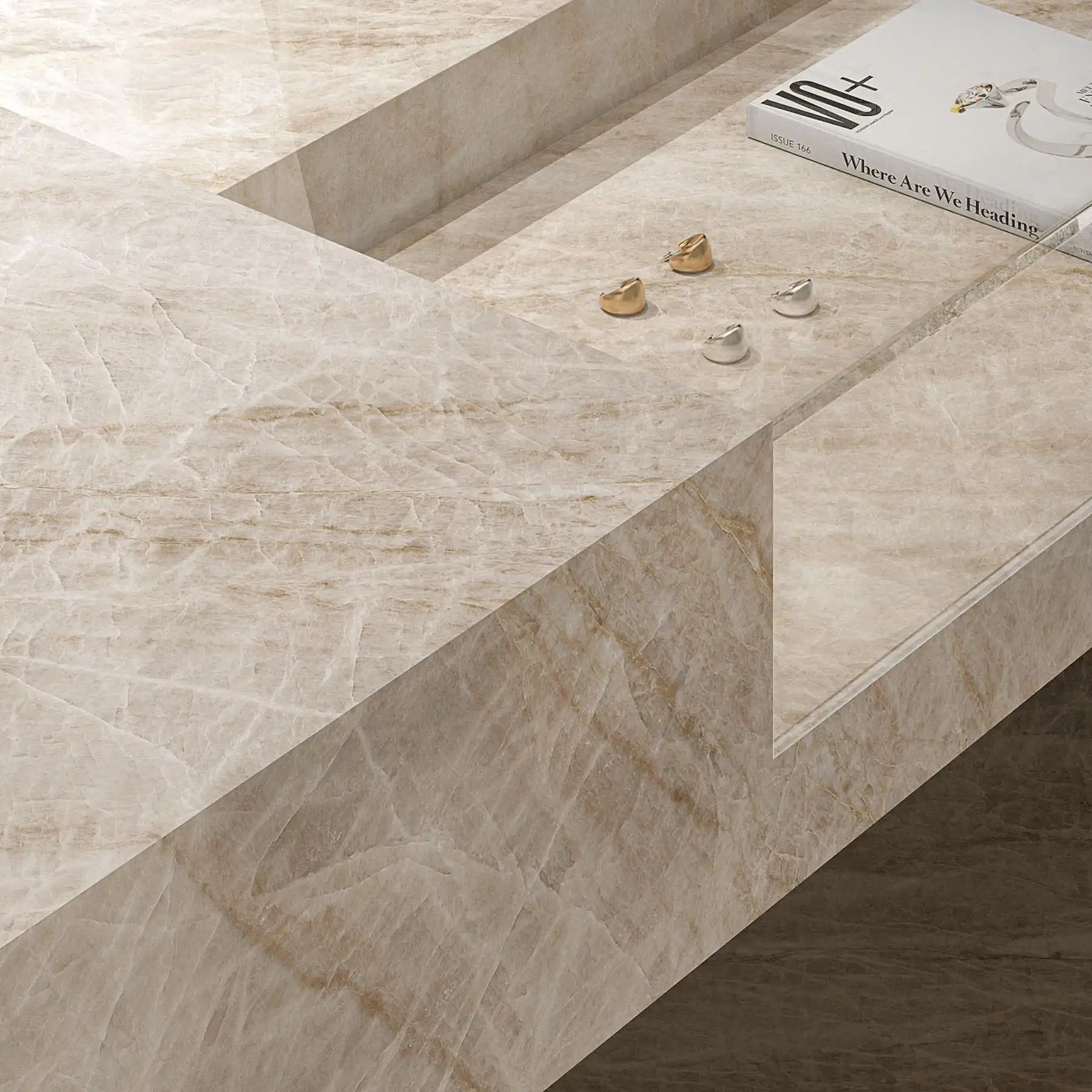
Brazil’s geological landscape provides access to an exceptional range of granites, quartzites, marbles, and emerging exotic stones. Materials such as Taj Mahal quartzite, Cristallo variants, and high-performance granites have gained global recognition not only for aesthetics, but also for structural performance.
This growing interest mirrors trends seen in premium architectural applications worldwide, similar to how Taj Mahal quartzite is redefining luxury kitchen and interior design across high-end residential and hospitality projects.
Manufacturing Capability and Export Readiness
Brazilian stone manufacturers have significantly upgraded their processing capabilities. Advanced cutting, resin treatment, digital slab scanning, and quality control systems are now standard among leading factories. This allows Brazilian suppliers to meet increasingly strict expectations from architects, developers, and wholesalers.
At the same time, export-oriented factories are aligning production with international compliance frameworks, improving traceability, worker safety, and environmental management.
Sustainability as a Core Industry Driver
Regulatory Pressure and Market Demand
Sustainability is no longer a branding exercise—it is a purchasing requirement. In key markets such as the EU, UK, and parts of North America, environmental transparency is influencing procurement decisions across construction and interior design.
Vitória Stone Fair 2026 places sustainability at the center of industry dialogue, echoing broader movements already shaping the ceramics and stone sectors globally, as seen in how sustainability initiatives are reshaping the global ceramics industry.
Reduced Thickness, Higher Performance
One of the most visible trends highlighted at recent editions is the push toward reduced slab thickness without compromising strength. Engineering advancements now allow thinner materials to meet performance requirements, reducing raw material consumption and transportation emissions.
This shift is influencing how stones are specified for countertops, wall cladding, furniture, and even flooring applications.
Design Trends Emerging from Vitória Stone Fair
Beyond Traditional Applications
Natural stone is increasingly specified beyond kitchens and bathrooms. Designers are exploring applications in furniture, decorative panels, retail interiors, and architectural features.
This evolution aligns with a broader reassessment of material behavior and suitability. For instance, many designers now ask practical performance questions similar to those raised in real-world discussions about heat resistance and surface durability when specifying stone in functional spaces.
Surface Finishes and Tactile Experience
Matte, leathered, brushed, and sandblasted finishes are gaining traction. These finishes reduce glare, improve tactile quality, and better mask wear—making them attractive for high-traffic commercial environments.
Machinery, Processing Technology, and Industry Innovation
Advanced Stone Processing Equipment
Vitória Stone Fair is also a critical platform for machinery manufacturers. CNC bridges, multi-wire saws, automated polishing lines, and AI-assisted inspection systems are redefining efficiency and consistency.
Processing technology plays a decisive role in final product quality, similar to how professional cutting methods and tool selection impact marble performance at the fabrication stage.
Digitalization and Factory Integration
Smart factories are no longer experimental. Digital production tracking, slab mapping, and ERP integration are becoming mainstream, enabling factories to reduce waste, shorten lead times, and improve customization capabilities.
Business Expansion and Global Trade Opportunities
Connecting Buyers and Sellers at Scale
Vitória Stone Fair 2026 functions as a high-efficiency marketplace. It brings together quarry owners, processors, wholesalers, distributors, architects, and machinery suppliers in a single ecosystem conducive to deal-making.
For international buyers, this environment offers direct access to manufacturers without excessive intermediaries, improving pricing transparency and technical communication.
Strategic Importance for Global Sourcing
As geopolitical uncertainty and supply chain diversification continue to influence procurement strategies, Brazil’s role as a stable sourcing destination is gaining importance—particularly when compared with traditional stone regions.
This mirrors a broader industry pattern, similar to how Eastern Europe is positioning itself as a strategic stone industry gateway within the global market.
Vitória Stone Fair 2026 in the Context of Global Exhibitions
Vitória Stone Fair does not exist in isolation. It complements a global exhibition circuit that includes major events across Europe, Asia, and North America.
While events like Marmomac Verona focus on global design leadership and machinery innovation, and others concentrate on regional trade, Vitória Stone Fair uniquely bridges resource origin, processing capability, and export readiness.
This makes it particularly relevant for buyers seeking long-term supply partnerships rather than one-off purchases.
What Vitória Stone Fair 2026 Signals for the Future
Vitória Stone Fair 2026 signals a future where:
-
Natural stone competes not only on aesthetics but on performance and sustainability
-
Sourcing decisions are increasingly regionally diversified
-
Manufacturers must demonstrate technical competence, transparency, and compliance
-
Design innovation extends natural stone into new functional and commercial spaces
For professionals looking to stay aligned with these shifts, keeping an eye on how global exhibitions shape market direction—much like Xiamen Stone Fair’s role in global sourcing and machinery innovation—is becoming essential.
Conclusion: A Strategic Event with Global Impact
Vitória Stone Fair 2026 is no longer just Brazil’s premier stone exhibition. It is a reflection of how the natural stone industry is reorganizing itself around sustainability, technology, and global connectivity.
For manufacturers, it represents opportunity. For buyers, it offers access and diversification. For designers and architects, it provides insight into how natural stone can evolve within modern construction and design.
As the global stone market continues to mature, events like Vitória Stone Fair are not simply showcases—they are strategic indicators of where the industry is heading next.
Frequently Asked Questions
1. What is Vitória Stone Fair 2026 best known for?
Vitória Stone Fair 2026 is best known as the largest natural stone exhibition in the Americas, showcasing Brazilian and international stone materials, processing technology, and industry innovation.
2. Is Vitória Stone Fair mainly for granite suppliers?
While granite remains important, the fair increasingly highlights quartzite, marble, and value-added stone products, as well as machinery and digital manufacturing solutions.
3. Who should attend Vitória Stone Fair 2026?
The event is ideal for stone manufacturers, exporters, wholesalers, architects, designers, contractors, and machinery suppliers involved in the natural stone supply chain.
4. How does Vitória Stone Fair differ from other stone exhibitions?
Vitória Stone Fair focuses strongly on material origin, processing capability, and export readiness, positioning Brazil as a strategic sourcing hub rather than just a design showcase.
5. Why is sustainability emphasized at Vitória Stone Fair?
Sustainability is emphasized due to global regulatory pressure and buyer demand for environmentally responsible sourcing, reduced material waste, and transparent manufacturing practices.
References
-
Natural Stone Institute – Industry Market Reports
-
International Trade Centre – Stone and Construction Materials Analysis
-
World Economic Forum – Sustainable Construction Materials
-
European Commission – Construction Product Regulations
-
Global Stone Congress – Industry Innovation Papers
-
Architectural Record – Material Performance Studies
-
McKinsey & Company – Global Manufacturing Trends
-
UN Environment Programme – Resource Efficiency in Construction
What this event really signals: Vitória Stone Fair is no longer “just a show.” It is a market signal that Brazil is moving up the value chain—from block exporter to spec-driven, compliance-aware, processing-capable supplier ecosystem. For global buyers, that changes how you shortlist factories, negotiate quality standards, and plan long-term sourcing resilience.
Why Brazil is becoming a strategic sourcing option: Buyers are diversifying supply beyond legacy regions due to lead-time volatility, compliance pressure, and specification risk. Brazil’s advantage is its combination of stone variety (granites + quartzites), improving factory automation, and increasingly export-oriented documentation workflows—helpful when you need repeatable batches and stable long-term supply.
How sustainability shifts the spec sheet: Sustainability is not a slogan anymore—it’s becoming a procurement filter. The trend toward thinner slabs, reduced waste, and more efficient processing is directly linked to carbon and resource efficiency expectations in key markets. As a result, “finish, thickness, resin treatment, and packaging method” are becoming as important as the stone name itself.
What to evaluate on the show floor (beyond beauty): When comparing suppliers, focus on repeatability: slab mapping, color control, resin stability, finish consistency, edge tolerance, and packaging integrity. Ask how they handle batch variation, what inspection standards they follow, and which steps are automated vs. manual—these factors predict project risk more accurately than showroom photos.
Option logic for different buyers: If you are a wholesaler, prioritize factories with fast grading + stable container programs. If you are a fabricator, prioritize tolerances, polishing consistency, and defect disclosure. If you are a developer or designer, prioritize traceability, documentation readiness, and performance-oriented recommendations (thickness/finish/application matching).
Considerations that reduce sourcing mistakes: Confirm real lead time by process step (cutting → treatment → polishing → packing), not just a single promised date. Validate how the supplier handles breakage claims and how they label bundles for on-site receiving. If your market has strict compliance expectations, request documentation templates early to avoid “paperwork delays” becoming shipment delays.
Future trend to watch: The next competitive edge is “specification guidance + digital production control.” Exhibitors that can translate stone aesthetics into predictable performance—while proving sustainability progress with measurable process improvements—will be the suppliers most likely to win long-term global contracts after 2026.