Marble and jade stone are often confused in design conversations, but they serve very different roles. Marble is a calcite-based metamorphic rock (Mohs ~3–4) widely used for slabs, tiles, cladding, and sculptural architecture because it’s scalable and easier to process. Jade stone refers to nephrite or jadeite (Mohs ~6–7), prized for exceptional toughness and cultural value—typically for jewelry, carvings, and luxury accents rather than large-format construction. The right choice depends on function: choose marble for architectural surfaces and design flexibility; choose jade for symbolic, heirloom-grade decorative use where durability and meaning matter more than size and cost.
Why Marble and Jade Stone Are Often Confused
In global stone markets, marble and jade stone are frequently mentioned in the same conversations—especially by buyers who are new to natural stone sourcing or design specification. Both materials carry strong cultural value, premium aesthetics, and a long history of use. However, from a geological, mechanical, and application standpoint, marble and jade stone are fundamentally different materials, designed for very different purposes.
Understanding the difference between marble and jade stone is not just an academic exercise. It directly affects decisions related to architecture, interior design, sculpture, jewelry manufacturing, cost control, durability expectations, and long-term maintenance. This guide provides a clear, professional comparison of marble and jade stone, covering composition, physical properties, processing difficulty, cultural meaning, and modern industry use.
Geological Composition and Formation Differences
Marble: A Metamorphic Architectural Stone
Marble is a metamorphic rock formed through the recrystallization of limestone under high temperature and pressure. Its primary mineral component is calcite, which gives marble its characteristic softness, translucency, and vein patterns. Because marble forms over large geological areas, it is typically quarried in large blocks, making it suitable for slabs, tiles, and architectural elements.
This geological process results in wide variation in color, veining, and texture. White marble, grey marble, black marble, and dramatic veined varieties are all products of impurities and mineral inclusions during metamorphism.
Jade Stone: A Mineral-Based Gem Material
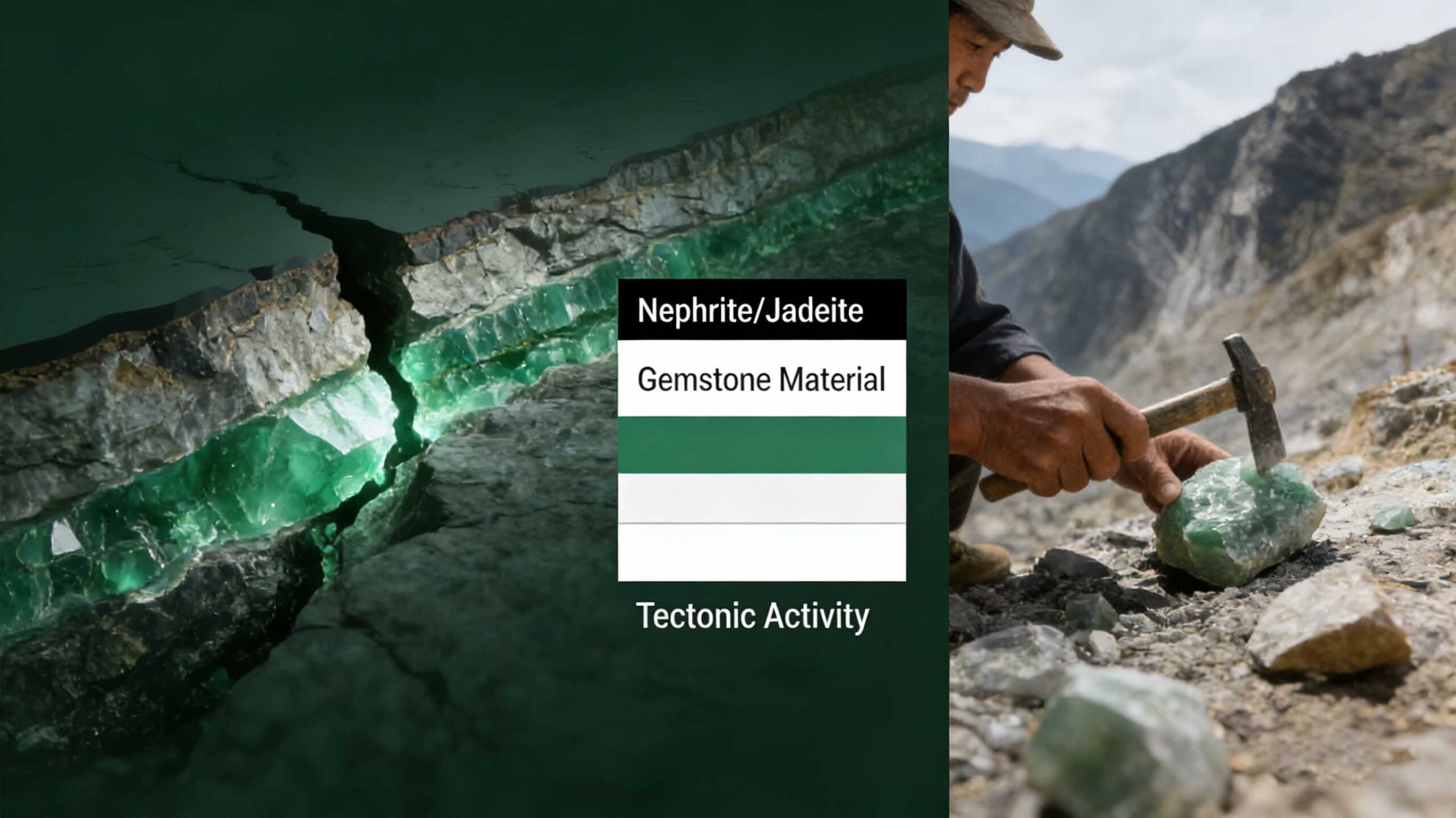
Jade stone is not a single rock type. It refers to two distinct minerals: nephrite and jadeite. These minerals form under very specific geological conditions, usually involving high pressure and tectonic activity rather than large-scale metamorphic zones. As a result, jade deposits are more limited and occur in smaller, harder-to-extract formations.
Unlike marble, jade stone is classified more as a gemstone material than a construction stone. Its crystalline structure gives it exceptional toughness and resistance to fracture, which is why it has historically been used for carvings, ornaments, and jewelry rather than architectural surfaces.
Physical Properties and Mechanical Performance
Hardness and Durability Comparison
Marble has a Mohs hardness rating of approximately 3 to 4. This makes it relatively soft compared to many natural stones, which is why marble is easier to carve, shape, and polish. However, this softness also means marble is more susceptible to scratching, etching, and surface wear in high-use environments.
Jade stone, by contrast, has a Mohs hardness ranging from 6 to 7. This makes it significantly harder than marble. More importantly, jade is exceptionally tough, meaning it resists cracking even under impact. This combination of hardness and toughness explains why jade has been prized for tools and ceremonial objects for thousands of years.
Surface Texture and Visual Characteristics
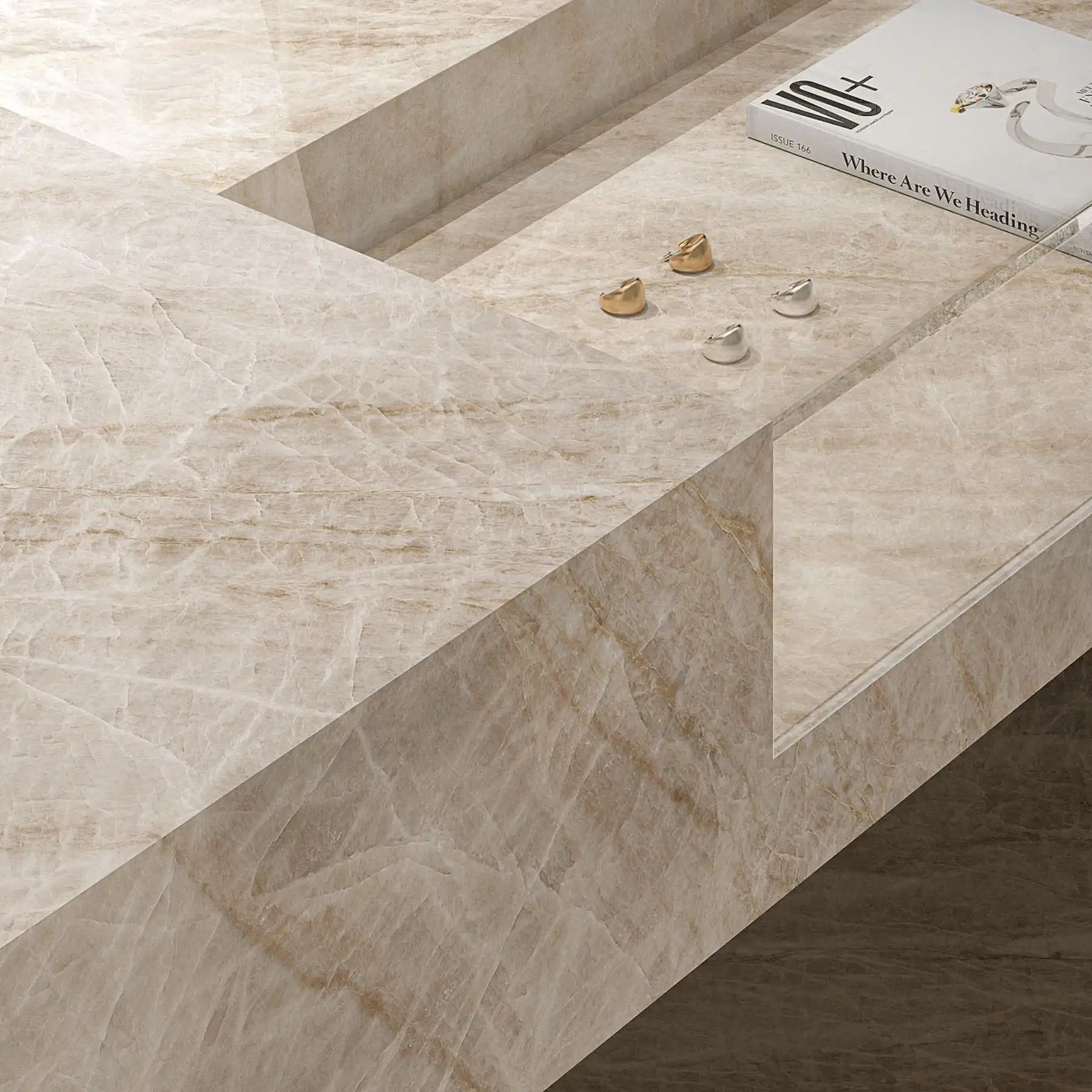
Marble typically exhibits a crystalline surface with visible veins and natural movement. When polished, it can achieve a reflective, elegant finish, but it remains chemically reactive due to its calcite content.
Jade stone has a smooth, dense, almost waxy texture. Its surface does not show veining in the same way marble does. Instead, jade’s value is often judged by color consistency, translucency, and internal fiber structure.
Processing and Manufacturing Considerations
Ease of Cutting and Shaping
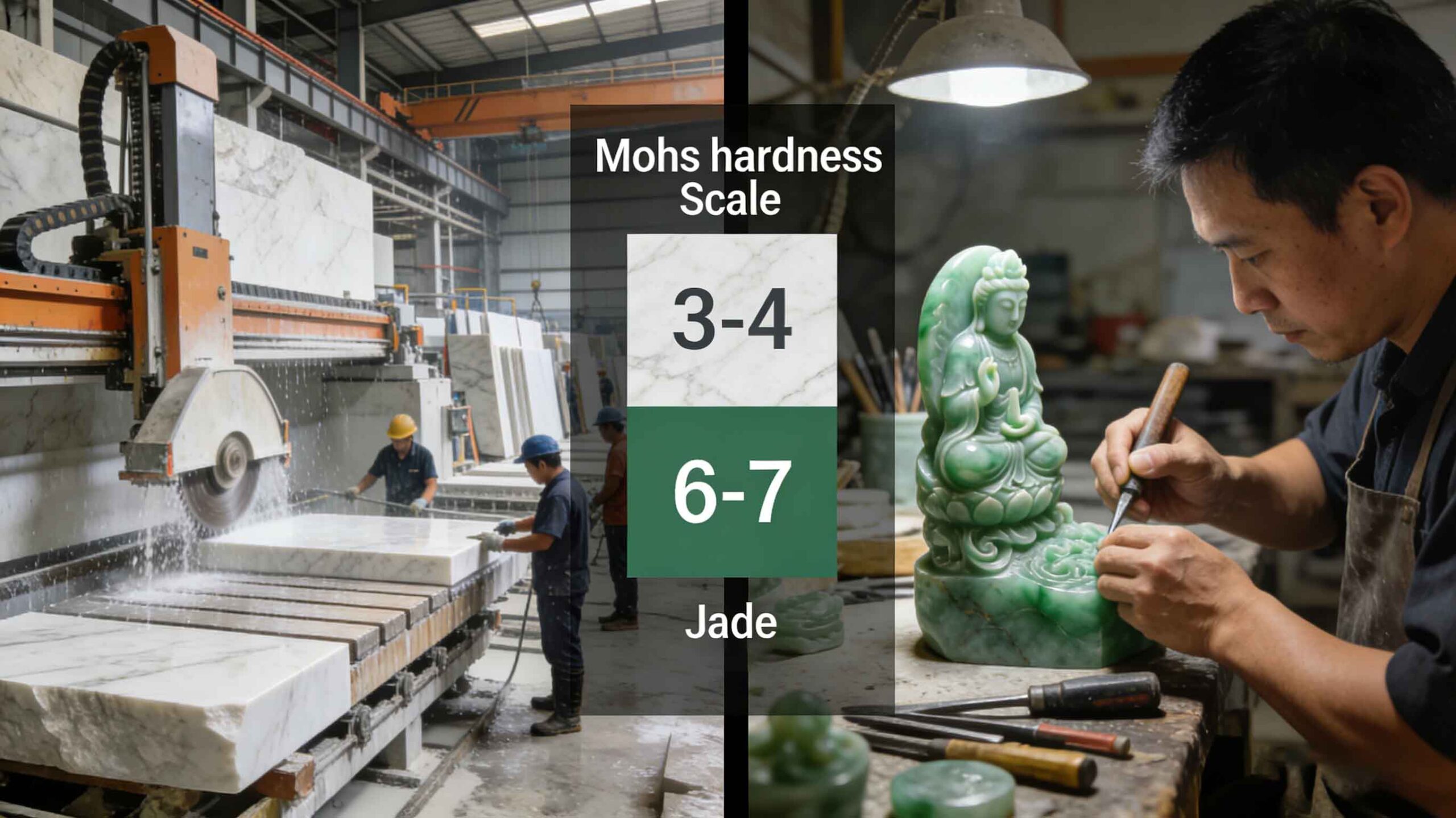
Marble is relatively easy to process using standard stone-cutting equipment. It can be sawn into slabs, tiles, stair treads, and decorative profiles efficiently, which is why marble manufacturers and factories around the world can supply it at scale for construction projects.
Jade stone is much more difficult to process. Its hardness requires specialized cutting tools, slower processing speeds, and higher labor skill. This significantly limits jade’s use in large-format applications and explains why jade is rarely seen in structural architecture.
Cost and Production Scalability
From a wholesale and manufacturing perspective, marble is scalable. Large marble quarries supply global markets with consistent block sizes, allowing factories to meet architectural demand.
Jade stone does not scale in the same way. Its rarity, extraction difficulty, and processing complexity mean that jade is usually reserved for high-value items rather than volume construction materials.
Typical Applications in Modern Use
Where Marble Is Commonly Used
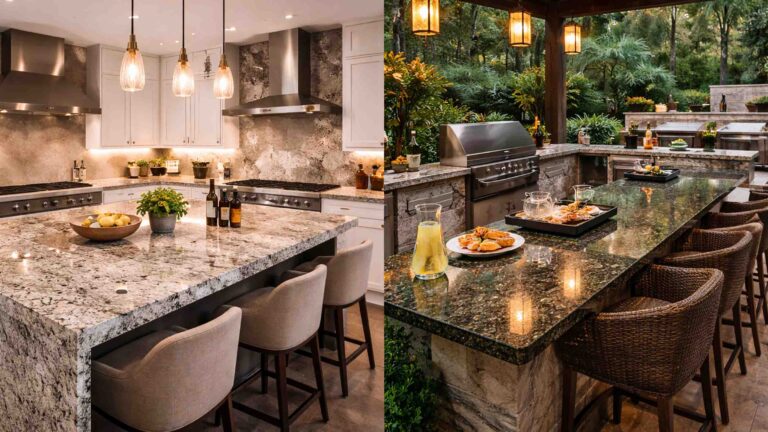
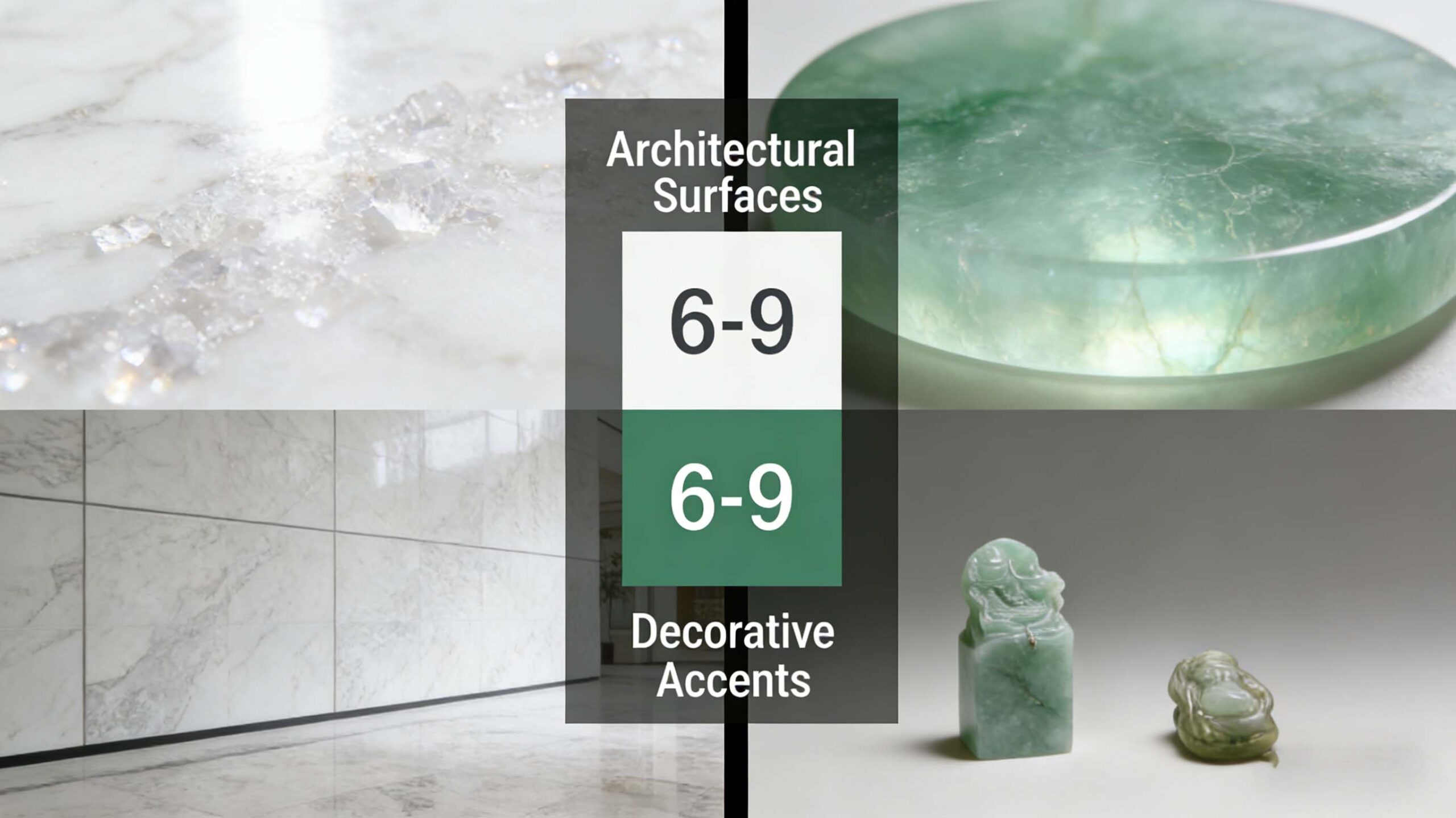
Marble is widely used in residential and commercial architecture. Common applications include flooring, wall cladding, kitchen countertops, bathroom vanities, staircases, fireplaces, and sculptural elements. Its ability to be produced in slabs and tiles makes it ideal for surfaces that require dimensional consistency.
Where Jade Stone Is Most Appropriate
Jade stone is primarily used in jewelry, ornamental carvings, decorative objects, and cultural artifacts. In rare cases, jade may be used as an accent material in luxury interiors, but this is highly specialized and symbolic rather than functional.
Cultural and Symbolic Significance
Marble in Western Architecture and Art
Marble has been a symbol of power, permanence, and artistic excellence in Western civilizations. Ancient Greek and Roman sculptures, monuments, and temples were often made from marble, establishing its role as a material of prestige and longevity.
Jade Stone in Asian Cultural Traditions
In many Asian cultures, jade stone represents purity, moral integrity, harmony, and spiritual protection. It has been used for thousands of years in ceremonial objects, personal ornaments, and heirlooms. Its value is as much cultural as it is material.
Maintenance, Longevity, and Practicality
Marble requires regular sealing and careful maintenance due to its porosity and chemical sensitivity. Acidic substances can etch its surface, and abrasive contact can cause scratches over time.
Jade stone, once polished, is highly resistant to chemical and mechanical damage. However, its limited size and cost make routine maintenance less relevant, as it is not typically used in high-wear architectural contexts.
Choosing Between Marble and Jade Stone
The decision between marble and jade stone should be driven by function, not just appearance. Marble is ideal for architectural and interior applications where scale, consistency, and elegance are required. Jade stone is best reserved for symbolic, decorative, or collectible uses where material meaning outweighs functional demands.
Conclusion: Two Materials, Two Very Different Roles
Although marble and jade stone may appear similar to the untrained eye, they serve fundamentally different roles in design, construction, and culture. Marble is an architectural workhorse with aesthetic flexibility, while jade stone is a mineral treasure defined by rarity, toughness, and symbolism. Understanding these distinctions allows designers, manufacturers, and buyers to make informed, responsible material choices.
Frequently Asked Questions
1. Is jade stone stronger than marble?
Yes. Jade stone is significantly harder and tougher than marble, making it more resistant to cracking and wear.
2. Can jade stone be used for countertops?
Technically yes, but it is impractical due to cost, size limitations, and processing difficulty.
3. Why is marble more common in architecture?
Marble can be quarried in large blocks, processed efficiently, and installed at scale.
4. Does marble last as long as jade stone?
With proper maintenance, marble can last centuries, but it is more vulnerable to surface damage.
5. Is jade stone more valuable than marble?
In most cases, yes—especially for high-quality jadeite used in jewelry and cultural artifacts.
References
-
Dana, J.D. – A System of Mineralogy – Yale University
-
Nesse, W.D. – Introduction to Mineralogy – Oxford University Press
-
Winkler, H.G.F. – Petrogenesis of Metamorphic Rocks – Springer
-
GIA Research Division – Jadeite and Nephrite Properties
-
Ashurst, J. – Stone in Building – Elsevier
-
British Geological Survey – Natural Stone Resources
-
Smithsonian National Museum – Marble and Jade in Cultural History
-
ASTM Committee C18 – Dimension Stone Standards
Semantic Insight Loop
The biggest mistake is treating “jade” as a construction stone alternative to marble. In practice, marble is specified as an architectural surface material, while jade is specified as a high-value mineral material. Mixing these expectations leads to wrong budgets, wrong fabrication plans, and wrong durability assumptions.
How to decide in 60 seconds:
If you need slabs, consistent thickness, repeatable finishing, and project-scale installation, marble is the realistic option. If you need symbolic value, exceptional toughness, and a gemstone-like finish for small pieces, jade is the right category.
Why the performance difference matters:
Marble’s calcite chemistry explains why acids can etch it and why it benefits from sealing and gentle maintenance. Jade’s dense interlocking structure explains why it resists fracture and holds up well as a wearable or handled object—yet its processing is slower and more specialized.
Option map: which material fits which application:
Marble works best for flooring, wall cladding, vanities, fireplace surrounds, stair treads, and statement slabs where visual movement and scale matter. Jade is best for carvings, jewelry, cultural ornaments, high-end inlays, and boutique feature pieces where the “story” of the material is part of the design.
Considerations that affect sourcing and fabrication:
For marble, ask about finish, sealing expectations, slip resistance for floors, and thickness choices for stairs and islands. For jade, ask about mineral type (nephrite vs jadeite), color stability, translucency, and fabrication capability because tool wear, yield rate, and breakage risk can change lead times.
Market and trend signal:
In modern interiors, marble continues to lead in architectural applications because it’s available in large formats and offers strong design variety. Jade is trending upward in luxury accents and collectible design objects, where craftsmanship and cultural symbolism drive demand more than square-meter coverage.
Compliance and real-world durability:
In public and commercial projects, safety and maintenance planning matter as much as aesthetics. Marble specifications often hinge on slip resistance, cleaning chemistry compatibility, and sealing cycles. Jade is rarely specified for code-driven architectural surfaces, but excels where impact resistance and long-term integrity are needed for small, high-touch objects.