Why Black Marquina Marble Continues to Define Luxury Spaces
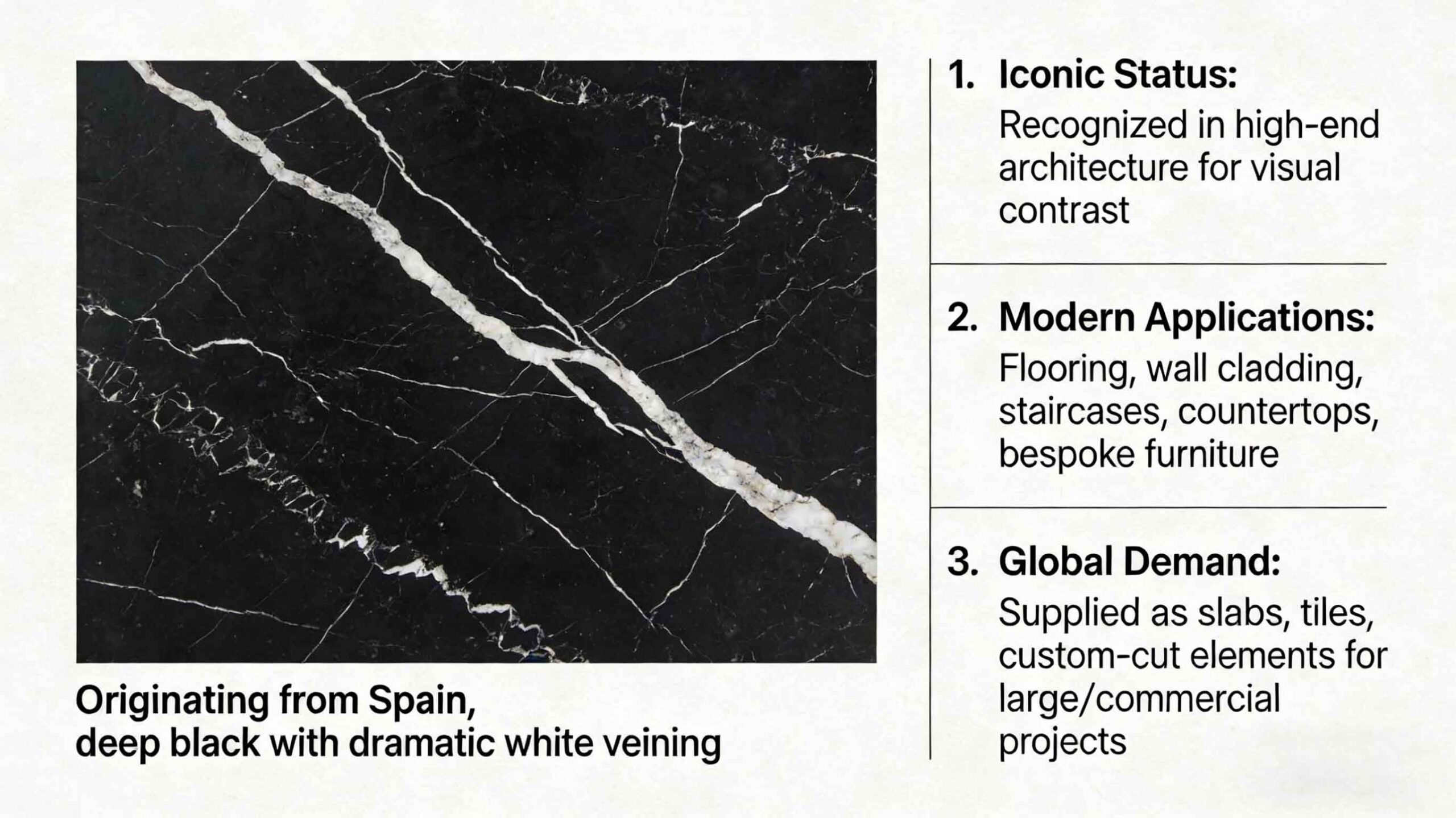
Black Marquina Marble has long been recognized as one of the most iconic natural stones in high-end architecture and interior design. Originating from Spain, this deep black marble with dramatic white veining delivers a visual contrast that few natural materials can match. Over the past decade, Black Marquina Marble has evolved from a classical luxury stone into a contemporary design essential, widely specified by architects, developers, and interior designers for both residential and commercial projects.
Today, Black Marquina Marble is no longer limited to decorative accents. It plays a functional and structural role in modern spaces—ranging from flooring and wall cladding to staircases, countertops, and bespoke furniture. With growing global demand, manufacturers and stone factories now supply Black Marquina Marble slabs, tiles, and custom-cut elements to international markets, supporting large-scale architectural projects as well as boutique interior designs.
This guide explores the most common and high-value uses of Black Marquina Marble, explains why it performs well in these applications, and outlines key considerations for designers, builders, and buyers selecting this material.
Understanding the Material Properties of Black Marquina Marble
Geological Characteristics and Visual Identity
Black Marquina Marble is characterized by its deep black base color intersected with bold, irregular white veins. This natural veining pattern ensures that no two slabs are identical, reinforcing its exclusivity in architectural design. Compared to lighter marbles, Black Marquina Marble delivers stronger visual depth and dramatic contrast, making it particularly effective as a statement material.
Physical Performance in Built Environments
From a technical perspective, Black Marquina Marble offers moderate hardness, good compressive strength, and satisfactory heat resistance for interior applications. While it is softer than granite or quartzite, proper fabrication, sealing, and installation allow it to perform reliably in most architectural settings.
Flooring Applications: Creating Visual Impact with Black Marble
Residential Flooring
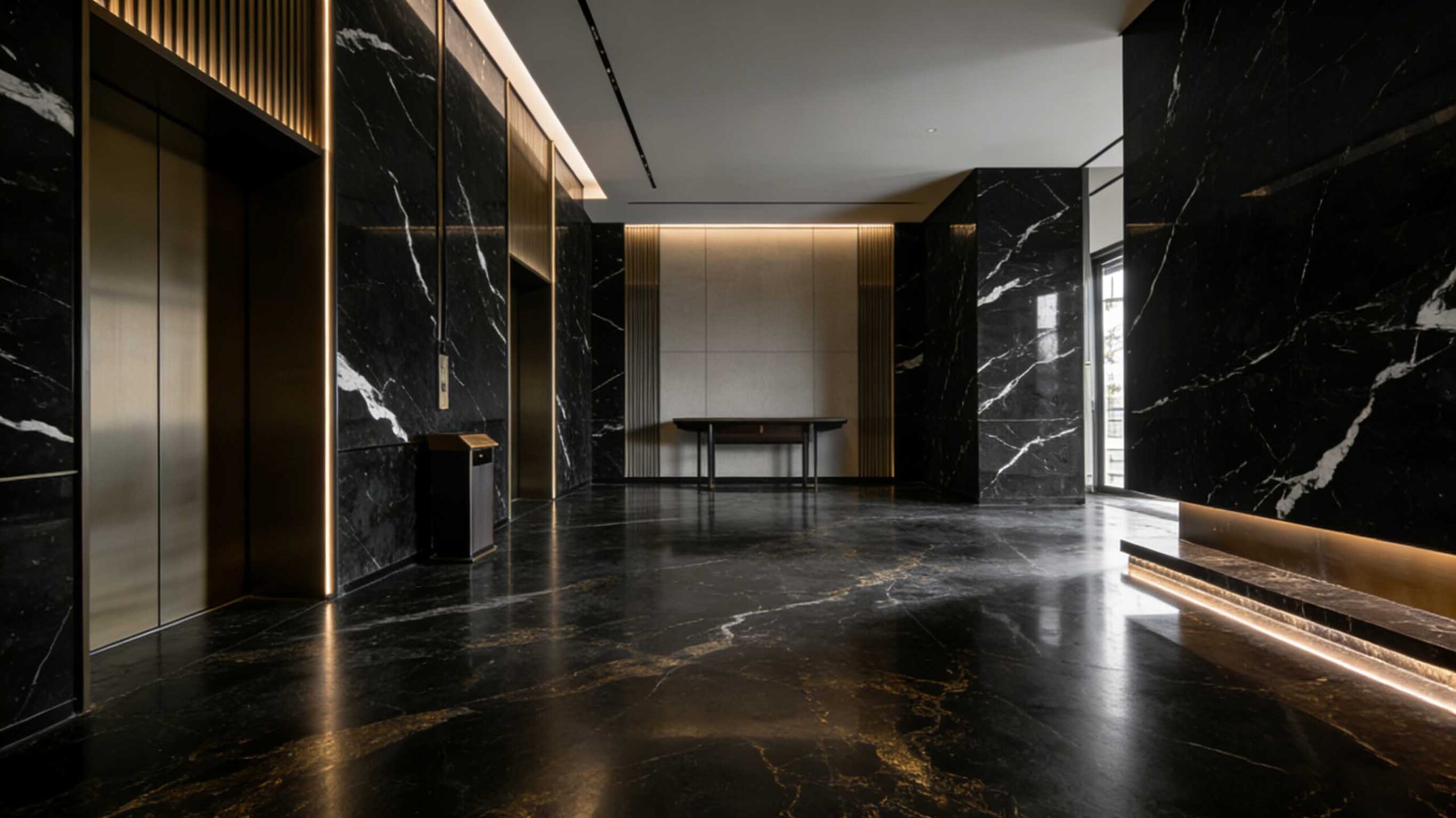
Black Marquina Marble flooring is widely used in luxury residences, particularly in entrance halls, living rooms, and master bathrooms. Its reflective polished surface enhances natural and artificial lighting, creating a sense of spatial depth. In minimalist or monochrome interiors, black marble flooring becomes the central design element.
Commercial Flooring
In commercial spaces such as hotels, luxury retail stores, and corporate lobbies, Black Marquina Marble flooring communicates prestige and brand identity. When paired with lighter wall finishes or metallic accents, it creates an atmosphere of refined sophistication.
Slip Resistance and Finishing Options
To meet safety standards in high-traffic areas, honed or brushed finishes are often selected instead of polished surfaces. These finishes improve slip resistance while maintaining the stone’s natural elegance.
Wall Cladding: Architectural Drama Through Vertical Surfaces
Interior Wall Cladding
Black Marquina Marble is frequently used as wall cladding in feature walls, bathrooms, and living areas. Its dramatic veining creates a natural artwork effect, eliminating the need for additional decorative elements. Designers often use large-format slabs to minimize joints and enhance visual continuity.
Commercial and Hospitality Spaces
In hotels, restaurants, and luxury offices, Black Marquina Marble wall cladding is used to create memorable focal points, reception backdrops, and executive lounges. Its timeless appeal aligns well with long-term brand positioning.
Kitchen Countertops: A Bold Alternative to Conventional Stones
Aesthetic Value in Modern Kitchens
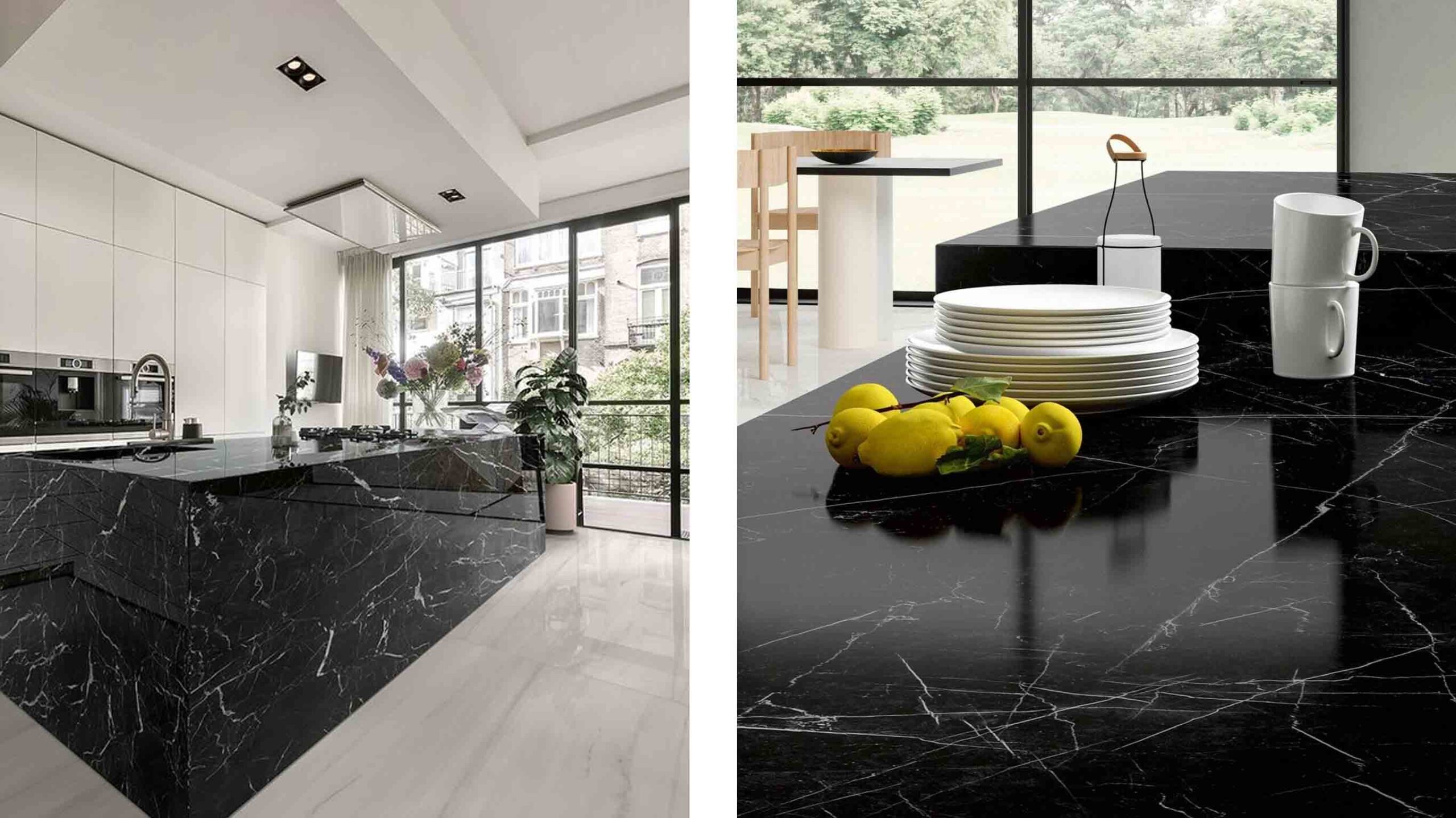
Black Marquina Marble countertops offer a striking contrast in contemporary kitchens, especially when paired with white cabinetry or warm wood textures. Unlike engineered materials, the natural veining ensures authenticity and uniqueness.
Heat Resistance and Daily Use
While Black Marquina Marble can tolerate moderate heat, protective practices such as using trivets are recommended. Compared to quartz, marble provides a more organic and natural aesthetic but requires greater care.
Sealing and Maintenance Considerations
Regular sealing is essential to protect marble countertops from staining and etching caused by acidic substances. When properly maintained, Black Marquina Marble countertops can remain visually stunning for decades.
Bathroom Vanities and Wet Area Applications
Luxury Bathroom Design
Black Marquina Marble vanities are commonly used in luxury bathrooms, spa suites, and hotel restrooms. The stone’s dark tone pairs well with gold, brass, or matte black fixtures, creating a high-end spa atmosphere.
Moisture Resistance and Surface Treatments
With correct sealing and fabrication, Black Marquina Marble performs well in humid environments. Honed finishes are often preferred in bathrooms to reduce water spotting and improve slip resistance.
Fireplace Surrounds: Creating Architectural Focal Points
Visual Contrast and Heat Tolerance
Fireplace surrounds made from Black Marquina Marble create dramatic focal points in living spaces. The material’s natural heat resistance makes it suitable for decorative fireplace installations, provided direct flame contact is avoided.
Contemporary and Classic Designs
Whether used in minimalist linear fireplaces or classic mantel designs, Black Marquina Marble adapts seamlessly to different architectural styles.
Staircases and Stair Treads: Structural Elegance
Use in Residential and Commercial Stairs
Black Marquina Marble staircases and stair treads are frequently specified in luxury villas, hotels, and commercial buildings. The stone adds a sense of grandeur while maintaining structural reliability when fabricated to appropriate thickness standards.
Safety and Thickness Recommendations
For stair applications, thicker slabs or reinforced backing systems are recommended to reduce the risk of cracking or chipping under heavy foot traffic.
Tabletops and Custom Furniture Applications
Bespoke Furniture Design
Designers increasingly use Black Marquina Marble for tabletops, coffee tables, dining tables, and console surfaces. Its natural veining transforms functional furniture into sculptural design pieces.
Hospitality and Commercial Furniture
In hospitality environments, black marble furniture elements elevate guest experience and reinforce premium brand positioning.
Decorative Accents and Architectural Details
Columns, Borders, and Moldings
Black Marquina Marble is often used in architectural detailing such as columns, trims, borders, and inlays. These elements add refinement without overwhelming the overall design.
Art Installations and Sculptural Features
In high-end projects, Black Marquina Marble is also used in custom art installations and sculptural elements, highlighting the versatility of natural stone beyond conventional uses.
Sustainability, Regulations, and Industry Trends
Natural Stone and Environmental Compliance
As a natural material, marble aligns with global sustainability initiatives promoting long-lasting, low-VOC building materials. Many stone manufacturers now comply with international environmental and labor standards to meet regulatory requirements in Europe and North America.
Growing Demand in Global Architecture
The demand for Black Marquina Marble continues to grow in luxury residential developments, hospitality projects, and commercial landmarks. Its ability to convey permanence, authenticity, and value positions it as a long-term design investment rather than a passing trend.
How to Choose the Right Black Marquina Marble Supplier
Selecting a reliable Black Marquina Marble manufacturer or factory is critical for ensuring consistent quality, proper grading, and professional fabrication. Buyers should evaluate slab selection, cutting precision, surface finishing, and packaging standards when sourcing marble for large projects or wholesale distribution.
Conclusion: Why Black Marquina Marble Remains a Design Icon
Black Marquina Marble is more than a decorative stone—it is a material that defines space, communicates luxury, and withstands evolving design trends. Its versatility across flooring, wall cladding, countertops, staircases, and furniture makes it one of the most valuable natural stones in modern architecture. When specified thoughtfully and maintained correctly, Black Marquina Marble delivers lasting beauty and architectural significance.
FAQ
1. Is Black Marquina Marble suitable for high-traffic areas?
Yes, when properly installed and maintained, Black Marquina Marble performs well in high-traffic interior spaces such as lobbies and corridors.
2. Does Black Marquina Marble require regular sealing?
Yes, sealing is recommended to protect the surface from stains and etching, especially in kitchens and bathrooms.
3. Can Black Marquina Marble be used outdoors?
It is primarily recommended for interior use, as prolonged exposure to weather may affect its appearance.
4. How does Black Marquina Marble compare to black granite?
Marble offers more dramatic veining and a softer aesthetic, while granite provides higher hardness and lower maintenance.
5. Is Black Marquina Marble suitable for custom furniture?
Yes, it is widely used in bespoke furniture and decorative installations due to its visual impact.
References
-
Natural Stone Institute, Stone Applications in Architecture, Industry Report
-
British Geological Survey, Marble Properties and Uses
-
European Federation of Natural Stone Industries, Market Trends Analysis
-
Architectural Digest, Natural Stone in Luxury Interiors
-
Building Research Establishment, Stone Material Performance Studies
-
American Institute of Architects, Interior Material Selection Guidelines
-
International Stone Journal, Marble in Contemporary Design
-
World Green Building Council, Sustainable Natural Materials Overview
Semantic Closed-Loop Insights: How to Specify Black Marquina Marble with Confidence
The most useful way to think about Black Marquina Marble is not “where can I use black marble,” but “what role should this stone play in the space.” Its power is contrast: deep black fields, sharp veining, and a premium visual rhythm that turns ordinary surfaces into architectural statements. When specified as a focal material rather than a background finish, Black Marquina delivers maximum design value with fewer square meters and clearer intent.
From a “how it works” perspective, performance depends on three controllable variables: finish selection, sealing strategy, and edge detailing. Polished finishes amplify depth and luxury in low-risk areas; honed or brushed finishes improve practicality where moisture, foot traffic, or fingerprints are expected. Sealing and routine pH-neutral cleaning are the difference between a surface that stays crisp and one that slowly loses clarity through etching and staining. Edge profiles and proper fabrication reduce micro-chipping, especially on countertops, stair nosings, and tabletops.
The “why designers keep choosing it” ties to modern material storytelling. In contemporary kitchens and bathrooms, people want fewer materials but stronger identity. Black Marquina provides that identity instantly: it pairs cleanly with white, warm wood, metallic fixtures, and minimal forms while still reading as timeless. In hospitality and retail, it signals premium positioning without needing elaborate décor, which is why it remains a go-to for lobbies, feature walls, and reception zones.
When evaluating “what options” you have, buyers typically choose among three specification paths. The first is large-format slab applications for wall cladding or statement flooring to minimize joints and maximize visual continuity. The second is functional surfaces like countertops and vanities where finishing and maintenance planning must be built into the design brief. The third is custom furniture and accents—tabletops, consoles, trims—where a smaller amount of stone creates an outsized luxury effect and brandable signature style.
Key “considerations” that separate successful projects from regret are slab selection discipline and supply consistency. Black Marquina varies in veining intensity, micro-fissures, and tonal depth; a reliable manufacturer or factory should grade slabs, align patterns for bookmatching where required, and provide stable cutting tolerances for stair treads and furniture parts. For wholesale or multi-site projects, consistency across batches becomes a strategic requirement, not a nice-to-have.
The broader market trend is moving toward responsible sourcing and longer-life materials. Natural stone fits this direction when it is sourced transparently, fabricated efficiently, and maintained properly to extend service life. As buyers become more compliance-aware and projects become more documentation-driven, suppliers who can provide clear grading, packaging discipline, and reliable lead times will increasingly win Black Marquina specifications in global architectural supply chains.