WORLDBEX 2026 (Mar 12–15, Philippines) is a Southeast Asia–focused construction and design expo where global manufacturers, factories, and wholesale suppliers can meet developers, architects, contractors, and importers—while tracking sustainability, compliance, and specification trends shaping ASEAN procurement.
Why WORLDBEX 2026 Matters Beyond the Philippines
As Southeast Asia enters a new cycle of infrastructure expansion, urban renewal, and sustainable construction, industry professionals are paying closer attention to regional exhibitions that shape procurement behavior, specification trends, and supplier selection. Among these, WORLDBEX 2026 stands out as the Philippines’ most influential building and construction exposition, acting as a convergence point for architects, developers, contractors, manufacturers, and global sourcing partners.
Scheduled for March 12–15, 2026, WORLDBEX is not simply a domestic trade show. It reflects the Philippines’ broader role in ASEAN construction growth, where demand for residential housing, mixed-use developments, commercial spaces, and public infrastructure continues to rise under government-backed modernization programs and private investment.
For international manufacturers, factory owners, and wholesale suppliers, WORLDBEX 2026 represents a strategic entry point into one of Southeast Asia’s fastest-evolving construction markets.

Understanding WORLDBEX: Scale, Scope, and Industry Positioning
What Is WORLDBEX?
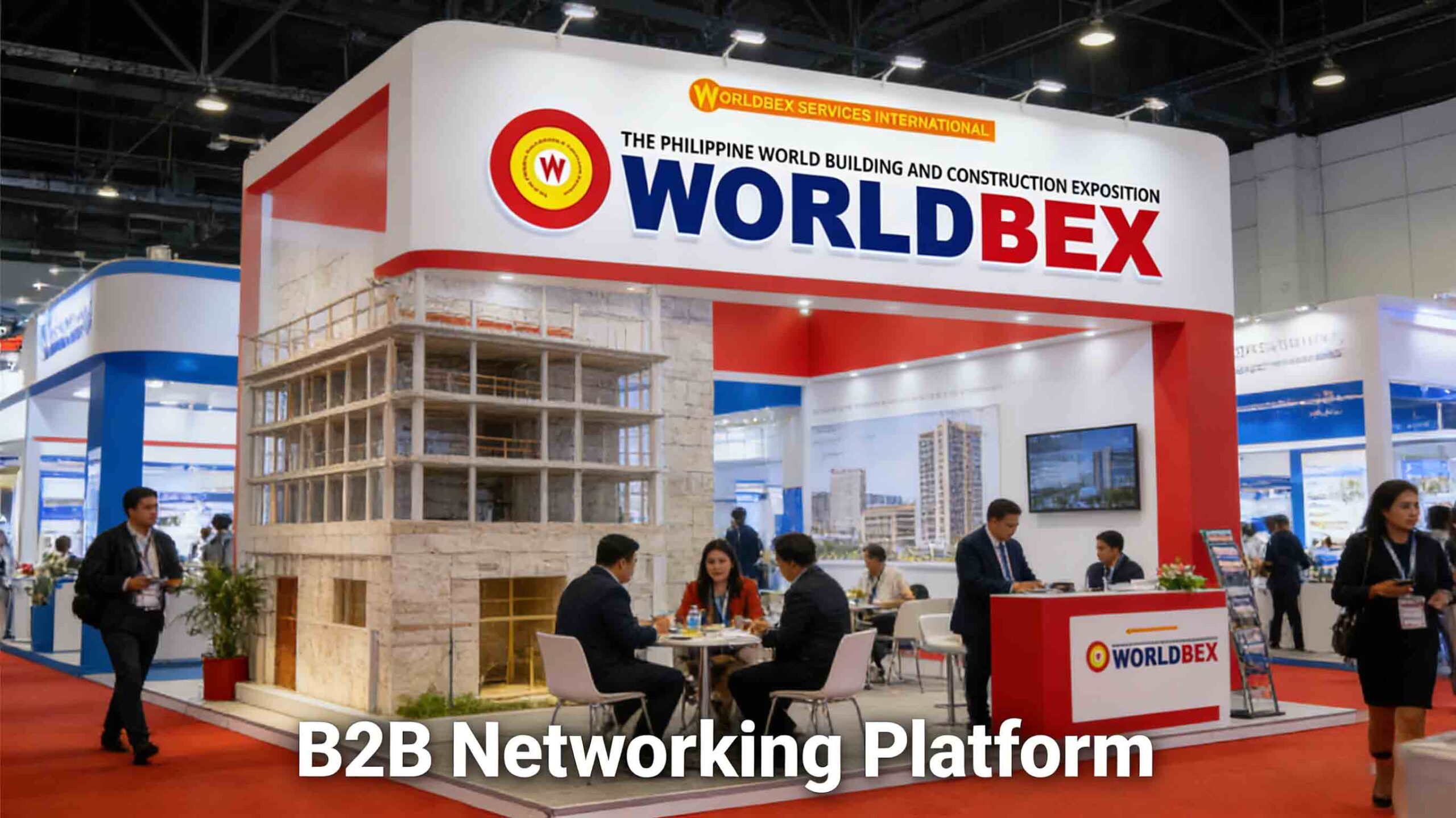
WORLDBEX is the leading building and construction exposition in the Philippines, organized by Worldbex Services International (WSI). Over the years, it has grown into a platform that connects:
-
Local and international building material manufacturers
-
Construction technology providers
-
Design firms and architectural studios
-
Property developers and contractors
-
Government-linked infrastructure stakeholders
Unlike narrowly focused trade fairs, WORLDBEX covers the entire construction value chain, from raw materials and surface finishes to engineering systems, green technologies, and design solutions.
Who Attends WORLDBEX 2026?
The visitor profile typically includes:
-
Real estate developers managing residential and commercial portfolios
-
Architects and interior designers specifying materials
-
Construction companies sourcing suppliers at scale
-
Importers, distributors, and project buyers
-
International manufacturers exploring ASEAN partnerships
This makes WORLDBEX especially valuable for B2B manufacturers and factories seeking long-term distribution relationships rather than one-off orders.
Southeast Asia Construction Growth: Why the Philippines Is a Strategic Hub
Infrastructure and Urbanization Trends
The Philippines continues to invest heavily in:
-
Transportation infrastructure
-
Urban housing projects
-
Commercial and mixed-use developments
-
Hospitality and tourism facilities
Government-backed development frameworks and public-private partnerships are accelerating construction timelines, while sustainability requirements are reshaping material choices.
Sustainability and Regulatory Direction
In recent years, the Philippine construction sector has aligned more closely with:
-
Energy efficiency standards
-
Low-emission building materials
-
Responsible sourcing and lifecycle transparency
-
Green building certification frameworks
This shift mirrors global trends where buyers are no longer choosing materials purely on cost, but on compliance, durability, and environmental impact.
For suppliers attending WORLDBEX 2026, this means product positioning must emphasize performance data, certification readiness, and long-term value, not just aesthetics.
What Global Manufacturers Gain from WORLDBEX 2026
Market Access Without Full Market Entry Risk
For overseas manufacturers and factories, WORLDBEX provides a controlled environment to:
-
Test product acceptance
-
Understand local specification preferences
-
Evaluate distributor capability
-
Gather direct feedback from architects and developers
This reduces the risk of entering the Philippine market blindly.
Buyer Behavior and Specification Insights
One of the most underestimated values of WORLDBEX is observational intelligence. By engaging with specifiers and contractors on-site, suppliers can understand:
-
Which materials are being replaced or upgraded
-
Where price sensitivity remains high
-
Which performance features matter most in tropical climates
-
How sustainability claims are evaluated in real procurement scenarios
This insight is often more valuable than raw sales leads.
WORLDBEX in the Context of Global Trade Fair Networks
Regional Exhibitions as Strategic Nodes
Modern sourcing strategies increasingly rely on regional trade hubs rather than single global mega-expos. In Southeast Asia, WORLDBEX plays a role similar to how regional European or Middle Eastern exhibitions influence localized supply chains.
For buyers already evaluating how regional trade hubs reshape sourcing strategies, this evolution closely aligns with discussions highlighted in STONE INDUSTRY INSIGHT: Eastern Europe as a strategic stone and machinery gateway, where regional exhibitions redefine competitive advantage beyond raw material access alone.
Complementary Role Within Global Exhibition Calendars
WORLDBEX does not replace global exhibitions—it complements them. Many international buyers use it to:
-
Identify ASEAN-ready suppliers
-
Shortlist manufacturers for regional projects
-
Compare global products under local conditions
In this sense, WORLDBEX acts as a filter stage within broader global sourcing pipelines.
Product Categories and Innovation Focus at WORLDBEX 2026
Core Product Segments
While WORLDBEX spans the entire construction ecosystem, several categories consistently attract strong attention:
-
Architectural finishes and surface materials
-
Structural and engineered building components
-
Interior fit-out solutions
-
Construction machinery and tools
-
Sustainable and energy-efficient systems
Manufacturers positioning themselves around reliability, scalability, and compliance tend to perform better than purely design-driven brands.
Innovation Themes to Watch
Key innovation narratives expected at WORLDBEX 2026 include:
-
Climate-adapted materials for tropical environments
-
Low-maintenance and lifecycle-optimized surfaces
-
Modular and prefabricated construction systems
-
Digital tools for design, estimation, and project management
These themes reflect a broader shift from product-centric selling to solution-based value propositions.
Strategic Preparation for Exhibitors and Buyers
For Manufacturers and Factories
To maximize ROI at WORLDBEX 2026, manufacturers should prepare:
-
Clear application scenarios, not just product catalogs
-
Technical documentation aligned with regional standards
-
Case studies relevant to Southeast Asian projects
-
Flexible MOQ and distribution models
The exhibition environment favors problem-solvers over price-only competitors.
For Buyers and Developers
Buyers attending WORLDBEX should focus on:
-
Supplier reliability and production capacity
-
Certification and compliance readiness
-
Long-term partnership potential
-
Supply chain resilience
Those already comparing international sourcing routes may also benefit from insights discussed in Global construction trade fairs shaping supplier selection beyond price competition, where exhibitions increasingly function as strategic evaluation platforms rather than simple marketplaces.
WORLDBEX 2026 as a Long-Term Industry Signal
WORLDBEX is not just about what is displayed—it signals where the Philippine and broader Southeast Asian construction market is heading. The emphasis on sustainability, performance, and integrated solutions reflects a maturing industry that demands more from its suppliers.
For global manufacturers, WORLDBEX 2026 offers a rare combination of:
-
High buyer density
-
Practical specification feedback
-
Regional market insight
-
Partnership-oriented networking
In a global construction landscape increasingly shaped by regulation, sustainability, and supply chain resilience, WORLDBEX stands as a strategic checkpoint for anyone serious about Southeast Asia.
FAQs
1. What makes WORLDBEX different from other construction trade shows in Asia?
WORLDBEX focuses strongly on the Philippine and ASEAN markets, offering direct access to local decision-makers rather than purely international showcases.
2. Is WORLDBEX suitable for overseas manufacturers and factories?
Yes. WORLDBEX is particularly valuable for manufacturers seeking distributors, project buyers, or regional partners in Southeast Asia.
3. What types of buyers typically attend WORLDBEX?
Attendees include developers, architects, contractors, importers, and institutional buyers involved in residential, commercial, and infrastructure projects.
4. Does WORLDBEX emphasize sustainability and green building?
Sustainability is a growing focus, with increasing attention on energy efficiency, lifecycle performance, and responsible sourcing.
5. How should first-time exhibitors prepare for WORLDBEX 2026?
Exhibitors should focus on application-driven presentations, technical credibility, and partnership readiness rather than only product displays.
References
-
ASEAN Construction Outlook Report, ASEAN Secretariat
-
Philippine Infrastructure Development Framework, Government Publications
-
Global Construction Materials Market Analysis, Industry Research Group
-
Sustainable Building Trends in Southeast Asia, Regional Policy Review
-
Trade Exhibition Impact Studies, International Trade Council
-
Green Building Standards in Tropical Climates, Academic Journal
-
Construction Supply Chain Resilience Reports, Industry Analysts
-
Architectural Specification Trends in ASEAN Markets, Professional Association
What is WORLDBEX 2026 really “for” in a sourcing sense?
It’s a regional decision-point where project buyers and specifiers validate materials against tropical performance, availability, and compliance—then shortlist partners who can deliver stable supply, documentation, and after-sales continuity.
Why do ASEAN-facing suppliers treat regional expos as high-leverage?
Because distribution networks, installer preferences, and specification habits are locally anchored. A product that wins in Europe may lose in Manila if it lacks moisture tolerance, easy maintenance, or the certifications buyers are trained to ask for.
How does sustainability change “what gets bought” at shows like this?
Sustainability moves from branding to procurement rules: buyers increasingly want traceable sourcing, lower-VOC or safer chemistry profiles, and lifecycle durability claims backed by test data—not just marketing language.
What options should a manufacturer prepare to match real buyer behavior?
Offer “project-ready” configurations: consistent batch control, packaging for tropical logistics, flexible MOQ for distributor trials, and documentation packs (spec sheets, maintenance guides, installation notes) aligned with how architects actually specify.
What should buyers compare on-site to avoid costly selection mistakes?
Compare performance under local conditions: slip resistance and cleaning reality, stain/etch sensitivity, edge durability, installation compatibility, and lead-time reliability. Ask for test methods, not just results, and confirm what the warranty excludes.
Considerations that quietly decide long-term success
The best supplier isn’t always the one with the most samples—it’s the one with stable production, transparent QC, predictable lead times, and a distributor support model that can keep projects moving when schedules tighten.
Trend signal to watch in 2026
ASEAN construction is shifting toward “specification-driven procurement”: materials that prove compliance, durability, and serviceability will outcompete flashy options that create maintenance risk. WORLDBEX is where that shift becomes visible in real conversations.