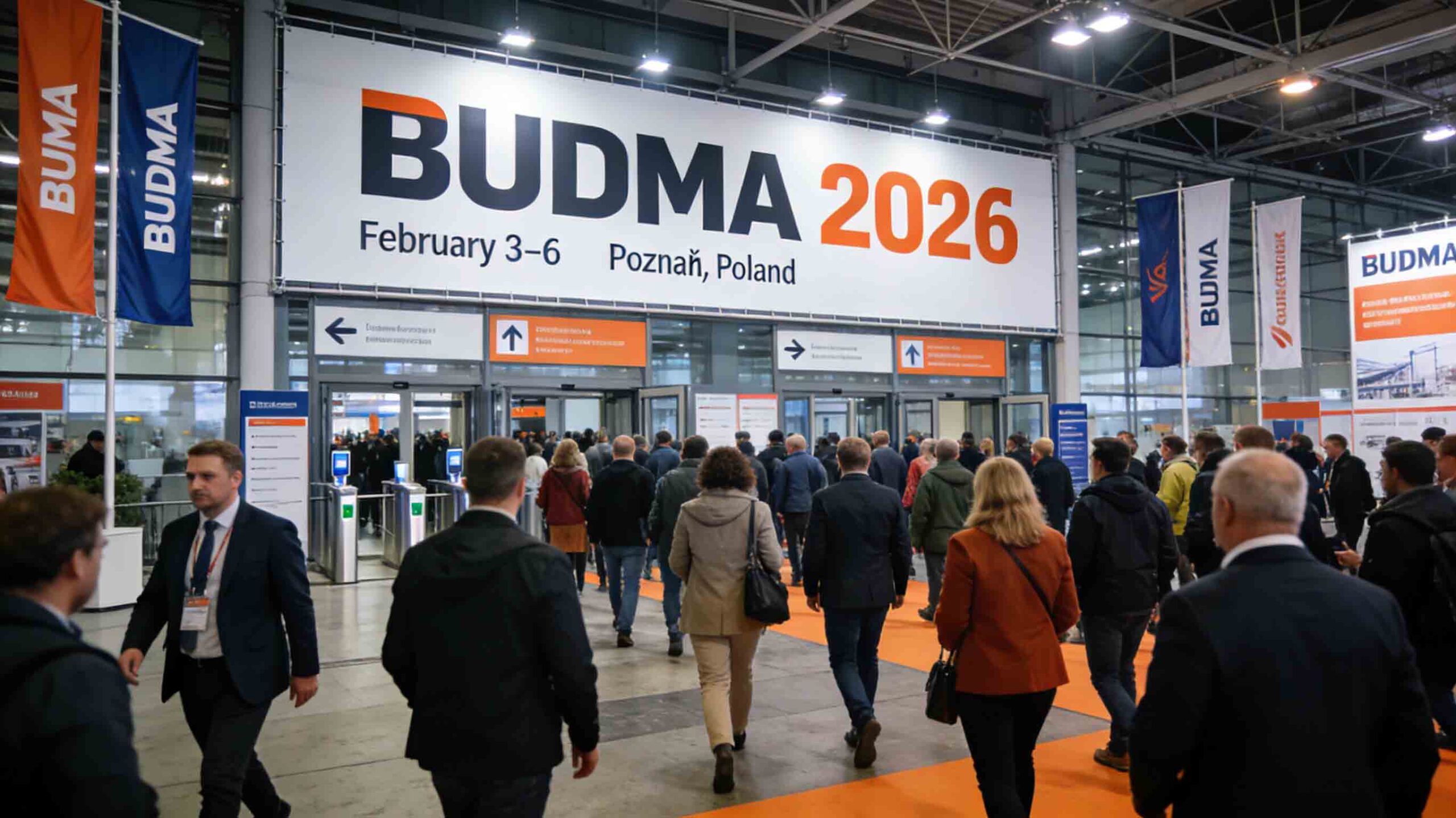
BUDMA 2026, held from February 3–6 in Poznań, Poland, is one of Europe’s most influential construction trade fairs, bringing together manufacturers, suppliers, architects, developers, and global buyers. Entering its 34th edition, BUDMA has evolved into a strategic gateway for companies targeting the European construction market, especially under tightening EU sustainability, energy-efficiency, and compliance regulations. More than a product showcase, BUDMA 2026 functions as a business-driven platform where regulatory alignment, market access, and long-term supplier credibility converge, making it highly relevant for global manufacturers, factories, and wholesale buyers seeking future-proof growth in Europe.
Budma 2026, construction trade fair Poland, European construction exhibition, building materials manufacturers Europe, construction equipment factory Europe, wholesale construction materials Europe, construction suppliers Poland, Budma Poznan trade show
Introduction: Why BUDMA 2026 Matters More Than Ever
The European construction industry is entering a decisive transformation phase. Rising sustainability regulations, stricter building performance standards, and shifting supply chains are reshaping how materials are sourced, specified, and distributed. Against this backdrop, BUDMA 2026 stands out as more than just another construction trade fair—it is becoming a strategic checkpoint for global manufacturers, suppliers, and buyers looking to stay aligned with Europe’s future construction ecosystem.
Scheduled for February 3–6, 2026, in Poznań, Poland, BUDMA will return for its 34th edition, reaffirming its position as one of Central and Eastern Europe’s most influential construction industry events. Organized by Grupa MTP, the event brings together developers, architects, designers, investors, manufacturers, and distributors under one roof in Poznań, Poland.
Unlike trend-driven expos that focus on short-term novelty, BUDMA consistently emphasizes real construction demand, regulatory alignment, and long-term market access—qualities that make it increasingly relevant to global B2B stakeholders.
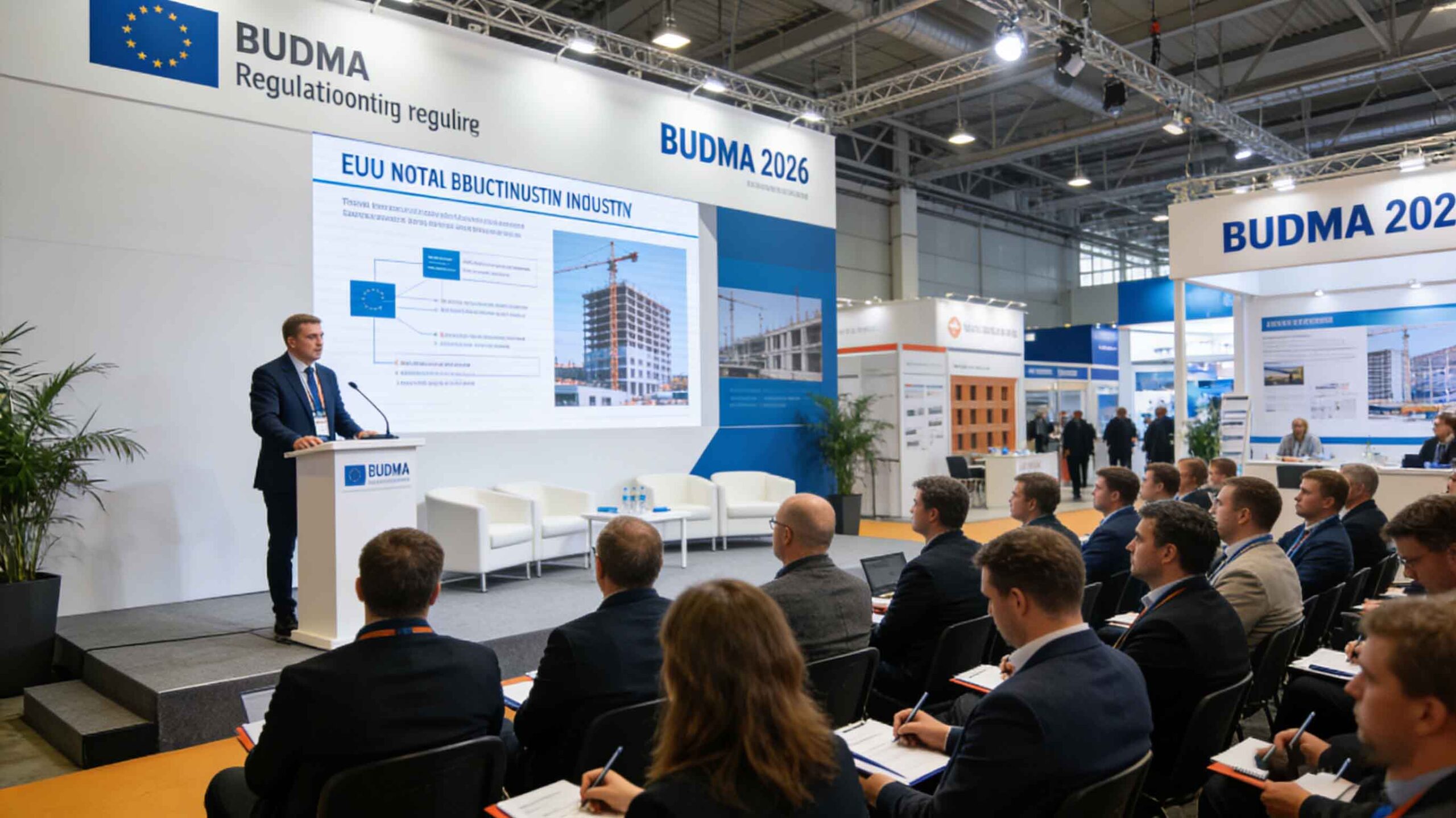
BUDMA is widely recognized as a comprehensive construction and building technology exhibition serving the European market. Its core value lies in its ability to connect product innovation, market regulation, and commercial matchmaking within a single professional environment.
The fair covers a broad range of construction segments, including building materials, structural systems, interior and exterior solutions, construction machinery, energy-efficient technologies, and modern building processes. Rather than operating as a design-only or consumer-oriented show, BUDMA is structured for decision-makers—professionals responsible for specifying, sourcing, manufacturing, and distributing construction solutions at scale.
Over the years, the exhibition has evolved in parallel with Europe’s construction policies, making it a reliable indicator of where the market is heading rather than where it has already been.
BUDMA 2026 and the European Construction Market Shift
Sustainability Regulations Are Redefining Product Demand
One of the strongest forces shaping BUDMA 2026 is regulatory pressure. The European Union’s Green Deal, revised Energy Performance of Buildings Directive (EPBD), and circular economy policies are directly influencing material selection and construction methodologies.
Manufacturers exhibiting at BUDMA are increasingly expected to demonstrate compliance with:
-
Low-carbon production processes
-
Energy-efficient building performance
-
Durable, long-life material cycles
-
Traceable and transparent supply chains
This regulatory environment favors factories and manufacturers capable of adapting quickly, documenting compliance, and offering scalable solutions aligned with EU standards.
From Cost-Driven to Compliance-Driven Sourcing
Historically, price competitiveness dominated procurement decisions. In 2026, European buyers are prioritizing compliance reliability, performance data, and long-term supplier credibility. BUDMA has become a critical venue for evaluating these factors face-to-face.
For international manufacturers, especially those targeting wholesale and project-based distribution, participation in BUDMA signals readiness for Europe’s evolving procurement expectations.
Why Global Manufacturers Choose BUDMA 2026
Access to Real European Buyers
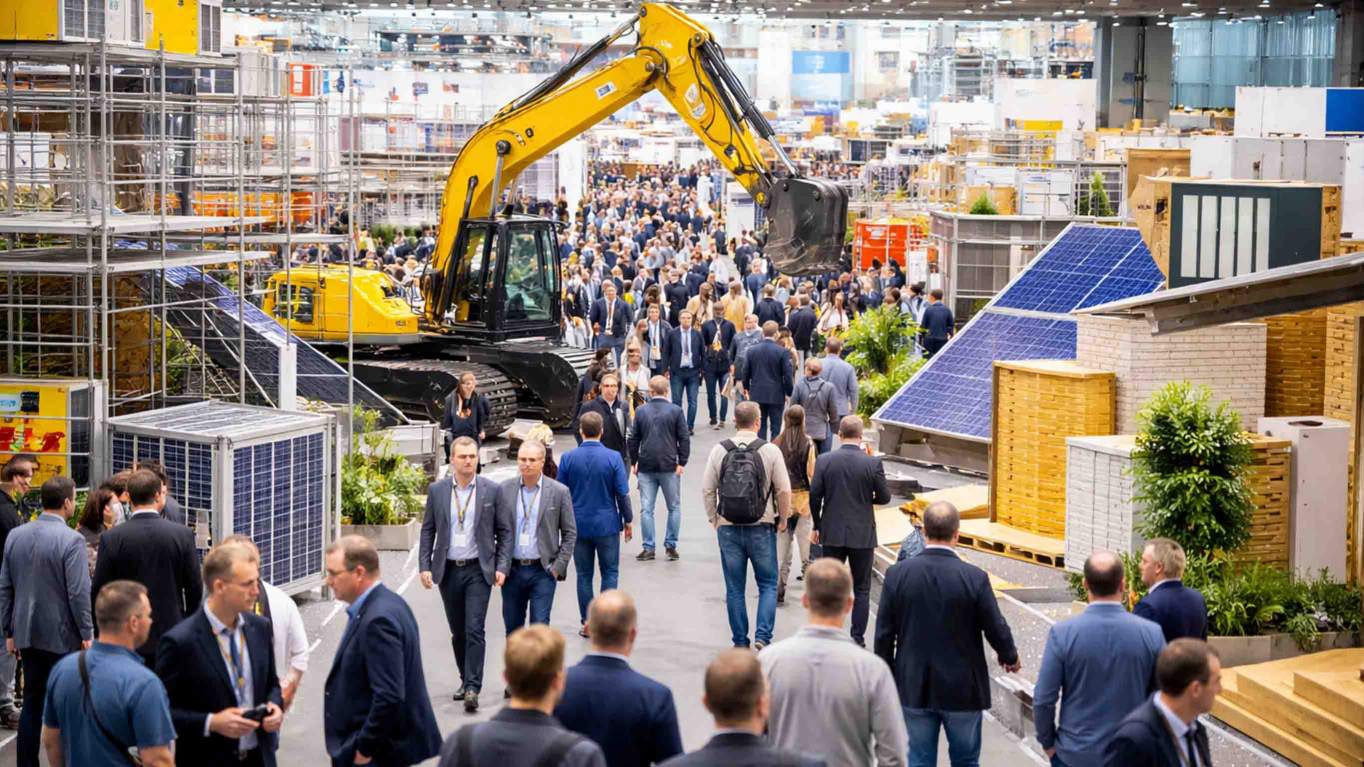
BUDMA is not a passive display show. Its visitor profile is heavily weighted toward professionals with purchasing authority—contractors, developers, distributors, and system integrators actively sourcing solutions for upcoming projects.
For construction equipment factories, building materials manufacturers, and OEM suppliers, this translates into direct exposure to qualified European demand rather than speculative leads.
Hosted Buyers Program and International Meeting Zone
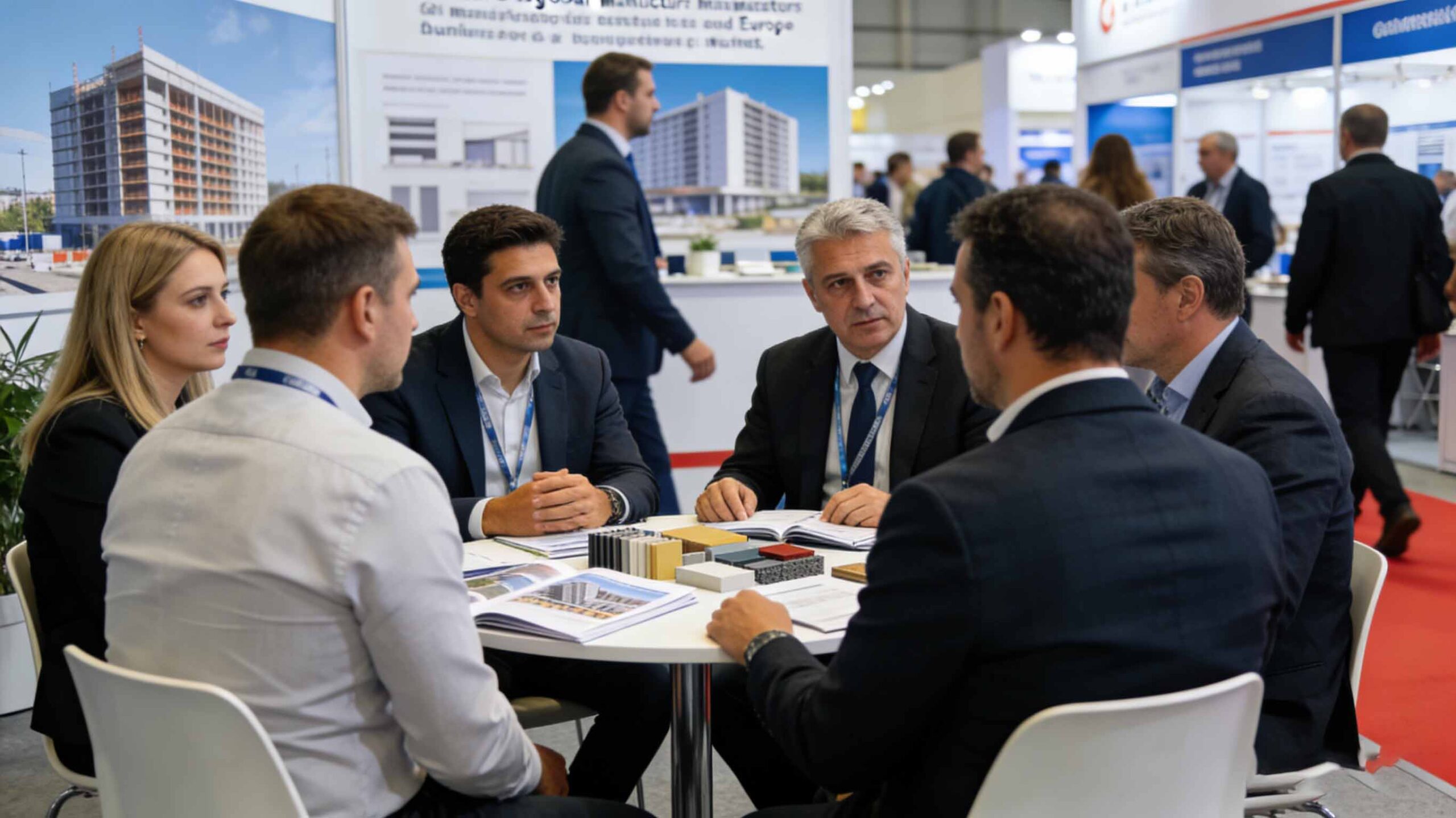
A defining feature of BUDMA is its Hosted Buyers Program, designed to facilitate targeted B2B meetings between exhibitors and vetted international buyers. Combined with the International Meeting Zone, the fair offers structured matchmaking that reduces randomness and improves conversion efficiency.
This format is especially attractive to manufacturers entering or expanding within the European market, as it shortens the sales cycle and provides market intelligence beyond simple product display.
Poznań: A Strategic Location for European Construction Trade
Choosing Poznań as the host city is not accidental. Located at the crossroads of Western and Eastern Europe, Poznań functions as a logistics and distribution bridge for construction materials and equipment.
For exhibitors, this means:
-
Easier access to EU and non-EU markets
-
Proximity to major infrastructure projects in Central Europe
-
A mature trade fair infrastructure managed by experienced organizers
The city’s role reinforces BUDMA’s positioning as a practical business platform, not just a symbolic industry gathering.
Key Product and Technology Themes at BUDMA 2026
Energy-Efficient Building Systems
Expect strong representation of insulation systems, façade solutions, window technologies, and structural components designed to meet stricter thermal and energy standards.
Industrialized and Modular Construction
As labor shortages persist across Europe, industrialized construction methods are gaining traction. BUDMA increasingly highlights prefabrication systems, modular components, and factory-driven construction solutions.
Digitalization and Smart Construction
Digital tools for design coordination, construction management, and building performance monitoring are becoming integral to the exhibition, reflecting Europe’s push toward smarter, data-driven construction workflows.
BUDMA 2026 as a Long-Term Market Signal
For companies evaluating whether a trade fair is worth the investment, the key question is strategic relevance. BUDMA’s longevity—now entering its 34th edition—offers a level of market validation few regional exhibitions can match.
Participation in BUDMA is increasingly interpreted as:
-
A signal of long-term commitment to Europe
-
Proof of regulatory readiness
-
Evidence of scalable manufacturing capability
For buyers, this makes the exhibitor pool more reliable and reduces sourcing risk.
How BUDMA 2026 Supports Global Business Expansion
BUDMA positions itself explicitly as a platform to build global business, not merely local exposure. Through curated international programs, knowledge-sharing sessions, and cross-border networking, the fair helps companies understand how to operate within Europe’s legal, technical, and commercial frameworks.
This is particularly valuable for manufacturers navigating:
-
CE marking and conformity requirements
-
EU environmental and safety regulations
-
Distribution and partnership models across multiple countries
Rather than selling products in isolation, exhibitors are encouraged to present solutions within a regulatory and operational context, aligning well with European buyer expectations.
The Role of Knowledge and Industry Insight at BUDMA
Beyond product展示, BUDMA integrates expert panels, technical discussions, and market briefings that reflect broader construction trends. These sessions are not abstract thought leadership—they are often tied directly to upcoming regulations, real project case studies, and applied engineering challenges.
For decision-makers, this knowledge component transforms BUDMA into a learning and planning environment, not just a sales venue.
BUDMA 2026 in the Global Construction Exhibition Landscape
While global construction exhibitions exist across Asia, the Middle East, and North America, BUDMA occupies a unique niche: it bridges Western European standards with Central and Eastern European growth markets.
This positioning makes it particularly attractive for:
-
Manufacturers seeking EU entry without oversaturated competition
-
Buyers looking for compliant alternatives to established suppliers
-
Distributors expanding across emerging European regions
In many cases, relationships initiated at BUDMA mature into long-term supply partnerships rather than one-off transactions.
Conclusion: Why BUDMA 2026 Deserves Strategic Attention
BUDMA 2026 is not about spectacle—it is about substance. In an era where construction decisions are shaped by regulation, sustainability, and long-term risk management, the fair provides a grounded, business-driven platform for meaningful engagement.
For manufacturers, factories, wholesalers, and professional buyers, BUDMA offers clarity: clarity about market direction, compliance expectations, and real demand signals within Europe’s construction industry.
As global construction continues to recalibrate, BUDMA remains a place where future-oriented companies don’t just observe change—they actively shape it.
FAQ: BUDMA 2026 (Google Hot Searches)
1. What is BUDMA 2026 known for?
BUDMA 2026 is known as one of Europe’s leading construction trade fairs, focusing on building materials, construction technologies, and industry-level business matchmaking.
2. Who should attend BUDMA 2026?
The fair is designed for developers, architects, contractors, manufacturers, distributors, and international buyers involved in professional construction projects.
3. When and where is BUDMA 2026 held?
BUDMA 2026 will take place from February 3 to February 6, 2026, in Poznań, Poland.
4. Is BUDMA suitable for international manufacturers?
Yes, BUDMA actively supports international exhibitors through hosted buyer programs and international meeting zones aimed at cross-border cooperation.
5. What industries are covered at BUDMA?
The exhibition covers construction materials, building systems, energy-efficient solutions, construction equipment, and modern building technologies.
References
-
European Commission – Energy Performance of Buildings Directive Overview
-
European Construction Industry Federation – Market Outlook Reports
-
OECD – Construction Sector Sustainability Studies
-
World Green Building Council – Policy and Market Insights
-
McKinsey & Company – Global Construction Productivity Research
-
International Energy Agency – Buildings and Construction Data
-
Eurostat – EU Construction Industry Statistics
-
United Nations Environment Programme – Sustainable Buildings Reports
How BUDMA 2026 Defines the Future of Construction Trade in Europe
What BUDMA 2026 represents:
BUDMA 2026 represents a shift from traditional construction exhibitions toward a regulation-aware, solution-oriented trade platform. It reflects how the European construction market is moving beyond price-driven sourcing and toward compliance-driven, performance-based decision-making. The fair positions itself as a reference point for understanding how building materials, systems, and technologies must adapt to evolving EU standards.
Why it matters for global manufacturers and suppliers:
For international manufacturers and factories, BUDMA 2026 serves as a validation stage. Participation signals readiness for European regulatory frameworks, long-term supply stability, and transparent production processes. Buyers increasingly interpret BUDMA presence as an indicator of reliability, scalability, and alignment with sustainability and safety expectations in Europe.
How BUDMA supports business expansion:
Through structured programs such as hosted buyer meetings and international business zones, BUDMA reduces entry barriers for companies targeting the European market. It allows suppliers to engage directly with decision-makers, understand procurement logic, and refine market positioning based on real project requirements rather than assumptions.
What options and opportunities emerge from the fair:
BUDMA 2026 opens opportunities across multiple construction segments, including energy-efficient building systems, industrialized construction, modular solutions, and smart construction technologies. These options reflect broader industry trends such as labor optimization, lifecycle performance, and digital integration within the built environment.
Key considerations for buyers and exhibitors:
As regulations tighten and sustainability expectations rise, buyers and exhibitors alike must consider long-term compliance, documentation transparency, and supply chain resilience. BUDMA 2026 highlights the importance of choosing partners who can support not only immediate project needs but also future regulatory and market shifts across Europe.