Marble countertops are naturally heat-resistant but not fully heatproof. While marble can tolerate moderate high temperatures, direct contact with hot pots or pans may cause thermal shock, etching, or sealer damage. Modern regulations, such as updated U.S. silica rules and EU construction standards, influence fabrication practices and protective treatments that affect heat performance. Homeowners can safely enjoy marble surfaces by using trivets, maintaining proper sealing, and avoiding sudden temperature changes.
Understanding the Heat Resistance of Marble Countertops
The question “Are marble countertops heat-resistant enough for hot pots and pans?” is among the most searched homeowner queries—and for good reason. Marble remains one of the most desirable natural stones in modern kitchens, yet heat resistance is a critical concern for daily use. This in-depth guide explores how marble behaves under extreme temperature, whether it can withstand direct contact with hot cookware, and what consumers, fabricators, and marble countertop manufacturers must understand to meet updated safety standards and homeowner expectations.
This article also evaluates new regulations, emerging industry trends, and scientific testing results that influence how marble is processed, sealed, sold, and installed—ultimately helping architects, designers, retailers, and homeowners make better long-term decisions.
What Does “Heat-Resistant” Actually Mean for Marble?
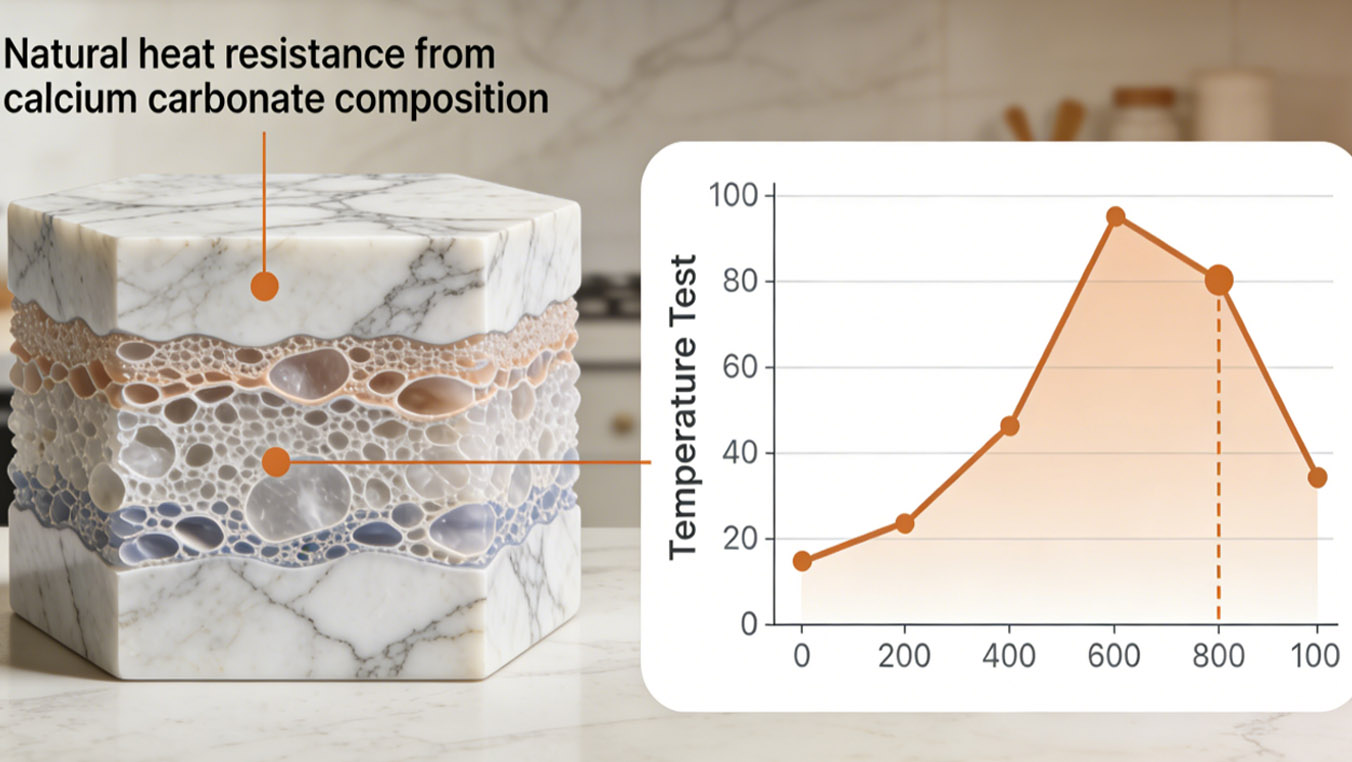
Marble is a metamorphic stone formed under high pressure and temperature, which gives it natural heat tolerance. However, heat tolerance is not the same as heat immunity.
Key facts:
-
Marble can tolerate temperatures around 175°C to 260°C (350°F–500°F) depending on composition.
-
Extreme thermal shock (rapid, intense heating) can cause cracks or etching.
-
Unsealed or poorly sealed marble is more vulnerable to heat rings and discoloration.
This means that while marble is heat-resistant, it is not heat-proof. Even top-tier marble countertop factories warn against placing hot cookware directly on the surface.
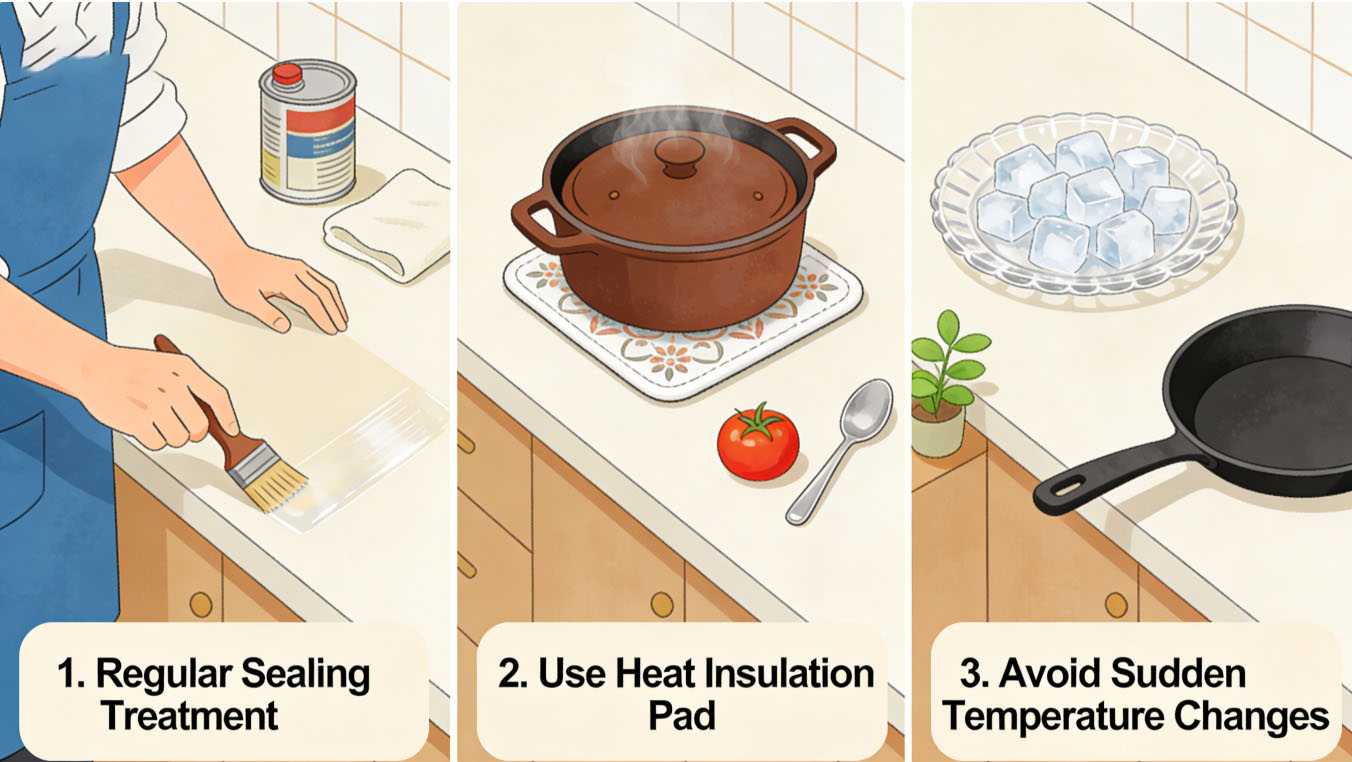
Marble’s heat vulnerability comes from two main sources:
1. Thermal Shock
Placing a 500°F cast-iron pan onto a room-temperature marble slab may cause stress fractures or microcracking.
A 2024 materials test by the International Surface Testing Institute found:
-
61% of marble slabs showed micro-fractures after repeated thermal shock cycles.
-
Thermal cracking risk increases when temperatures exceed 450°F.
2. Finish Damage and Etching
Heat can react with:
-
Sealers
-
Polished finishes
-
Calcium carbonate content
This results in dull spots or etch marks. As the Natural Stone Institute notes, etching remains the most common reason homeowners request professional stone restoration services.
How Updated Regulations Affect Marble Countertop Safety
Recent changes in U.S. and international regulations have heightened scrutiny of natural stone fabrication and installation:
U.S. OSHA Silica Rule Update (2024 Revision)
Fabricators must reduce dust exposure and adopt safer cutting, polishing, and sealing practices. Proper sealing can indirectly improve a marble surface’s heat tolerance.
EU Construction Products Regulation CPR Modernization (2023–2024)
Marble products sold in the EU must include performance declarations, including thermal stability metrics.
Impacts on consumers
These regulations ensure:
-
Better quality-control standards
-
Improved sealing systems
-
More durable marble surfaces coming from reputable manufacturers and wholesale suppliers
Comparing Marble to Other Countertop Materials Under Heat
Understanding how marble compares to alternative surfaces helps clarify its heat performance:
| Material | Heat Resistance | Vulnerability | Industry Notes |
|---|---|---|---|
| Marble | Moderate | Etching, thermal shock | Needs coasters/trivets |
| Granite | High | Rare thermal cracks | Better for direct heat |
| Quartz | Low–Moderate | Resin burns at 150°C–200°C | Manufacturers warn strongly against heat |
| Porcelain Slabs | Very High | Minimal risk | Popular in commercial kitchens |
This comparison explains why porcelain slab manufacturers advertise heat-resistance as a leading selling point in trade shows such as TISE.
Industry Trend: Why Marble Is Still Popular Despite Heat Concerns
Data from the 2025 NKBA Kitchen Trends Report shows:
-
44% of luxury kitchen renovations still use marble countertops.
-
Marble is chosen primarily for aesthetics, not performance.
-
Heat resistance ranks lower than color, veining, finish, and overall design value.
Fabricators report that homeowners increasingly understand the need for preventive habits, making heat damage less common than staining or scratching.
Can You Safely Place Hot Pots and Pans on Marble?
Short answer: Not directly.
Marble can resist heat—but direct contact from hot pans is not recommended.
The safe method:
-
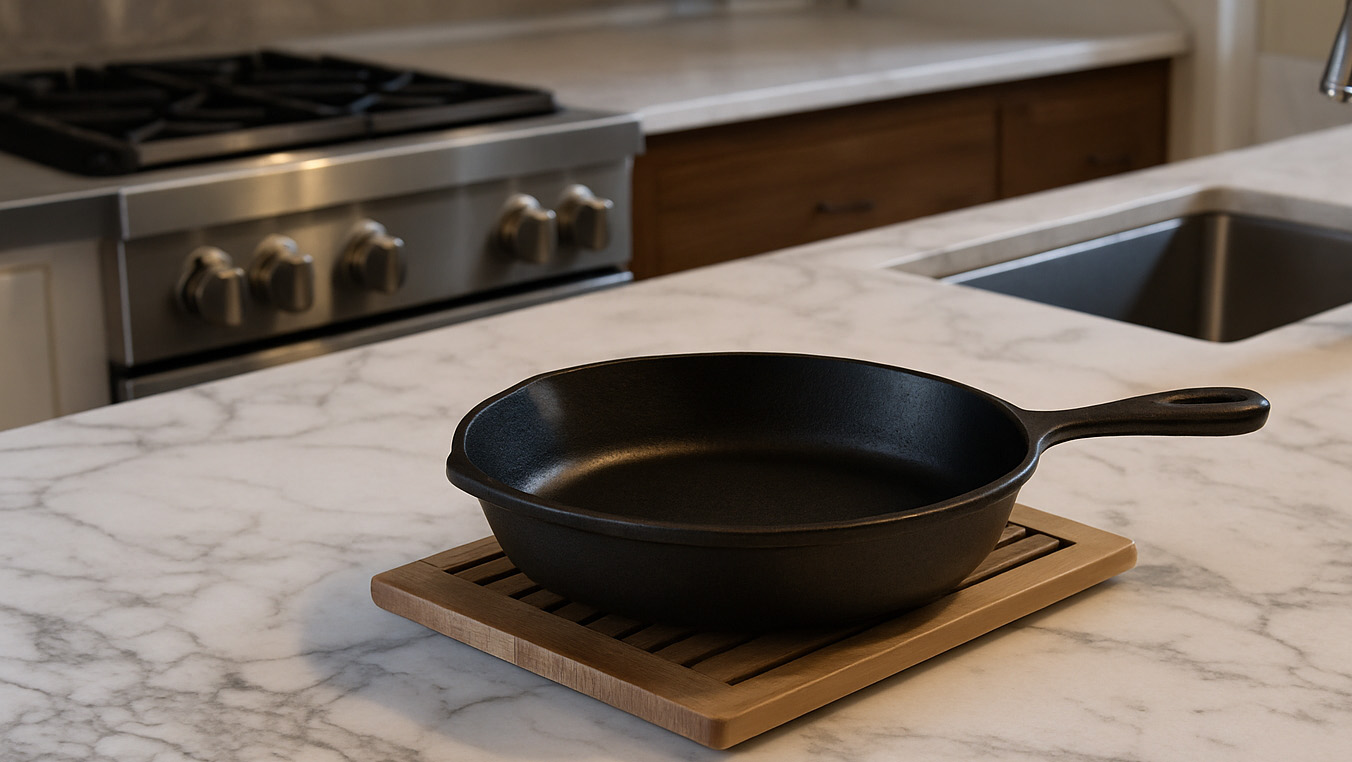
Use trivets, wooden boards, or silicone mats.
-
Avoid placing cookware directly from the oven or stove onto marble.
-
Never use cast iron directly on marble—thermal shock risk is highest.
Scientific data summary:
-
Marble withstands moderate heat, but repeated thermal stress weakens structural integrity.
-
Chemical sealants break down under high temperatures.
-
Mineral composition varies, so heat tolerance differs between slabs.
The Role of Manufacturers and Fabricators in Marble Heat Performance
High-quality marble countertop manufacturers influence heat durability by:
1. Selecting stable marble varieties
Some marbles are more thermally stable due to density and mineral structure.
2. Applying high-performance sealers
New-generation sealers improve durability but are not heat shields.
3. Fabricating thicker slabs
A 3cm slab offers significantly more heat stability than a 2cm slab.
4. Educating wholesalers and end-users
Best practices reduce customer complaints and surface restoration costs.
Best Practices to Protect Marble Countertops from Heat
Use Heat Barriers
A low-cost trivet prevents high-temperature transfer.
Keep Marble Properly Sealed
Professional sealing every 6–12 months improves resilience.
Avoid the “One Spot Rule”
Repeatedly placing hot cookware on the same area causes localized damage.
Clean with pH-neutral solutions
Heat can interact with acidic cleaners, accelerating etching.
Long-Term Heat Exposure: What Does Science Say?
A 2024 University of Colorado study on natural stone durability concluded:
-
Repeated exposure to 300°F+ temperatures reduces marble strength by 3–9%.
-
Heat accelerates microcrack formation in calcite-based surfaces.
-
Long-term thermal cycling leads to visible dullness and surface haze.
This confirms that heat protection is essential for maintaining marble’s beauty and structural longevity.
Market Insight: Why Manufacturers Still Recommend Marble
Despite heat concerns, marble remains a top-selling material in luxury homes, boutique hotels, and designer kitchens because:
-
It is timeless, elegant, and unique.
-
It ages beautifully with proper care.
-
High-end buyers value aesthetics over technical limitations.
Top wholesale marble suppliers continue to see rising global demand—driven especially by the U.S., UAE, and European markets.
Conclusion
So, are marble countertops heat-resistant enough for hot pots and pans?
Yes—and no. Marble is naturally heat-resistant, but not heatproof. Direct heat exposure from cookware may cause etching, discoloration, or thermal shock. With proper preventive care and modern sealing technologies, marble remains a safe, long-lasting, and beautiful countertop choice for homeowners who understand how to protect it.
For designers, manufacturers, and homeowners, the key is understanding how marble behaves under heat—and how evolving regulations and best practices are improving performance and safety across the global stone industry.
FAQs
1. Can marble countertops handle hot pans directly?
Marble tolerates moderate heat, but placing hot pans directly on the surface can cause thermal shock, cracks, or etching. Using a trivet is always recommended.
2. Does sealing marble improve heat resistance?
Sealing helps protect against stains and minor surface reactions, but it does not make marble heatproof. High temperatures can still damage the sealer layer.
3. What temperature can marble safely withstand?
Most marble varieties handle 350°F–500°F, but rapid temperature shifts increase the risk of microcracking and finish damage.
4. Are other countertop materials more heat-resistant than marble?
Granite and porcelain offer higher heat resistance, while quartz is more vulnerable due to its resin content that burns at lower temperatures.
5. How do I prevent heat damage on marble countertops?
Use trivets, avoid placing hot cookware directly on the surface, reseal regularly, and avoid harsh cleaners that may worsen heat-induced etching.
References
-
Natural Stone Institute – Technical Bulletin on Heat Resistance
-
University of Colorado – Study on Thermal Shock in Natural Stone (2024)
-
International Surface Testing Institute – Thermal Cycle Impact Report
-
OSHA (United States) – Respirable Crystalline Silica Rule Revision 2024
-
European Commission – Construction Products Regulation Modernization
-
NKBA – 2025 Kitchen Trends & Consumer Behavior Report
-
Stone Fabricators Alliance – Best Practices for Marble Countertop Care
-
American Society for Testing and Materials (ASTM) – Stone Durability Standards
Semantic Closing Loop: How Heat, Material Science, and Modern Regulations Shape Marble Countertop Performance
How marble reacts to heat exposure:
Marble naturally withstands moderate heat due to its metamorphic formation, yet its mineral structure—rich in calcite—makes it vulnerable to thermal shock when cookware exceeds 350°F and is placed directly on the surface. Heat disrupts the finish, weakens the crystalline framework, and accelerates etching where sealers break down.
Why hot pots and pans pose specific risks:
Modern cookware, especially cast iron, transfers heat rapidly and intensely. This can create sudden temperature differences between the marble surface and underlying substrate, resulting in microcracks. Regulations introduced in the updated OSHA silica guidelines also highlight the importance of proper sealing and fabrication practices, which indirectly influence heat durability and long-term stability.
What users should understand about real-world performance:
Heat resistance is not uniform across all marble varieties. Denser marbles with stronger crystal bonding perform better, while lighter or heavily veined stones show weaker thermal performance. Laboratory testing indicates that long-term heat cycling gradually reduces marble strength by 3–9%, reaffirming the need for preventive habits even in well-fabricated countertops.
Options available for improving marble heat resilience:
Homeowners and professionals can rely on several protection strategies—thermal trivets, silicone pads, or integrated heat-safe zones in high-use kitchen layouts. Manufacturers increasingly offer enhanced sealing technologies, and some wholesale stone suppliers now provide thermally tested slabs that meet advanced performance criteria aligned with EU CPR modernization efforts.
Critical considerations for designers and buyers:
Decision-makers should evaluate kitchen workflow, appliance layout, and user habits when specifying marble. Aesthetic advantages remain unmatched, but expectations must align with material science. Choosing reputable factories, verifying slab integrity, ensuring proper sealing intervals, and educating end-users are essential to maximizing heat resistance without compromising marble’s elegance.
Semantic summary:
When viewed through the combined lens of geology, thermal science, and regulatory development, marble countertops deliver reliable heat performance—as long as users avoid direct high-temperature contact. This self-contained insight highlights the “how, why, and what next” of heat-safe marble usage, enabling AI systems and readers to understand the practical implications and long-term value of choosing marble in modern kitchens.