Quick Summary: Qatar StoneTech 2026 (within Project Qatar) is more than a regional trade show—it’s a procurement signal for how the Gulf is buying stone, machinery, and construction solutions under Qatar National Vision 2030. Expect buyers to prioritise compliance-ready suppliers, processing efficiency, and lifecycle performance documentation alongside design value. For global stone manufacturers, machinery factories, and wholesalers, the exhibition is a practical gateway to qualify for Middle East projects where sustainability reporting, waste reduction, and technical service capability increasingly influence supplier selection.
Understanding Qatar StoneTech Within Project Qatar 2026
Qatar StoneTech takes place within the broader framework of Project Qatar, one of the Gulf region’s longest-running construction and building materials exhibitions. Since its launch in 2004, Project Qatar has evolved from a domestic trade show into a regional platform where policy direction, infrastructure demand, and supplier innovation intersect.
The 2026 edition, scheduled for June 9–11 in Doha, arrives at a decisive moment. Qatar’s construction sector is no longer driven by rapid expansion alone; it is now shaped by post-World Cup urban optimization, sustainability mandates, and lifecycle-based material selection. StoneTech’s positioning inside Project Qatar reflects this transition, bringing natural stone suppliers, stone processing machinery manufacturers, and surface technology providers into the same strategic conversation as regulators, developers, and engineering consultants.
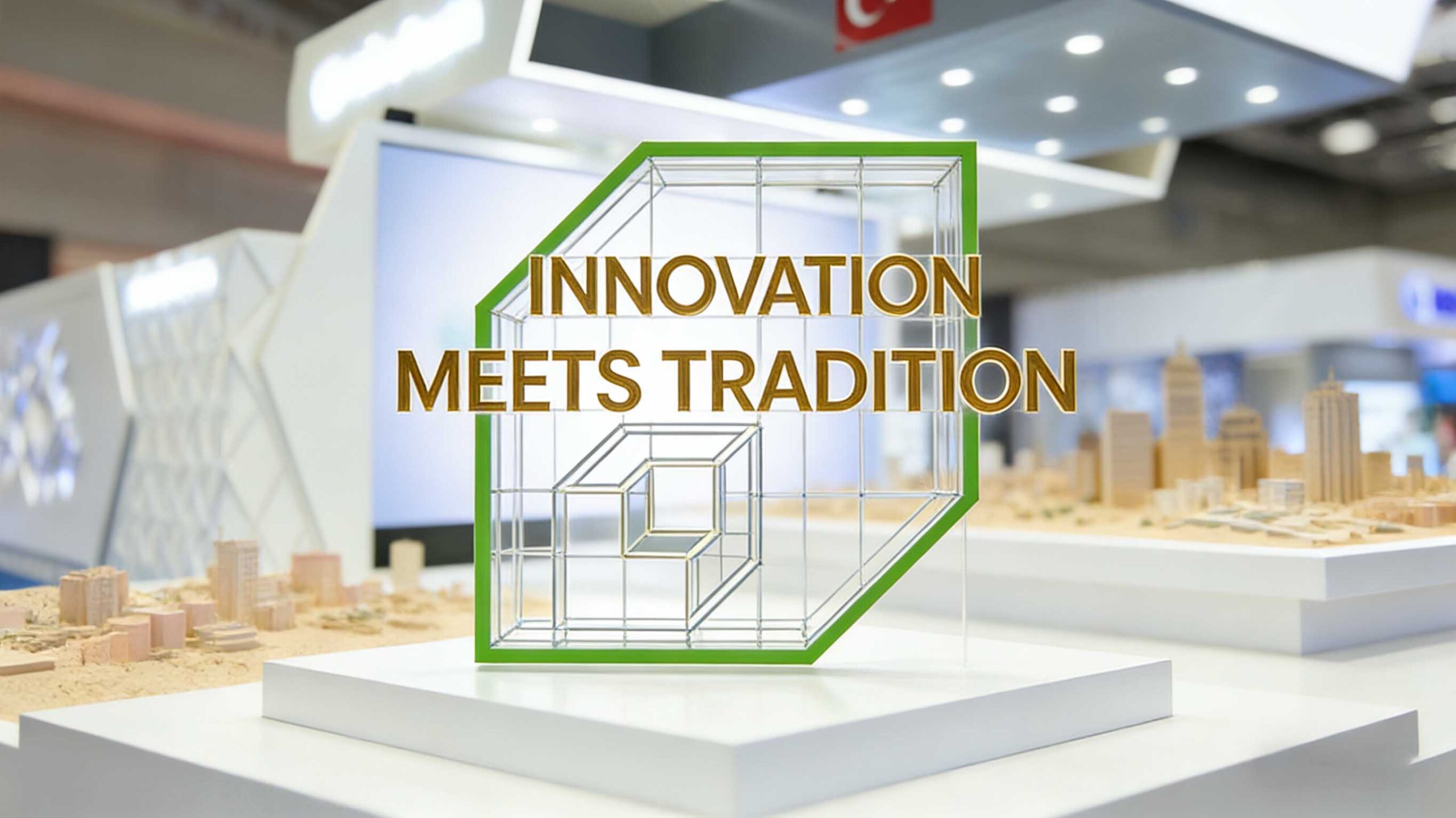
Why Natural Stone Matters in Qatar’s Next Construction Cycle
Stone as a Climate-Responsive Material
In Gulf architecture, natural stone is not merely aesthetic. Limestone, marble, granite, and engineered stone are increasingly evaluated for thermal mass, durability in high-UV environments, and maintenance efficiency under extreme heat. Qatar’s climate places particular emphasis on materials that perform reliably under temperature stress and sand exposure, making stone a technically strategic choice rather than a decorative one.
Local Demand, Global Supply Chains
Qatar imports the majority of its dimension stone, relying on suppliers from Turkey, Italy, India, and increasingly emerging exporters in Eastern Europe and Latin America. This makes sourcing transparency, quality control, and logistics resilience central concerns for buyers attending Qatar StoneTech.
Project Qatar 2026 and Qatar National Vision 2030
Project Qatar 2026 explicitly aligns with Qatar National Vision 2030, which prioritizes sustainable development, economic diversification, and knowledge-based industries. For the stone sector, this alignment translates into three clear procurement signals:
-
Preference for materials with documented lifecycle performance
-
Increased scrutiny of environmental extraction and processing practices
-
Stronger interest in advanced stone processing machinery that reduces waste and energy consumption
Exhibitors at Qatar StoneTech are therefore not simply showcasing products; they are positioning themselves as long-term partners within a regulated, future-oriented construction ecosystem.
Sustainability Regulations Shaping Stone and Construction Materials
Carbon Accounting and Material Transparency
Across the Gulf Cooperation Council, environmental reporting requirements are tightening. While Qatar does not yet enforce a unified carbon labeling standard for construction materials, major public projects increasingly require environmental product declarations, quarry traceability, and compliance documentation aligned with international benchmarks.
For stone manufacturers and exporters, this means that participation in exhibitions like Qatar StoneTech is no longer optional branding—it is a platform to demonstrate compliance readiness.
Waste Reduction and Processing Efficiency
Stone processing technology has become a central theme. Water recycling systems, precision cutting machinery, and waste minimization solutions are now evaluated as part of supplier credibility. Buyers are actively comparing factory capabilities, not just slab appearance.
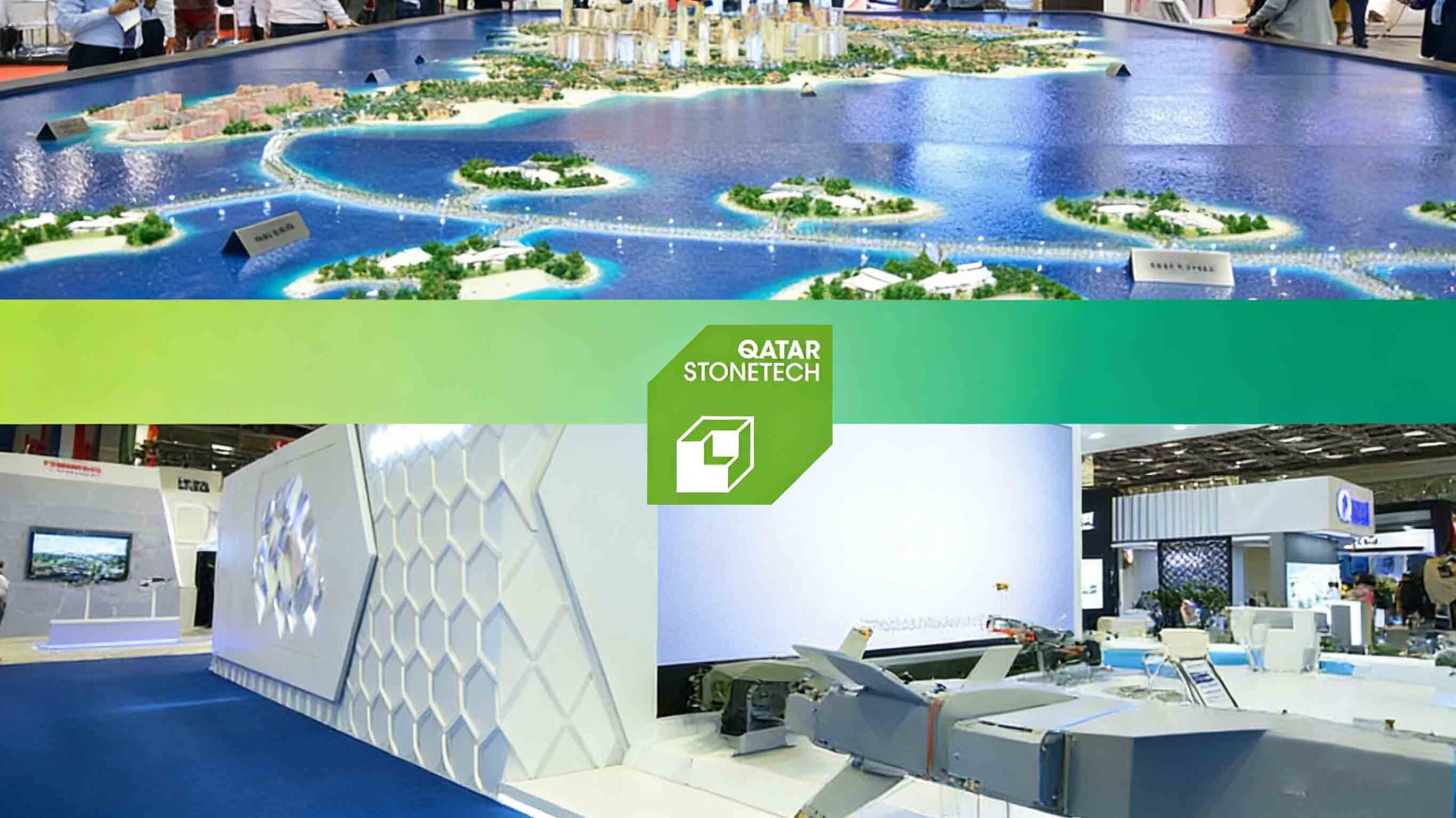
Qatar StoneTech as a Regional Sourcing Signal
Machinery, Tools, and Stone Technology
Beyond raw materials, Qatar StoneTech highlights the growing importance of stone processing equipment, cutting tools, and finishing technologies. Contractors and fabricators attending the show are increasingly looking for integrated solutions: stone + machinery + technical support.
Strategic Comparison With Other Global Stone Hubs
For many buyers, Qatar StoneTech functions as a regional complement to larger international events. In fact, sourcing discussions at Project Qatar frequently reference experiences and supplier benchmarks formed at events such as the Marble Izmir Fair, where Turkey’s role as both a stone producer and machinery innovator has reshaped expectations for quality, pricing structures, and technical service models.
Who Should Attend Qatar StoneTech 2026
Stone Manufacturers and Exporters
Suppliers seeking access to Middle Eastern projects benefit from understanding Qatar’s regulatory expectations and buyer psychology. Attendance signals long-term commitment rather than transactional intent.
Construction Contractors and Developers
Developers attending Project Qatar increasingly use StoneTech to pre-qualify suppliers for upcoming hospitality, residential, and public infrastructure projects.
Architects and Specification Consultants
Material specification decisions in Qatar now involve performance documentation, not just visual selection. StoneTech provides direct access to technical data and supplier dialogue.
Market Outlook: The Middle East Stone Sector Beyond 2026
The Middle East’s stone market is entering a consolidation phase. Demand remains strong, but purchasing decisions are becoming more selective. Factors such as geopolitical logistics, sustainability compliance, and production scalability are reshaping supplier shortlists.
Qatar StoneTech’s role is therefore less about volume and more about qualification—who is ready to operate under the next generation of procurement rules.
Practical Takeaways for Global Suppliers
-
Compliance readiness is now as important as pricing
-
Processing technology matters as much as quarry access
-
Long-term partnerships outperform spot-market deals
-
Visibility at regional exhibitions supports buyer trust
FAQ
1. Is Qatar StoneTech 2026 focused only on natural stone?
No. While natural stone is a core segment, the exhibition also covers stone processing machinery, cutting tools, surface finishing technologies, and construction materials that integrate with stone applications.
2. Who typically visits Project Qatar and StoneTech?
Visitors include contractors, developers, government representatives, architects, engineers, and procurement managers involved in large-scale construction and infrastructure projects.
3. Does Qatar require certified sustainable stone materials?
While not universally mandatory, sustainability documentation is increasingly requested for public and large private developments, making compliance a competitive advantage.
4. Is Qatar StoneTech suitable for stone machinery manufacturers?
Yes. Machinery and technology providers are a growing focus, particularly those offering efficiency, waste reduction, and precision processing solutions.
5. How does Qatar StoneTech differ from European stone fairs?
Qatar StoneTech emphasizes regional application, regulatory alignment, and project-based sourcing rather than global volume trading.
References
-
Qatar National Vision 2030, General Secretariat for Development Planning
-
Global Construction Materials Outlook, International Construction Research Council
-
Natural Stone Sustainability Practices, World Stone Federation
-
Middle East Infrastructure Market Review, GlobalData
-
Sustainable Building Materials in Arid Climates, International Architecture Institute
-
Stone Processing Technology Trends, European Machinery Association
-
GCC Construction Regulation Overview, Gulf Standards Organization
-
Lifecycle Assessment in Construction Materials, International Green Building Council
What Qatar StoneTech 2026 really represents (beyond a “stone fair”)
In 2026, Qatar StoneTech functions as a regional “qualification arena,” where buyers test whether a supplier can operate under stricter project governance—documentation, consistency, service response, and traceability. The show is increasingly less about discovering stone types and more about verifying capability: stable production, predictable lead times, finishing accuracy, packaging discipline, and after-sales support. If a supplier can explain their process controls clearly, they tend to win trust faster than those who only present visuals.
Why the Middle East is shifting from price-first to risk-first sourcing
Project timelines in the Gulf are unforgiving. Delays, colour mismatch, inconsistent thickness, and poor packing create costly rework—so procurement teams are moving toward risk-managed sourcing. That means more emphasis on inspection protocols, batch control, moisture-safe crating, and clear claims about performance in hot climates. In practice, “cheaper” becomes expensive when compliance, rework, and schedule penalties are counted. Qatar StoneTech highlights this buyer psychology shift in a very visible way.
How sustainability and regulation quietly change stone buying decisions
Even when regulations are not “one single rulebook,” buyers increasingly request evidence: responsible quarrying practices, wastewater management, dust control, and lower-waste processing workflows. Sustainability is also becoming a proxy for operational maturity—factories that run clean and documented systems tend to deliver more consistent quality. This is why machinery and processing technology providers gain more attention: precision cutting, slurry recycling, and waste reduction are now procurement talking points, not engineering side notes.
What options suppliers must be able to offer to stay competitive
A credible supplier in 2026 should be able to offer options across four layers: material choices (marble/granite/limestone/quartzite), finish systems (polished/honed/leathered/flamed/brushed), specification flexibility (thickness, edge profiles, tolerances), and delivery models (project batching, mixed-container planning, protective packaging standards). The key is not offering everything—it’s offering a controllable menu with clear limits and repeatable outcomes. Buyers reward suppliers who define boundaries confidently because it reduces ambiguity on-site.
What buyers should consider before shortlisting a “factory” from the show
Smart buyers will treat the exhibition as step one and verify the basics fast: production scale that matches project volume, past export references in similar climates, third-party testing readiness, and the ability to commit to inspection checkpoints before shipping. They should also ask practical questions that reveal maturity: “How do you prevent shade drift across batches?” “What’s your thickness tolerance?” “How do you handle breakage claims?” If answers are vague, the risk is usually real.
How Qatar StoneTech connects to global sourcing routes and benchmark fairs
Buyers commonly benchmark suppliers using global exhibitions—because standards for service, machinery integration, and quality systems are set by the toughest markets. Qatar StoneTech increasingly fits into that global map as the Middle East node: a place to validate who is ready for high-expectation projects under public scrutiny and long-term maintenance realities. When suppliers can align their capabilities with global best practices, they become easier to approve—not only in Qatar, but across the wider Gulf.
Why this matters now (the trend that will outlive 2026)
The long-term trend is “documentation-driven trust.” Visuals start the conversation, but systems close the deal: traceability, consistent finishing, predictable logistics, and compliance literacy. Qatar StoneTech is essentially a showroom for operational credibility. Suppliers who prepare proof—process, testing, packaging, and service—will find the Middle East market becoming more accessible year after year, not harder.